Trump Reverses Course on Refrigerant Regulations, Cites Grocery Cost Savings
The Trump administration, in a significant policy shift, has announced a rollback of stringent regulations governing the use of refrigerants, primarily targeting hydrofluorocarbons (HFCs). This reversal, championed by the Environmental Protection Agency (EPA) under Administrator Andrew Wheeler, is explicitly justified on the grounds of lowering operating costs for businesses, particularly in the food sector, and consequently reducing grocery prices for consumers. The move directly challenges the Kigali Amendment to the Montreal Protocol, an international agreement to phase down HFCs, a class of potent greenhouse gases. While proponents herald this as a victory for economic pragmatism and consumer relief, critics decry it as a dangerous step backward for environmental protection, potentially exacerbating climate change.
The core of the Trump administration’s argument centers on the perceived economic burden imposed by current HFC regulations. These regulations, often stemming from the Frank R. Lautenberg Chemical Safety for the 21st Century Act, mandate a phasedown of HFC production and consumption. This phasedown necessitates a transition to alternative refrigerants, many of which have historically been more expensive to purchase and implement. The administration contends that these higher costs are passed on directly to businesses, including supermarkets, restaurants, and food distributors, who then transfer these expenses to consumers in the form of higher prices for everyday goods. By easing these regulatory requirements, the administration believes it can alleviate these costs, leading to a tangible reduction in grocery bills.
Specifically, the EPA has signaled its intent to reconsider previous rules that mandated a significant reduction in HFC use. This includes potentially delaying or weakening targets for HFC phase-downs and allowing for a greater continued reliance on existing HFC technologies. The reasoning behind this policy change is to avoid what the administration terms "unnecessary burdens" on American businesses. The argument posits that forcing a rapid transition to newer, more expensive refrigerant technologies penalizes established industries and hinders their ability to operate competitively. This is particularly relevant for industries like refrigeration and air conditioning, which rely heavily on these substances and represent a substantial portion of operational expenses.
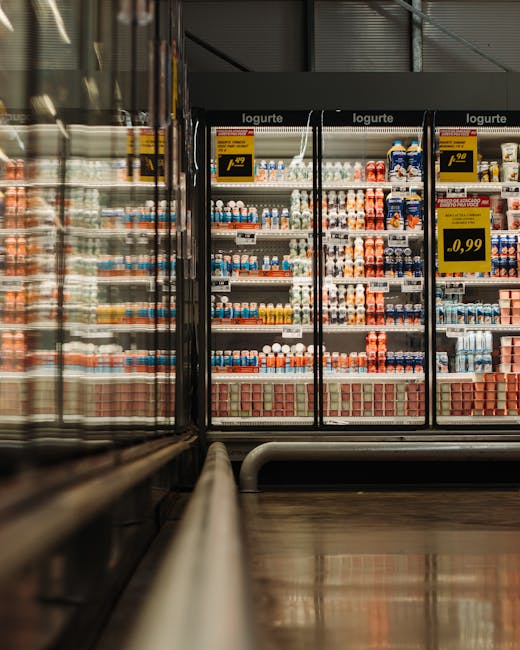
The economic rationale is further elaborated by focusing on the direct impact on the grocery supply chain. Supermarkets, for instance, operate vast refrigeration systems that are critical for preserving perishable goods. The cost of maintaining and upgrading these systems, including the purchase and servicing of refrigerants, is a significant operational expense. The administration’s stance is that by allowing businesses to continue using more readily available and potentially less costly HFC refrigerants, these expenses will decrease, leading to lower operating costs for grocers. This, in turn, is expected to translate into more competitive pricing for consumers at the checkout counter. The narrative is one of freeing businesses from what are perceived as overly aggressive environmental mandates that ultimately harm the pocketbooks of average Americans.
However, this policy reversal has ignited fierce opposition from environmental organizations and a significant segment of the scientific community. HFCs, while less potent than some older refrigerants like chlorofluorocarbons (CFCs), are still powerful greenhouse gases. Their contribution to global warming is substantial, and their continued widespread use runs counter to international efforts to mitigate climate change. Critics argue that the short-term economic benefits touted by the administration are dwarfed by the long-term environmental and economic costs associated with a warming planet, including increased frequency of extreme weather events, agricultural disruption, and rising sea levels.
The Kigali Amendment, to which the United States became a party under the Trump administration, outlines a clear pathway for phasing down HFCs over several decades. The administration’s current trajectory appears to be at odds with its previous commitment to this international agreement, raising concerns about the U.S.’s standing on the global stage regarding climate action. The argument that regulatory relief will significantly impact grocery costs is also being challenged. Many argue that the price fluctuations in the grocery market are driven by a multitude of factors, including supply chain disruptions, labor costs, and global commodity prices, and that the impact of refrigerant regulations is a relatively minor component.
Furthermore, the development and adoption of alternative, lower-GWP (global warming potential) refrigerants have been spurred by regulatory pressure. These alternatives, while initially more expensive, offer long-term benefits in terms of reduced environmental impact and potential energy efficiency improvements in refrigeration systems. Critics fear that by weakening these regulations, the administration will stifle innovation in this crucial sector, delaying the transition to more sustainable technologies and potentially locking in less environmentally friendly infrastructure for decades to come. The economic argument, they contend, is a short-sighted justification for sacrificing long-term environmental well-being.
The EPA’s proposed actions are expected to involve rescinding or amending existing rules that established specific HFC reduction targets and mandated the use of alternative refrigerants in certain applications. This could include revisiting SNAP (Significant New Alternatives Policy) rules, which assess and regulate substitutes for ozone-depleting substances and HFCs. The administration’s approach is characterized by a de-emphasis on prescriptive regulatory mandates and a greater reliance on market-based solutions, though the specific market mechanisms to encourage the adoption of lower-GWP refrigerants in the absence of strong regulatory drivers remain unclear. The focus is on providing businesses with flexibility and avoiding what is perceived as government overreach in setting specific technological pathways.
The debate over refrigerant regulations highlights a fundamental tension between immediate economic concerns and long-term environmental sustainability. The Trump administration’s latest policy reversal leans heavily towards prioritizing the former, with the promise of lower grocery costs serving as a key justification. This approach, however, is met with significant skepticism from environmental advocates and scientists who view it as a dangerous gamble with the planet’s future, potentially undermining years of progress in addressing climate change and jeopardizing the economic stability that a healthy environment provides. The ultimate impact on grocery costs remains a subject of debate, with proponents claiming tangible relief and opponents arguing for a more nuanced economic analysis that accounts for the broader, long-term costs of climate change.
