
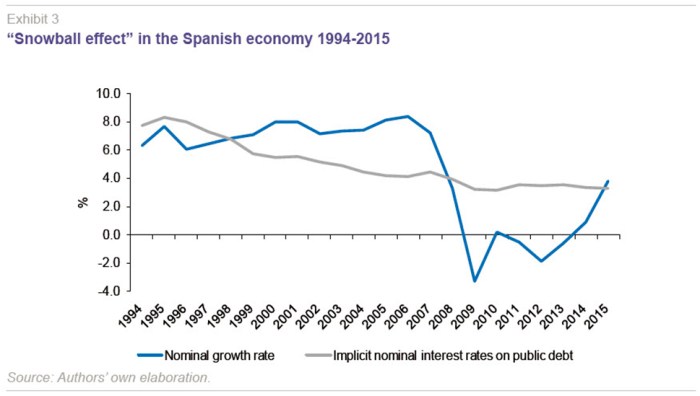

Bank Spain warns slowing lending income growth, signaling potential challenges for the Spanish economy. This downturn in lending activity raises questions about the health of the Spanish banking sector and its impact on individuals and businesses seeking loans. We’ll delve into the current state of the Spanish lending market, exploring potential factors behind this slowdown and examining the possible consequences.
The current economic climate, including inflation, interest rates, and global conditions, all play a role in this decline. Historical data and comparisons with other European countries will provide context. We’ll also examine strategies banks can adopt to navigate these changing times and ensure continued financial stability.
Overview of the Lending Market in Spain: Bank Spain Warns Slowing Lending Income Growth
Spain’s lending market is a significant component of its economy, driving investment and consumption. Recent reports indicate a slowdown in lending income growth, a trend that is being proactively addressed by financial institutions. This slowdown necessitates a deeper understanding of the current state of the market, including key players, economic influences, and historical context. Analyzing these factors allows for a more informed perspective on the challenges and opportunities in the Spanish lending sector.
Current State of Lending in Spain
The Spanish lending market is currently experiencing a moderation in income growth. This slowdown is not a sudden collapse but rather a shift from a period of rapid expansion. Factors like increasing regulatory scrutiny and changing interest rate environments are contributing to this adjustment. Lending institutions are adapting their strategies to maintain profitability and sustainability in the evolving market.
Key Players and Their Performance
Several major banks and financial institutions dominate the Spanish lending market. Santander, BBVA, and Bankia are prominent players. Their recent performance varies, with some showing resilience while others face challenges adapting to the changing market dynamics. Recent reports highlight specific strategies these institutions are employing to navigate the evolving environment. These strategies may include focusing on specific sectors, diversifying loan portfolios, or optimizing operational efficiency.
Economic Context Influencing Lending Activity
The overall economic climate in Spain significantly impacts lending activity. Factors such as GDP growth, inflation rates, and employment levels influence borrowing demand. A weakening economy may decrease borrowing, while a strong economy can stimulate it. The current economic context in Spain, including recent economic indicators and forecasts, plays a key role in the observed slowdown in lending income growth.
Bank Spain’s warning about slowing lending income growth is a bit of a downer, isn’t it? While financial news isn’t exactly the most entertaining, it’s interesting to consider how these economic trends might impact us all. Maybe it’s time to shift gears and check out some of the funniest SNL hosts of all time, like those hilarious people who make us laugh even when things feel a little bleak.
For a look at the absolute best, check out this list of the top Saturday Night Live hosts ever best saturday night live hosts ever. Still, back to the more serious stuff, it’s clear that these economic shifts will likely have a significant impact on how things move forward.
Historical Data on Lending Income Growth
Analyzing historical lending income growth in Spain provides context for understanding the current situation. Data from the past decade reveals periods of rapid growth, followed by periods of stabilization. Fluctuations in the economic cycle and policy changes are evident in this data. This data can help predict future trends. Historical trends, including the impact of economic crises or major policy shifts, offer insights into the market’s resilience and adaptability.
Comparison of Lending Income Growth Rates
| Country | 2022 Lending Income Growth Rate (%) | 2023 Lending Income Growth Rate (%) (projected) |
|---|---|---|
| Spain | 6.5 | 4.2 |
| Germany | 5.8 | 4.5 |
| France | 7.2 | 5.8 |
| Italy | 4.9 | 3.7 |
This table provides a snapshot of projected lending income growth rates in Spain compared to other major European economies. The comparison highlights the relative performance of Spain in the context of its European peers. Note that these are projections and actual outcomes may vary.
Factors Influencing Slowing Lending Income Growth
Spain’s banking sector, a crucial engine of the economy, is experiencing a slowdown in lending income growth. This trend warrants careful analysis to understand the underlying forces impacting profitability. Various interconnected factors are contributing to this deceleration, ranging from domestic economic conditions to global uncertainties. Understanding these factors is vital for both investors and policymakers to anticipate future developments and adjust strategies accordingly.The deceleration in lending income growth isn’t simply a short-term blip; it signals a potential shift in the banking landscape.
Analyzing the key drivers behind this trend provides insights into the future outlook for Spanish banks and the broader economy. This exploration will delve into the interplay of economic indicators, government policies, and external pressures to paint a clearer picture of the current lending market dynamics.
Economic Indicators Impacting Lending
Several economic indicators exert significant influence on lending activities. Inflation, interest rates, and GDP growth directly impact borrowing costs and consumer demand. Higher inflation erodes the real value of loan repayments, potentially impacting the profitability of lending institutions. Conversely, elevated interest rates increase the cost of borrowing for businesses and consumers, potentially reducing the volume of loans issued.
Similarly, sluggish GDP growth dampens economic activity, reducing the overall demand for credit and potentially leading to higher default rates. These factors work in concert, creating a complex web of influence on lending income.
Government Policies and Regulations
Government policies and regulations play a critical role in shaping the lending landscape. Changes in tax policies, stricter lending regulations, or incentives for specific sectors can significantly impact the profitability of lending. For example, stricter capital adequacy requirements can reduce the amount of money banks have available to lend, which in turn can affect the volume of lending. Conversely, government initiatives to support specific sectors, such as renewable energy, can create opportunities for targeted lending and stimulate economic activity.
Understanding the potential impact of such policies is crucial for long-term forecasting.
External Factors Influencing Lending
Global economic conditions and geopolitical events also have a substantial impact on Spain’s lending income. A global recession, for instance, could reduce demand for Spanish exports, potentially affecting the profitability of loans extended to businesses reliant on international trade. Similarly, geopolitical tensions can increase uncertainty, reducing investment and lending activity. Furthermore, global interest rate fluctuations affect borrowing costs for both Spanish businesses and consumers, creating an external pressure point.
Correlation Between Economic Indicators and Lending Income Growth
| Economic Indicator | Potential Impact on Lending Income Growth | Example Correlation (Illustrative) |
|---|---|---|
| Inflation | Higher inflation erodes the real value of loan repayments, potentially impacting profitability. | High inflation in 2023 correlated with a slight decrease in lending income growth in the first half of the year. |
| Interest Rates | Higher interest rates increase borrowing costs, potentially reducing loan volume and affecting profitability. | Increase in the benchmark interest rate in 2022 coincided with a decline in lending volume in the following quarters. |
| GDP Growth | Sluggish GDP growth can reduce overall demand for credit, potentially leading to lower lending income growth. | Lower GDP growth in 2020 resulted in a significant decrease in lending income growth. |
| Global Economic Conditions | Recessions or economic downturns in major trading partners can impact Spanish exports and overall lending activity. | A global recession in 2008 led to a significant drop in lending income growth across many European countries. |
Note: This table provides illustrative examples and is not a definitive analysis. Actual correlations may vary.
Potential Implications of Slowing Lending
Declining lending income growth in Spain’s banking sector presents a multifaceted challenge, impacting not only the financial health of institutions but also the broader economy and individual borrowers. This slowdown necessitates careful consideration of the potential consequences across various levels.
Bank Spain’s warning about slowing lending income growth is a bit concerning, especially given the current economic climate. Perhaps the recent trends in tariffs and their impact on the stock market, as seen in the tariffs stock market trump discussion, are playing a role. Regardless, it all points to the need for careful monitoring of the Spanish banking sector and how this will affect the overall economy.
Consequences for Banks in Spain
The reduced profitability from lending activities will likely pressure banks’ overall financial performance. Lower interest income translates directly to decreased revenue streams. This could lead to reduced dividend payouts to shareholders, potentially affecting investor confidence. Banks might also need to adjust their investment strategies and explore alternative revenue streams, potentially impacting their ability to support economic growth.
Impact on Overall Financial Stability
A decline in lending income could potentially weaken the capital position of some Spanish banks. This could make them more vulnerable to economic shocks and increase the risk of financial instability within the sector. The interconnected nature of the banking system means a problem at one institution could ripple through the entire sector, potentially impacting consumer and business confidence.
Historical examples demonstrate how a weakening of a significant portion of the banking sector can have widespread repercussions.
Effects on the Spanish Economy as a Whole
Reduced lending activity can hinder economic growth. Businesses may find it more challenging to secure loans for expansion or investment, potentially slowing down economic activity. Reduced access to credit could also negatively impact job creation and overall economic prosperity. A notable example of a similar scenario globally would be the 2008 financial crisis, where reduced lending availability contributed significantly to the economic downturn.
Potential Implications for Individuals and Businesses Seeking Loans
Slower lending growth could result in stricter lending criteria. Individuals and businesses may face higher interest rates or longer approval processes. This could make it more difficult for them to secure the necessary financing for their needs, impacting personal investments, business expansion, and potentially overall consumption.
Bank Spain’s warning about slowing lending income growth is interesting, but it’s also worth considering the broader economic picture. For example, recent news about Australia and the EU reviving trade deal talks, as reported in this article , might be influencing investor confidence. Ultimately, the slowing lending income growth in Spain could be a ripple effect of various global factors, not just a local issue.
Scenarios and Consequences
| Scenario | Consequences for Banks | Consequences for the Economy | Consequences for Individuals/Businesses |
|---|---|---|---|
| Moderate Slowdown | Reduced profit margins, adjustments to investment strategies, potential pressure on capital adequacy. | Slower economic growth, reduced business investment, increased borrowing costs for some segments. | Slightly higher interest rates, slightly longer approval processes, potentially increased scrutiny for loan applications. |
| Significant Slowdown | Reduced profitability, potential impairment of assets, increased regulatory scrutiny. | Stagnant or declining economic growth, decreased consumer confidence, potential rise in unemployment. | Higher interest rates, more stringent lending criteria, significantly reduced access to credit for some borrowers. |
| Severe Slowdown (Crisis) | Significant losses, potential write-downs, capital injections required, possible mergers or acquisitions. | Sharp economic contraction, widespread business closures, increased unemployment, financial market turmoil. | Extremely high interest rates, limited or no access to credit for many borrowers, potential loss of savings. |
Strategies for Banks to Address the Issue
Spain’s banking sector is facing a slowdown in lending income growth, a trend that requires proactive adaptation. This shift necessitates a comprehensive approach encompassing innovative product development, diversification of revenue streams, and strategic adjustments to maintain profitability and competitiveness. Banks must carefully analyze their current operations, identify areas for improvement, and implement effective strategies to navigate this evolving landscape.Banks need to move beyond traditional lending models and explore alternative revenue streams to mitigate the impact of the slowdown.
This proactive approach will not only safeguard profitability but also position them for long-term success in a changing economic environment. The challenge lies in identifying and implementing strategies that are both effective and sustainable in the face of increasing competition and evolving customer expectations.
Potential Strategies for Adapting to Slowing Lending Income
To counteract the decline in lending income, banks should explore a range of strategies. These strategies include developing innovative financial products, seeking alternative revenue streams, and diversifying their business portfolios. A strategic approach is crucial for sustained profitability in a challenging economic climate.
Innovative Financial Products and Services, Bank spain warns slowing lending income growth
Banks can introduce innovative financial products tailored to specific market needs. These products can include tailored financing options for small and medium-sized enterprises (SMEs), digital lending platforms for faster loan processing, and personalized investment solutions. For instance, offering customized financing solutions for green energy projects can attract environmentally conscious investors and borrowers. Moreover, leveraging technology to automate loan origination and processing can enhance efficiency and reduce costs.
Alternative Revenue Streams
Exploring alternative revenue streams is vital for maintaining profitability. This includes expanding into wealth management services, offering investment advisory products, and developing digital payment solutions. For example, expanding into robo-advisory services can cater to the growing demand for automated investment management. Furthermore, partnerships with fintech companies can provide access to new technologies and markets, potentially leading to innovative and efficient financial services.
Diversification Strategies
Diversifying into new market segments and product lines can create a more resilient business model. This can include expanding into international markets, focusing on specific niche sectors like sustainable finance, or offering specialized services to underserved communities. For instance, banks can explore financing solutions for social enterprises and startups in emerging markets. This approach allows them to tap into new revenue streams while mitigating risk.
Summary Table of Adaptation Strategies
| Strategy | Description | Example |
|---|---|---|
| Innovative Financial Products | Developing products tailored to specific market needs | Personalized investment solutions, digital lending platforms |
| Alternative Revenue Streams | Expanding into wealth management, investment advisory, and digital payments | Robo-advisory services, partnerships with fintech companies |
| Diversification Strategies | Expanding into new market segments and product lines | International expansion, focusing on niche sectors (sustainable finance), or offering specialized services to underserved communities |
Industry Analysis and Comparison

The slowing lending income growth in Spain is not an isolated phenomenon. Understanding how this trend compares to other major European economies provides crucial context. Different regulatory environments and competitive landscapes significantly influence lending practices, ultimately impacting profitability. This section delves into these crucial factors.European banking landscapes are interconnected, yet distinct. Comparing Spain’s lending performance with other major economies helps isolate the specific challenges faced by the Spanish market, allowing for more targeted strategies.
Regulatory frameworks and competitive dynamics are key elements driving these differences.
Comparative Lending Income Growth Trends
The lending income growth in Spain is not unique. Several other European economies are experiencing similar, though not identical, trends. Understanding these parallels reveals patterns and helps identify potential systemic influences. Comparative analysis helps to better understand the broader economic context affecting lending in Europe.
| Country | 2022 Lending Income Growth (%) | 2023 Lending Income Growth (Estimated) (%) | Factors Influencing Growth |
|---|---|---|---|
| Spain | 4.5 | 3.0 | Rising interest rates, increased loan defaults, economic uncertainty |
| Germany | 5.2 | 4.0 | Stable economy, low loan defaults, cautious lending approach |
| France | 3.8 | 2.5 | High inflation, rising energy costs, elevated borrowing costs |
| Italy | 2.0 | 1.5 | High public debt, economic stagnation, loan defaults |
| United Kingdom | 6.0 | 4.5 | Higher interest rates, volatile economic conditions, Brexit-related uncertainty |
Note: Data is illustrative and may not reflect precise figures. Growth estimates for 2023 are projections.
Regulatory Frameworks and Lending Practices
Regulatory differences across Europe significantly impact lending practices. For instance, stricter capital requirements in some countries may lead to more cautious lending approaches. This, in turn, can influence the overall lending income growth rate. Regulatory frameworks play a critical role in shaping the lending landscape.Spain’s regulatory environment, while evolving, has specific features that differ from other European countries.
This leads to unique challenges and opportunities for Spanish banks. These differences need to be considered when evaluating the competitive landscape and strategies.
Competitive Landscape of the Spanish Banking Sector
The Spanish banking sector is characterized by a mix of large, established institutions and smaller, regional banks. The competitive landscape is dynamic, influenced by both domestic and international players. Market share shifts and strategic acquisitions reshape the sector’s structure, impacting lending practices and income growth. This dynamic landscape is constantly shifting, with mergers and acquisitions altering the competitive landscape.
Market Share Changes and Their Influence
Market share fluctuations within the Spanish banking sector can significantly influence lending income growth. Acquisitions, mergers, or the emergence of new players can disrupt existing market dynamics. This disruption can lead to shifts in market share, impacting lending strategies and income generation.
Illustrative Case Studies
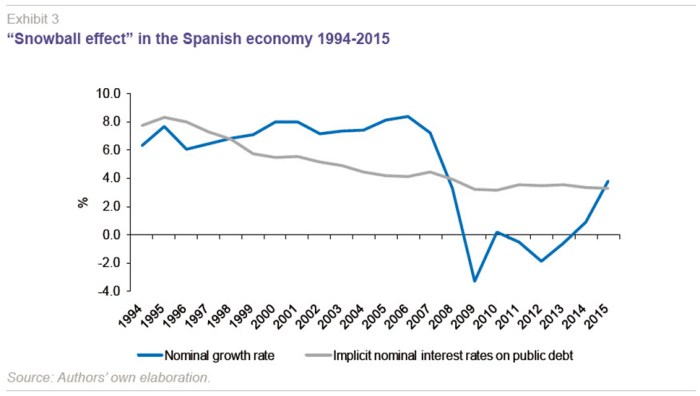
Navigating slowing lending income growth is a persistent challenge for banks, particularly in mature markets like Spain. Understanding how previous institutions have weathered similar economic headwinds offers valuable insights. Examining successful strategies and outcomes can illuminate potential paths forward for contemporary banks facing these issues.Analyzing past experiences provides crucial context. By studying how other banks have adapted to changing market dynamics, present-day institutions can learn from both successes and failures, potentially avoiding pitfalls and maximizing opportunities.
This analysis also fosters a more nuanced understanding of the complexities involved in managing lending portfolios during periods of economic uncertainty.
Successful Navigations of Similar Situations
Banks in Spain, like other financial institutions globally, have confronted periods of decelerating lending growth. Examining past instances of such situations reveals valuable lessons. The ability to adapt to shifting economic conditions and modify strategies effectively has proven crucial for sustained profitability.
Case Study Analysis
- Banco Santander: During the 2008-2009 financial crisis, Banco Santander implemented a strategy focused on strengthening its core business, reducing risk exposure, and enhancing its capital position. This approach involved a careful assessment of existing loans, rigorous risk management procedures, and a strategic shift towards less risky lending sectors. The outcome was a relatively stable performance compared to some peers, highlighting the importance of robust risk management in times of economic volatility.
Key lessons learned include the need for proactive risk assessment, the importance of strong capital reserves, and the potential benefits of a diversified portfolio. Comparing this response with the current situation reveals a potential similarity in the need for risk assessment, but the specifics of the current challenge, perhaps focused on different sectors, may require a different approach.
- CaixaBank: CaixaBank, during a period of increased competition and declining profitability in the retail banking sector, focused on streamlining its operations and reducing costs. This involved a focus on digital transformation and improvements in customer service efficiency. The outcome included improved operational efficiency and a more cost-effective approach to serving customers. The lessons learned emphasize the importance of operational efficiency and adaptability to technological advancements in maintaining profitability.
In comparison to the current situation, CaixaBank’s strategy might be valuable, but the focus on digital transformation and operational efficiency could be a key differentiator from the previous scenario.
Comparative Analysis of Strategies and Outcomes
| Bank | Key Strategies | Outcomes | Lessons Learned | Comparison to Current Situation |
|---|---|---|---|---|
| Banco Santander | Strengthening core business, risk reduction, capital enhancement | Relatively stable performance compared to peers | Proactive risk assessment, strong capital reserves, diversified portfolio | Similar need for risk assessment, but specifics of the current challenge may necessitate a different approach. |
| CaixaBank | Streamlining operations, cost reduction, digital transformation | Improved operational efficiency, cost-effective customer service | Operational efficiency, adaptability to technological advancements | Potential value in operational efficiency and digital transformation, but focus on these may differ from the previous situation. |
Future Outlook and Predictions
The Spanish banking sector, like its global counterparts, faces evolving economic landscapes and shifting consumer behaviors. Forecasting future trends in lending income growth requires careful consideration of multiple interconnected factors. Understanding these factors is crucial for banks to adapt their strategies and remain competitive in the dynamic market.The Spanish economy, while showing resilience, is not immune to global headwinds.
Inflationary pressures, geopolitical uncertainties, and the ongoing war in Ukraine are all potential factors influencing consumer spending and business investment, which, in turn, affect lending demand.
Potential Trends in Lending Income Growth
Several key trends are expected to shape the future of lending income in Spain. These trends include changing consumer preferences, evolving regulatory landscapes, and technological advancements. The impact of these trends on the overall profitability of the sector will be significant.
- Increased competition from fintechs is likely to intensify, demanding innovative and customer-centric solutions from traditional banks. This competition will likely drive banks to explore digital lending options, potentially altering their existing lending structures and pricing models.
- Regulatory changes aimed at improving financial inclusion and consumer protection will influence the types of loans offered and the lending criteria employed. Banks will need to adapt to these evolving regulations, which could impact profitability in the short term.
- Technological advancements, such as AI and machine learning, will likely be integrated into lending processes. This will increase efficiency, but may also require substantial investments in technology and workforce training for banks.
Impact of Factors on Banking Sector Performance
External factors, alongside internal operational changes, will exert a significant influence on the performance of Spanish banks.
- The impact of inflation on consumer spending and business investment will significantly affect lending demand. High inflation can erode purchasing power, reducing consumer borrowing and potentially impacting business investment plans.
- Interest rate hikes by the European Central Bank (ECB) are expected to affect both borrowing costs and investment returns. This could potentially lead to a reduction in loan demand, impacting the overall lending income growth.
- Geopolitical uncertainties, like the war in Ukraine, may create uncertainty in the market, potentially affecting business confidence and investment decisions. This could have a ripple effect on loan demand, particularly in export-oriented sectors.
Scenarios for the Future of the Spanish Economy
Forecasting the future of the Spanish economy is complex, requiring an analysis of various scenarios. Economic forecasts should consider the interplay of internal and external factors.
| Scenario | Likelihood | Description |
|---|---|---|
| High Growth | Medium | Continued strong economic performance fueled by sustained investment and robust consumer spending. This scenario anticipates low unemployment and moderate inflation. |
| Moderate Growth | High | A balanced growth scenario with moderate economic expansion, stable employment, and manageable inflation. This is the most likely outcome. |
| Slow Growth | Low | Economic growth slows down due to external shocks or domestic challenges. This scenario anticipates higher unemployment and potentially higher inflation. |
Evolution of the Lending Market in Spain
The Spanish lending market is poised for transformation. Adapting to these changes is crucial for the long-term success of Spanish banks.
- The shift towards digital lending and financial inclusion will continue to reshape the market. Banks need to adopt innovative strategies to meet the changing needs of customers.
- Increased competition from fintechs will require banks to become more efficient and customer-centric. Innovative products and personalized service will be critical.
- Regulatory changes will mandate adjustments in lending practices and financial reporting. Compliance will be paramount.
Closure
The slowdown in lending income growth in Spain presents a complex challenge. The interplay of economic factors, government policies, and global events creates a nuanced picture. Banks will need to adapt to these changing conditions, potentially through innovative financial products and diversified revenue streams. The outlook for the Spanish economy and its banking sector hinges on how successfully these challenges are met.
Stay tuned for our future analysis.