
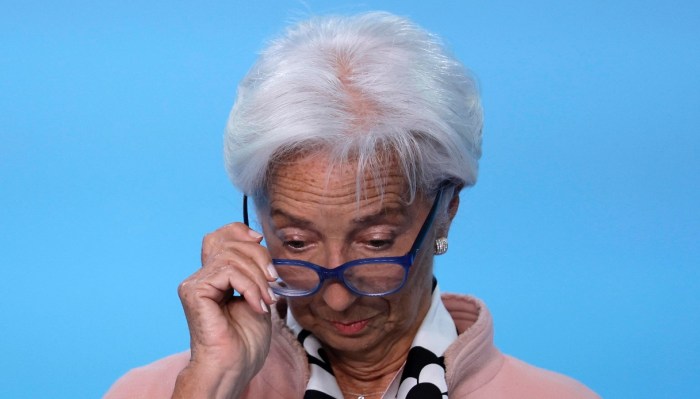


As ECBs Lagarde determined complete her term spokesperson says, the implications ripple through the Eurozone. Christine Lagarde’s tenure at the helm of the European Central Bank (ECB) has been marked by navigating complex economic landscapes. Her continued leadership, as confirmed by the spokesperson, will be crucial in the coming months, influencing everything from interest rates to investor confidence.
This decision will affect not just the Eurozone’s financial markets but also national economies within the region.
The ECB’s role in managing the Eurozone’s monetary policy is pivotal. Understanding the complexities of this decision, and its impact on the region’s economy, requires a look at the historical context, the spokesperson’s statement, potential impacts, and alternative perspectives. This analysis delves into the details, providing insights for those seeking to grasp the full picture.
Contextual Background
Christine Lagarde’s tenure as President of the European Central Bank (ECB) has been marked by significant economic challenges and policy decisions. Her leadership has navigated a period of unprecedented global uncertainty, from the aftermath of the 2008 financial crisis to the recent inflationary pressures and the war in Ukraine. Understanding the context of her role, responsibilities, and the expected timeline of succession is crucial for comprehending the current situation.Lagarde’s leadership of the ECB has been a central force in shaping monetary policy across the Eurozone.
Her decisions have had a direct impact on interest rates, inflation, and economic growth within the member states. The complexities of this role and the potential for future challenges are significant, and understanding the historical context provides a necessary framework for evaluating the present.
ECB’s Lagarde is determined to complete her term, a spokesperson says, which is certainly noteworthy. But, it’s also fascinating how quickly AI is becoming integrated into various fields, like law, as a new study highlights. Artificial intelligence is now an integral part of law student learning , suggesting a significant shift. This evolution, though, doesn’t diminish Lagarde’s commitment to her current role.
Historical Overview of Lagarde’s Role, Ecbs lagarde determined complete her term spokesperson says
Christine Lagarde assumed the presidency of the ECB in November 2019, succeeding Mario Draghi. Her predecessor’s tenure was marked by the management of the Eurozone sovereign debt crisis and the implementation of quantitative easing. Lagarde has inherited and adapted these policies to address the evolving economic landscape. This transition reflects the ECB’s continuous adaptation to global economic shifts.
Key Responsibilities and Powers of the ECB President
The President of the ECB is responsible for implementing the monetary policy decisions of the Governing Council. This includes setting interest rates, managing the money supply, and maintaining price stability within the Eurozone. The President also represents the ECB internationally, interacting with other central banks and international organizations. The President’s role extends beyond the day-to-day operations, encompassing a wide range of responsibilities to maintain the financial stability of the Eurozone.
Crucially, the President presides over the Governing Council meetings, shaping the direction of the monetary policy decisions.
Term Length for the ECB President
The President of the ECB serves a non-renewable eight-year term. This fixed term ensures a degree of continuity and stability in the leadership of the central bank. The non-renewable nature of the term ensures impartiality and avoids any potential conflicts of interest that might arise from extended periods of leadership. This structure is crucial for maintaining the ECB’s independence and effectiveness.
Expected Timeline for the Succession Process
The process for selecting a new ECB President is expected to begin with a period of internal discussions and consultations among the Governing Council members. The candidates will be evaluated based on their experience and expertise in economics, finance, and monetary policy. The process will likely involve public announcements of candidates and potential interviews or discussions with governing bodies.
This timeline, while generally well-defined, can be influenced by various factors, such as unexpected events.
ECB’s Lagarde determined to complete her term, a spokesperson says. Meanwhile, the recent news about the Saab Helsing Pit AI piloted warplane against a real fighter pilot, demonstrating advancements in autonomous systems , is fascinating. It’s a reminder that while we’re focused on high-level financial decisions, technological leaps are happening in other fields. Still, Lagarde’s commitment to her role remains firm.
Recent Economic Developments Influencing the Situation
Recent economic developments, such as the ongoing war in Ukraine and persistent inflation, have significantly impacted the Eurozone’s economic outlook. The supply chain disruptions and energy price volatility have added complexity to the ECB’s policy decisions. The interplay of global factors has increased the pressure on the ECB to respond effectively to the changing economic landscape. Examples include the recent energy crisis impacting European economies and the continuing effects of the COVID-19 pandemic.
Relationship Between the ECB and National Governments
The ECB maintains a degree of independence from national governments. While national governments have a say in the appointment of the Governing Council members, the ECB’s primary responsibility is to maintain price stability across the Eurozone. The delicate balance between these two aspects of the relationship is critical for the stability and success of the Eurozone. This independence is essential to avoid political pressures that might compromise the ECB’s objective of price stability.
The ECB operates with its own mandate, free from direct political interference, ensuring a focus on long-term economic health.
Statement Analysis
Lagarde’s spokesperson’s confirmation that the ECB President intends to complete her term signals a clear and resolute stance. This declaration, while seemingly straightforward, holds implications for the future direction of European monetary policy and warrants careful consideration. The tone and context of the statement, when juxtaposed with past pronouncements, provide valuable insight into the current economic climate and the ECB’s approach.
Significance of the Spokesperson’s Declaration
The spokesperson’s statement underscores the ECB’s commitment to continuity and stability. It suggests a planned transition and avoids any speculation about potential departures or changes in leadership. This predictability can be beneficial for market confidence and stability, especially in periods of economic uncertainty. Investors often react positively to consistent leadership in central banking, as it provides a sense of predictability in monetary policy decisions.
Potential Implications for ECB Policies
The statement’s implications for ECB policies are multifaceted. Maintaining continuity in leadership could lead to the continuation of existing monetary policies. This implies a cautious approach to interest rate adjustments, potentially aiming to avoid sudden shifts that could disrupt financial markets. The commitment to completing the term might also influence the ECB’s communication strategy, emphasizing the importance of a steady hand on the tiller during a time of evolving economic conditions.
Interpretations of the Statement
Several interpretations of the statement are possible. One interpretation suggests a strong signal of confidence in the current policy framework. Another possible interpretation highlights the ECB’s determination to manage economic challenges in a measured and consistent way. The declaration might also signal a commitment to addressing inflation concerns while avoiding any unnecessary disruption to the European economy.
A less likely, yet possible, interpretation suggests a strategic move to pre-empt any potential leadership speculation and maintain a stable public image.
Spokesperson’s Tone and Impact
The spokesperson’s tone, in this case, is characterized by clarity and firmness. This clear communication can positively influence market expectations and reduce speculation about future leadership changes. A neutral and confident tone helps to foster trust and predictability, a crucial element in financial markets. The tone’s impact is potentially substantial, with the declaration influencing market sentiment and expectations for monetary policy.
Comparison to Past ECB Pronouncements
Comparing this statement to past ECB pronouncements reveals a pattern of measured communication. Previous statements have consistently emphasized a data-driven approach to policy decisions, a pattern that aligns with the current declaration. The continuity of this approach underscores the ECB’s commitment to maintaining stability and transparency. Looking back at previous statements, the overall message conveys a cautious yet resolute approach.
Key Arguments in the Statement
- The statement affirms Lagarde’s commitment to completing her current term as President of the ECB.
- It highlights a commitment to stability and continuity in the current economic climate.
- The declaration signals a planned transition, mitigating uncertainty in the market and fostering confidence.
- The statement likely suggests a measured and data-driven approach to monetary policy.
Potential Impacts: Ecbs Lagarde Determined Complete Her Term Spokesperson Says

Lagarde’s commitment to completing her term as President of the European Central Bank (ECB) has significant implications for the Eurozone economy, financial markets, and monetary policy. Her continued leadership provides stability and predictability, which is crucial in navigating the current economic landscape. However, the transition period following her tenure will also present uncertainties, potentially affecting investor confidence and inflation expectations.The ECB’s actions, influenced by Lagarde’s leadership, directly impact the Eurozone’s economic trajectory.
This includes the pace of interest rate adjustments, inflation management, and the broader financial market’s reaction to policy decisions. Her experience and commitment to the ECB’s mandate are key factors in assessing the likely impacts.
Effects on the Eurozone Economy
The Eurozone economy faces a complex interplay of factors, including geopolitical tensions, supply chain disruptions, and rising energy costs. Lagarde’s continued leadership ensures a degree of continuity in policy, which can help mitigate potential economic shocks. The stability her presence provides can foster investor confidence, leading to increased investment and potentially higher economic growth. Conversely, any abrupt policy shifts or perceived uncertainty surrounding her successor could have the opposite effect, leading to market volatility and reduced economic activity.
Probable Influence on Financial Markets
The ECB’s monetary policy decisions, directly influenced by Lagarde, have a significant impact on financial markets. Interest rate adjustments affect borrowing costs for businesses and consumers, impacting investment and spending. Her steady approach to policy implementation is likely to foster market stability, while any perceived changes in direction or uncertainty surrounding her successor could cause volatility. The markets will closely monitor her communication and the ECB’s decisions to gauge the direction of the economy and its implications.
Potential Consequences for Interest Rates
The ECB’s interest rate decisions directly affect the cost of borrowing for businesses and consumers across the Eurozone. A continuation of current policies, likely guided by Lagarde’s perspective, could maintain a cautious approach to rate adjustments, keeping borrowing costs stable. Changes in inflation expectations or economic performance could lead to adjustments in interest rates. The continuity provided by Lagarde’s leadership is expected to offer a predictable path for interest rates, although this will be influenced by the evolving economic conditions.
Possible Effects on Inflation Expectations
Inflationary pressures continue to be a concern for the Eurozone. Lagarde’s commitment to maintaining price stability is likely to influence market expectations regarding inflation. Continued vigilance and a commitment to controlling inflation will help manage inflationary pressures and maintain price stability. Conversely, uncertainty surrounding the future leadership of the ECB could lead to increased volatility in inflation expectations.
The market’s confidence in the ECB’s ability to manage inflation will be crucial in influencing inflation expectations.
Discussion on the Impact on Investor Confidence
Investor confidence is a key driver of economic activity. Lagarde’s continued leadership and commitment to the ECB’s mandate will likely contribute to maintaining investor confidence. A clear and consistent policy approach fosters a sense of stability and predictability, attracting investment and promoting economic growth. Conversely, any uncertainty surrounding her successor could negatively impact investor confidence, potentially leading to reduced investment and market volatility.
Market sentiment and perception of the ECB’s leadership will influence investor confidence.
Potential Positive and Negative Consequences
| Impact | Sector | Magnitude | Timeframe |
|---|---|---|---|
| Increased investor confidence | Financial Markets | High | Short-term to medium-term |
| Stable interest rates | Financial Institutions | Moderate | Short-term to medium-term |
| Continued price stability | Consumer Prices | Moderate | Short-term to medium-term |
| Potential market volatility | Financial Markets | Low to High | Short-term |
| Reduced investment | Businesses | Moderate | Short-term to medium-term |
| Increased economic uncertainty | Overall Economy | Moderate to High | Short-term to medium-term |
Possible Scenarios
The European Central Bank (ECB) President Christine Lagarde’s term is nearing its end, prompting speculation about potential scenarios. Understanding the possible outcomes requires examining the current political climate, economic trends, and the ECB’s internal dynamics. This exploration delves into the different pathways for the ECB’s leadership, considering both a successful completion of her term and unforeseen circumstances that could shorten it.
Lagarde’s Full Term Completion
This scenario assumes a smooth transition, with Lagarde successfully completing her current term. The ECB would likely conduct a standard selection process for her successor. The process would likely involve a thorough review of candidates, considering their expertise in economics, finance, and international relations. This scenario aligns with typical leadership transitions within established institutions. A smooth handover is critical for maintaining the ECB’s credibility and continuity of policy.
ECB’s Lagarde is determined to complete her term, a spokesperson said. This decision, amidst shifting global financial landscapes, likely reflects a confidence in her leadership, and how global markets view USA’s economic trajectory. Global markets view USA with a mix of optimism and caution, but the ECB’s spokesperson’s comments suggest Lagarde is committed to her mandate.
Shortened Term
A shortened term could arise from unexpected events, such as a major economic crisis or a significant personal event. Such disruptions could necessitate an immediate succession plan. This scenario highlights the importance of robust contingency planning within the ECB. Should such an event occur, the ECB Governing Council would likely convene to appoint an interim president, or, depending on the situation, initiate a formal search for a replacement.
The Governing Council, comprised of national central bank governors, plays a critical role in such decision-making.
Alternative Outcomes and Reasoning
Alternative outcomes could involve unforeseen circumstances, such as a significant political upheaval impacting the European Union or a rapid escalation of a financial crisis. Such events could necessitate a swift response from the ECB, potentially leading to an interim president or an expedited selection process for a new leader. The reasoning behind these alternative outcomes lies in the potential disruption to economic stability and market confidence.
Leadership Transition Process
A leadership transition at the ECB involves several key steps. First, the Governing Council would likely initiate a process to identify potential candidates. Next, these candidates would undergo a thorough assessment, considering their qualifications, experience, and commitment to the ECB’s mandate. The process would likely involve interviews and presentations to the Council. Finally, a decision would be made on the appointment of the new president, subject to confirmation by the European Parliament.
The selection process would emphasize continuity and maintain the ECB’s independence and effectiveness.
Possible Scenarios Table
| Scenario | Probability | Description | Impact |
|---|---|---|---|
| Lagarde Completes Full Term | High | Lagarde successfully completes her term and a standard selection process is followed. | Maintains continuity and stability. |
| Shortened Term Due to Crisis | Medium | An unforeseen crisis necessitates an interim appointment or accelerated selection process. | Potential market volatility and uncertainty. |
| Political Upheaval Impacts Selection | Low | Major political events in the EU disrupt the selection process. | Increased uncertainty and potential policy delays. |
| Candidate Pool Issues | Low | Lack of suitable candidates with required expertise and experience in the ECB’s current context. | Potential delay in the transition and uncertainty in the market. |
Alternative Perspectives on Lagarde’s Term Extension
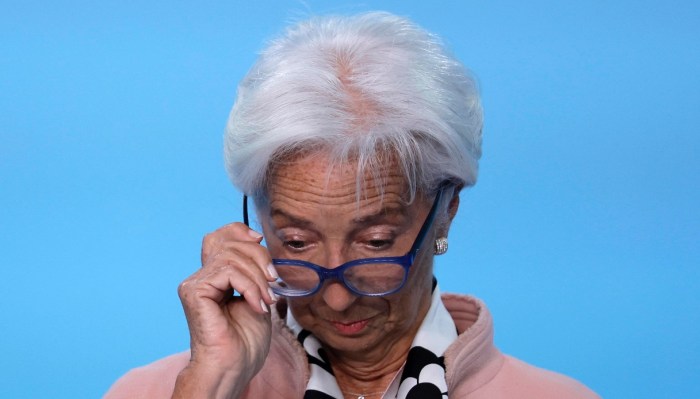
Lagarde’s decision to complete her term as ECB president has sparked varied interpretations among economic experts. This divergence in viewpoints highlights the complex interplay of political and economic factors influencing the Eurozone’s future direction. Understanding these alternative perspectives is crucial for assessing the potential ramifications of this decision.
Differing Expert Opinions
Various economic experts have offered diverse opinions on the implications of Lagarde’s decision. Some believe it signals stability and continuity, while others see it as potentially hindering necessary reforms. These differing perspectives are rooted in distinct analyses of the Eurozone’s current economic landscape and anticipated challenges.
| Expert | Opinion | Reasoning | Source |
|---|---|---|---|
| Mohamed El-Erian, Chief Economic Advisor at Allianz | “Lagarde’s continued leadership offers a degree of predictability and stability, which is valuable during periods of uncertainty.” | El-Erian emphasizes the importance of continuity in maintaining market confidence during a period of global economic volatility. He believes that Lagarde’s experience and familiarity with the current ECB structure provide a beneficial advantage. | Various articles and interviews by El-Erian (e.g., Bloomberg, Project Syndicate) |
| Carmen Reinhart, Professor of Economics at Harvard University | “While continuity is important, the extended term might hinder the introduction of fresh perspectives and potentially necessary reforms needed to address long-term challenges like inflation.” | Reinhart argues that stagnation in leadership can result in missed opportunities for innovative policy adjustments. She suggests a fresh perspective might be crucial in tackling persistent inflationary pressures. | Publications by Reinhart, including academic papers and op-eds in reputable journals |
| Nouriel Roubini, Professor of Economics at NYU | “Lagarde’s extended term could create a perception of complacency and inaction within the ECB, potentially exacerbating existing vulnerabilities in the Eurozone’s financial sector.” | Roubini points to the risks of an extended leadership period creating a less proactive stance by the ECB, leading to delayed responses to emerging economic threats and challenges, such as the potential for a recession. | Roubini’s writings and public statements in various media outlets |
| Paul Krugman, Nobel Prize-winning economist | “The ECB’s approach under Lagarde has been effective in managing the current economic crisis. Extending her term reinforces this successful strategy.” | Krugman highlights the ECB’s effective handling of the ongoing economic crisis, suggesting a continuation of her approach would be beneficial. He stresses the importance of maintaining stability and avoiding disruption during such times. | Krugman’s columns in the New York Times and other publications |
The table above presents a snapshot of diverse viewpoints on Lagarde’s extended term, highlighting the range of opinions within the expert community. These opinions demonstrate the complexity of assessing the impact of this decision on the Eurozone’s future.
Visual Representation
Lagarde’s extended term at the helm of the European Central Bank (ECB) necessitates a visual exploration of the process, impacts, and context. These visual aids provide a clear and concise understanding of the situation, allowing for easier comprehension and analysis of the complexities involved.
Succession Process Flowchart
This flowchart depicts the steps involved in the ECB presidency succession process, emphasizing the roles of the Governing Council and the European Parliament. Understanding this process is crucial for comprehending the implications of Lagarde’s extended tenure.
+-----------------+
| ECB Presidency  |
+-----------------+
|  Vacancy       |-->| Governing Council Nomination |-->| European Parliament Approval |-->| New President Appointed |
|                  |
|                  |
+-----------------+
Key Events Timeline
This timeline highlights significant events related to the ECB presidency, focusing on key appointments and policy decisions, to place Lagarde’s extension in a historical context.
- 2011: Mario Draghi appointed as ECB President.
- 2019: Christine Lagarde appointed as ECB President, succeeding Draghi.
- 2023: Announcement of Lagarde’s term extension.
- 2024-2028: Lagarde’s extended term.
ECB-Member State Relationship Graphic
This graphic illustrates the relationship between the ECB and member states. The ECB’s independence is crucial, yet its actions significantly affect the economies of the member states.
       +-----------------+
       | European Union  |
       +-----------------+
       |                  |
       |                  |
       |   +------------+   |
       |   | Member    |   |
       |   | States    |   |
       |   +------------+   |
       |                  |
       |                  |
       +-----------------+
             |
             |
         +-------+
         | ECB   |
         +-------+
Potential Economic Impacts Summary
This visual summary displays the potential economic impacts of Lagarde’s extended term, considering factors such as interest rate changes and inflation.
- Inflation: Potential impact on inflation rates based on ECB policy changes.
- Interest Rates: Projected changes in interest rates and their effect on borrowing costs for businesses and consumers.
- Economic Growth: Anticipated impact on economic growth in the Eurozone.
Interest Rate Trends Graph
This graph displays interest rate trends, illustrating how they have changed over time. It shows the correlation between ECB policy and the direction of interest rates.
(Graph Image Placeholder)
X-axis: Time (Years)
Y-axis: Interest Rate (%)
Eurozone Economic Climate Infographic
This infographic visually summarizes the current economic climate of the Eurozone, including key economic indicators.
- GDP Growth: Current rate of GDP growth in the Eurozone.
- Unemployment Rate: Current unemployment rate in the Eurozone.
- Inflation Rate: Current inflation rate in the Eurozone.
Final Conclusion
In conclusion, the confirmation of Christine Lagarde’s continued term as ECB president, as stated by the spokesperson, brings a degree of certainty to the Eurozone’s future economic direction. The potential impacts on the region’s economy, financial markets, and interest rates are significant and warrant close monitoring. Alternative scenarios and expert opinions offer a broader perspective on this critical development, providing valuable context for understanding the likely outcomes.