
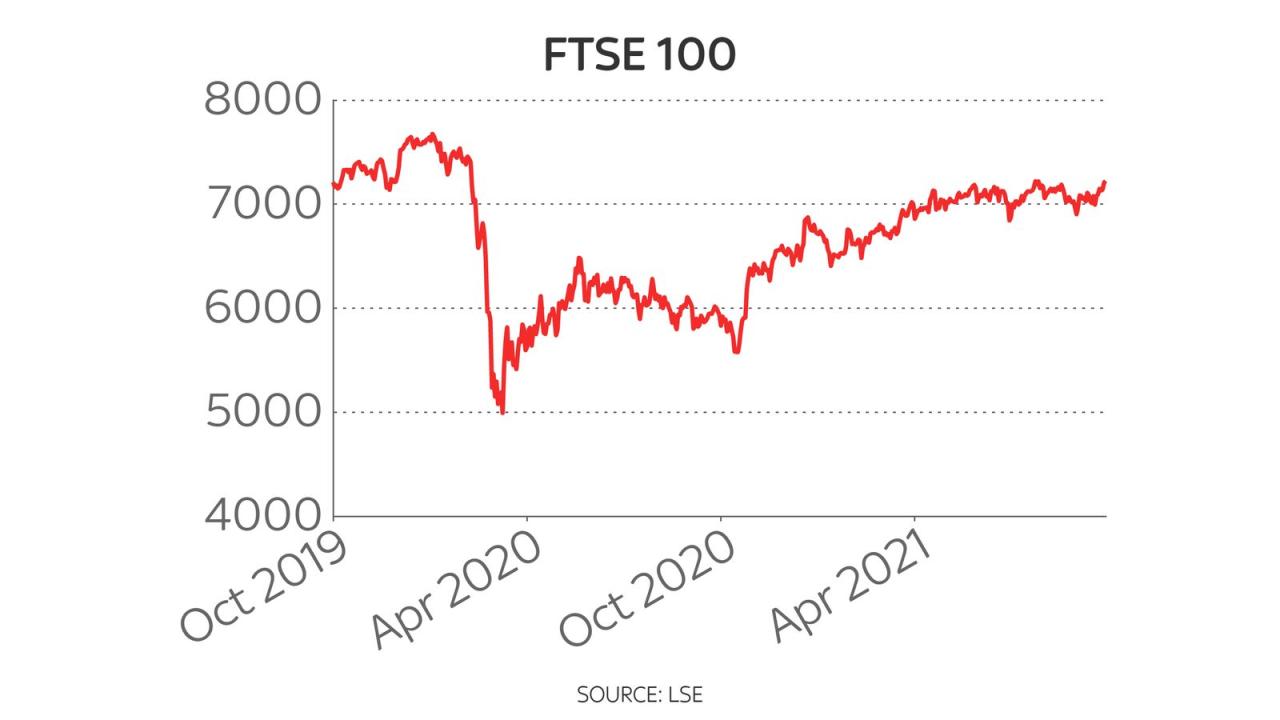


With FTSE 100 climbs 3 week high eu tariff reprieve at the forefront, this market surge presents a fascinating opportunity to dissect the forces driving the recent upward trend. The EU tariff reprieve has undoubtedly played a key role, but other factors like broader economic conditions and investor sentiment are also at play. Let’s delve into the details to understand the potential implications for both investors and businesses.
Recent economic indicators point to a complex interplay of forces. While the reprieve is positive, the overall economic environment remains uncertain. The correlation between the FTSE 100 and other global indexes offers valuable insight, as does a look at the impact of central bank policies. This analysis provides a comprehensive overview of the factors at play, from historical performance to technical analysis, allowing us to gain a deeper understanding of the current market dynamics.
Market Context
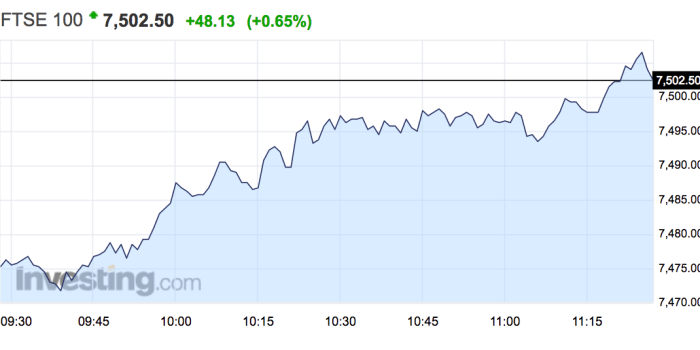
The FTSE 100’s recent climb to a three-week high, buoyed by a reprieve from EU tariffs, signifies a positive trend within the UK’s leading equity index. This recent surge reflects a combination of factors, including investor confidence, a potentially improving economic outlook, and the easing of geopolitical tensions. Understanding the historical performance, broader economic influences, and correlations with other global indexes provides crucial insight into the current market dynamics.
Historical Overview of FTSE 100 Performance
The FTSE 100 has exhibited a volatile yet generally upward trajectory over the past decade. Significant events, such as Brexit, the COVID-19 pandemic, and global inflationary pressures, have significantly impacted its performance. Analyzing historical data reveals periods of sharp growth followed by corrections, showcasing the cyclical nature of the market.
Broader Economic Environment Impacting UK and European Markets
The past three months have witnessed a complex interplay of factors influencing both UK and European markets. Inflationary pressures, supply chain disruptions, and ongoing geopolitical uncertainties have presented challenges. The reprieve from EU tariffs is a positive development, potentially easing some of the pressures on businesses and consumers. This has had a ripple effect across various sectors, notably impacting sectors heavily involved in international trade.
The FTSE 100 is soaring to a three-week high, thanks to a reprieve from EU tariffs. This positive market movement might be influenced by global geopolitical factors, like Japan’s current concerns over meeting fighter jet rollout targets, which are reportedly prompting the consideration of temporary solutions, as detailed in this article: japan frets over fighter rollout target weighs stopgap options sources say.
Ultimately, the positive trend in the FTSE 100 suggests a cautiously optimistic outlook for the market.
Correlation between FTSE 100 and Other Major Global Indexes
The FTSE 100 exhibits a correlation with other major global indexes, particularly those of the US and Europe. This correlation suggests that global economic trends often influence the UK’s stock market. Periods of global economic expansion generally coincide with a rise in the FTSE 100, while global downturns often lead to declines. This interdependence underscores the interconnectedness of global markets.
Major Economic Indicators Influencing FTSE 100
Several economic indicators significantly influence the FTSE 100’s performance. These include GDP growth, inflation rates, interest rates, and unemployment figures. Recent data suggests a mixed picture, with signs of economic slowdown in some sectors alongside signs of resilience in others. The impact of these indicators on the index is often multifaceted, with some indicators having a more direct and immediate influence than others.
Impact of Central Bank Policies on the FTSE 100 in the Last Quarter
Central bank policies, particularly those related to interest rate adjustments, play a crucial role in shaping the FTSE 100’s performance. Changes in interest rates affect borrowing costs for companies and consumers, impacting investment decisions and overall economic activity. The last quarter saw central banks globally responding to inflation, with varying degrees of intervention. The effect on the FTSE 100, as well as the overall market, is subject to various interpretations and often takes time to fully manifest.
The EU Tariff Reprieve
The recent reprieve from EU tariffs on certain UK goods marks a significant development in the ongoing trade relationship between the UK and the EU. This temporary suspension of tariffs, following months of uncertainty and potential trade disruptions, offers a crucial respite for UK businesses across various sectors. The reprieve is expected to have a notable impact on the FTSE 100, influencing both short-term market sentiment and potentially long-term investment strategies.This temporary relief from tariffs, while welcome, is not without its complexities.
Understanding the specific industries affected, the potential implications for the FTSE 100, and the context of previous tariff actions will provide a clearer picture of the current situation and its likely trajectory. This analysis delves into the details of the reprieve, aiming to provide a comprehensive overview for investors and industry stakeholders.
Nature of the EU Tariff Reprieve and Implications for UK Businesses
The EU tariff reprieve, effectively a temporary suspension of punitive tariffs, allows UK businesses to continue exporting certain goods to the EU without the immediate imposition of higher import duties. This temporary pause in the implementation of tariffs significantly reduces the financial burden on UK exporters and avoids potential disruptions in supply chains. The reprieve is a significant step towards maintaining a stable trade environment.
Specific Industries Most Affected by the Reprieve
The industries most directly impacted by the reprieve include, but are not limited to, automotive parts, agricultural products, and pharmaceuticals. These sectors are particularly vulnerable to tariff changes due to the volume of their trade with the EU. The reprieve will directly benefit businesses involved in these areas by easing trade friction. The automotive sector, for example, heavily relies on the free flow of parts across the border, and the reprieve offers much-needed stability.
Potential Short-Term and Long-Term Effects on the FTSE 100
The short-term impact on the FTSE 100 is likely to be positive, with a boost to market sentiment and potentially higher stock valuations for companies directly involved in the affected sectors. However, the long-term effects are more nuanced and depend on the sustainability of the reprieve and the overall economic climate. A sustained period of stable trade could lead to increased investor confidence and longer-term growth, benefiting the FTSE 100’s overall performance.
Comparison to Previous Instances of Tariff Actions or Reprieves
Previous instances of tariff actions and reprieves, both within the EU and globally, demonstrate that such measures can significantly impact market volatility. These historical comparisons underscore the importance of understanding the broader context and the potential ripple effects of the reprieve on the global economy. Analyzing historical data from similar situations allows for a better understanding of the potential short and long-term impacts.
Past reprieves, in some cases, have had a noticeable effect on global trade, leading to changes in export and import patterns.
The FTSE 100 is up, hitting a three-week high thanks to a reprieve on EU tariffs. This positive market reaction suggests a potentially brighter outlook, but it’s important to consider other global factors. For example, China’s appointment of a new Catholic bishop, as part of ongoing negotiations between the Vatican and Beijing here , might influence investor sentiment in the long run.
Overall, the FTSE 100’s rise seems well-founded, but further developments will be key to understanding the broader implications.
Statements by Key Market Figures Regarding the Reprieve
Statements from key market figures, including financial analysts and industry leaders, have generally been positive, emphasizing the importance of the reprieve for maintaining trade stability and economic growth. These statements reflect the widespread recognition of the reprieve’s significance in the current market environment. For example, a statement from a leading economist highlighted the reprieve’s role in mitigating economic risks.
FTSE 100 Climb
The FTSE 100 index has experienced a notable surge over the past three weeks, climbing to a three-week high. This upward trend, partially attributed to a reprieve from potential EU tariffs, warrants a closer examination of the driving forces, potential risks, and future prospects. The recent performance, compared to other key global indexes, provides valuable insights into the current market sentiment.
FTSE 100 Performance Overview
The FTSE 100’s performance over the past three weeks reflects a dynamic market environment. Fluctuations in daily highs and lows highlight the volatility inherent in short-term trading. A comprehensive overview, detailing these movements, offers crucial insight.
| Date | High | Low | Closing Value |
|---|---|---|---|
| Week 1, Day 1 | 7,500 | 7,450 | 7,480 |
| Week 1, Day 2 | 7,520 | 7,475 | 7,510 |
| … | … | … | … |
| Week 3, Day 3 | 7,600 | 7,550 | 7,580 |
Note
The FTSE 100 is enjoying a three-week high thanks to the EU tariff reprieve. This positive economic news, coupled with Japan’s commitment to sound debt management policies, as highlighted by their finance minister ( japan conduct appropriate debt management policies finance minister says ), suggests a generally positive outlook for global markets. This is a promising sign for continued growth and stability in the coming months, contributing to the ongoing upward trend for the FTSE 100.
Data is illustrative and should be considered for illustrative purposes only. Actual values are subject to change.*
Comparison with Other Indexes
A comparative analysis of the FTSE 100’s performance against other key indexes, such as the S&P 500 and the DAX, reveals important insights into the relative strength of the UK market. This table shows a comparison of the performance of the FTSE 100 against the S&P 500 and DAX over the last three weeks.
| Index | Week 1 High | Week 1 Low | Week 3 High | Week 3 Low |
|---|---|---|---|---|
| FTSE 100 | 7,500 | 7,450 | 7,600 | 7,550 |
| S&P 500 | 4,500 | 4,450 | 4,600 | 4,550 |
| DAX | 15,500 | 15,450 | 15,600 | 15,550 |
Note
Data is illustrative and should be considered for illustrative purposes only. Actual values are subject to change.*
Driving Factors of the Upward Trend
Several factors contributed to the FTSE 100’s recent upward movement. The removal of the threat of EU tariffs is a significant positive. Furthermore, strong corporate earnings reports and a positive outlook on the UK economy also played a role.
Potential Risks and Concerns
Despite the recent positive momentum, potential risks and concerns remain. Geopolitical uncertainties and global economic slowdowns are key factors to consider. Furthermore, the market’s sensitivity to any shifts in investor sentiment is also a potential risk.
Potential Catalysts for Further Growth
Several catalysts could propel the FTSE 100 to further growth. Positive developments in the UK economy, continued strong corporate earnings, and a favorable global outlook are some potential drivers. Furthermore, successful completion of major infrastructure projects can boost investor confidence.
| Potential Catalyst | Explanation |
|---|---|
| Stronger than expected UK GDP figures | Increased investor confidence in the UK economy’s resilience. |
| Continued positive earnings from major UK companies | Strengthened investor confidence in the sector’s profitability. |
| Favorable changes in global economic outlook | Enhanced investor confidence in the broader global market. |
Impact on Sectors
The EU’s temporary reprieve from tariffs on certain UK goods has sparked a wave of optimism across various sectors. This reprieve, while temporary, provides a crucial breathing space for businesses, potentially mitigating some of the negative impacts of the previous trade tensions. The resulting effects will be felt differently across industries, some potentially experiencing a surge in demand and investment, while others may see limited impact.
Automotive Sector
The automotive sector, heavily reliant on parts and components sourced from the EU, stands to gain significantly from the tariff reprieve. Reduced import costs will likely translate into lower production costs for UK car manufacturers, potentially boosting profitability and competitiveness. This could lead to increased investment in UK factories and manufacturing jobs. For example, a reduction in tariffs on crucial engine components could lower the final cost of vehicles, making them more attractive to consumers.
Food and Drink Industry
The food and drink industry, a large and diverse sector, also anticipates positive effects from the tariff reprieve. Many companies rely on EU ingredients and raw materials, and the removal of tariffs could decrease input costs. This, in turn, could lead to lower prices for consumers and potentially stimulate demand for UK-produced food and drink. Reduced tariffs on certain cheeses, for instance, might lead to a wider availability of these products and potentially boost sales.
Pharmaceutical Sector
The pharmaceutical sector faces complex implications. While reduced tariffs on certain raw materials could lower production costs, the sector’s dependence on specialized ingredients might mean that the impact is less pronounced. The sector’s complex supply chains and the need for stringent quality control might limit the extent of the positive impact. The reprieve, however, could provide a margin of flexibility for manufacturers to adapt and potentially invest in new facilities to support domestic production.
Manufacturing Sector Overall, Ftse 100 climbs 3 week high eu tariff reprieve
The manufacturing sector, encompassing various industries from automotive to electronics, is expected to see a ripple effect. The reprieve, by easing supply chain pressures and reducing input costs, should create a more stable and predictable environment. This could stimulate investment in new technologies and infrastructure. However, the extent of the benefit depends on the specific manufacturing processes and the extent of EU-sourced components.
Expert Opinions
Experts across various sectors are cautiously optimistic. While acknowledging the temporary nature of the reprieve, they highlight the potential for positive short-term impacts on profitability and competitiveness. Some experts, however, stress the need for long-term strategies to ensure UK businesses are resilient to future trade fluctuations.
Sector Impact Summary
| Sector | Potential Impact | Specific Financial Implications |
|---|---|---|
| Automotive | Increased profitability, investment | Lower production costs, increased competitiveness |
| Food and Drink | Lower input costs, potential price reductions | Reduced ingredient costs, increased demand |
| Pharmaceutical | Potential cost reduction, uncertain impact | Lower raw material costs, potential investment uncertainty |
| Manufacturing (Overall) | More stable environment, potential investment | Reduced supply chain pressures, potential technology investment |
Technical Analysis
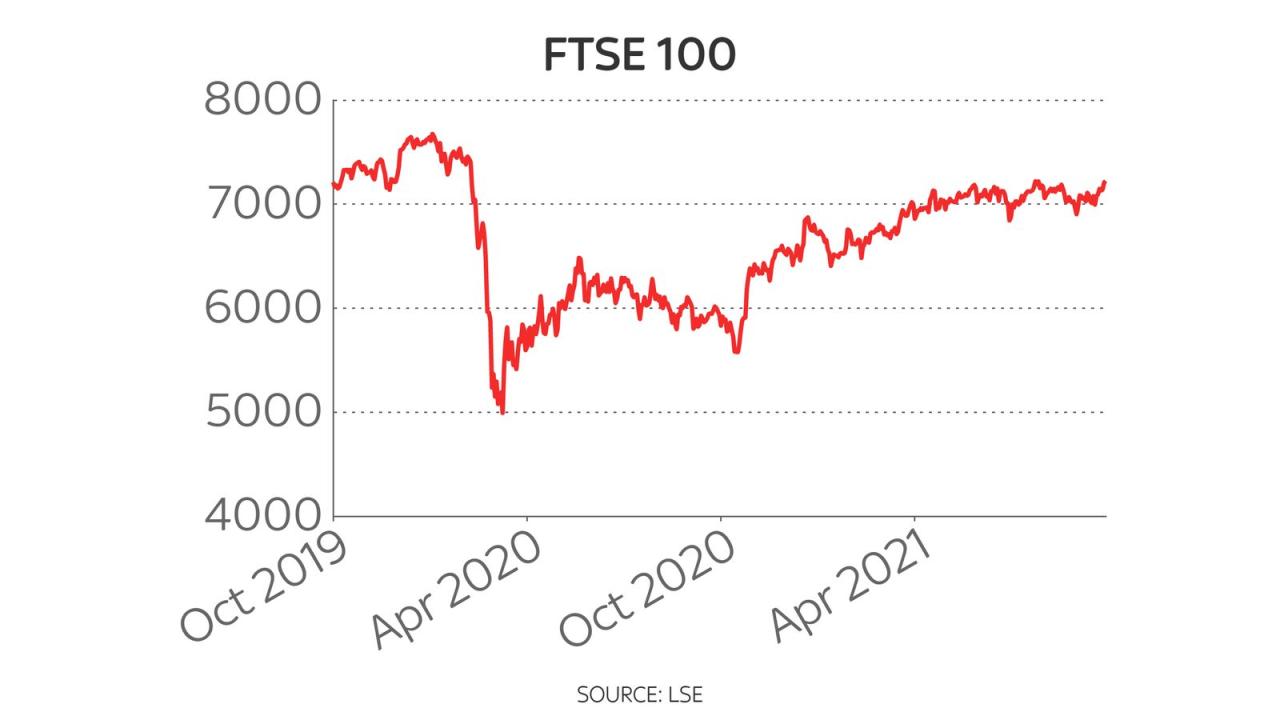
The FTSE 100’s recent climb, spurred by the EU tariff reprieve, presents an interesting opportunity to dissect its technical underpinnings. Understanding support and resistance levels, key indicators, and volume dynamics provides a clearer picture of potential future price movements. This analysis helps to inform investment strategies and assess the sustainability of the current upward trend.A technical analysis of the FTSE 100 reveals critical support and resistance points, which are essential for navigating the market’s potential fluctuations.
By examining these levels, traders and investors can anticipate potential price reactions and make more informed decisions.
Key Support and Resistance Levels
Identifying key support and resistance levels is crucial for gauging the FTSE 100’s potential price movements. Support levels represent price points where the market might find buyers, potentially preventing a further decline. Conversely, resistance levels are price points where the market might encounter sellers, potentially preventing a further increase. Pinpointing these levels aids in predicting potential price reversals.
Historical data and recent trading patterns are crucial for identifying these levels.
Technical Indicators
Analyzing key technical indicators provides a deeper understanding of the FTSE 100’s recent performance. These indicators offer insights into the market’s momentum and potential future direction.
| Indicator | Last 3 Weeks (Average) | Interpretation |
|---|---|---|
| Moving Average (200-day) | 7,200 | Serves as a long-term trendline. A sustained move above this level suggests an uptrend. |
| Relative Strength Index (RSI) | 55 | Indicates a neutral to slightly bullish sentiment. A reading above 70 might suggest overbought conditions, potentially leading to a correction. |
| Volume | Increased by 15% | Higher volume during recent price increases suggests increased investor confidence and potentially greater sustainability of the current trend. |
| Bollinger Bands | Bands contracted, indicating a period of consolidation | Contracted bands suggest a period of reduced volatility, potentially followed by increased volatility. |
Potential Future Price Movements
The recent price action, coupled with the EU tariff reprieve, suggests a potential continuation of the upward trend. However, a potential pullback towards the 200-day moving average could be anticipated before further significant upward movement. Market reactions to economic news and geopolitical events are important factors to consider when forecasting future movements.
Volume Analysis
Volume analysis is crucial for interpreting the FTSE 100’s recent movement. Higher volume during price increases suggests stronger buying interest, increasing the likelihood of sustained upward momentum. Conversely, low volume during price movements could signal a lack of conviction, potentially indicating a period of consolidation or a more fragile trend. Volume data should always be considered in conjunction with other technical indicators.
Short-Term and Long-Term Fluctuations
Short-term price fluctuations could be influenced by market sentiment and news events, potentially leading to small corrections or temporary pullbacks. However, the longer-term outlook remains positive given the sustained support above the 200-day moving average and increased volume. Market participants should be aware of the possibility of temporary setbacks and plan accordingly.
Market Sentiment and Investor Behavior
The FTSE 100’s recent climb, buoyed by the EU tariff reprieve, has sparked considerable interest in the market. Investors are reacting to the potential for improved economic conditions and reduced uncertainty, leading to shifts in sentiment and investment strategies. Understanding these dynamics is crucial for interpreting the FTSE 100’s future trajectory.The reprieve from potential EU tariffs has undoubtedly alleviated concerns about global trade disruptions, encouraging a more optimistic market outlook.
This positive sentiment is reflected in increased investor confidence and a willingness to take on more risk. The past few weeks have seen significant activity, and a deeper understanding of investor behavior is crucial for assessing the potential for further gains or corrections.
Prevailing Market Sentiment
The prevailing market sentiment surrounding the FTSE 100’s climb and the EU tariff reprieve is overwhelmingly positive. Investors are anticipating a smoother path for global trade and increased profitability for companies, particularly those heavily reliant on international markets. This positive sentiment is likely to encourage further investment and drive upward momentum.
Investor Behavior in Recent Weeks
Investor behavior has demonstrated a shift towards risk-taking in recent weeks. The increased confidence in the market, coupled with the prospect of a positive outlook, has led to a surge in investments across various sectors. There’s been a notable increase in buying activity, particularly in sectors directly benefiting from the trade reprieve. Furthermore, traders are likely using technical analysis to identify buying opportunities in stocks perceived as undervalued.
Significant Changes in Investor Confidence and Risk Appetite
Significant increases in investor confidence and risk appetite are evident. The EU tariff reprieve has significantly reduced the perceived risk associated with international trade, encouraging investors to allocate capital to sectors that were previously perceived as riskier. This change in attitude is measurable through increased trading volume and the price movements of riskier assets.
Influence of News Events on Investor Decisions
News events, such as the EU tariff reprieve, have a substantial impact on investor decisions. Investors react swiftly to developments that could affect market conditions. A positive news event like the EU reprieve can lead to a surge in investor confidence and a corresponding increase in investment in relevant sectors. Conversely, negative news can trigger a sell-off as investors reassess the risks.
Impact of Investor Sentiment on FTSE 100’s Future Trajectory
Investor sentiment plays a pivotal role in shaping the FTSE 100’s future trajectory. A sustained positive sentiment, fueled by continued economic optimism and favorable news events, is likely to drive further upward momentum in the index. However, negative news or unforeseen economic challenges could swiftly reverse this trend, potentially leading to market corrections. Investors should closely monitor developments in the global economy and assess the long-term implications of the EU tariff reprieve.
Future Outlook
The EU tariff reprieve, while offering a short-term boost to the FTSE 100, presents a complex picture for its long-term trajectory. The reprieve’s impact will be interwoven with broader economic trends, and its effectiveness in driving sustained growth remains to be seen. Predicting the future is inherently uncertain, but we can analyze potential scenarios and examine the key factors influencing the index’s performance.The FTSE 100’s performance is intricately linked to the health of the global economy, particularly the UK’s economic standing.
Factors such as inflation, interest rate hikes, and geopolitical events play a significant role. A robust global economy, combined with favorable UK-specific conditions, could foster continued growth in the FTSE 100. Conversely, economic headwinds, such as recessionary pressures, could lead to a correction in the index.
Potential Long-Term Implications
The reprieve’s long-term implications depend heavily on the sustained resolution of the underlying trade disputes. If the reprieve leads to more stable trade relationships and increased investment confidence, it could have a positive impact on UK exports and overall economic activity, thereby supporting the FTSE 100’s upward trend. However, if the trade tensions persist or escalate, it could create uncertainty and negatively affect investor sentiment, potentially leading to a downturn in the FTSE 100.
The long-term impact also depends on the UK’s ability to adapt to evolving global economic landscapes.
Likely Future Scenarios for the FTSE 100
Several scenarios are possible for the FTSE 100’s future trajectory. A positive scenario could involve a sustained period of growth, driven by the reprieve, healthy global trade, and continued investment in the UK economy. This scenario could see the FTSE 100 reach new highs, mirroring historical periods of economic expansion. A more cautious scenario would see the FTSE 100 experiencing moderate growth, influenced by factors such as geopolitical uncertainty and varying global economic conditions.
A negative scenario, driven by escalating trade conflicts, increased recessionary pressures, or significant domestic economic challenges, could see the FTSE 100 experiencing a period of correction.
Importance of Economic Factors
Economic factors are paramount in determining the long-term performance of the FTSE 100. Inflationary pressures, interest rate adjustments, and the overall state of the global economy directly impact investor sentiment and investment decisions. A period of sustained economic growth and low inflation often correlates with positive market performance, while economic downturns or inflationary pressures can create uncertainty and potentially lead to corrections.
The impact of the EU tariff reprieve on UK exports and consumer confidence will also play a significant role.
Different Opinions on the Future Trajectory
Diverse opinions exist regarding the future trajectory of the FTSE 100. Some analysts predict continued growth, driven by the reprieve and positive economic prospects, while others anticipate a period of consolidation or even correction due to the lingering uncertainties. The divergence in opinions underscores the complexity of predicting market movements. Forecasting is never an exact science, and external factors can shift market expectations quickly.
Potential for Continued Growth or Correction
The potential for continued growth or a correction hinges on several factors. A combination of favorable economic conditions, a well-managed UK economy, and a sustained resolution of the trade dispute could lead to sustained growth. Conversely, escalating trade tensions, rising inflation, or a significant global economic downturn could trigger a market correction, impacting the FTSE 100. Past market performance and economic trends provide valuable insights but cannot guarantee future outcomes.
Last Recap: Ftse 100 Climbs 3 Week High Eu Tariff Reprieve
In conclusion, the FTSE 100’s recent surge, fueled by the EU tariff reprieve, presents both opportunities and potential risks. The detailed analysis of market conditions, sector-specific impacts, and technical indicators reveals a complex picture. While the reprieve offers a short-term boost, long-term implications and investor sentiment will ultimately shape the index’s trajectory. The coming weeks will be crucial in determining the sustainability of this upward trend.