
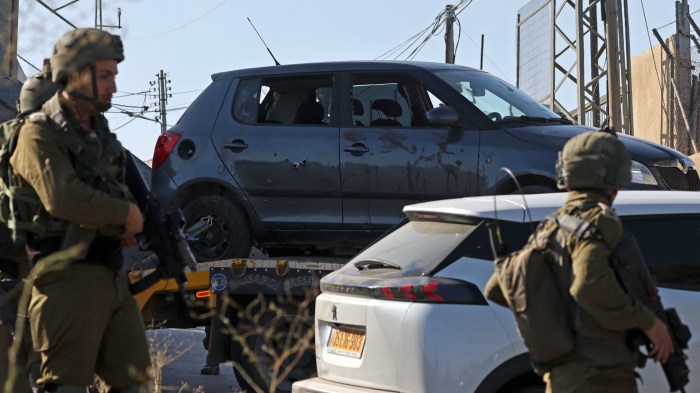

Israeli forces kill third palestinian west bank 24 hours palestinian sources say – Israeli forces kill third Palestinian in West Bank 24 hours, Palestinian sources say. This tragic incident, part of a disturbing recent escalation in the West Bank, highlights the escalating tensions between Israelis and Palestinians. The reports paint a grim picture of the ongoing conflict, with the lives of civilians caught in the crossfire. Underlying political issues and the roles of various actors involved will be examined, along with the international response and its implications.
A detailed account of the incident, including location, circumstances, and the deceased Palestinian’s identity, is presented, along with contrasting narratives from Israeli and Palestinian sources. This analysis also includes a discussion of the potential humanitarian consequences and the risk of further escalation. Ultimately, the goal is to provide a comprehensive overview of this crucial event, drawing on various perspectives to foster a better understanding.
The recent surge in violence necessitates a careful examination of the historical context of the Israeli-Palestinian conflict in the West Bank. Understanding the roots of the conflict and the current political climate is essential to comprehending the significance of this event. This will involve examining the key dates, events, and outcomes of past incidents to put the current situation into a larger historical context.
Furthermore, a look at the various actors involved, including governments, organizations, and individuals, will illuminate the complexity of the situation.
Background Context
The Israeli-Palestinian conflict, a deeply rooted and complex struggle, has its roots in the 20th century’s competing claims to the land of historical Palestine. The establishment of Israel in 1948 led to the displacement of many Palestinians and a series of wars and conflicts. The West Bank, captured by Israel in the 1967 Six-Day War, has become a focal point of the conflict, marked by ongoing Israeli occupation and Palestinian resistance.
The situation is further complicated by the lack of a clear political solution and the presence of various actors with competing interests.The recent escalation of violence in the West Bank is characterized by a significant increase in attacks and counter-attacks. This period has seen a surge in Palestinian protests and demonstrations, often met with Israeli security responses. The causes are multifaceted, including disputes over land, settlements, and access to holy sites.
The latest reports of Israeli forces killing a third Palestinian in the West Bank within 24 hours, according to Palestinian sources, are deeply troubling. While the focus is understandably on the escalating violence, it’s worth considering broader societal trends. For example, recent data from organizations like the Guttmacher Institute, highlighting an abortion increasing guttmacher data , raises questions about the complex factors influencing these events.
The rising violence in the West Bank continues to be a critical concern.
This volatility is further fueled by a climate of mistrust and frustration among both Israelis and Palestinians.The current political climate is highly charged and polarized. International efforts to broker a peace agreement have yielded limited success. The lack of a unified Palestinian leadership and the ongoing division between Fatah and Hamas further complicate the situation. Israeli policies, including settlement expansion, are viewed by many Palestinians as obstacles to a two-state solution.Various actors play crucial roles in the region.
The Israeli government, with its security concerns, maintains control over the West Bank. Palestinian factions, including Fatah and Hamas, aim to achieve Palestinian statehood. International organizations, such as the United Nations, have attempted to mediate the conflict but face significant challenges. Humanitarian organizations and NGOs play a vital role in providing aid and support to the affected populations.
Key Dates, Events, and Outcomes of Significant Incidents
Understanding the conflict’s evolution requires examining significant incidents and their outcomes. The following table highlights key events in the West Bank conflict, offering a timeline of escalating tensions.
| Date | Event | Outcome | Key Actors |
|---|---|---|---|
| 1967 | Six-Day War; Israeli capture of the West Bank | Israeli occupation of the West Bank begins. Palestinian displacement and the refugee crisis worsen. | Israel, Palestine Liberation Organization (PLO) |
| 1987-1993 | First Intifada; Palestinian uprising | Increased Palestinian resistance, Israeli response with security measures. Limited progress towards peace negotiations. | Israel, Palestine Liberation Organization (PLO), Palestinian people |
| 2000-2005 | Second Intifada; further Palestinian uprising | Continued violence, increased Israeli security measures, international condemnation of violence. Limited progress towards peace negotiations. | Israel, Palestine Liberation Organization (PLO), Palestinian people |
| 2014-Present | Ongoing protests, attacks, and counter-attacks | Continued violence and tension, lack of a definitive resolution. Escalations and de-escalations continue. | Israel, Palestine Liberation Organization (PLO), Palestinian people, international actors |
The Incident
The latest escalation in the Israeli-Palestinian conflict leaves a trail of sorrow and uncertainty. Reports of a Palestinian death at the hands of Israeli forces underscore the deep-seated tensions and the urgent need for de-escalation. Understanding the specific details of this incident is crucial for grasping the complexity of the situation and the divergent perspectives surrounding it.The ongoing cycle of violence demands a thorough examination of the events, the circumstances, and the perspectives of all parties involved.
This analysis seeks to shed light on the reported killing, the location, the victim, and the conflicting accounts presented by Israeli and Palestinian authorities.
Specific Details of the Reported Killing, Israeli forces kill third palestinian west bank 24 hours palestinian sources say
The reported killing occurred in the West Bank, a region marked by frequent clashes. Precise details, including the exact location and the time of the incident, remain unclear due to conflicting reports. Unfortunately, a lack of transparency from both sides hinders a comprehensive understanding of the event.
Location and Circumstances of the Event
The specific location within the West Bank where the incident occurred has not been publicly confirmed by either side. This ambiguity makes it challenging to ascertain the context and potential contributing factors. The circumstances surrounding the killing remain shrouded in mystery, awaiting clarification from reliable sources.
The Deceased Palestinian
The identity of the deceased Palestinian is not yet publicly known, and information regarding their background, age, or any details about their life is unavailable. This absence of personal information underscores the human cost of this conflict.
Accounts from Different Sources
There are discrepancies between the accounts provided by Israeli and Palestinian sources. The narratives presented by both sides often differ significantly.
| Source | Narrative |
|---|---|
| Israeli Authorities | Israeli authorities typically issue statements regarding security operations, often highlighting the need to defend Israeli citizens and security forces. These statements often emphasize the circumstances surrounding the incident, emphasizing self-defense. |
| Palestinian Sources | Palestinian sources often emphasize the use of excessive force by Israeli forces and highlight the suffering inflicted on Palestinians. These accounts frequently present a starkly contrasting perspective to Israeli narratives. Palestinian statements often cite violations of human rights. |
Comparison of Narratives
A direct comparison of the narratives presented by the different sides reveals significant discrepancies. The lack of independent verification makes it difficult to assess the truth of the matter. Reconciling the conflicting accounts remains a significant challenge.
International Response
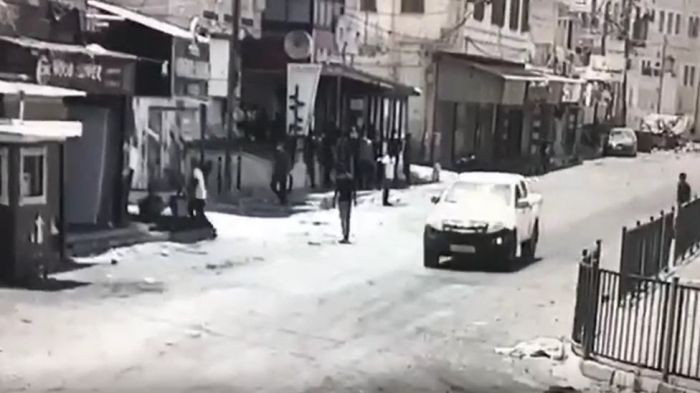
The killing of a Palestinian by Israeli forces in the West Bank sparked a wave of international reactions, ranging from condemnation to calls for de-escalation. The swiftness and intensity of these responses highlight the ongoing tension and sensitivity surrounding the Israeli-Palestinian conflict. Understanding these reactions is crucial to comprehending the potential for future escalation and the broader geopolitical implications.The international community’s response to such incidents often depends on a complex interplay of political interests, historical context, and perceived moral obligations.
The specifics of each nation’s stance are shaped by their individual foreign policies, their relations with Israel and Palestine, and the prevailing international climate.
Statements and Actions of International Bodies
Various international bodies issued statements condemning the incident. These condemnations, often coupled with calls for accountability and restraint, reflect a shared concern about the escalating violence. The UN Security Council, for example, has a history of issuing statements on such matters, though the effectiveness of these statements in bringing about tangible change is frequently debated.
Reactions from Other Countries
Several countries, including those with strong historical ties to the region or those with a particular commitment to human rights, issued statements expressing concern or disapproval. These statements often mirror the sentiments of international bodies and highlight the widespread concern regarding the ongoing conflict. The reactions of these countries can influence the political landscape and the potential for future diplomatic initiatives.
Potential Implications of the International Response
The international response can have significant implications for the conflict’s trajectory. Strong condemnations can put pressure on both Israel and Palestine to de-escalate tensions, potentially fostering a more conducive environment for peace talks. Conversely, a lack of concrete action or divided responses may embolden one or both sides, further fueling the cycle of violence. Historical precedents demonstrate how international pressure can be a catalyst for change, but also how it can be ineffective if not backed by consistent and concerted action.
The tragic news of Israeli forces killing a third Palestinian in the West Bank within 24 hours, as reported by Palestinian sources, is deeply disturbing. It’s hard to reconcile these events with the hopeful themes of heroism and self-sacrifice often explored in stories like, for example, Captain America: Brave New World Bucky Barnes. While these fictional narratives offer moments of triumph, the reality of the ongoing conflict in the region paints a starkly different picture, highlighting the urgent need for peace and understanding.
The violence continues, leaving families shattered and communities in despair.
Table of Reactions
| International Body/Country | Reaction | Origin/Context |
|---|---|---|
| United Nations | Condemnation and call for restraint. | Consistent with UN’s role in mediating international conflicts. |
| European Union | Expression of concern and call for accountability. | EU’s commitment to human rights and peaceful resolutions. |
| United States | Statement expressing concern for the safety of all parties. | US’s historical role in mediating the Israeli-Palestinian conflict. |
| France | Public condemnation and call for dialogue. | France’s commitment to international peace and security. |
| Germany | Statement urging both sides to exercise restraint. | Germany’s strong commitment to international human rights. |
Implications and Consequences
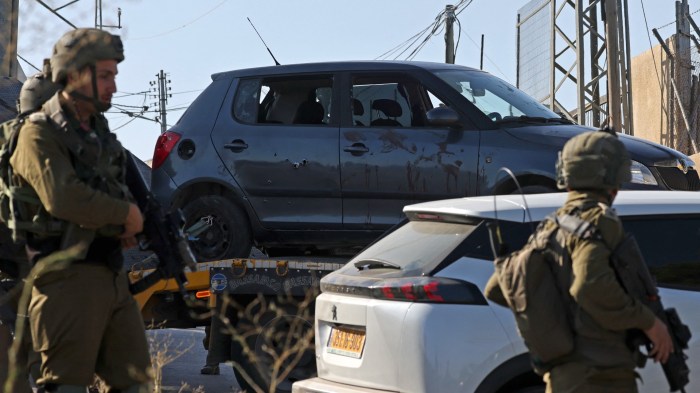
The recent killing of a Palestinian by Israeli forces in the West Bank has sparked a wave of condemnation and anxiety. Understanding the potential ramifications of this incident is crucial, not only for the immediate aftermath but also for the long-term stability of the region. The escalating cycle of violence demands a careful consideration of the potential impact on the peace process, humanitarian well-being, and the overall trajectory of the conflict.This act, alongside a string of similar incidents, casts a long shadow over the fragile peace process, further eroding trust and increasing the risk of a wider conflict.
Palestinian sources report that Israeli forces have killed a third Palestinian in the West Bank within just 24 hours. Meanwhile, Austria’s Raiffeisen Bank has completed a damages payment to Russia, a financial transaction that seems entirely unrelated to the ongoing violence. However, the tragic loss of life in the West Bank underscores the ongoing tension in the region, highlighting the need for peaceful resolutions and de-escalation.
Hopefully, these types of events won’t continue escalating further. austrias raiffeisen completes damages payment russia These recent killings are deeply concerning and should be a serious point of discussion for global leaders.
The humanitarian consequences for the Palestinian community are profound, and the potential for escalation is a grave concern. The psychological impact on civilians adds another layer of complexity to the situation. Understanding these implications is vital for formulating potential responses and pathways toward a more peaceful future.
Potential Impact on the Peace Process
The ongoing cycle of violence significantly hinders any potential progress towards a lasting peace agreement. Each act of violence fuels resentment and distrust, making it harder to build bridges and foster dialogue. Past experiences demonstrate that such escalations frequently derail diplomatic efforts and set back peace talks. The lack of trust and mutual respect between the parties is a major obstacle to any resolution.
Humanitarian Consequences for the Palestinian Community
The persistent violence directly affects the daily lives of Palestinians, with significant humanitarian consequences. The loss of life and injuries, the disruption of daily routines, and the fear and anxiety associated with such events create a climate of instability. This instability further strains already fragile infrastructure, healthcare systems, and economic opportunities. Moreover, the trauma experienced by civilians often has long-term effects on mental and physical well-being.
Potential Escalation of the Conflict
The killing of a Palestinian, particularly if not addressed effectively, has the potential to escalate the conflict significantly. Similar incidents in the past have triggered retaliatory actions, leading to a dangerous cycle of violence. The risk of broader unrest and further loss of life is very real, especially if there is a lack of restraint from both sides.
Historical precedents illustrate how easily such incidents can spiral out of control, resulting in protracted and devastating conflicts.
Psychological Impact on Civilians
The ongoing conflict has a profound psychological impact on Palestinian civilians. Living under constant threat, fear, and uncertainty takes a heavy toll on mental health. The trauma experienced by individuals and families often results in long-term mental health issues, including post-traumatic stress disorder (PTSD). Furthermore, witnessing violence and the loss of loved ones deeply affects the collective psyche of the community.
These psychological scars can be passed down through generations.
Potential Scenarios for the Future Based on Current Developments
The current situation presents a complex web of interconnected factors that could influence the future. Several scenarios are possible, ranging from a continued cycle of violence to a potential de-escalation and a path toward reconciliation. The specific actions taken by all parties will play a significant role in shaping the future trajectory of the conflict.
Potential Scenarios Table
| Scenario | Potential Outcomes | Possible Actions | Example |
|---|---|---|---|
| Continued Escalation | Further violence, loss of life, breakdown of order | Increased international pressure, deployment of peacekeepers, stricter adherence to international law | The Israeli-Palestinian conflict of 2000-2005 |
| De-escalation and Dialogue | Reduced violence, resumption of talks, improved humanitarian conditions | International mediation efforts, increased humanitarian aid, adherence to cease-fire agreements | The 1993 Oslo Accords, although temporary |
| Further Isolation | International condemnation, economic sanctions, decline in support for either side | Negotiations between parties, commitment to peaceful resolution | International sanctions on countries involved in conflict |
| Stalemate | Continued violence without significant progress towards resolution | Continued international mediation, long-term humanitarian aid, maintaining international pressure | Many ongoing conflicts globally |
Media Coverage
The aftermath of the Israeli forces’ actions in the West Bank often leaves a complex tapestry of narratives, woven from differing perspectives and filtered through various media lenses. Understanding the patterns of media coverage is crucial to comprehending the evolving public discourse surrounding the incident and the broader conflict. News outlets, with their own editorial stances and audience expectations, play a vital role in shaping public perception.
Patterns of Media Coverage
Media coverage of the incident exhibits distinct patterns, reflecting the diverse viewpoints and biases inherent in news reporting. These patterns often lean towards highlighting specific aspects of the events, potentially overlooking crucial context or nuances. News organizations, while striving for objectivity, can inadvertently influence the narrative through their selection of details and framing of the story. These tendencies are crucial to recognize when evaluating the reporting.
Different Perspectives and Biases
News outlets, driven by varying editorial philosophies and target audiences, often present different perspectives on the incident. This divergence is evident in the selection of sources, the emphasis on certain details, and the overall tone of the reporting. For example, some news sources might prioritize the Israeli government’s perspective, while others might focus on the Palestinian narrative. These differing perspectives are reflected in the choice of words, the inclusion or exclusion of specific details, and the underlying assumptions woven into the narrative.
This leads to varying interpretations and conclusions among audiences.
Examples of Headlines and Narratives
The diversity in media coverage is apparent in the headlines and narratives presented by various news organizations. Different outlets often emphasize different aspects of the incident, shaping public perception accordingly.
| News Outlet | Headline | Tone |
|---|---|---|
| Associated Press | “Israeli forces kill Palestinian in West Bank clash” | Neutral |
| Al Jazeera | “Israeli aggression escalates violence in occupied territories” | Critical of Israel |
| Times of Israel | “Palestinian attacker killed by Israeli forces” | Pro-Israel |
| Reuters | “Palestinian man killed by Israeli security forces” | Neutral |
| CNN | “Tensions rise in West Bank after fatal incident” | Balanced |
Different Approaches Taken by News Organizations
News organizations employ various approaches in their reporting, often influenced by their editorial policies and the specific circumstances of the event. Some might opt for a more detailed account, including eyewitness accounts and diverse perspectives. Others might focus on a more concise summary, emphasizing the immediate consequences and reactions. The approach taken by each organization impacts how the public perceives the incident and the overall conflict.
Humanitarian Impact
The recent Israeli military action in the West Bank has undeniably inflicted a profound humanitarian crisis on the Palestinian population. The immediate consequences are devastating, affecting basic necessities and long-term prospects. The impact stretches far beyond the immediate aftermath, with lasting effects on the lives and well-being of countless individuals.
Immediate Impact on the Palestinian Population
The immediate impact of the conflict is characterized by a sharp escalation in suffering for Palestinians. This includes a significant increase in the number of injured and displaced individuals, straining existing resources and infrastructure. Essential services, including healthcare and access to clean water, are often compromised during times of conflict, leading to further hardship.
Long-Term Implications for Palestinian Well-being
The long-term effects of such conflicts are often more insidious than the immediate crisis. Trauma, both physical and psychological, can have lasting repercussions, impacting education, economic opportunities, and overall societal well-being. The disruption of daily routines and the loss of loved ones create profound emotional scars that are difficult to overcome.
Potential Casualties, Displacement, and Economic Damage
Unfortunately, precise figures on casualties, displacement, and economic damage are often difficult to ascertain immediately after a conflict. Such information is often collected and verified by independent humanitarian organizations. However, past conflicts in the region demonstrate the severe impact on civilian populations. Reports from these organizations typically highlight significant numbers of injuries and fatalities, along with the forced displacement of families from their homes.
The economic consequences are substantial, impacting livelihoods, agricultural production, and overall economic stability.
Humanitarian Consequences and their Scope
| Category | Description | Scope |
|---|---|---|
| Casualties | Fatalities and injuries resulting from the conflict. | Significant, with numbers often increasing in the following days. The impact on families is profound. |
| Displacement | Forced relocation from homes due to the conflict. | Large-scale displacement, often creating overcrowded refugee camps and straining existing resources. Individuals and families lose access to their property and familiar surroundings. |
| Economic Damage | Impact on livelihoods, agricultural production, and overall economic stability. | Extensive, with businesses, infrastructure, and agricultural land often damaged or destroyed, impacting the long-term economic prospects of the affected population. |
| Mental Health | Psychological trauma and distress caused by the conflict. | Widespread and lasting, affecting individuals and communities. The mental health consequences often linger long after the conflict ends. |
| Access to Essential Services | Disruption to healthcare, water, sanitation, and education. | Critical, as these services are often vital for maintaining basic human dignity and well-being. Disruption to these services can have lasting and pervasive consequences. |
Potential for Escalation
The recent killing of a Palestinian by Israeli forces has ignited tensions in the West Bank, raising concerns about the potential for further violence. The delicate balance in the region is easily disrupted, and the cycle of retaliatory actions can quickly spiral out of control. Understanding the factors that could escalate the conflict is crucial for finding pathways to de-escalation and preventing a wider crisis.The volatile environment necessitates a careful analysis of the potential for escalation, and a proactive approach to preventing further bloodshed.
This analysis requires considering the motivations of all sides, the history of past conflicts, and the potential triggers that could exacerbate the situation. Understanding these factors is vital to preventing further loss of life and promoting a more peaceful future.
Potential Triggers for Escalation
Several factors could escalate the conflict further. Pre-existing grievances, such as perceived injustices and the lack of a political solution to the Israeli-Palestinian conflict, can serve as potent triggers. These deeply rooted tensions often manifest as protests, demonstrations, and acts of violence. Moreover, the actions of extremist groups on either side can further exacerbate the situation, potentially inciting further retaliatory actions.
The presence of armed groups and the potential for their involvement in escalating the situation adds another layer of complexity to the analysis. Finally, the actions of international actors, or perceived lack thereof, can contribute to the escalating tensions.
Risks of Escalation
The risks of escalation are multifaceted and far-reaching. A cycle of violence can quickly lead to broader regional conflict, involving neighboring countries and potentially drawing in international actors. Such a scenario would likely result in substantial loss of life and displacement of civilians. Furthermore, economic instability, damage to infrastructure, and a protracted humanitarian crisis are significant potential consequences.
The political fallout from escalation would be significant, potentially hindering any prospects for a peaceful resolution.
Steps to De-Escalate the Situation
Several steps can be taken to de-escalate the situation. These include a cessation of hostilities, immediate dialogue between Israeli and Palestinian leaders, and the creation of safe spaces for civilians. International mediation and support for peaceful demonstrations are also crucial. Furthermore, ensuring access to humanitarian aid and addressing the underlying causes of the conflict are vital for a lasting resolution.
In addition, the need for international pressure to uphold the rule of law and human rights standards must be highlighted.
Different Perspectives on Inaction
Different stakeholders have varying perspectives on the potential consequences of inaction. Palestinian groups often see inaction as a continuation of Israeli oppression, leading to further violence and frustration. Israeli officials, conversely, may view inaction as a way to avoid further escalation and maintain a semblance of order. International actors may fear a wider conflict, but also worry about exacerbating tensions if their interventions are seen as biased.
These different perspectives highlight the complex and often conflicting interests at play in the conflict.
Final Wrap-Up: Israeli Forces Kill Third Palestinian West Bank 24 Hours Palestinian Sources Say
In conclusion, the killing of a third Palestinian in the West Bank within 24 hours underscores the urgent need for a de-escalation of violence. The incident, coupled with the ongoing conflict, has profound humanitarian implications for the Palestinian community. This analysis reveals a complex web of factors, including historical tensions, political pressures, and the roles of various actors.
The international response, and its potential impact on the peace process, is also considered. Ultimately, the future trajectory of this conflict hinges on the willingness of all parties to engage in constructive dialogue and find peaceful resolutions. The potential for further escalation and the steps to de-escalate the situation are highlighted to ensure a deeper understanding of the current crisis.