
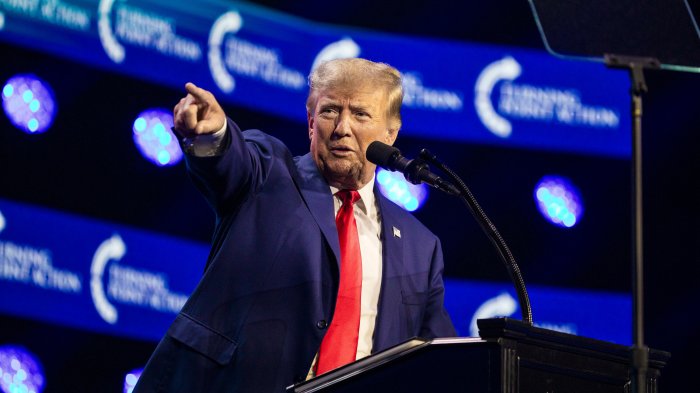

Trumps sweeping tax cut bill includes provision weaken court powers – Trump’s sweeping tax cut bill includes provisions to weaken court powers, setting the stage for a fascinating debate about the balance of power in the US government. This bill’s potential impact on judicial independence, constitutional principles, and public perception is a critical discussion. The proposed changes will likely have far-reaching consequences, impacting not only the judiciary but also the overall legal landscape.
This analysis delves into the background of the tax cut bill, exploring its key provisions concerning court powers. It also examines the potential effects on judicial independence, constitutional implications, public opinion, and comparisons to similar legislation from other countries and historical periods. A comprehensive understanding of the possible long-term consequences for the legal system is provided.
Background of the Tax Cut Bill
The Trump administration’s tax cut bill, officially known as the Tax Cuts and Jobs Act of 2017, significantly altered the U.S. tax code. This legislation aimed to stimulate economic growth by reducing corporate and individual income taxes, with the intention of boosting investment and job creation. The bill’s impact, however, remains a subject of ongoing debate, with proponents and opponents citing differing evidence and analyses.
Key Provisions of the Tax Cut Bill
The Tax Cuts and Jobs Act of 2017 encompassed a wide array of provisions impacting various sectors of the economy. While many of these provisions focused on tax rates and deductions, some provisions also directly addressed court powers, though this was a smaller part of the overall bill.
Trump’s sweeping tax cut bill, with its provisions to weaken court powers, is definitely a hot topic right now. Meanwhile, baseball fans are buzzing about Francisco Lindor’s impressive 2-homer performance leading the Mets over the Rockies. Francisco Lindor’s 2 homers lead the Mets over the Rockies. It’s fascinating to consider how these seemingly disparate events might, in some ways, reflect broader societal trends, or perhaps just the chaos of a typical day in the world of politics and sports.
Regardless, the implications of Trump’s tax cuts on judicial independence are still quite significant.
| Provision | Description | Impact |
|---|---|---|
| Corporate Tax Rate Reduction | Reduced the top corporate tax rate from 35% to 21%. | Intended to incentivize businesses to invest and expand, potentially leading to job creation. Critics argued that the benefits would disproportionately accrue to large corporations. |
| Individual Income Tax Cuts | Lowered individual income tax rates for most taxpayers. Included changes to deductions and credits. | Intended to increase disposable income and consumer spending. Critics argued that the benefits were not evenly distributed and disproportionately benefited higher-income earners. |
| Reduced Tax Deductions and Credits | Phased out or limited some deductions and credits, such as those for state and local taxes. | Reduced the amount of tax relief available to certain taxpayers. Some argued that these reductions were needed to offset other tax cuts, while others believed that they would unfairly burden certain groups. |
Political Context of the Bill’s Passage
The bill’s passage was heavily influenced by partisan politics. Republicans largely supported the bill, arguing that it would stimulate economic growth. Democrats, conversely, voiced concerns about the bill’s potential to exacerbate income inequality and increase the national debt. The bill faced considerable opposition from various interest groups, including labor unions and consumer advocates.
Arguments For and Against the Bill
Proponents of the tax cut bill argued that the reductions in corporate and individual taxes would stimulate economic growth. They believed that the increased investment and job creation would benefit all segments of society. Opponents, however, contended that the bill’s benefits would disproportionately accrue to higher-income earners, leading to increased income inequality and an increased national debt. Furthermore, critics raised concerns about the potential for reduced government revenue and the long-term impact on the national economy.
Impact on Judicial Independence
Weakening court powers, as proposed in the tax cut bill, raises serious concerns about the future of judicial independence. This erosion of judicial authority could have profound consequences for the balance of power within the government, potentially tilting the scales in favor of the legislative or executive branches. Examining historical precedents and their outcomes provides crucial insight into the potential ramifications of these proposed changes.
Potential Effects on Judicial Independence
The proposed changes to court powers could undermine the judiciary’s ability to act as an independent check on the other branches of government. By limiting the court’s jurisdiction or its ability to interpret laws, the balance of power within the government could shift. This could lead to a decrease in public trust in the impartiality and fairness of the judicial system.
Historical Precedents and Outcomes
Throughout history, attempts to restrict judicial power have often had unintended and negative consequences. These actions can erode public confidence in the judiciary and may lead to accusations of political interference. For instance, attempts to limit the Supreme Court’s ability to review laws have been met with opposition from those who believe in the separation of powers. The outcome in such cases has varied, ranging from limited impact to significant alteration of the judicial landscape.
Examples of Historical Impacts on Judicial Decisions
Historical examples illustrate the impact of legislative actions on judicial decisions. The passage of specific laws, or changes in the makeup of the court, can influence how judges interpret legal precedents. For example, the passage of the Voting Rights Act of 1965 had a clear impact on how the courts approached voting rights cases in the following years.
The influence of societal and political context on judicial decisions is evident in many landmark cases. These cases show that judicial decisions are not solely based on legal texts, but also reflect the broader societal and political environment.
Comparison of Historical Periods and Judicial Independence
| Historical Period | Judicial Independence Trends | Legislative Actions Affecting Courts | Impact on Judicial Decisions |
|---|---|---|---|
| Early American Republic (1789-1860) | Generally strong, with early establishment of judicial review | Limited direct attempts to control the courts | Decisions focused on establishing the framework of federal power and individual rights. |
| Progressive Era (1890-1920) | Mixed, with some calls for greater judicial activism | Increased legislative activity aimed at regulating industries and businesses. | Decisions often involved balancing economic interests with social welfare concerns. |
| New Deal Era (1930s) | Strengthened, with the Court adapting to the challenges of the time | Major legislation regarding the role of government in the economy. | Courts faced pressure to adapt to the changing economic landscape and role of government. |
| Contemporary Era (1970-present) | Continued emphasis on independence, with debates on judicial activism | Diverse legislative actions addressing social and political issues. | Courts grapple with balancing competing societal interests and evolving legal interpretations. |
This table illustrates how judicial independence has evolved over time, and how legislative actions have affected the interpretation and application of laws.
Constitutional Implications: Trumps Sweeping Tax Cut Bill Includes Provision Weaken Court Powers
The Trump administration’s sweeping tax cut bill, while aiming to stimulate economic growth, has sparked concerns regarding its potential impact on the judiciary. Weakening court powers, as some provisions suggest, raises critical constitutional questions about the separation of powers and the balance of governmental authority. These concerns extend beyond mere political debate and delve into the very foundations of American democracy.The bill’s proposed changes to the judiciary, if enacted, could face substantial legal challenges based on the Constitution’s structure and established precedents.
Careful consideration of these implications is crucial to ensure the long-term integrity and impartiality of the judicial system.
Trump’s sweeping tax cut bill, with its provision to weaken court powers, is certainly a hot topic right now. It’s interesting to see how these financial maneuvers ripple through various sectors, like the ongoing dispute at India’s Mumbai airport with Indigo and Air India over payment terms. This airport standoff highlights the complex web of financial relationships and potential repercussions.
Ultimately, the potential for weakened judicial oversight within Trump’s tax plan raises serious questions about the balance of power.
Potential Constitutional Challenges
The proposed tax cuts might face constitutional challenges due to the way they affect the judiciary. These challenges are not hypothetical; they are rooted in fundamental principles of American constitutionalism. Concerns arise about the bill’s potential to diminish the independence and authority of the judiciary, thus impacting the balance of powers within the government.
Relevant Constitutional Principles and Precedents
The principle of the separation of powers, enshrined in the Constitution, is central to this discussion. This doctrine mandates that governmental power be divided among the legislative, executive, and judicial branches. Each branch has distinct responsibilities and is designed to act as a check on the others. Supreme Court precedents, like Marbury v. Madison, solidify the judiciary’s power of judicial review, enabling it to scrutinize laws passed by Congress and the President.
This inherent power is essential to safeguarding individual rights and ensuring the Constitution’s continued relevance.
Arguments for and Against the Constitutionality
Arguments supporting the bill’s constitutionality will likely focus on the legislative branch’s broad power to tax and spend for the general welfare. They might argue that adjusting court powers is within Congress’s purview, citing historical precedents of legislative adjustments to the judiciary.Conversely, arguments against the bill’s constitutionality will emphasize the principle of judicial independence and the need to maintain a balance of powers.
These arguments will highlight the potential for the bill to unduly influence judicial decisions through financial incentives or limitations on court authority. They will likely cite precedents upholding judicial independence as a cornerstone of the American legal system.
Potential Legal Challenges to the Bill’s Implementation
Potential legal challenges could arise from various groups, including civil rights organizations, interest groups, and even individual citizens. These challenges could focus on the bill’s impact on specific court cases or its broader effect on the independence of the judiciary. The nature of these challenges will depend on the specific provisions of the bill. For instance, provisions that appear to limit the jurisdiction of federal courts or curtail the court’s ability to hear certain types of cases might be challenged.
Table of Potential Constitutional Provisions Affected and Interpretations
| Constitutional Provision | Potential Impact of the Bill | Interpretation (Potential Arguments for and against) |
|---|---|---|
| Separation of Powers | Weakening judicial authority | Arguments for: Congress has the power to adjust the judicial branch within reasonable limits. Arguments against: Any actions that diminish judicial independence threaten the balance of powers. |
| Judicial Review | Potential limitation on court’s ability to review legislation | Arguments for: Congress has the power to limit the scope of judicial review. Arguments against: Undermining judicial review undermines the Constitution’s checks and balances. |
| Due Process Clause | Potential impact on citizens’ rights to access the courts | Arguments for: The tax cuts may not directly affect due process rights. Arguments against: Limiting court access diminishes due process protections. |
Public Perception and Debate

Public opinion on the proposed weakening of court powers in the tax cut bill is deeply divided. Concerns about the potential impact on judicial independence and the rule of law have resonated with many, while others believe the changes are necessary for a more balanced legal system. This debate has spilled over into the media, social media, and political discourse, further complicating the discussion.
A nuanced understanding of these perspectives requires examining various sources of public opinion data and the strategies employed to shape public perception.
Public Opinion Data
Public opinion data on the proposed changes to court powers is varied and often depends on the specific phrasing of the question and the demographic characteristics of the sample. Surveys, polls, and focus groups provide a snapshot of public sentiment, but interpreting the results necessitates understanding the context and methodology of each study. For instance, polls conducted by organizations with known political biases may yield results that favor a particular viewpoint.
Different Perspectives on Judicial Impact
Different perspectives on the bill’s impact on the judiciary exist, reflecting varying interpretations of the proposed changes. Proponents argue that the changes are essential for a more responsive and efficient legal system, aligning the courts with modern needs. Critics, however, express profound concerns about the potential for political influence on judicial decisions, and a deterioration of the impartial nature of the court system.
Media Coverage and Public Discourse
Media coverage plays a crucial role in shaping public discourse surrounding the tax cut bill and its impact on the judiciary. News outlets, both traditional and online, present different interpretations and analyses of the proposed changes, often influencing the public’s understanding of the potential consequences. The tone and emphasis of media coverage can significantly sway public opinion, as demonstrated by past examples of politically charged reporting.
Furthermore, social media platforms act as a powerful amplifier for public opinion, allowing individuals to express their views and engage in discussions.
Methods of Gathering Public Opinion
Various methods are used to gauge public opinion on the proposed weakening of court powers. Polling organizations employ structured surveys, asking respondents specific questions about the bill’s provisions. Focus groups provide opportunities for in-depth discussion, allowing for a more nuanced understanding of public sentiment. Analyzing social media sentiment can offer insights into public opinion, although the challenge of interpreting this data lies in discerning the authenticity and representativeness of the voices.
Additionally, academic research and scholarly articles often contribute to a more comprehensive understanding of the public’s perception. Examining these methods helps to understand the complexities and nuances in the debate surrounding this issue.
Comparison to Other Legislation
The Trump tax cut bill’s provisions weakening court powers raise crucial questions about precedent and the balance of power within the US government. Comparing these provisions to similar legislative actions in other countries and historical periods reveals both similarities and differences, offering valuable insights into the potential impacts on judicial independence and the legal landscape. Understanding these parallels can help assess the potential consequences of such measures.The inherent tension between legislative and judicial branches is a recurring theme in political history.
Trump’s sweeping tax cut bill, aiming to significantly weaken court powers, is raising eyebrows. Meanwhile, the tragic death of journalist Fatima Hassona in Gaza, as reported by itsnewstimes.com , highlights the urgent need for accountability and justice in the region. These separate, yet interconnected, events underscore the complexities of political maneuvering and the importance of holding powerful figures accountable, particularly when it comes to undermining the judiciary.
This comparison highlights how the Trump tax cut bill fits into a broader context of legislative efforts to influence the judiciary, examining both the intent and the likely outcomes of such actions.
Comparison Across Jurisdictions, Trumps sweeping tax cut bill includes provision weaken court powers
This analysis explores how provisions aimed at impacting court power in the Trump tax cut bill compare to similar actions in other countries and historical periods. A crucial aspect is understanding the intent and the possible outcomes of such legislative approaches on the independence and effectiveness of the judiciary.
- Historical Precedents in the United States: Throughout US history, there have been instances of legislative attempts to influence judicial decisions, though often with differing levels of success. The judiciary’s power of judicial review, as established in Marbury v. Madison, serves as a crucial counterbalance to these attempts, ensuring that the courts maintain their role in interpreting the law. Examples such as the Judiciary Act of 1801, while aimed at changing the court’s structure, demonstrate the historical tension between the branches of government.
Analyzing these historical instances helps understand the potential consequences of the Trump tax cut provisions.
- International Examples: Several countries have witnessed instances where legislative actions aimed at curbing judicial power have emerged. For example, some countries with strong executive power may have legislation that prioritizes the executive’s interests over judicial independence. Understanding these differing approaches offers a comparative perspective on the implications of the Trump tax cut bill.
- Impact on Judicial Systems: The impact on judicial systems varies significantly. In some cases, such provisions have led to perceived politicization of the judiciary, eroding public trust in the court system. In others, they have resulted in a more aligned judicial approach with legislative objectives. Understanding these varying outcomes is essential for analyzing the possible consequences of the Trump tax cut bill.
Specific Legislative Actions and Their Impacts
Examining specific instances of legislative actions that have impacted court power in other jurisdictions provides further context. Understanding these examples illuminates the potential implications of the Trump tax cut bill’s provisions.
| Country/Period | Legislative Action | Impact on Judicial Independence | Effect on Legal Landscape |
|---|---|---|---|
| United States (Historical) | Judiciary Act of 1801 | Attempts to reshape the court’s composition and structure. | Led to controversy and a subsequent court decision clarifying judicial independence. |
| Example Country A (Hypothetical) | Legislation reducing judicial review powers. | Potential for reduced judicial oversight of legislative actions. | Increased executive influence on legal interpretations. |
| Example Country B (Hypothetical) | Legislation limiting court jurisdiction over specific issues. | Potential for uneven application of justice. | Focus on legislative agenda over judicial principles. |
Illustrative Case Studies
Examining real-world cases where similar legislative actions have occurred can offer valuable insights. Such analysis demonstrates the potential consequences and the interplay between legislative intent and judicial response.
- Historical Case: The Judiciary Act of 1801, while aiming to reshape the judiciary, ultimately sparked controversy and resulted in adjustments to ensure judicial independence. Analyzing the outcomes of this historical precedent helps understand the potential impact of the Trump tax cut provisions.
Potential Future Impacts

The sweeping tax cut bill, coupled with provisions weakening court powers, presents a complex tapestry of potential future impacts on the American judicial system. This analysis explores the possible long-term consequences, including potential effects on legal processes, public trust, and the challenges that may arise. The long-term implications of such legislation are not easily predicted, but careful consideration of potential scenarios is crucial for understanding the potential trajectory of the legal landscape.This legislation’s impact on judicial independence and the future of the court system is a crucial area of concern.
The bill’s provisions, while intended to achieve certain economic goals, might inadvertently undermine the integrity and impartiality of the judiciary, potentially leading to a cascade of unforeseen problems. The long-term effects on public trust in the courts are also significant and warrant careful consideration.
Potential Effects on Legal Processes
The weakening of court powers could potentially lead to slower or more convoluted legal processes. This could manifest in longer trials, increased litigation costs, and a rise in appeals. Reduced resources available to courts might lead to a backlog of cases, delaying justice for many individuals and entities. Moreover, changes in judicial oversight could create ambiguities and uncertainties in the application of laws, making it harder for individuals to understand and navigate the legal system.
Potential Effects on Public Trust in the Courts
Reduced public trust in the courts is a serious concern. The perception that the judiciary is beholden to political interests, rather than upholding the rule of law, could damage the institution’s credibility and erode public confidence. This erosion of trust could manifest in various ways, from decreased participation in legal processes to a broader skepticism regarding the fairness and impartiality of the legal system.
Historical examples of political interference in the judiciary have demonstrated the long-term damage to public trust and the legitimacy of the legal system.
Potential Future Challenges and Issues
The long-term impacts of the tax cut bill’s changes to court powers could lead to a variety of challenges. These could include increased political polarization surrounding legal issues, as well as challenges to the principle of equal justice under the law. The judiciary’s ability to remain independent and uphold its role as an impartial arbiter of disputes could be compromised.
Furthermore, the bill’s impact on judicial resources and personnel could create a bottleneck in case resolution, potentially hindering the smooth functioning of the legal system.
Expert Opinions on the Bill’s Long-Term Implications
Numerous legal scholars and experts have voiced concerns regarding the long-term implications of the bill. Some have argued that the weakening of court powers could potentially lead to an erosion of the rule of law, potentially creating a more arbitrary and less predictable legal environment. Others have warned of the potential for the bill to exacerbate existing societal inequalities and create new ones.
The varied perspectives highlight the complex and multifaceted nature of the bill’s potential consequences.
Potential Future Scenarios and Consequences
- Scenario 1: Increased Political Interference. If political influence over judicial appointments and decisions increases, the impartiality of the courts could be compromised. This could result in biased rulings and a decline in public trust. This could be further compounded by a decrease in the resources allocated to the judiciary.
- Scenario 2: Backlog of Cases. Reduced court resources and staffing could lead to an overwhelming backlog of cases, delaying justice and potentially impacting the efficiency of the legal system. The delays could disproportionately affect individuals and businesses with limited resources.
- Scenario 3: Erosion of Public Trust. Public perception of the courts’ independence and impartiality could be damaged, leading to a decrease in public confidence in the legal system. This could have long-term consequences for the administration of justice.
Wrap-Up
In conclusion, Trump’s tax cut bill, with its provisions to weaken court powers, raises significant questions about the future of judicial independence and the balance of power within the US government. The potential constitutional challenges, public reaction, and long-term implications demand careful consideration. Further discussion and analysis are crucial to fully understand the ramifications of this legislation.