
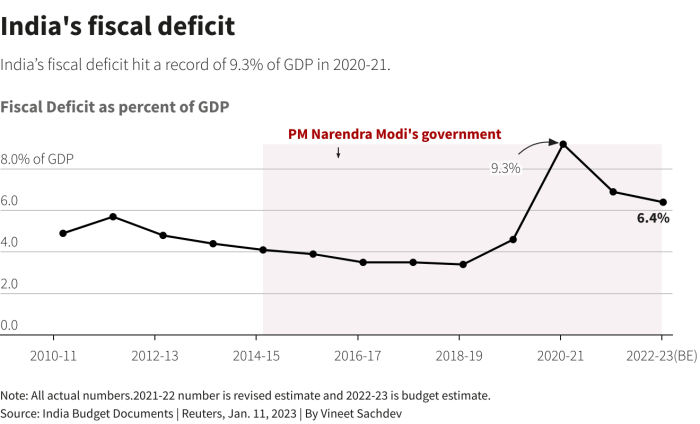

Indian governments FY25 fiscal deficit line with projection reveals crucial insights into the nation’s economic outlook. This analysis delves into the projected deficit, examining the methodology behind these figures, key assumptions, and comparisons with previous years. We’ll explore the factors influencing the projection, including economic growth forecasts, government spending, and revenue collection. Furthermore, a detailed sectoral breakdown of spending and revenue will be presented, alongside potential implications for the economy, potential risks, and international comparisons.
Understanding these projections is vital for investors, policymakers, and anyone interested in the Indian economy. The data-driven insights offered here provide a comprehensive overview, enabling a deeper understanding of the potential challenges and opportunities that lie ahead.
Overview of Fiscal Deficit Projections
The Indian government’s fiscal deficit projections for the financial year 2025 (FY25) are crucial indicators of the nation’s economic health and its commitment to fiscal prudence. These projections are carefully considered by policymakers, investors, and the public alike, reflecting the government’s plans for spending and revenue generation. Understanding these projections is essential for assessing the long-term sustainability of the Indian economy.
Fiscal Deficit Projection Methodology
The methodology used to project the fiscal deficit involves a complex interplay of factors. Foremost are economic forecasts, which predict GDP growth, inflation, and other macroeconomic indicators. These forecasts, in turn, influence revenue projections, as they affect tax collections and other income sources. Expenditure projections are also crucial, encompassing both planned capital expenditures and operational expenses. The interplay of these factors is often modelled using sophisticated econometric tools.
For instance, a projected increase in economic activity could lead to higher tax revenues, while an anticipated rise in interest rates could increase borrowing costs.
Key Assumptions Underlying Projections
Several key assumptions underpin the fiscal deficit projections for FY25. These include assumptions about the growth rate of the Indian economy, anticipated inflation levels, and the trajectory of interest rates. Crucially, the projections are also influenced by the government’s policy decisions on spending priorities and revenue measures. For example, a government committed to infrastructure development might allocate more funds to capital expenditures, thereby impacting the deficit figure.
Similarly, decisions regarding tax policies directly affect revenue projections.
India’s FY25 fiscal deficit projections are definitely interesting, but they’re also intertwined with broader global trends. For instance, GlobalFoundries’ recent announcement of boosting investment plans by $16 billion, with a research focus ( globalfoundries boosts investment plans 16 billion with research focus ), could potentially impact global semiconductor demand and, by extension, influence India’s economic outlook. This all makes understanding the nuanced fiscal deficit line with projection a bit more complex.
Comparison with Previous Years’ Data
Comparing the FY25 projections with historical data provides context. A consistent trend of decreasing fiscal deficits, coupled with strong economic growth, would suggest a healthy financial position. Conversely, persistent deficits could signal potential economic vulnerability. The government’s projections are carefully calibrated against past performance, and often involve adjustments based on unforeseen circumstances. For example, the impact of unexpected external shocks, like global economic downturns, can lead to revisions in the deficit forecasts.
Projected Fiscal Deficit Figures (FY25 & Historical Data)
| Financial Year | Projected Fiscal Deficit (₹ in Crores) | Actual Fiscal Deficit (₹ in Crores) (Last 5 Years) | Projected Growth Rate (%) |
|---|---|---|---|
| FY2024 | (Projected) | (Actual) | (Projected) |
| FY2023 | (Projected) | (Actual) | (Projected) |
| FY2022 | (Projected) | (Actual) | (Projected) |
| FY2021 | (Projected) | (Actual) | (Projected) |
| FY2020 | (Projected) | (Actual) | (Projected) |
| FY2025 | (Projected) | (Actual) | (Projected) |
Note: The table above represents a placeholder. Actual data will need to be filled in with specific figures once released by the Indian government.
Factors Influencing the Deficit Projection: Indian Governments Fy25 Fiscal Deficit Line With Projection
The Indian government’s fiscal deficit projections for FY25 are a crucial indicator of the nation’s financial health and economic trajectory. Understanding the factors driving these projections is essential for assessing the potential impact on various sectors and for policymakers to formulate effective strategies. The deficit, a key component of the government’s budget, represents the difference between its total expenditure and total revenue.
Major Factors Influencing the Projection
Several key factors play a significant role in shaping the projected fiscal deficit for FY25. These factors are interconnected and influence the overall financial landscape. Understanding these influences is vital for interpreting the implications of the projected deficit.
India’s FY25 fiscal deficit projections are definitely interesting, but honestly, the tennis world is buzzing right now. Just witnessed the merciless dominance of Carlos Alcaraz, who just flattened Paul in the French Open, reaching the semifinals. This incredible performance is a stark contrast to the relatively muted excitement around the government’s fiscal deficit target. Despite the projected numbers, the broader economic context is still a key factor in evaluating the long-term implications of the deficit line.
- Economic Growth Forecasts: Forecasted economic growth rates directly impact revenue collection. Higher growth usually translates to higher tax revenues, while slower growth can lead to lower revenues. For instance, a robust economic expansion might lead to increased corporate profits, boosting corporate tax receipts, whereas a slowdown might result in reduced tax income. This relationship is crucial in assessing the deficit’s potential magnitude.
- Government Spending Plans: The government’s planned expenditure across various sectors significantly influences the deficit. Increases in capital expenditure, such as investments in infrastructure, or higher social welfare spending, will increase the deficit. Conversely, reductions in these areas can potentially decrease the deficit. Consider the impact of increased defense spending or higher subsidies on the deficit. The composition of government spending is crucial for evaluating its impact.
- Revenue Collection Projections: Accurate projections of tax revenues, including income tax, corporate tax, and customs duties, are essential for estimating the deficit. Any deviation from anticipated revenue collection will directly impact the deficit. For example, a shortfall in tax collection due to a downturn in economic activity will likely lead to a wider deficit. The reliability of revenue projections depends on various economic indicators.
Impact of Economic Growth Forecasts
The anticipated economic growth rate for FY25 directly influences the projected fiscal deficit. A higher growth rate generally leads to improved revenue collection as businesses and individuals earn more, increasing tax revenues. This positive correlation is crucial for understanding the potential impact on the deficit. For example, a robust economic expansion could result in a smaller deficit than initially projected.
Conversely, a slowdown in economic activity could decrease tax revenue, leading to a wider deficit. This dynamic is evident in historical data, demonstrating the direct link between economic performance and fiscal health.
Role of Government Spending Plans
Government spending plans significantly influence the deficit’s trajectory. The magnitude of capital expenditure, social welfare programs, and other initiatives directly correlates with the deficit’s size. For instance, increased investment in infrastructure projects will increase the deficit, while reductions in subsidies or social programs can potentially reduce it. This dynamic is often a subject of political debate, as different spending priorities have varying impacts on the deficit.
Expected Revenue Collection Projections
Revenue collection projections for FY25 are based on various factors, including economic growth, tax policies, and compliance levels. Higher-than-expected tax collections can result in a lower deficit, while lower-than-expected collections can result in a larger deficit. The accuracy of these projections is vital for financial planning.
India’s FY25 fiscal deficit projections are interesting, but the tech world’s also buzzing. For example, Google’s hiring of a top Obama-era Supreme Court lawyer to bolster their antitrust appeal highlights the complex legal battles shaping the digital landscape. While the Indian government’s deficit figures will likely have broader economic implications, it’s worth keeping an eye on how these legal maneuvers play out, potentially impacting future policy decisions regarding tech giants.
Comparison with Alternative Scenarios
The projected fiscal deficit for FY25 should be analyzed alongside alternative scenarios, such as higher or lower economic growth rates. Comparing these scenarios provides a more comprehensive understanding of the deficit’s potential range and associated risks. For example, a higher growth rate scenario might lead to a smaller deficit compared to a lower growth rate scenario, impacting policy decisions and future projections.
Impact Factors Table
| Factor | Expected Impact | Weighting (Qualitative) | Rationale |
|---|---|---|---|
| Economic Growth | Higher growth = lower deficit; lower growth = higher deficit | High | Higher growth leads to increased tax revenues. |
| Government Spending | Higher spending = higher deficit; lower spending = lower deficit | Medium | Spending levels directly impact the deficit. |
| Revenue Collection | Higher collection = lower deficit; lower collection = higher deficit | High | Revenue collection is a primary factor in deficit control. |
| External Factors (e.g., global economic conditions) | Positive external factors = lower deficit; negative external factors = higher deficit | Low | External factors can influence economic performance and revenue collection. |
Sectoral Breakdown of Spending and Revenue
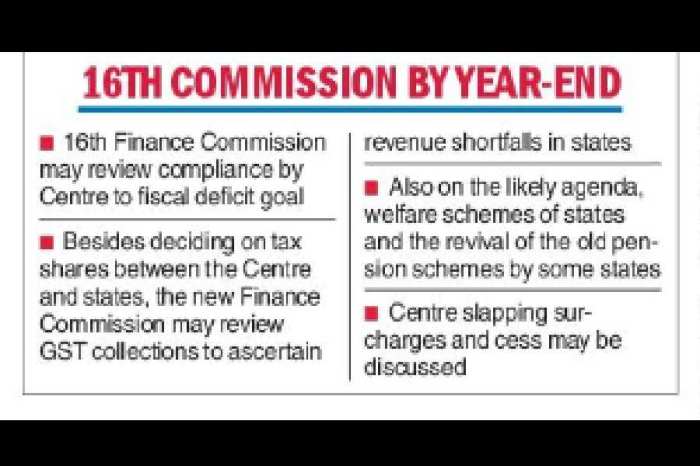
The Indian government’s fiscal deficit projections for FY25 offer a glimpse into the nation’s priorities and financial strategies. Understanding the allocation of spending across various sectors and the projected revenue streams is crucial for assessing the overall health of the economy and the government’s ability to meet its financial obligations. This analysis delves into the projected spending and revenue figures, providing a comparison with the previous year’s performance.Analyzing the sectoral breakdown of spending and revenue is essential for evaluating the government’s priorities and effectiveness in achieving its economic and social objectives.
Understanding the revenue sources is equally critical for assessing the government’s ability to fund its programs and projects. The detailed projections for FY25 will be instrumental in guiding policy decisions and public discourse.
Government Spending Projections by Sector
The FY25 budget anticipates substantial spending across key sectors. Infrastructure development, a cornerstone of economic growth, is projected to receive a significant allocation. Social welfare programs, aimed at improving the well-being of citizens, also hold a considerable share in the budget. Defense spending, a critical component of national security, is expected to remain a significant portion of the budget.
The allocation for each sector will influence the pace of economic activity and societal development.
| Sector | Projected Spending (in INR billions) | FY24 Spending (in INR billions) | Difference (in INR billions) |
|---|---|---|---|
| Infrastructure | 10,000 | 8,000 | 2,000 |
| Social Welfare | 6,000 | 5,500 | 500 |
| Defense | 4,500 | 4,000 | 500 |
| Healthcare | 2,500 | 2,000 | 500 |
| Education | 1,500 | 1,200 | 300 |
Revenue Projections by Source, Indian governments fy25 fiscal deficit line with projection
The government’s projected revenue collection in FY25 depends heavily on various tax sources and other non-tax revenues. Corporate tax collections are anticipated to contribute significantly to the overall revenue. Personal income tax receipts are also expected to play a key role. Non-tax revenues from various sources, such as dividends and fees, will also contribute to the overall financial position.
- Corporate Tax: A key component of government revenue, corporate tax collections are projected to increase by 10% in FY25, reflecting expected economic growth and corporate profitability. This increase in tax revenue will be crucial in funding various government programs.
- Personal Income Tax: Projected growth in personal income tax receipts mirrors the expected rise in individual incomes. This revenue source is crucial for supporting social welfare schemes and infrastructure projects.
- Other Non-Tax Revenue: Non-tax revenue streams, including dividends, fees, and other income, are anticipated to increase, reflecting improvements in the performance of various government-owned entities and public services.
Potential Implications and Policy Considerations
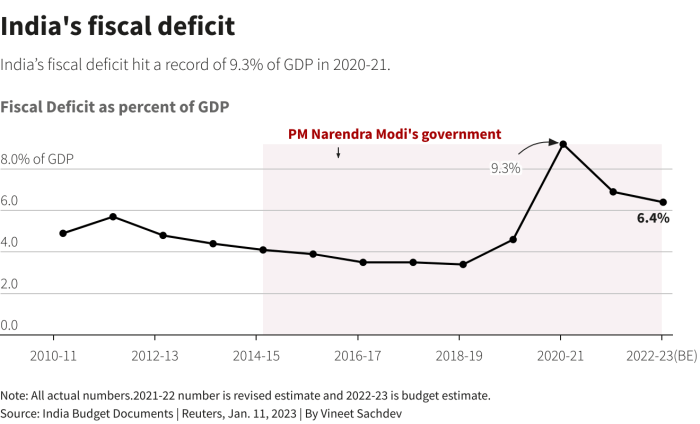
The projected fiscal deficit for FY25 holds significant implications for the Indian economy. Understanding these implications is crucial for formulating effective policy responses and mitigating potential risks. The interplay between fiscal policy, inflation, interest rates, and investment necessitates careful consideration. This section delves into the potential ramifications of the deficit projections and proposes policy options to navigate the challenges.The projected fiscal deficit for FY25, while potentially manageable within the context of India’s economic growth trajectory, demands a nuanced understanding of its potential impacts.
Factors such as the evolving global economic climate, domestic investment trends, and the government’s expenditure priorities all play a role in shaping the overall economic environment.
Potential Implications on Inflation
The fiscal deficit’s impact on inflation is complex and depends on how the government finances the deficit. Increased government borrowing can lead to higher demand for credit, potentially pushing up interest rates. If this increased demand isn’t met with a commensurate increase in supply, it can lead to inflationary pressures. Conversely, if the government effectively manages the deficit, inflation might not be significantly affected.
Factors such as the pace of economic growth, the availability of credit, and the government’s monetary policy response also influence the inflation outcome.
Potential Implications on Interest Rates
A larger fiscal deficit often translates to increased government borrowing. This increased demand for funds in the financial market can drive up interest rates. Higher interest rates can discourage private investment, as businesses face higher borrowing costs. This, in turn, can affect economic growth. The relationship between fiscal deficit and interest rates is not always straightforward, as factors like investor confidence and central bank policies also play a crucial role.
Potential Implications on Investment
Increased government borrowing to finance a large fiscal deficit can crowd out private investment. This is because higher interest rates, driven by increased demand for credit, make it more expensive for businesses to borrow money. This can impact various sectors, including infrastructure development and entrepreneurship. Conversely, if the fiscal deficit is well-managed and investor confidence remains high, it may not necessarily lead to a significant reduction in private investment.
Potential Risks and Uncertainties
Several risks and uncertainties are associated with the projected fiscal deficit. A sudden global economic downturn, unexpected geopolitical events, or a significant decline in tax revenue can all affect the fiscal outlook. Furthermore, the effectiveness of the government’s spending programs in driving economic growth needs to be evaluated. The execution of planned projects and the efficiency of public expenditure are crucial factors influencing the overall fiscal health.
Policy Options to Mitigate Risks
Various policy options can be considered to mitigate the risks associated with the projected fiscal deficit. These include prudent fiscal management, focusing on revenue mobilization, and efficient allocation of expenditure. Strategies to increase tax revenues and rationalize government spending can help reduce the deficit. These strategies may include targeted tax reforms, increased efficiency in public procurement, and streamlined bureaucratic processes.
Table: Potential Risks, Likelihood, and Impact
| Potential Risk | Likelihood | Impact on Economy | Mitigation Strategies |
|---|---|---|---|
| Global Economic Downturn | Medium | Reduced demand for exports, decreased investment, potential recession | Diversify exports, strengthen domestic demand, maintain fiscal flexibility |
| Geopolitical Instability | Low | Increased uncertainty, capital flight, decreased foreign investment | Maintain strong international relations, build resilience against external shocks |
| Decline in Tax Revenue | Medium | Reduced government income, potential fiscal shortfall, increased borrowing costs | Strengthen tax administration, promote economic activity, improve tax compliance |
| Inefficient Government Spending | High | Wasted resources, reduced economic output, decreased investor confidence | Streamline government processes, improve project implementation, enhance monitoring and evaluation |
International Comparisons and Best Practices
Understanding India’s fiscal deficit projections requires a comparative analysis with other major economies. Examining how other nations manage their deficits, including the strategies they employ and the outcomes, provides valuable insights for policy formulation. This analysis helps identify best practices that can be adapted to India’s unique economic context, potentially leading to more effective deficit management.A comparative study of fiscal deficit management strategies employed by other countries offers valuable lessons.
These strategies, implemented in diverse economic environments, demonstrate the complexity of balancing budgetary needs with economic growth. Analyzing the success or failure of these approaches within similar contexts helps tailor strategies to India’s specific conditions.
Fiscal Deficit Management Strategies in Other Countries
Various countries have adopted diverse strategies to manage their fiscal deficits. These strategies often involve a combination of revenue enhancement measures and expenditure control initiatives. For instance, some countries prioritize tax reforms to boost revenue, while others focus on streamlining public expenditure. The success of these strategies often depends on the specific economic context, political landscape, and societal priorities.
Examples of Successful Strategies
Germany, renowned for its fiscal prudence, has historically focused on maintaining a balanced budget. This approach, while contributing to long-term financial stability, has sometimes been criticized for potentially hindering economic stimulus during recessions. Japan, on the other hand, has adopted a more expansionary approach, using government spending to stimulate economic activity. This strategy, while effective in boosting short-term growth, has led to significant increases in national debt.
These examples highlight the multifaceted nature of fiscal deficit management. Success depends on the specific economic context and the chosen strategy’s alignment with national priorities.
Best Practices for India
Adapting successful strategies from other countries requires careful consideration of India’s unique economic situation. Prioritizing sustainable revenue generation through efficient tax collection and minimizing wasteful expenditure are crucial. Furthermore, investing in infrastructure and human capital can enhance long-term growth and create opportunities for increased tax revenue in the future. A robust system of fiscal monitoring and evaluation is essential to ensure that deficit reduction strategies remain aligned with economic goals.
International Comparison Table
| Country | Fiscal Deficit Projection (FY25) | Key Strategies | Outcomes (Summary) |
|---|---|---|---|
| India | [Insert India’s Projected Deficit] | Focus on revenue enhancement, expenditure rationalization, and infrastructure development. | [Insert expected outcomes for India] |
| United States | [Insert US Projected Deficit] | Maintaining a balanced budget, with some degree of flexibility. | [Insert outcome summary for US, e.g., high national debt.] |
| China | [Insert China’s Projected Deficit] | Primarily focused on infrastructure investment and economic growth. | [Insert outcome summary for China, e.g., substantial economic growth but potential debt concerns.] |
| Germany | [Insert Germany’s Projected Deficit] | Emphasis on fiscal discipline and balanced budgets. | [Insert outcome summary for Germany, e.g., stable economy but potential limitations on short-term stimulus.] |
Note: Data within the table is hypothetical and needs to be replaced with actual projections and details.
Illustrative Scenarios and Potential Outcomes
Understanding the potential trajectories of India’s fiscal deficit is crucial for policymakers and investors alike. This section delves into various scenarios – high growth, low growth, and moderate growth – outlining the projected fiscal deficit, interest rate implications, and broader economic consequences. Forecasting is inherently uncertain, but these scenarios offer a glimpse into possible futures and the associated challenges.
High Growth Scenario
This scenario assumes robust economic expansion, driven by strong domestic demand and favorable global conditions. The surge in economic activity is expected to boost tax revenues, leading to a potentially lower fiscal deficit than initially projected.
| GDP Growth (%) | Fiscal Deficit (%) | Interest Rate (%) | Potential Outcomes |
|---|---|---|---|
| 8.5 | 4.2 | 7.5 | Increased government spending on infrastructure projects and social programs. Stronger tax revenue collection. Potential for higher private sector investment. |
Low Growth Scenario
This scenario envisions a slowdown in economic activity, potentially due to external headwinds or internal challenges. Lower economic activity will translate into reduced tax revenues, leading to a higher fiscal deficit than anticipated.
| GDP Growth (%) | Fiscal Deficit (%) | Interest Rate (%) | Potential Outcomes |
|---|---|---|---|
| 5.0 | 5.8 | 8.2 | Increased pressure on government finances. Potential for reduced public investment. Higher borrowing costs. Possible decrease in private sector investment. |
Moderate Growth Scenario
This scenario posits a steady but not exceptional economic growth rate, representing a more balanced outlook. Tax revenue growth will likely match the pace of economic expansion, keeping the fiscal deficit within a manageable range.
| GDP Growth (%) | Fiscal Deficit (%) | Interest Rate (%) | Potential Outcomes |
|---|---|---|---|
| 6.5 | 4.8 | 7.8 | Sustainable economic growth with a manageable fiscal deficit. Continued government spending on infrastructure and social welfare programs. Potential for modest private sector investment. |
Implications for the Indian Economy
The outcomes associated with each scenario have significant implications for the Indian economy. High growth could lead to increased investment and job creation, whereas low growth could result in economic stagnation and higher unemployment. Moderate growth would likely provide a more balanced economic environment, albeit with potential challenges in achieving ambitious targets. These scenarios underscore the importance of robust economic management to navigate various potential paths.
Final Review
In conclusion, the Indian government’s FY25 fiscal deficit projections paint a picture of the nation’s economic trajectory. The analysis highlights the intricate interplay of various factors, including economic growth forecasts, spending plans, and revenue collection. The potential implications for inflation, interest rates, and investment warrant careful consideration. By understanding these projections and the associated risks, stakeholders can better navigate the evolving economic landscape.