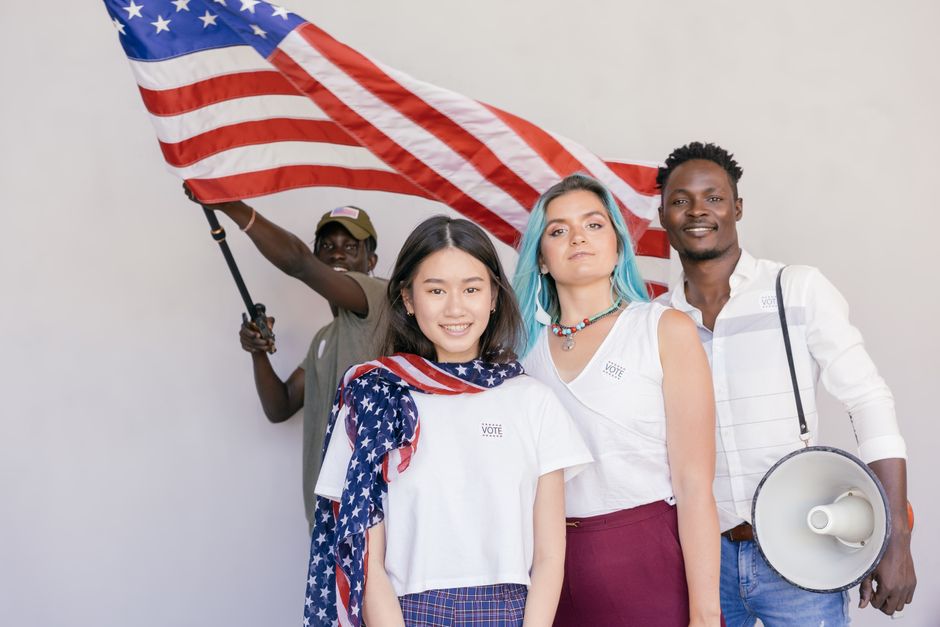
The Gen Z Gender Divide: A Reshaping Force in Democracy
The widening gulf in political and social attitudes between young men and women, commonly referred to as the Gen Z gender divide, is not merely a demographic curiosity; it represents a significant and transformative force actively reshaping the landscape of modern democracy. This divergence, evident in voting patterns, issue prioritization, and fundamental understandings of justice and equality, presents both profound challenges and opportunities for established political structures and ideologies. Understanding the nuances and drivers of this divide is crucial for comprehending the future trajectory of governance, policy-making, and societal progress.
At its core, the Gen Z gender divide is characterized by starkly contrasting viewpoints on a range of critical issues that directly influence democratic participation and outcomes. Young women, in overwhelming numbers, express greater support for progressive social policies, including robust LGBTQ+ rights, comprehensive reproductive healthcare access, stringent climate change mitigation efforts, and a more interventionist role for government in addressing economic inequality. Conversely, young men, while not monolithic, tend to exhibit more conservative leanings on social issues, often expressing skepticism towards identity politics, greater emphasis on individual liberty over collective action, and a less urgent perceived need for immediate, large-scale government intervention to solve societal problems. This divergence is not rooted in shared lived experiences of their male and female predecessors; it is a product of distinct formative environments shaped by unprecedented digital connectivity, evolving social norms, and a heightened awareness of systemic injustices.
The digital sphere, particularly social media platforms, plays a pivotal role in both amplifying and entrenching this divide. For Gen Z, these platforms are not just communication tools; they are primary arenas for political socialization and information consumption. Algorithms, designed to maximize engagement, often create echo chambers, reinforcing pre-existing beliefs and limiting exposure to counterarguments. For young women, who disproportionately experience online harassment and misogyny, platforms can become spaces where feminist discourse and calls for social justice are amplified, creating a sense of collective identity and purpose. These digital communities foster a shared understanding of systemic oppression and a demand for structural change, translating directly into political mobilization and advocacy. Conversely, young men, exposed to different online content streams—often featuring critiques of "woke culture," identity politics, and perceived liberal overreach—can develop a sense of grievance or alienation from mainstream progressive narratives. This can lead to a greater receptivity to populist appeals and a rejection of what they perceive as an overly sensitive or politically correct social environment. The curated nature of online experiences, therefore, actively contributes to the hardening of distinct political identities along gender lines.
This ideological chasm has direct and observable consequences for democratic processes. Voting behavior is perhaps the most immediate manifestation. In recent elections, a significant "gender gap" has emerged, with young women voting at higher rates and leaning more heavily towards Democratic candidates or parties advocating for progressive agendas, while young men are more likely to align with Republican or more conservative parties, or to express less consistent party allegiance. This isn’t simply about partisan preference; it reflects differing fundamental priorities. Young women often prioritize issues related to social justice, equality, and systemic reform, viewing these as existential threats that require immediate government action. Young men, on the other hand, may place greater emphasis on economic opportunity, individual freedoms, and national security, and may be more skeptical of large-scale government programs they perceive as infringing on these values or being fiscally irresponsible. This divergence creates a complex electoral calculus for political parties, forcing them to craft messaging and policy platforms that can appeal to both segments of the youth demographic, or risk alienating significant portions of the future electorate.
Beyond voting, the Gen Z gender divide is profoundly influencing the nature of political discourse and activism. Young women are at the forefront of movements demanding accountability for historical injustices, advocating for criminal justice reform, and pushing for greater representation of marginalized groups in all spheres of public life. Their activism is often characterized by a strong emphasis on intersectionality, recognizing how various forms of oppression—based on race, gender, sexual orientation, and class—are interconnected. This approach demands a more nuanced and inclusive form of democracy, one that actively seeks to dismantle existing power structures. Young men, while also engaged in various forms of activism, may focus more on issues of free speech, economic libertarianism, or traditional nationalistic sentiments. When engaged in political discourse, they may express frustration with what they perceive as an overly critical or accusatory approach from progressive movements, leading to a defensive posture or a search for alternative political narratives that validate their concerns. This can manifest as a rejection of established political norms and a willingness to embrace more radical or fringe political ideologies.
The impact on policy-making is equally significant. As Gen Z matures and enters positions of influence, their distinct priorities will inevitably shape legislative agendas. Issues that were once considered niche or fringe—such as comprehensive gender-affirming healthcare, reparations for historical injustices, or aggressive climate policies—are gaining traction and becoming mainstream demands due to the advocacy of young women and their allies. This necessitates a recalibration of policy debates, forcing policymakers to confront issues that may have been previously ignored or downplayed. Conversely, the concerns of young men regarding economic precarity, the perceived overreach of government regulations, or the erosion of traditional social structures will also need to be addressed, albeit through different policy lenses. The challenge for democracy lies in finding common ground and developing policies that can garner broad support across this increasingly divided demographic, or risk a polarized and gridlocked political system.
The very definition of democratic ideals is also being contested and redefined by this generational and gendered divergence. For many young women, democracy is intrinsically linked to social justice, equity, and the dismantling of oppressive systems. Their understanding of a healthy democracy involves active participation of all marginalized groups and a commitment to rectifying historical wrongs. For many young men, democracy may be more closely associated with individual liberties, free markets, and a limited government that protects these freedoms. This fundamental difference in conceptualization creates friction in how democratic principles are interpreted and applied, leading to debates over free speech versus hate speech, individual rights versus collective responsibility, and the role of government in ensuring both equality and liberty. The evolution of these competing visions of democracy will shape the very foundation upon which future governance is built.
Furthermore, the Gen Z gender divide has implications for institutional trust and civic engagement. Young women, often feeling that existing institutions have failed to adequately address systemic inequalities, may express lower levels of trust in traditional political parties, government agencies, and even established media outlets. Their engagement often manifests in alternative forms of activism, grassroots organizing, and a preference for direct action over traditional political participation. Young men, who may feel alienated by what they perceive as a progressive hegemony or a lack of recognition for their concerns, might also exhibit declining trust in institutions, but their disaffection could lead to a greater embrace of anti-establishment rhetoric and a skepticism towards democratic processes themselves. This erosion of trust, regardless of its origin, poses a significant threat to the stability and legitimacy of democratic systems, which rely on an engaged and trusting citizenry.
The future of democracy will undoubtedly be shaped by the ability of political systems and societal actors to navigate and, ideally, bridge this Gen Z gender divide. Ignoring this phenomenon is not an option; it is a fundamental shift in the electorate and in the very fabric of political thought. Addressing it requires a deep understanding of the underlying causes, from the influence of digital media to evolving socio-economic pressures. It necessitates a willingness from political parties to move beyond outdated ideological frameworks and develop authentic strategies for engaging both young women and young men, acknowledging their distinct concerns and aspirations. Policy solutions will need to be crafted with an eye towards fostering genuine inclusivity and addressing the root causes of both progressive and conservative impulses within this demographic. Ultimately, the reshaping of democracy by the Gen Z gender divide presents a critical juncture, demanding adaptation, innovation, and a renewed commitment to the principles of representation and responsive governance. The choices made now will determine whether this divergence leads to a more inclusive and equitable democracy or to further polarization and fragmentation.
