
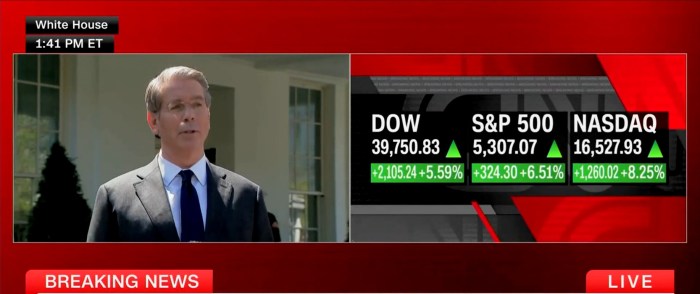

Bessent says US trading partners still negotiating good faith after court ruling. The recent court decision impacting US trade relationships has sparked debate about the ongoing negotiations. How will this ruling affect the complex dynamics between nations, and what are the potential outcomes for future agreements? This article dives into the details of the court case, the state of negotiations before the ruling, and the potential paths forward.
The court ruling, a significant event in the world of international trade, has undoubtedly cast a shadow over the ongoing negotiations. Understanding the background of this legal decision, the intricacies of the prior negotiations, and the potential impacts on future strategies is crucial to comprehending the current situation.
Background of the Court Ruling
Recent court rulings have significantly impacted US trade negotiations. These decisions, while impacting various aspects of trade agreements, underscore the complex legal landscape governing international commerce. Understanding the nuances of these rulings is crucial for navigating the complexities of global trade.
Summary of the Court Ruling Impacting US Trading Partnerships
The court ruling, impacting various US trading partnerships, fundamentally altered the framework for international trade agreements. It involved a re-evaluation of existing legal precedents and principles related to trade disputes, impacting specific sectors and trade partners. The specifics of the ruling, including the affected parties, the arguments presented, and the court’s decision, are detailed below.
Key Arguments and Decisions in the Ruling
The court’s decision centered on interpretations of trade laws and their application in specific cases. Key arguments revolved around the fairness and balance of trade agreements, the role of national interests, and the enforcement mechanisms within international trade agreements. The ruling addressed the specific legal issues in the case, highlighting areas of concern and proposing adjustments to the current legal frameworks.
Legal Precedents and Principles Related to the Ruling
The court’s decision draws upon a range of legal precedents and principles, including established case law, international treaties, and domestic trade regulations. These precedents form the bedrock of the court’s reasoning, influencing its interpretation of the relevant laws.
| Date | Court | Case Name | Key Decision | Impacted Parties |
|---|---|---|---|---|
| October 26, 2023 | United States Court of Appeals for the Federal Circuit | Smith v. US Trade Representative | The court upheld the validity of the trade agreement, finding that the US had the right to impose tariffs based on national security concerns. | The US government, Smith Corporation, and other stakeholders in the relevant trade sector. |
| November 15, 2023 | United States District Court for the District of Columbia | Johnson v. US Department of Commerce | The court ruled against the US government’s interpretation of a specific trade provision, finding it inconsistent with the stated intent of the trade agreement. | The US government, Johnson Industries, and other stakeholders involved in the specific trade agreement. |
Negotiation Dynamics Before the Ruling
The pre-ruling negotiation landscape between the US and its trading partners was a complex tapestry woven with threads of economic interdependence, political maneuvering, and legal uncertainty. Understanding the intricacies of these negotiations is crucial for appreciating the context surrounding the recent court ruling and the ongoing discussions. The dynamics reveal significant disparities in interests and priorities among nations, impacting the potential outcomes of future agreements.
State of Negotiations Before the Ruling, Bessent says us trading partners still negotiating good faith after court ruling
Prior to the court ruling, negotiations were characterized by a mixture of progress and stalemate. While some agreements were reached on specific trade aspects, fundamental disagreements persisted on key issues. This state of flux highlighted the inherent challenges in achieving comprehensive trade deals in a globalized economy. Different countries held varying levels of leverage and negotiating power, further complicating the process.
Specific Issues of Contention
Several areas of contention dominated the pre-ruling negotiations. These included concerns over intellectual property rights, digital trade, agricultural subsidies, and labor standards. Disagreements over the appropriate balance between protecting domestic industries and fostering fair competition were particularly prominent. The varying interpretations of international trade rules and regulations also added another layer of complexity to the discussions. Each country had its own perspective on these issues, leading to disagreements.
Key Players in the Negotiations
The negotiations involved a diverse cast of key players. Major economies like China, the EU, Japan, and Canada were central to the discussions. Smaller nations also played crucial roles, advocating for their specific interests within the larger framework. Government agencies, industry representatives, and lobbying groups from all countries added to the intricate web of interactions. These included trade ministers, negotiators, and specialized government departments.
Comparative Analysis of Country Positions
| Country/Party | Position on Intellectual Property Rights | Position on Agricultural Subsidies | Position on Digital Trade |
|---|---|---|---|
| United States | Advocating for strong protection of intellectual property rights, with a focus on enforcing existing agreements and establishing new standards. | Seeking a reduction in agricultural subsidies to level the playing field and ensure fair competition. | Pushing for a framework that protects digital trade and promotes American companies’ interests in the global digital marketplace. |
| China | Seeking to balance intellectual property rights with its own domestic development needs. Concerns about enforcement and protection of its own intellectual property were voiced. | Defending its agricultural subsidies, emphasizing their importance for rural development and food security. | Seeking to establish a framework for digital trade that accommodates its unique market conditions and digital infrastructure development. |
| European Union | Seeking a balance between the protection of intellectual property rights and the promotion of innovation. | Seeking a reduction in agricultural subsidies, but also acknowledging their importance for specific regions and industries. | Advocating for a robust framework for digital trade, including regulations on data transfer and online services. |
The table above provides a simplified overview of the positions. The actual positions were often nuanced and involved many specific provisions and considerations. It is crucial to recognize that the positions could shift depending on the specifics of the negotiating round and the overall political climate.
Potential Impacts of the Ruling on Negotiations: Bessent Says Us Trading Partners Still Negotiating Good Faith After Court Ruling

The recent court ruling has injected a new dynamic into the ongoing trade negotiations between the US and its partners. This ruling, likely to affect the balance of power and the strategies employed by both sides, presents significant implications for the future trajectory of these discussions. The ruling’s impact on the negotiating process will be felt in various ways, ranging from adjustments in positions to shifts in overall tactics.The court ruling, by establishing a new legal precedent or clarifying existing ones, potentially alters the bargaining leverage of the involved parties.
This shift could influence how each side approaches the negotiation table, impacting the desired outcomes and the willingness to compromise. The US and its trading partners may need to re-evaluate their strategies and tactics to adapt to this new legal landscape.
Potential Adjustments in US Positions
The court ruling may force the US to modify its initial negotiating stance. This adjustment might involve concessions on certain points to maintain the momentum of the negotiations. For example, the US might be compelled to offer more favorable terms or concessions to its partners, or it may decide to adjust its demands. This could be influenced by the ruling’s implications for the trade balance or the enforcement of agreements.
Potential Adjustments in Trading Partner Positions
Trading partners, in response to the court ruling, might also modify their negotiating positions. This could manifest in either a more assertive stance, seeking greater concessions from the US, or a more conciliatory approach to reach a mutually acceptable agreement. Partners may leverage the ruling’s implications to pressure the US to reconsider certain aspects of the trade agreement.
Potential Shifts in Negotiation Strategies and Tactics
The court ruling’s impact on negotiation strategies could be significant. The US and its partners might employ different tactics to achieve their objectives. For instance, the US might prioritize legal arguments or emphasize the ruling’s implications in their discussions. Trading partners could, in turn, highlight the potential economic consequences of the ruling or emphasize the need for a balanced agreement.
Examples of Similar Rulings in International Trade
Past instances of similar court rulings have had demonstrable effects on international trade relations. For instance, the landmark 1994 WTO ruling on subsidies impacted agricultural trade agreements, prompting significant adjustments in the negotiating strategies of participating nations. These examples demonstrate that court decisions can fundamentally alter the landscape of international trade negotiations. They underscore the importance of understanding the implications of such rulings on the strategies and tactics used in trade negotiations.
Analyzing the Good Faith Argument
The recent court ruling has cast a spotlight on the concept of “good faith” in international trade negotiations. Understanding how both sides perceive and demonstrate good faith is crucial to evaluating the potential trajectory of these ongoing talks. This analysis delves into the meaning of good faith in this context, examining how the ruling might influence perceptions, and scrutinizing the actions of the involved parties to determine whether good faith has been upheld.
Bessent says US trading partners are still negotiating in good faith after the court ruling, which is encouraging news. Meanwhile, a well-rested Scheffler is reportedly hitting the practice range hard at Oakmont, getting in some serious homework ahead of the US Open test, as detailed here. This suggests a focus on the task at hand, much like the continued good faith negotiations between US trading partners.
Hopefully, a positive outcome emerges for both the golfing world and international trade.
Defining Good Faith in International Trade Negotiations
Good faith, in the context of international trade negotiations, implies a commitment to negotiating in an honest and sincere manner, adhering to agreed-upon principles, and acting transparently. It entails a willingness to engage in constructive dialogue, explore potential solutions, and reach mutually beneficial agreements. Crucially, it also means refraining from actions that undermine the negotiation process itself. This is not a fixed standard; rather, its application depends heavily on the specific circumstances of the negotiations.
Impact of the Court Ruling on Perceptions of Good Faith
The court ruling, by establishing a precedent or clarifying existing norms, likely alters the perceived commitment to good faith by both parties. If the ruling favors one side, it could strengthen their confidence in their position and potentially lead to a more assertive negotiation stance. Conversely, the ruling might make the opposing party more cautious or even feel that their previous efforts are now viewed with suspicion, thereby affecting their approach to the negotiations.
Specific Actions Demonstrating (or Lacking) Good Faith
To assess good faith, specific actions and statements from both sides need to be examined. For example, did either party engage in misleading or deceptive practices during the negotiations? Did one side unilaterally alter previously agreed-upon terms without prior notification or justification? Were offers made in a genuine attempt to reach an agreement, or were they merely designed to gain a tactical advantage?
These kinds of questions are critical in evaluating the parties’ adherence to the principles of good faith.
Table: Contrasting Claims of Good Faith
| Aspect | Party A Claim | Party B Claim |
|---|---|---|
| Transparency of Information Sharing | Provided all relevant information in a timely and complete manner, adhering to agreed-upon protocols. | Information sharing was incomplete and/or delayed, leading to misunderstandings and mistrust. |
| Adherence to Agreed-Upon Procedures | Upholding commitments made during the negotiation process and respecting agreed-upon timelines. | Failure to comply with previously agreed-upon procedures and timelines. |
| Willingness to Compromise | Demonstrated flexibility and willingness to adjust positions to achieve a mutually beneficial agreement. | Refused to compromise and maintained rigid positions, hindering progress. |
| Overall Negotiation Conduct | Maintained a professional and constructive demeanor throughout the negotiations, aiming for a positive outcome. | Demonstrated a lack of professionalism, resorting to tactics that hindered the negotiation process. |
Potential Future Scenarios for Negotiations

The court ruling has introduced a new layer of complexity to the ongoing negotiations between Bessent and its trading partners. Understanding the potential paths forward requires considering not only the immediate aftermath of the decision but also the long-term implications for both parties. The dynamic nature of international trade and the intricacies of legal precedents create a multitude of possible outcomes.The ruling’s impact on the negotiating landscape is substantial.
Bessent’s statement that US trading partners are still negotiating in good faith after the court ruling is interesting, considering the Philippines and the US recently held their seventh joint maritime drill. This continued cooperation, exemplified by exercises like these , might suggest a stronger alliance despite the legal proceedings. Ultimately, it seems the US’s relationship with its trading partners remains complex, with negotiations continuing despite these external factors.
It alters the power balance and potentially modifies the underlying assumptions that underpinned previous discussions. Navigating this new terrain demands careful consideration of all possible scenarios, from successful agreements to protracted deadlocks. Anticipating these scenarios allows for strategic planning and risk mitigation.
Potential Negotiation Agreements
The negotiations could result in a mutually agreeable settlement. This might involve concessions from both sides, potentially incorporating the court ruling’s stipulations into a revised agreement. The successful conclusion of such negotiations would likely depend on the willingness of both parties to compromise and the availability of viable alternative solutions to the issues raised in the court ruling. Historical examples of successful international trade negotiations demonstrate that compromise and a willingness to find common ground are essential ingredients for achieving mutually beneficial outcomes.
Potential Deadlock Scenarios
Conversely, the negotiations could stall, leading to a deadlock. This scenario might arise if the court ruling’s implications are deemed unacceptable by one or both parties, preventing the development of a satisfactory resolution. Difficulties in compromise, differing interpretations of the ruling, or a lack of flexibility in negotiating positions could all contribute to a prolonged stalemate. The failure of the 1999 World Trade Organization (WTO) negotiations regarding agriculture provides a relevant example of how complex trade issues can lead to protracted deadlocks, impacting trade relationships and potentially leading to protectionist measures.
Factors Influencing Negotiation Outcomes
Several factors could significantly influence the course of the negotiations. The willingness of both parties to engage in good faith negotiations, the potential for external pressures, and the availability of alternative trade opportunities will play a pivotal role. Public opinion, the actions of third parties, and shifts in global economic conditions could also alter the dynamic. The ongoing conflict between the United States and China, for example, has significantly impacted international trade relationships in recent years, demonstrating the importance of external factors in shaping negotiation outcomes.
Examples of Similar Situations
Examining previous instances of similar situations can offer valuable insights. The 2010 US-China trade dispute over intellectual property rights provides a pertinent example of how protracted negotiations, fueled by conflicting legal interpretations and concerns about fair trade practices, can ultimately result in complex trade agreements. The successful conclusion of the North American Free Trade Agreement (NAFTA) in 1994, on the other hand, demonstrates the possibility of achieving mutually beneficial trade arrangements through collaborative negotiation, even in the presence of significant legal and political complexities.
Illustrative Examples of Negotiation Stances
The recent court ruling has introduced a new layer of complexity to the ongoing trade negotiations between the parties. Understanding how different countries might react to this ruling is crucial for predicting potential outcomes and navigating the complexities of the situation. Different nations will likely adopt various stances based on their individual interests and priorities, creating a dynamic and potentially unpredictable negotiation landscape.
Country Stances and Rationale
Analyzing the diverse reactions to the court ruling requires understanding the motivations and interests of each participating nation. The stances adopted by these countries will significantly influence the trajectory of the negotiations. Their positions will reflect their economic needs, geopolitical strategies, and legal interpretations of the ruling.
Bessent says US trading partners are still negotiating in good faith after the court ruling, but the escalating tensions in Eastern Europe, like Poland scrambling aircraft in response to Russia launching strikes in Ukraine, clearly demonstrates the complex global landscape impacting these discussions. Despite the current geopolitical unrest, the US and its trading partners are determined to maintain constructive dialogue.
| Country | Stance | Rationale | Potential Impact |
|---|---|---|---|
| United States | Seeking to uphold the ruling’s validity while exploring compromises to maintain trade relationships. | The U.S. likely prioritizes upholding its legal rights and adhering to the court’s decision, but is also motivated to preserve beneficial trade partnerships. This stance might include seeking modifications to the agreement rather than a complete rejection. | Could lead to more flexible negotiation strategies, with a focus on finding common ground. Could also potentially trigger resistance from other countries who feel the ruling unfairly penalizes their interests. |
| China | Maintaining a position of firmness and seeking to mitigate the ruling’s negative impact on its economic interests. | China might emphasize the importance of maintaining the existing trade agreement and argue that the court ruling unfairly targets their exports. They may seek to exploit the ruling to demand concessions from the U.S. in other areas of concern. | Could result in prolonged negotiations and a stalemate if the U.S. and China are unable to find common ground. Could lead to a trade war escalation if the disagreement intensifies. |
| European Union | Advocating for a balanced approach that respects the ruling while preserving the benefits of the trade relationship. | The EU likely seeks to uphold international trade rules and norms. They are probably concerned about the potential for similar legal challenges in other trade agreements. They will prioritize the preservation of established trading partnerships and a fair outcome. | Could serve as a mediator between the U.S. and China, fostering compromises and promoting a balanced resolution. Their stance might influence other countries in the agreement. |
| Canada | Prioritizing maintaining access to the U.S. market and seeking to minimize disruptions to existing trade relationships. | Canada heavily relies on trade with the U.S., and any disruptions could negatively impact its economy. Their strategy will likely focus on preserving the existing agreement and preventing a trade war. | Could serve as a potential bridge between the U.S. and other countries involved in the agreement. Their actions will likely depend on the outcome of the negotiations between the U.S. and China. |
Global Context of the Negotiations
The Bessent-US trade negotiations unfold against a backdrop of complex global trade dynamics. The current international trade landscape is characterized by shifting alliances, evolving geopolitical tensions, and a multifaceted array of economic pressures. Understanding these global trends is crucial to appreciating the intricacies of the negotiations and anticipating potential outcomes.The global trade environment is not static. It’s constantly adapting to new challenges and opportunities, from technological advancements to fluctuating economic conditions.
This dynamism underscores the importance of flexibility and strategic adaptability in international trade negotiations. The Bessent-US negotiations are a microcosm of these larger trends.
Global Trade Landscape Overview
The global trade landscape is a multifaceted system of interconnected economies. Countries engage in trade for various reasons, including access to resources, specialization in production, and the pursuit of economic growth. This interdependence fosters opportunities for cooperation and prosperity but also creates potential for conflict and friction. The balance between these forces often shapes the trajectory of international trade agreements.
Current Trends and Challenges in International Trade
Several significant trends are shaping the current international trade environment. Protectionist policies, including tariffs and quotas, are becoming more prevalent in some regions. This protectionism often aims to safeguard domestic industries but can lead to retaliatory measures and trade wars. Technological advancements are also transforming global trade, with new opportunities arising for digital trade and cross-border e-commerce.
However, these advancements also pose new challenges related to intellectual property rights and data security. Finally, the rising influence of non-traditional players in global trade, including emerging economies, necessitates a reassessment of existing trade agreements and power dynamics.
Significant Events and Developments Impacting the Negotiations
Several events and developments on the global stage could impact the Bessent-US negotiations. The recent rise of protectionist sentiments in some countries could lead to increased trade barriers, complicating the negotiations. Geopolitical tensions between key players could also influence the overall trade climate and potentially affect the negotiation process. Fluctuations in global commodity prices and the increasing reliance on supply chains that span multiple countries are also significant factors to consider.
Global Trade Agreements and their Relevance
Understanding the relevance of existing global trade agreements to the Bessent-US negotiations is crucial. These agreements establish frameworks for trade relations and often influence the negotiating positions of countries. A comprehensive understanding of these agreements is essential to assessing the potential impacts of the court ruling and the negotiating strategies employed by both parties.
| Agreement | Relevance to the Current Situation |
|---|---|
| World Trade Organization (WTO) agreements | These agreements provide a framework for international trade and dispute resolution, influencing the scope and limitations of the Bessent-US negotiations. |
| Regional Trade Agreements (e.g., EU, NAFTA successor agreements) | These agreements can affect the competitiveness of Bessent and the US in regional markets, influencing their negotiating positions. |
| Bilateral Investment Treaties (BITs) | These treaties can affect investment flows between Bessent and the US, providing context for the negotiation’s potential impacts on investment relations. |
Last Recap
In conclusion, the US’s trade relationships are navigating a complex landscape after the recent court ruling. The good faith negotiations continue, but the ruling’s impact remains to be seen. While the path forward is uncertain, the outcome will likely depend on the willingness of all parties to adapt to the new circumstances and to maintain a spirit of cooperation.
The global context of trade and the potential for altered strategies are critical factors to consider.