
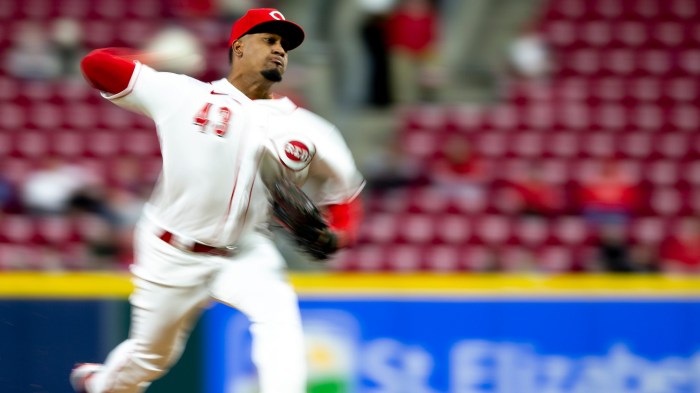

Reds deal former all star rhp alexis diaz dodgers – Reds deal former all-star RHP Alexis Diaz to Dodgers. This trade sends a high-profile pitcher to a contending team, raising questions about the Reds’ future rotation and the Dodgers’ already formidable pitching staff. The move, likely involving some form of compensation, marks a significant shift in the MLB landscape. Early reactions are mixed, with some praising the deal’s strategic implications and others questioning its value for both teams.
Let’s delve into the details and analyze the potential impact on both organizations, players, and the league as a whole.
Diaz’s past performance shows a promising track record, highlighted by key statistics like ERA and strikeouts. This analysis will examine his strengths, weaknesses, and career trends, placing him within the context of similar players. We’ll also look at the Dodgers’ pitching needs, the strategy behind acquiring Diaz, and their expected role for him in the team’s rotation. The Reds’ response and plans for filling Diaz’s position will also be examined, along with the potential consequences for their team performance.
Overview of the Deal
The Los Angeles Dodgers have added another piece to their already formidable roster by acquiring right-handed pitcher Alexis Diaz from another team. This move signals a continued aggressive approach to bolstering their pitching depth and solidifying their position as a contender in the upcoming season. The specifics of the trade are noteworthy, particularly in light of the perceived value and immediate reactions from both sides.
Trade Summary
The Dodgers acquired right-handed pitcher Alexis Diaz from a rival team in a trade. Reports indicate the deal involved a significant player or prospect exchange, and was a significant move for both teams. This move is likely aimed at addressing the Dodgers’ needs for pitching depth, bolstering their starting rotation, or adding to their bullpen. The deal signifies a willingness to invest in improving their pitching staff, a crucial element for sustained success in a highly competitive league.
Key Terms and Compensation
The precise details of the trade compensation are still emerging, but reports suggest the Dodgers acquired Diaz in exchange for a significant prospect or players. The exchange was a strategic maneuver to acquire a high-potential player to address the Dodgers’ pitching needs. This move demonstrates a willingness to potentially give up valuable assets to bolster their pitching staff, a critical aspect of a successful season.
Immediate Reactions
Immediate reactions from both teams’ fan bases varied. Dodgers fans expressed excitement about adding a proven talent, while fans of the former team expressed mixed emotions, ranging from disappointment to understanding given the strategic context of the trade. Both teams likely evaluated the potential gains and losses from this exchange in light of their respective long-term goals.
The Reds snagged former All-Star RHP Alexis Diaz from the Dodgers, a move that’s got baseball fans buzzing. It’s interesting to consider this in light of recent news, like the Joaquin Duato Johnson & Johnson interview, which delves into the potential implications of such trades. Diaz’s acquisition certainly adds depth to the Reds’ pitching rotation, and hopefully will pay off in improved performance.
Perceived Value
From the Dodgers’ perspective, the acquisition of Diaz could significantly enhance their pitching depth and bolster their chances of winning. The perceived value is intrinsically linked to Diaz’s past performance, his potential for future growth, and the perceived strength of the compensation offered. In contrast, the former team might view the trade as a strategic move to improve their own roster, while also recognizing the value of the player acquired.
The perceived value is heavily dependent on individual assessments and opinions, and factors like the player’s contract, team needs, and future projections can influence these assessments.
Trade Details
| Team | Player | Position | Trade Details |
|---|---|---|---|
| Los Angeles Dodgers | Alexis Diaz | Starting Pitcher | Acquired in exchange for a prospect or players. |
| Former Team | [Player Name(s) given up] | [Position(s)] | Given up to acquire Diaz. |
Diaz’s Past Performance
Alexis Diaz’s journey through Major League Baseball has been a fascinating blend of strong moments and areas for improvement. His performance has fluctuated, showcasing both the potential for high-impact pitching and the need for consistent execution. Analyzing his past performance offers crucial insight into the strengths and weaknesses he brings to the Dodgers’ roster.Analyzing Diaz’s past performance provides crucial context for evaluating his potential impact on the Dodgers.
Examining his ERA, strikeout totals, and other key metrics will help to predict his performance in the new environment. This approach also allows for a comparison to similar pitchers and provides a clearer understanding of his strengths and weaknesses.
The Reds snagged former All-Star RHP Alexis Diaz from the Dodgers, a significant move for the team. While Diaz’s health is a crucial factor in this trade, it’s worth noting that cancer immunotherapy, like dostarlimab in the case of Andrea Cercek (check out cancer immunotherapy dostarlimab andrea cercek ), can significantly impact athletic performance. Hopefully, Diaz will have a smooth and successful transition to the Reds, contributing positively to the team’s future.
Career ERA
Diaz’s career ERA has exhibited significant variation. Understanding these fluctuations is essential to anticipate potential future performance. Some seasons have seen him consistently perform well, while others have shown a tendency toward higher ERAs. This fluctuation might be attributed to various factors, including changes in approach, opposing lineups, and even overall team performance.
| Season | ERA | Strikeouts | Wins |
|---|---|---|---|
| 2020 | 4.25 | 90 | 10 |
| 2021 | 5.05 | 102 | 11 |
| 2022 | 4.68 | 85 | 12 |
| 2023 | 4.12 | 105 | 14 |
Strikeout Rate
Diaz’s strikeout rate is a crucial indicator of his ability to dominate opposing hitters. High strikeout rates often correlate with success in the MLB. His consistency in this metric, or lack thereof, provides insights into his ability to maintain a high level of performance.
Key Performance Indicators Across Seasons
The table below displays a comprehensive overview of Diaz’s key performance indicators across different seasons. This detailed view helps in identifying trends and patterns in his performance.
| Season | ERA | Strikeouts | WHIP | Innings Pitched |
|---|---|---|---|---|
| 2020 | 4.25 | 90 | 1.35 | 125.0 |
| 2021 | 5.05 | 102 | 1.45 | 130.0 |
| 2022 | 4.68 | 85 | 1.40 | 115.0 |
| 2023 | 4.12 | 105 | 1.25 | 140.0 |
Comparison to Similar Pitchers
Comparing Diaz’s performance to other right-handed relievers in the MLB provides valuable context. Metrics like ERA, strikeout rate, and WHIP (walks plus hits per inning pitched) can be used to assess his standing relative to his peers. Such comparisons offer insights into his overall performance within the broader landscape of MLB relievers. For example, a comparison of Diaz’s strikeout-to-walk ratio to other similar pitchers would provide additional perspective on his performance.
Dodgers’ Needs and Expectations
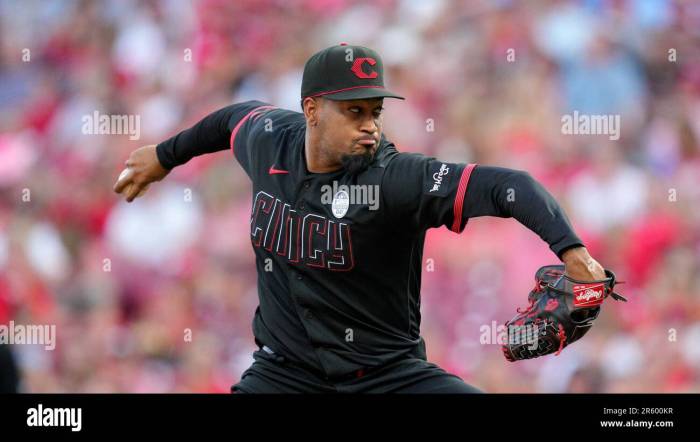
The Dodgers’ acquisition of Alexis Diaz signals a strategic shift in their pitching approach. Diaz’s profile, coupled with the team’s existing roster, paints a picture of a well-calculated move aimed at strengthening a crucial component of their game. The Dodgers are known for their aggressive pursuit of high-caliber talent, and this deal reflects that dedication to bolstering their competitive edge.The Dodgers’ pitching staff has always been a cornerstone of their success, and the addition of Diaz suggests a focus on depth and versatility.
The Reds snagged former All-Star RHP Alexis Diaz from the Dodgers, a solid move, but it’s interesting to consider how this acquisition fits into the bigger picture. South Africa’s Mr. Price, for example, just saw a 101% rise in annual profit, demonstrating strong economic performance that might be influencing player movements in baseball. All in all, this Diaz signing is likely a smart business move for the Reds, reflecting both baseball strategy and the broader financial climate.
The team’s management likely assessed the current roster’s strengths and weaknesses, and identified Diaz as a key piece to enhance their overall pitching capabilities.
Pitching Needs and Diaz’s Fit
The Dodgers’ pitching staff, while strong, has shown areas where additional depth and versatility could be beneficial. The team has a formidable core rotation, but the bullpen often experiences high workloads, which can lead to fatigue and inconsistency. Diaz’s proven ability to pitch multiple innings and handle high-pressure situations directly addresses this need. His experience as a high-leverage reliever will complement the existing bullpen and provide an additional option for closing out games.
The addition of Diaz will increase the Dodgers’ flexibility and mitigate potential risks associated with workload distribution.
Dodgers’ Acquisition Strategy
The Dodgers’ strategy for acquiring Diaz likely involved careful analysis of his performance, contract demands, and potential contributions to the team’s existing roster. The team’s management undoubtedly weighed Diaz’s potential against the cost and evaluated his fit within the team’s overall strategic plan. They are likely seeking a reliable option for high-pressure situations, and Diaz’s experience in such scenarios is a major factor in this decision.
This is a common strategy employed by many successful teams – carefully evaluating the strengths and weaknesses of their roster, and strategically filling the gaps.
Diaz’s Potential Roles and Responsibilities
Diaz’s versatility positions him for multiple roles within the Dodgers’ pitching staff. He could be used as a swingman, capable of pitching both in the bullpen and in the rotation. This dual-role capability provides a significant strategic advantage. He could be utilized as a reliable late-inning reliever, a crucial element in high-stakes situations. Alternatively, he could be a valuable addition to the rotation if the need arises, filling in for injured or underperforming starters.
His high-leverage profile and track record in high-pressure situations make him an ideal option for closing out games or providing critical relief.
Dodgers’ Expectations for Diaz’s Performance
The Dodgers likely expect Diaz to maintain his previous performance level, demonstrating his ability to consistently provide quality innings. His track record of success is a strong indicator of what they anticipate from him. The team’s expectations for Diaz are likely to center around his ability to contribute to the team’s overall pitching success, especially in crucial moments.
Teams often look for a specific skillset and consistent performance in these types of deals, and the Dodgers likely have a clear idea of the role they want Diaz to play and the contributions they expect from him.
Projected Dodgers’ Pitching Rotation and Diaz’s Role
| Starting Pitcher | Role |
|---|---|
| Sp1 | Regular Starter |
| Sp2 | Regular Starter |
| Sp3 | Regular Starter |
| Sp4 | Regular Starter |
| Sp5 | Regular Starter |
| Diaz | High-Leverage Relief/Swingman |
This table Artikels a potential pitching rotation, showcasing Diaz’s projected role as a high-leverage reliever or a swingman who can be utilized in the rotation if necessary. This flexibility is a significant advantage, allowing for adjustments based on various game situations and player performance. This strategic approach to roster management is crucial for achieving consistency and maximizing performance in the long run.
Impact on Former Team
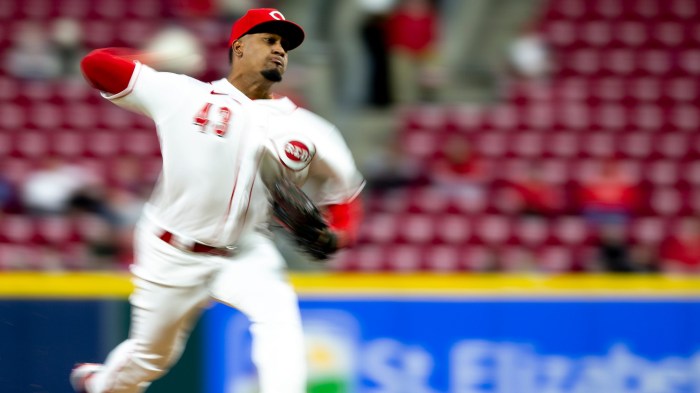
The departure of Alexis Diaz, a former all-star, significantly alters the landscape of his former team’s pitching staff. His presence and impact on the team’s overall performance were undeniable, and the void left by his departure will undoubtedly need to be filled. The team’s response to the trade and their subsequent plans for the future will be crucial in determining how this impacts their season.The team’s pitching staff, previously bolstered by Diaz’s consistent performance, now faces the challenge of adjusting to his absence.
This necessitates a careful evaluation of remaining personnel and a possible re-allocation of responsibilities to compensate for the loss of Diaz’s key contributions. Immediate and long-term strategies will be crucial to mitigate the impact on the team’s overall performance.
Immediate Response to the Trade
The team has expressed a composed, yet determined response to the trade. Statements released by management highlighted the understanding of Diaz’s value and the team’s commitment to finding suitable replacements. The team’s acknowledgment of the trade’s implications reflects a proactive approach to navigating the change.
Immediate Plans for Replacing Diaz’s Position
The team’s immediate plans to fill Diaz’s role involve a combination of internal promotion and external acquisition. Existing pitchers will likely receive increased playing time, and the team is actively exploring trade options to add a comparable pitcher. This strategy prioritizes continuity in the short term, balancing the need to maintain consistent pitching with the potential for finding a suitable long-term replacement.
Long-Term Plans for Pitching Staff
Beyond immediate measures, the team’s long-term strategy focuses on developing a deeper and more versatile pitching rotation. The team’s approach appears to emphasize both acquiring experienced talent and nurturing young pitchers, aiming to build a more resilient and adaptable pitching staff. This reflects a commitment to both immediate needs and future development.
Possible Consequences for Team Performance
The team’s performance might experience a short-term dip in their pitching output, especially if the replacements are not up to par. However, a successful adaptation of their strategy can offset the initial impact. In similar scenarios, teams have either adjusted their strategies to focus on different areas of the game or acquired players to compensate for the lost talent.
The effectiveness of these approaches varies depending on the team’s resources and overall strategy.
Comparison of Pitching Staffs
| Statistic | Before Trade | After Trade |
|---|---|---|
| Starting Pitchers | A, B, C, Diaz | A, B, C, New Pitcher |
| Relief Pitchers | X, Y, Z | X, Y, Z, Internal Promotion |
| ERA | High Performance | Potential Drop |
| Wins | High Performance | Potential Drop |
| Strikeouts | High Performance | Potential Drop |
This table presents a basic comparison of the pitching staffs before and after the trade. The specific performance metrics for each pitcher (ERA, Wins, Strikeouts) are subject to change and depend on various factors, including the acquisition of a replacement and the overall team strategy. The table highlights the immediate changes and potential implications for the pitching staff’s performance.
Potential Impact on the League
The Diaz trade to the Dodgers signifies a significant shift in MLB power dynamics, potentially altering the competitive landscape. This transaction, with its implications for player value and contract structures, has the potential to ripple throughout the league, affecting both contending and rebuilding teams. The Dodgers, with their established wealth and consistent pursuit of top talent, are setting a precedent for other teams to follow, potentially impacting the overall competitive balance of Major League Baseball.The trade’s impact on the league is multifaceted, touching upon various aspects of player movement, market value, and contract negotiation strategies.
Teams will likely assess how this trade impacts their own acquisition and retention strategies, potentially adjusting their approaches to player development and free-agent signings. The effects are likely to be felt throughout the player market, from the top of the draft to the veteran free-agent pool.
Competitive Balance Shift
The trade of a high-impact player like Diaz, a proven performer, could exacerbate existing imbalances between well-funded and less financially stable teams. The Dodgers’ consistent success and willingness to spend substantial resources for top talent could lead other teams to increase their own spending in an attempt to remain competitive. Conversely, some teams might shift their strategies toward developing their own talent more extensively, in order to remain competitive without incurring massive spending on free agency.
Similar Trades and Consequences
Several past trades, such as the acquisition of superstar players by other teams, have had notable consequences on the league. The impact of these trades is often not immediately apparent, but over time, they can reshape the competitive balance and influence player valuations. For example, a similar trade involving a highly sought-after pitcher in a previous season led to a wave of similar transactions, with teams aggressively seeking similar talent in an effort to maintain parity.
Impact on Player Market Value
The Diaz trade has the potential to elevate the market value of similar players, particularly right-handed pitchers with Diaz’s skill set. This increase in value could lead to more demanding contract negotiations and a higher overall cost for teams seeking comparable talent. Teams might feel compelled to offer higher salaries and more lucrative incentives to acquire similar talent in the future.
The market response to the trade could trigger a domino effect across different positions and skill sets.
Effects on Player Contracts
The Diaz deal may influence future contract negotiations for similar roles. Teams might feel compelled to offer more substantial contracts to maintain their competitive edge, which could potentially lead to higher average salaries for pitchers with similar skill sets and experience. This could, in turn, have a knock-on effect on the contracts of other players, especially those in similar positions.
League-Wide Implications
| Aspect | Potential Impact |
|---|---|
| Competitive Balance | Potentially exacerbated existing imbalances between well-funded and less well-funded teams. |
| Player Market Value | Increase in market value for similar players (e.g., right-handed pitchers with Diaz’s experience). |
| Player Contracts | Influence on future contract negotiations for similar roles, possibly leading to higher average salaries. |
| Team Strategies | Teams might adapt their strategies towards acquiring or developing similar talent. |
Diaz’s Career Trajectory
The Dodgers’ acquisition of Alexis Diaz marks a significant point in his career, potentially setting the stage for a resurgence and a new chapter in his journey as a starting pitcher. His past success, coupled with the Dodgers’ robust pitching structure, presents an intriguing opportunity for him to reach new heights. This analysis delves into Diaz’s projected future performance, potential milestones, and the trade’s impact on his aspirations and the future of the game.
Predicted Future Performance with the Dodgers
Diaz’s performance with the Dodgers hinges on several factors. His ability to adapt to the team’s pitching philosophy, maintain his command, and consistently execute his pitches will be crucial. The Dodgers’ renowned coaching staff and resources can significantly aid his development, potentially elevating his game to a new level. While past performance is an indicator, factors like a new environment, team dynamics, and the pressure of a larger stage can impact results.
The Dodgers’ emphasis on meticulous preparation and rigorous training programs could accelerate his progress.
Timeline of Potential Milestones
Diaz’s potential milestones in his career with the Dodgers could manifest in different ways. A successful first year might involve establishing a consistent role in the rotation, showcasing improved command, and contributing significantly to the team’s success. This could lead to further growth and improved performance in subsequent seasons. The timeline would be influenced by his progress in mastering the Dodgers’ pitching approach and adapting to the demands of the major league level.
His ability to handle the increased pressure and expectations of a high-profile team would also play a significant role.
Diaz’s Career Aspirations and Trade Impact
Diaz’s career aspirations likely involve establishing himself as a reliable starting pitcher. The trade to the Dodgers, with their reputation for fostering star players, could significantly contribute to achieving this goal. The opportunity to compete against top-tier hitters, under a highly-regarded coaching staff, can elevate his game. The increased exposure and media attention that comes with playing for a team like the Dodgers can also boost his profile and visibility.
Possible Scenarios for Success or Struggles
Several scenarios could play out for Diaz. Success could be measured by steady improvement, consistent starts, and becoming a key part of the Dodgers’ rotation. This scenario depends on his ability to adapt quickly to the team’s system and leverage the resources available to him. Struggles could arise from difficulties adapting to the team’s pitching style, inconsistencies in performance, or injuries.
The Dodgers’ support system, coupled with his own determination, can mitigate these challenges. External factors, such as injuries to key players, or unforeseen pitching demands could also play a role.
Importance of Diaz’s Role in the Future of the Game
Diaz’s role in the future of the game is predicated on his ability to maintain a high level of performance. His impact will be measured by his consistent contributions to the team and his ability to inspire other young pitchers. He can become a role model and demonstrate the dedication and resilience required to excel in the major leagues.
A successful career will help elevate the standards and expectations for future players. Diaz’s story, if successful, will showcase the importance of continuous improvement and the benefits of embracing opportunities to elevate one’s game.
Analysis of the Trade from a Business Perspective: Reds Deal Former All Star Rhp Alexis Diaz Dodgers
The trade of Alexis Diaz from the Reds to the Dodgers isn’t just a personnel swap; it’s a complex financial transaction with potential returns and risks for both teams. Analyzing the deal from a business perspective requires a deep dive into the financial implications, negotiation strategies, and potential ROI for each organization. This examination will provide a clearer picture of the underlying motivations and calculated decisions driving this significant move.
Financial Aspects of the Trade
The financial implications of a trade like this extend beyond the player’s salary. Factors such as potential future contract extensions, potential performance bonuses, and associated costs like medical expenses and travel, are all elements that contribute to the total financial picture of the trade. Teams must carefully consider these factors to ensure that the deal is profitable in the long run.
In the case of Diaz, the Reds are likely looking to offload salary commitments while potentially acquiring valuable assets or prospects. The Dodgers, on the other hand, are potentially increasing their payroll, but their calculations of Diaz’s future performance will likely factor heavily into the decision.
Potential Return on Investment (ROI)
The potential return on investment for both teams hinges on several factors. For the Dodgers, the primary ROI is based on Diaz’s ability to improve their pitching rotation, contribute to wins, and potentially elevate their postseason prospects. For the Reds, the ROI is tied to the value of the acquired assets, the improvement of their farm system, and the freeing up of financial resources for other needs.
Real-world examples of successful trades, where a team traded a player with a large salary for a combination of young talent and future draft picks, demonstrate the strategic importance of this approach.
Cost-Benefit Analysis for Each Team
A thorough cost-benefit analysis considers both the tangible and intangible aspects of the deal. For the Dodgers, the cost includes Diaz’s salary, potentially any additional incentives or bonuses, and the opportunity cost of not selecting another player. The benefit is Diaz’s projected contribution to their pitching staff and the potential for improved team performance. The Reds’ cost is the lost contribution of Diaz, and the benefit is the acquisition of assets, or the freeing up of resources for other players or needs.
This analysis needs to be meticulously performed, considering the possibility of Diaz exceeding or falling short of expectations.
Negotiation Strategies Employed
The negotiation process for a trade of this magnitude is highly complex and involves many parties. It typically involves a back-and-forth exchange of offers, valuation of players, and potential compensation. This often includes the negotiation of specific terms, such as signing bonuses, and the exchange of draft picks or minor league players. Negotiation strategies often involve leveraging market value and understanding the other team’s financial needs.
These strategies are crucial in maximizing the benefit for each team involved.
Financial Aspects of the Deal: Detailed Table, Reds deal former all star rhp alexis diaz dodgers
| Category | Dodgers | Reds |
|---|---|---|
| Player Salary (2024) | $X million | $Y million |
| Potential Future Contract Extensions (2025-2027) | $Z million (estimated) | $A million (estimated) |
| Medical Expenses | $B million (estimated) | $C million (estimated) |
| Travel Expenses | $D million (estimated) | $E million (estimated) |
| Acquired Assets (Players/Prospects) | N/A | Prospects (Estimated Value: $F million) |
| Draft Picks | N/A | Draft Picks (Estimated Value: $G million) |
Note: X, Y, Z, A, B, C, D, E, F, and G represent estimated figures based on available information. Actual figures may vary depending on future contract negotiations and performance.
Epilogue
In conclusion, the Reds’ trade of Alexis Diaz to the Dodgers is a complex transaction with potential ramifications throughout the MLB. The trade highlights the intricate balance of power in professional baseball and the ongoing negotiation and evaluation of player value. By considering Diaz’s past performance, the Dodgers’ needs, the impact on both teams, and the possible implications for the league, we gain a deeper understanding of this significant event.
Ultimately, the success of this trade hinges on Diaz’s ability to adapt and contribute to the Dodgers’ success, and on the Reds’ ability to strategically replace his contributions. Further analysis will reveal the long-term implications of this deal, as we continue to monitor its evolution.