
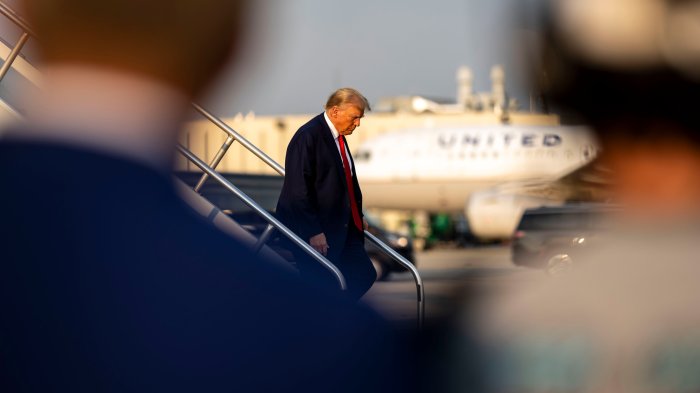

Trumps trade whims strengthen eus hawkish camp – Trump’s trade whims strengthen EU’s hawkish camp, forcing a re-evaluation of the transatlantic relationship. This post delves into the historical context of US-EU trade, analyzing Trump’s specific tactics and the EU’s response. We’ll examine how these actions impacted the EU’s foreign policy, potentially shaping future relations. The economic repercussions and key figures involved will also be explored.
Understanding the complexities of international trade requires examining the historical context of US-EU relations, specifically focusing on trade agreements and disputes. Trump’s unique approach, often characterized by protectionist measures, significantly influenced the EU’s stance. His trade policies sparked a series of disputes, each with unique circumstances and outcomes. The post further analyzes the EU’s countermeasures, the role of key individuals, and the arguments used to justify their actions.
Understanding the Context
The recent trade tensions between the US and the EU, exacerbated by Trump’s policies, have significantly reshaped the transatlantic landscape. Understanding this dynamic requires a historical perspective on US-EU trade relations, the evolution of EU trade policy, and the concept of “hawkish” foreign policy. This context reveals the complexities driving the current situation and its potential implications.The US-EU trade relationship has been a complex tapestry woven through decades of agreements and disputes.
Early relations were marked by cooperation, culminating in the creation of institutions like the GATT and the WTO. However, disagreements on specific trade issues have emerged, leading to periods of friction and negotiation.
Historical Overview of US-EU Trade Relations
US-EU trade relations have a long history, evolving from initial cooperation to periods of conflict and negotiation. The formation of the European Economic Community (EEC) in the 1950s marked a significant shift, laying the groundwork for a more unified European market. Subsequent agreements, like the Transatlantic Trade and Investment Partnership (TTIP), aimed to further liberalize trade but were ultimately unsuccessful.
The impact of these agreements and disputes significantly shaped the current political landscape.
Evolution of the EU’s Stance on Trade Policy
The EU’s approach to trade policy has evolved over time. Initially focused on creating a common market, the EU has increasingly adopted a more protectionist stance in response to perceived unfair trade practices from certain countries, including the US. This shift is influenced by the balance between fostering economic growth and protecting domestic industries.
The Concept of “Hawkish” Foreign Policy and its Implications for Trade Negotiations
A “hawkish” foreign policy, characterized by a tough and assertive stance in international relations, can significantly influence trade negotiations. Such policies often prioritize national interests over international cooperation, potentially leading to protectionist measures and trade disputes. This approach can lead to retaliatory actions from other nations, creating cycles of escalating trade conflicts.
Current Political Climate in the US and the EU
The current political climate in both the US and the EU plays a significant role in shaping trade policy. In the US, the administration’s focus on national interests and protectionism has driven specific trade policies. Conversely, the EU’s approach reflects a balance between economic growth and domestic industry protection. Key figures in both regions, like President [Name] and [Name of relevant EU official], have shaped the political landscape and their stances significantly influence trade negotiations.
Potential Economic Impacts of US Trade Policies on the EU
The US’s trade policies, particularly those emphasizing protectionism, can have substantial economic impacts on the EU. These impacts include decreased trade volumes, potential job losses in EU sectors reliant on US markets, and higher prices for consumers. The effects can vary depending on specific sectors and the nature of retaliatory measures.
Examples of Trade Disputes
- The imposition of tariffs on steel and aluminum by the US in 2018 prompted retaliatory measures from the EU, demonstrating the potential for escalating trade disputes.
- The ongoing disputes over subsidies for certain industries illustrate the complexity of international trade negotiations.
Comparative Analysis of Trade Policies
| Characteristic | US | EU |
|---|---|---|
| Trade Policy Stance | Protectionist | Protectionist, with emphasis on trade agreements |
| Key Figures | [Name of relevant US officials] | [Name of relevant EU officials] |
| Economic Impact on EU | Potential decrease in trade volumes, increased costs for EU consumers | Potential decrease in trade volumes, increased costs for EU consumers, potential job losses in export-oriented industries |
Analyzing Trump’s Trade Tactics
Donald Trump’s presidency was marked by a significant shift in US trade policy, characterized by a protectionist approach that often clashed with established international agreements and long-standing trade relationships. This shift had profound implications for the global economy and international relations, notably impacting the United States’ relationship with the European Union. His strategies, while aiming to bolster American industries, faced considerable criticism for their potential economic and political consequences.Trump’s trade policies were largely driven by a belief that existing agreements were disadvantageous to the United States.
He argued that these deals fostered unfair competition and resulted in job losses in American industries. His approach was often confrontational, leading to trade disputes and retaliatory tariffs. This section will analyze the key characteristics of Trump’s trade policies, focusing on the specific disputes with the EU and the underlying motivations behind his actions.
Key Characteristics of Trump’s Trade Policies
Trump’s trade policies were distinguished by a pronounced emphasis on bilateral agreements, often prioritizing national interests above international cooperation. He frequently employed tariffs and other trade barriers as leverage to achieve his objectives. A core tenet of his approach was a belief in renegotiating existing trade deals, including those with longstanding partners like the EU.
Trump’s unpredictable trade policies are clearly bolstering the more hawkish stance within the EU. This comes at a time when the Bank of England isn’t overly optimistic about inflation peaking, as reported in bank england is not sanguine about inflation hump greene says. The interconnected nature of global economics means these diverging viewpoints are likely to create further ripples, potentially impacting the already-fragile global trade landscape, and thus further strengthening the EU’s more assertive position in response to Trump’s trade maneuvers.
Specific Trade Disputes Between the US and the EU
The US and the EU engaged in several significant trade disputes during Trump’s presidency. Notable disagreements arose over steel and aluminum tariffs, auto tariffs, and agricultural products. These disputes often involved retaliatory measures, leading to uncertainty and potential economic damage for businesses on both sides of the Atlantic.
Trump’s unpredictable trade policies seem to be solidifying the EU’s more assertive stance. Given that President Xi Jinping of China will likely meet with Trump this week, as the White House announced ( trump chinas xi will likely speak this week white house says ), it’s possible this meeting will influence the direction of future trade negotiations. This could further intensify the EU’s already firm stance against what they see as unfair trade practices.
Reasons Behind Trump’s Trade Decisions
Several factors motivated Trump’s trade decisions. Economically, he sought to protect American industries and jobs, believing that unfair trade practices were harming the US economy. Politically, he aimed to demonstrate a strong stance on trade and assert American dominance. Socially, there were concerns about the impact of global trade on American workers and communities. These varied motivations often intertwined, shaping the specific actions taken.
Comparison with Previous US Administrations
Trump’s trade policies differed substantially from those of previous US administrations, which generally favored multilateral agreements and engagement in international trade organizations. While prior administrations had used trade sanctions, the scale and scope of Trump’s approach were unique in their aggressive nature and disregard for established trade norms. For example, the use of tariffs on a broad range of goods was a significant departure from prior practice.
Strategies Employed to Pressure the EU
Trump employed various strategies to pressure the EU on trade matters, including imposing tariffs on EU goods, threatening further tariffs, and engaging in public criticism of the EU’s trade policies. His administration also emphasized bilateral negotiations, seeking to isolate the EU from its trading partners and potentially weaken its bargaining position. These strategies were often met with countermeasures from the EU, creating a cycle of trade disputes and retaliations.
EU’s Response to Trump’s Actions
Trump’s trade policies significantly impacted the global landscape, prompting a robust response from the European Union. The EU, deeply invested in multilateral trade agreements and a rules-based system, viewed Trump’s unilateral actions as a threat to the international trading order. This response manifested in various forms, ranging from retaliatory tariffs to the strengthening of trade partnerships and the promotion of alternative trade deals.The EU’s approach to countering Trump’s policies was multifaceted, emphasizing both defensive and offensive strategies.
The goal was not just to mitigate the immediate economic effects but also to uphold the principles of international trade law and safeguard the EU’s economic interests in the long term.
EU’s Retaliatory Tariffs
The EU retaliated against specific US tariffs imposed on EU goods. This involved imposing tariffs on American products in areas like agriculture, steel, and aluminum. These retaliatory measures aimed to offset the economic damage caused by Trump’s tariffs and demonstrate the EU’s resolve in defending its interests. The EU’s approach was based on the principle of reciprocity, arguing that the US actions were not justified and that retaliatory tariffs were necessary to maintain a level playing field.
Strengthening Trade Partnerships, Trumps trade whims strengthen eus hawkish camp
Recognizing the need for collective action, the EU sought to strengthen existing trade relationships and forge new ones. This included expanding trade agreements with countries outside the US, creating new market access opportunities, and diversifying its economic partners. For example, the EU accelerated talks and finalized trade agreements with other blocs and nations to reduce reliance on the US market.
This strategy was designed to lessen the economic impact of Trump’s policies and reinforce the EU’s global economic influence.
Promoting Alternative Trade Deals
The EU actively promoted alternative trade agreements and initiatives. This involved deepening trade relations with countries such as China and strengthening existing partnerships with other trading blocs. Such moves aimed to create alternative avenues for trade and investment, reducing the economic dependence on the US. The EU’s efforts in this area sought to demonstrate its commitment to multilateralism and its ability to navigate a changing global economic landscape.
Trump’s unpredictable trade policies are clearly strengthening the hawkish stance within the EU. While this is happening, reports suggest the Twins sale is gaining momentum towards a $17 billion asking price, reports twins sale has momentum toward 17b asking price. This market activity, however, likely has little direct bearing on the larger geopolitical tensions, though it does highlight the complex interplay of global economic factors.
Trump’s trade strategies continue to be a significant driver of European Union’s hardened approach.
Key Individuals and Institutions
Several key individuals and institutions within the EU played crucial roles in responding to Trump’s actions. These included EU trade commissioners, national government representatives, and various trade organizations. The European Commission, as the EU’s executive body, played a pivotal role in coordinating the EU’s response and developing strategic policies. The Commission, alongside member states, spearheaded the retaliatory tariffs and the pursuit of alternative trade agreements.
Arguments for EU Trade Policies
The EU justified its trade policies in the context of Trump’s initiatives by emphasizing the principles of international trade law and the importance of a rules-based system. The EU argued that Trump’s unilateral actions were inconsistent with established agreements and undermined the global trading system. The EU emphasized the need for reciprocal actions and the importance of maintaining a level playing field for all participants in the global economy.
The EU highlighted the negative impacts of protectionist policies on global trade and the necessity to maintain open markets.
Impact on the EU’s Foreign Policy
Trump’s unpredictable and often confrontational trade policies significantly reshaped the EU’s foreign policy landscape. His “America First” approach, characterized by tariffs and trade disputes, prompted the EU to recalibrate its international relations and solidify its position as a global player. This shift was not merely reactive but also a strategic repositioning within the international arena.The EU, facing a diminished role in global trade under Trump’s administration, recognized the need to strengthen its own trade relationships and forge new alliances.
This necessitated a more assertive and independent foreign policy, distinct from its previous reliance on transatlantic cooperation with the US. The EU’s response to Trump’s actions, therefore, laid the groundwork for a more proactive role in global affairs.
EU’s Response to Trump’s Trade Actions
The EU responded to Trump’s trade policies by diversifying its trading partners and strengthening existing economic ties. This involved seeking new trade agreements with countries outside the traditional transatlantic framework, a strategy evident in the growing influence of the EU in Asia and South America. It underscored the EU’s willingness to stand independently in the face of protectionist trade policies.
The EU’s response to Trump’s unilateral actions aimed to reduce dependence on the US market and enhance its own economic strength.
Impact on the EU’s Position within International Trade Organizations
Trump’s administration’s challenges to the established rules-based international trade system significantly impacted the EU’s standing within organizations like the WTO. The US withdrawal from the Trans-Pacific Partnership (TPP) and other trade agreements, along with the imposition of tariffs, signaled a weakening of the global trade order. This directly affected the EU’s ability to navigate the global economic landscape, prompting the EU to bolster its own initiatives to counter protectionist tendencies.
The EU sought to maintain and defend the existing global trading framework, particularly within WTO negotiations, recognizing that the multilateral system was crucial for its economic interests.
New Trade Alliances and Agreements
In response to Trump’s policies, the EU actively pursued new trade agreements and strengthened existing partnerships. The EU’s focus on comprehensive economic agreements with countries like China and Japan underscored its determination to create alternatives to US-centric trade arrangements. The EU’s approach emphasized cooperation and mutual benefits, a stark contrast to the unilateral tactics employed by the US under Trump.
This included agreements with countries outside the traditional Western framework, showcasing the EU’s commitment to a more diverse and independent approach to international trade. For example, the EU-Japan Economic Partnership Agreement exemplified this diversification.
Implications for Future US-EU Trade Relations
Trump’s trade policies have undoubtedly left a lasting impact on US-EU relations. The trust and cooperation built over decades have been tested and strained, with a significant potential for friction in future trade negotiations. The EU’s strengthened trade ties with other nations demonstrate its commitment to independent action, creating a more complex and potentially competitive landscape for future US-EU economic relations.
The future will depend on the ability of both sides to find common ground and navigate the evolving global economic order. The potential for cooperation, however, still exists, and the ongoing need for a strong transatlantic relationship will shape future dialogues.
Illustrative Examples: Trumps Trade Whims Strengthen Eus Hawkish Camp
Trump’s trade policies significantly reshaped the US-EU relationship, marked by a series of disputes and retaliatory measures. These actions, often driven by a protectionist agenda, led to shifts in the EU’s foreign policy stance and economic strategies. This section provides specific examples to illustrate the dynamics of these trade conflicts.
Key Trade Disputes Between the US and EU During Trump’s Presidency
Understanding the specific trade disputes sheds light on the nature of the disagreements and the responses of both sides. The table below Artikels key instances of contention.
| Date | Dispute Subject | US Action | EU Response |
|---|---|---|---|
| 2018 | Steel and Aluminum Tariffs | Imposition of tariffs on steel and aluminum imports from the EU and other countries. | EU initiated retaliatory tariffs on US goods, including bourbon, motorcycles, and cheese. |
| 2019 | Dispute over EU subsidies for Airbus | US initiated trade actions against EU countries, citing unfair trade practices. | EU countered by appealing to the WTO, arguing against US claims of unfair trade practices. |
| 2020 | Dispute over digital services tax (DST) | US threatened to impose tariffs on EU digital services. | EU defended the DST, arguing it was a legitimate tax measure. |
EU Arguments in Response to Trump’s Trade Policies
The EU’s responses to Trump’s trade policies were multifaceted and strategically employed to protect its interests. The following arguments were frequently employed:
- The EU argued that Trump’s tariffs violated established international trade rules and norms, citing the World Trade Organization (WTO) as the proper forum for resolving disputes.
- EU officials emphasized the importance of maintaining a rules-based international trade system, contrasting Trump’s protectionist approach.
- The EU stressed the negative impact of Trump’s trade actions on global trade and economic stability.
- EU representatives argued that the tariffs were not justified by national security concerns and were instead aimed at unfairly disadvantaging EU businesses.
Economic Impact of Trump’s Trade Policies on the EU
The economic impact of Trump’s trade policies on the EU was significant and measurable. A bar graph comparing EU trade volumes before and after the imposition of tariffs would show a decrease in overall trade volumes, particularly in sectors directly affected by the tariffs. The graph would highlight a noticeable dip in trade flows, particularly between the US and EU, and potential negative effects on specific EU industries, such as agricultural and manufacturing sectors.
Furthermore, the graph would show how these effects varied across different EU member states, with some experiencing a larger impact than others.
Timeline of US-EU Trade Relations
Key events in the evolution of US-EU trade relations during the period under consideration are summarized in the timeline below:
- 2017: Trump’s election and initiation of protectionist trade policies.
- 2018: Introduction of steel and aluminum tariffs and the beginning of a broader trade war.
- 2019: Escalation of disputes over subsidies for Airbus and Boeing.
- 2020: Dispute over digital services tax (DST).
- 2021: Biden’s administration and potential shift in trade policy towards a more multilateral approach.
Comparison of Trump’s Trade Tactics with Other World Leaders
Trump’s trade tactics can be compared with those of other world leaders, both in terms of their strategies and outcomes. For instance, while some leaders may employ similar protectionist rhetoric, the degree of unilateral action and disregard for established trade norms may differ significantly. A comparative analysis would require a comprehensive evaluation of each leader’s approach and a thorough assessment of the resultant impacts.
Assessing the success and failures of these approaches requires a detailed study of their specific policies and their wider consequences.
Wrap-Up
In conclusion, Trump’s trade policies undeniably shifted the EU’s approach to international trade and its relationship with the US. The EU’s response, while complex, demonstrates its resilience and determination to protect its interests. This period offers valuable insights into the dynamics of international trade negotiations and the potential for future conflicts. The post provides a comprehensive overview of the events, including a table of key disputes, EU arguments, and illustrative examples to provide a deeper understanding of the impact of Trump’s trade policies on the EU.