The landscape of international humanitarian response and universal health coverage (UHC) took center stage as Dr. Tedros Adhanom Ghebreyesus, Director-General of the World Health Organization (WHO), successfully concluded the first day of his high-level two-day State visit to the Hashemite Kingdom of Jordan. The visit serves to underscore a profound, multi-year partnership between the global health agency and the Jordanian government, focusing heavily on bolstering health systems, expanding mental health infrastructure, and sustaining critical humanitarian health actions across a volatile Middle Eastern region.
The primary catalyst for the visit centers on Jordan’s exemplary role as a regional humanitarian pillar. Despite possessing limited natural resources and grappling with its own internal economic pressures, the Hashemite Kingdom has historically shouldered a disproportionate share of regional displacement crises. Today, the nation hosts more than three million registered refugees—predominantly from neighboring Syria and conflict-torn regions of Palestine and Gaza—integrating them into domestic public health infrastructure while collaborating intimately with international agencies to ensure continuity of care.
High-Level Engagements and Royal Audience
The cornerstone of Dr. Tedros’s itinerary on the opening day was an official audience with His Majesty King Abdullah II. The high-level discussions served to reinforce the strategic alignment between the Jordanian monarchy and the WHO in advancing health as both a fundamental human right and a cornerstone of national security and regional stability.
Talks between the WHO chief and King Abdullah II honed in on concrete strategies to fortify national health systems against future shocks, scale up primary healthcare frameworks, and secure predictable, long-term international funding for ongoing emergency medical responses. Particular emphasis was placed on the plight of the Palestinian people, the logistical complexities surrounding patients evacuated directly from the Gaza Strip into Jordanian medical facilities, and the ongoing strains placed on host-country communities by prolonged refugee influxes.
Expressing his profound gratitude, Dr. Tedros lauded the Jordanian monarch’s visionary leadership. "I wish to express my appreciation to His Majesty King Abdullah II for his commitment to advancing universal health coverage," Dr. Tedros stated. "I also extend my thanks to His Majesty and the people of Jordan for their solidarity and generosity in providing health services to more than three million refugees, primarily from Gaza and Syria, who are living in the country."
The WHO Director-General specifically highlighted Jordan’s innovative and compassionate humanitarian initiatives, most notably the King’s Medical Corridor. This specialized operational channel has proven instrumental in facilitating the transfer, medical stabilization, and treatment of critically ill and injured children evacuated from the blockaded Gaza Strip. "Jordan continues to show the world what it truly means to put health and humanity first," Dr. Tedros added, praising the nation’s unyielding dedication under immense geopolitical strain.
On-the-Ground Realities: Visiting Evacuated Children and Healthcare Workers
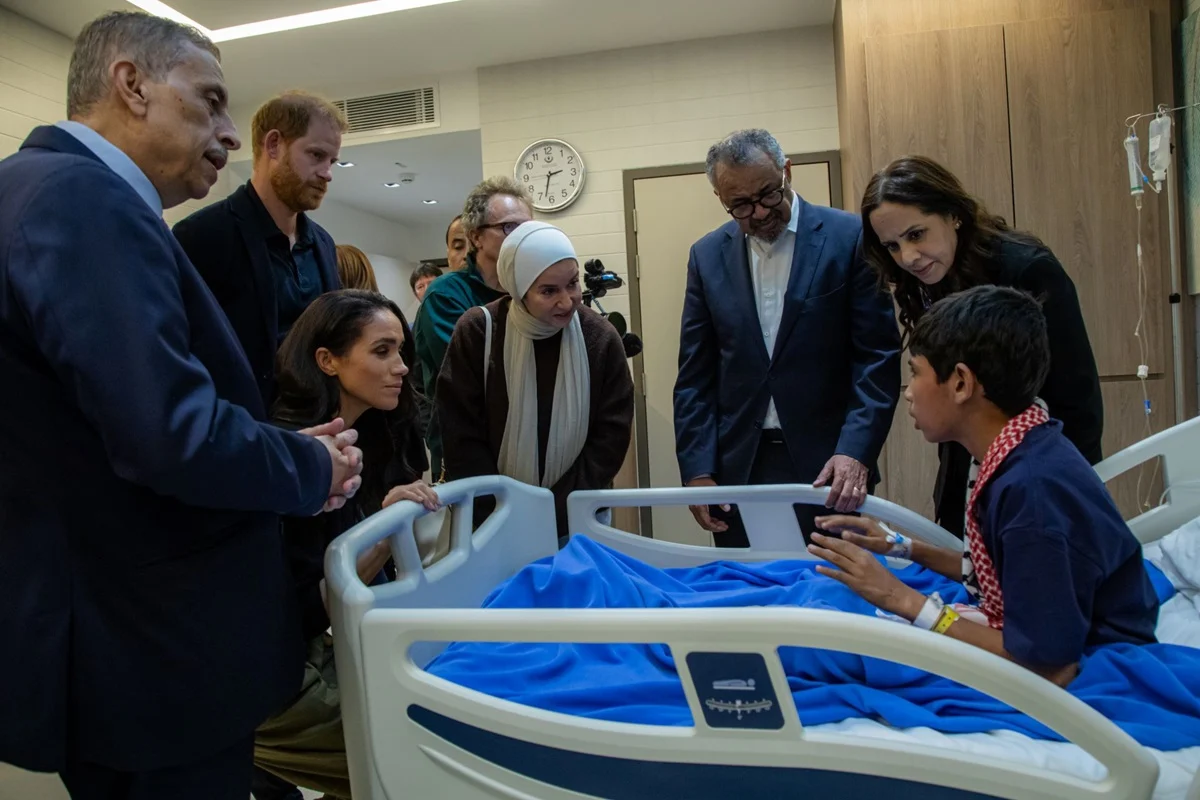
Moving beyond diplomatic chambers, Dr. Tedros transitioned from high-level meetings to direct field engagements, visiting a specialized, WHO-supported hospital facility dedicated to treating pediatric patients evacuated from Gaza.
During the hospital tour, the WHO Director-General engaged directly with young patients, their families, and the frontline medical staff working around the clock under high-pressure conditions. These healthcare professionals are tasked with delivering life-saving interventions for severe physical trauma, pediatric oncology, and other complex, life-threatening medical conditions that cannot be managed within the collapsed healthcare infrastructure of the Gaza Strip.
The visit starkly illuminated the operational dependencies of the medical evacuation corridor traversing Jordan. Public health experts note that as border crossings face intermittent closures and severe bureaucratic and security hurdles, the corridor remains an indispensable lifeline. Dr. Tedros’s presence served to amplify calls from the international community for sustained, unhindered humanitarian access and predictable multi-donor financial support to ensure that vulnerable children and other critical care patients can seamlessly reach specialized facilities.
Mobilizing Financial and Strategic Support with Global Partners
In tandem with clinical site visits, Dr. Tedros convened a strategic, high-level roundtable meeting involving key health development partners, major donor governments, specialized United Nations agencies, and prominent international philanthropic organizations.
The primary agenda of the convening was to address the widening funding gaps facing health system strengthening initiatives in Jordan, as well as to mobilize resources for expansive humanitarian health operations. Discussions centered on operationalizing mental health service scaling, which remains a critical yet historically underfunded component of humanitarian responses. Furthermore, participants evaluated financial burden-sharing mechanisms designed to alleviate the fiscal pressures experienced by countries hosting massive, protracted refugee populations.
Global health economists note that host nations like Jordan frequently bear structural deficits when managing the health security of non-national populations within their borders. The roundtable provided a platform for international stakeholders to reaffirm their financial commitments and pledge enhanced capital investments directed toward fortifying Jordan’s primary healthcare infrastructure, thereby safeguarding regional health security.
Advancing Universal Health Coverage and Mental Health Integration
Earlier in the day, Dr. Tedros held extensive bilateral talks with the Jordanian Minister of Health. The dialogue centered on domestic policy frameworks aimed at accelerating Jordan’s journey toward total Universal Health Coverage.
Jordan has consistently distinguished itself within the Eastern Mediterranean region by prioritizing a robust primary healthcare (PHC) approach as the bedrock of its national health strategy. Notably, the Jordanian government has systematically integrated mental health services into routine primary care clinics—a progressive policy shift heavily supported by the WHO Director-General’s Special Initiative for Mental Health.
By decentralizing psychological support and training general practitioners to identify and treat common mental health disorders, Jordan has successfully dismantled traditional stigmas and expanded access to psychological care for both local citizens and displaced communities. Public health analysts view this integration model as a blueprint for other developing and middle-income nations navigating simultaneous public health and humanitarian crises.
High-Profile Advocacy: The Role of Archewell Philanthropies
Adding a prominent advocacy dimension to the state visit, Dr. Tedros was accompanied during several key engagements by Prince Harry, Duke of Sussex, and Meghan, Duchess of Sussex. Operating in their capacities as founders of Archewell Philanthropies, the Duke and Duchess have maintained a long-standing, collaborative partnership with the World Health Organization across multiple global health campaigns.
Archewell Philanthropies has previously provided vital backing for WHO-led initiatives, ranging from advocacy campaigns supporting equitable global access to COVID-19 vaccines to logistical and financial support for medical evacuation corridors and grassroots mental health programs.
During the visit, Prince Harry actively participated as a global mental health ally, leveraging his platform to emphasize the urgent necessity of investing in mental health infrastructure across marginalized communities and active emergency settings. Particular attention was directed toward addressing the psychological trauma experienced by men, young adults, and children navigating the psychological aftermath of war and displacement.
Reflecting on the collaboration, Dr. Tedros remarked, "I want to thank our partners, including Prince Harry, Duke of Sussex, and Meghan, Duchess of Sussex, whose commitment to mental health and humanitarian action has helped bring visibility, resources, and hope to some of the world’s most vulnerable communities. Their collaboration is helping to advance WHO’s mission to ensure health for all."
Echoing these sentiments, Prince Harry shared his perspective on the ground realities observed during the trip: "It is an honour to join the Director-General of the World Health Organization in Jordan, a country that is leading by example in compassion, resilience, and innovation. Through our work with Archewell Philanthropies, my wife and I have seen first-hand the impact of WHO’s efforts to support mental health and deliver life-saving care in emergencies."
The Duke of Sussex further emphasized the inextricable link between psychological recovery and lasting geopolitical stability. "We remain deeply committed to advancing awareness, reducing stigma, and expanding access to mental health support for all those affected by conflict and crisis. Mental health is fundamental to recovery, dignity, and long-term peace, and we are proud to stand with WHO and partners around the world to make it a global priority," Prince Harry added.
Looking Ahead: Day Two Itinerary and Strategic Implications
As the state visit transitions into its second and final day, Dr. Tedros’s schedule remains intensely focused on specialized domestic health institutions and community resilience frameworks.
The WHO Director-General is scheduled to visit Jordan’s National Center for Rehabilitation of Addicts. Supported technically by the WHO, the center delivers comprehensive, integrated medical, psychological, and social rehabilitation services, serving as a regional model for evidence-based substance use treatment.
Following this, Dr. Tedros will engage with grassroots community leaders and women’s empowerment organizations, including prominent bodies such as the Jordanian Hashemite Fund for Human Development (JOHUD). These meetings are designed to assess community-led health promotion and resilience models that operate at the grassroots level.
The final leg of the official itinerary includes a high-profile visit to the globally renowned King Hussein Cancer Center (KHCC). Discussions at the KHCC will center on cutting-edge advancements in oncology care, the expansion of regional cancer treatment networks, and specialized bilateral research collaborations designed to elevate cancer survival rates across the Middle East.
Broader Implications for Regional Health Security
Public health policy experts analyzing the state visit emphasize that Jordan functions far beyond its geographical boundaries in the architecture of regional health security. By maintaining open humanitarian corridors, absorbing millions of refugees, and progressively reforming its primary healthcare delivery systems, Jordan acts as a crucial buffer against total systemic collapse in regional health delivery.
However, international relations analysts and humanitarian organizations continue to issue urgent warnings that Jordan’s healthcare infrastructure is operating near maximum capacity. Without sustained, multi-year international burden-sharing, predictable donor financing, and robust logistical backing from multilateral bodies like the WHO, the long-term sustainability of Jordan’s health system remains vulnerable to external geopolitical shocks.
The ongoing state visit by Dr. Tedros Adhanom Ghebreyesus, reinforced by high-level diplomatic alignment and international philanthropic partnerships, serves as a strategic reaffirmation of global solidarity. It highlights the indispensable nature of multilateral cooperation in safeguarding human dignity, upholding international humanitarian law, and ensuring that healthcare remains an inviolable right—even amidst the most severe regional conflicts.