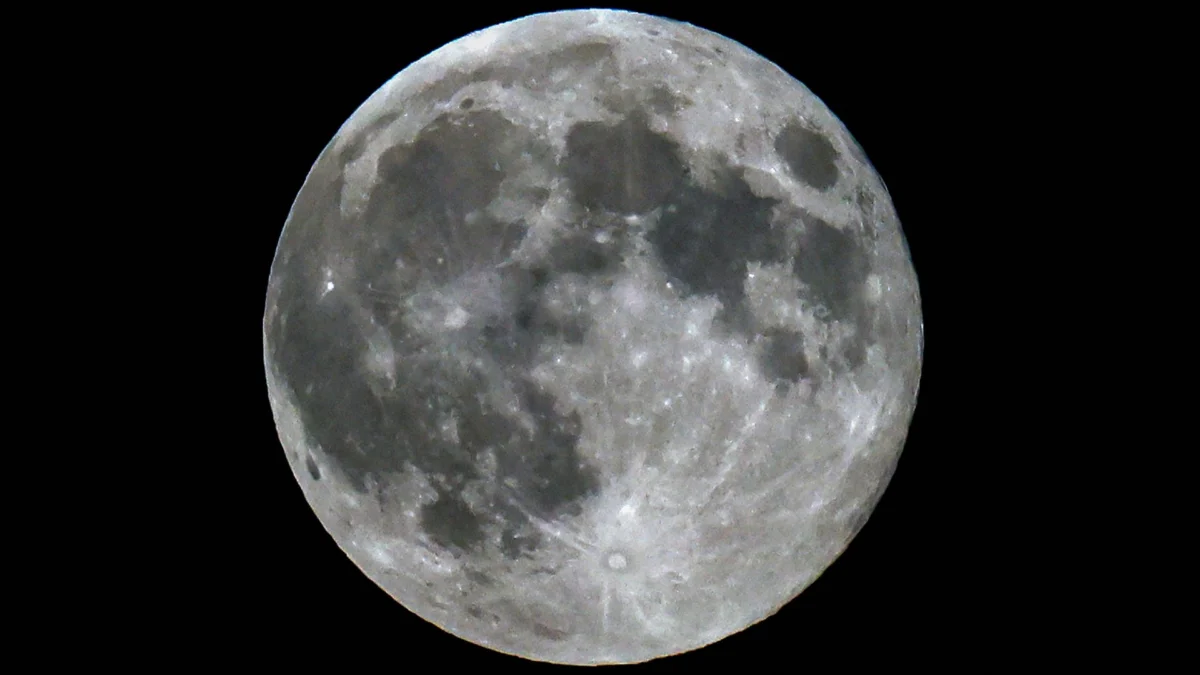
Skywatchers across the Northern Hemisphere are preparing for the arrival of the October full moon, widely celebrated as the Hunter’s Moon. Reaching its absolute peak illumination at 12:12 a.m. EDT (0412 GMT) on October 26, the lunar disk will position itself directly opposite the sun from the perspective of Earth. This astronomical alignment not only creates a brilliant nocturnal spectacle but also temporarily washes away the deep crater shadows typically observed during intermediate lunar phases. Astronomers, astrophotographers, and casual observers alike are turning their attention upward to witness this annual celestial event, which carries both scientific intrigue and deep-rooted cultural significance.
Astronomical Alignment and Surface Features
The exact moment of peak fullness occurs when the Earth sits directly between the sun and the moon. Because of this linear geometry, the shadowy terminator line—the demarcation separating the lunar day and night sides—is conspicuously absent from our viewpoint. Consequently, the harsh, dramatic relief shadows that normally outline the rims of craters and mountain ranges during the waxing and waning phases are flattened out.
Rather than viewing rugged topography in sharp contrast, this phase provides an optimal window for observing the broader geological composition of the lunar surface. Observers with binoculars or small telescopes can easily study the lunar maria—the vast, dark basaltic plains formed billions of years ago when massive impact basins were flooded with lava. Furthermore, sharp-eyed viewers can trace bright streaks of ejecta radiating away from younger impact craters. These lighter-colored pathways consist of subsurface material excavated and violently cast across the landscape during ancient asteroid impacts.
Chronology and Viewing Schedule
The celestial sequence for the October full moon begins at sunset on October 25, when the lunar disk climbs above the eastern horizon across the United States. Because moonrise universally coincides roughly with the setting of the sun during a full moon, observers will be greeted by the lunar rise just as dusk settles.
While the precise minute of 100% illumination occurs shortly after midnight on October 26 (12:12 a.m. EDT), the moon will appear completely full to the naked eye for approximately three consecutive nights, spanning from the evening of October 24 through the morning of October 27. Regional variations in time zones mean that local moonrise trackers, such as those provided by meteorological and astronomical services, are essential for pinpointing the exact minute the moon clears local obstructions like trees and buildings.
Atmospheric Optics: The Moon Illusion and Color Shift
Stargazers stepping out to view the moonrise on the evening of October 25 will likely experience two classic optical phenomena: the Moon Illusion and a dramatic shift in color.
Shortly after breaking the horizon, the moon frequently appears disproportionately large, a psychological trick of the human brain known as the Moon Illusion. While the physical angular diameter of the moon remains constant whether it is low on the horizon or high overhead, proximity to terrestrial reference points—such as distant buildings, trees, and the curvature of the landscape—causes the brain to scale up the perceived size of the lunar disk.
In addition to appearing magnified, the moon often assumes a striking yellow, amber, or deep orange hue during its first hour above the horizon. This coloration is a byproduct of Earth’s atmosphere. As moonlight travels obliquely through a thicker layer of the atmosphere to reach the observer’s eyes, the shorter, bluer wavelengths of light are scattered by air molecules and particulates, a process known as Rayleigh scattering. Only the longer, redder wavelengths successfully penetrate the dense atmospheric column, painting the moon in warm, autumnal tones until it climbs higher into the night sky.
Cultural Heritage and Traditional Naming Conventions
The moniker "Hunter’s Moon" is deeply embedded in the agricultural and seasonal traditions of the Northern Hemisphere. Historically, indigenous communities, colonial settlers, and farmers relied heavily on the lunar calendar to track the changing seasons and agricultural cycles.
According to historical records compiled in publications such as the Old Farmer’s Almanac, the Hunter’s Moon follows closely behind the Harvest Moon—the full moon closest to the autumnal equinox. By the time the Hunter’s Moon rises in October, fields have typically been cleared of their summer crops during the final harvest. With the stalks and vegetation cut down, farmers and hunters alike could easily spot wildlife, such as deer and foxes, venturing out into the open fields to forage. Historically, this moon provided the critical illumination needed for hunters to secure and preserve meat supplies ahead of the harsh winter months.
Different cultural groups across North America assigned distinct, ecologically attuned names to this October lunation. The Cree nation traditionally referred to it as the "Migrating Moon," marking the period when birds take flight toward warmer southern climates. Meanwhile, the Ojibwe and Haida peoples designated it the "Freezing Moon," capturing the perceptible and often abrupt drop in autumn temperatures that signals the transition into winter.
Astrophotography and Observation Guidelines
For those looking to document or study the October full moon, professional astronomers and seasoned astrophotographers recommend specific preparation. Observing details within the lunar maria and ray systems requires steady optics; even a basic pair of 7×50 or 10×50 binoculars can reveal substantial geological detail that is invisible to the unaided eye.
Photographers aiming to capture the moon during its horizon-hugging ascent are advised to utilize telephoto lenses ranging from 200mm to 600mm to frame the lunar disk properly against terrestrial foregrounds. Because the moon is an intensely bright object illuminated by direct sunlight, camera settings must be carefully balanced—relying on a tripod, a low ISO, and a fast shutter speed to prevent motion blur and overexposure, particularly when shooting through the atmospheric haze of moonrise. Major astronomical outreach organizations and digital science portals routinely invite amateur photographers to submit their best captures of the event to community galleries, fostering public engagement in observational science.
Broader Scientific and Educational Implications
Beyond its aesthetic appeal, the regular occurrence of full moons serves as an invaluable educational catalyst for the public sciences. Astronomy institutions and planetariums report significant spikes in public telescope usage and educational website traffic during prominent full moon events. These occurrences offer a reliable entry point for individuals of all ages to engage with foundational concepts in orbital mechanics, atmospheric physics, and planetary geology.
As humanity looks toward the future of crewed lunar exploration—including upcoming Artemis missions aimed at establishing a sustainable human presence near the moon’s south pole—public fascination with Earth’s sole natural satellite continues to grow. Events like the October Hunter’s Moon bridge the gap between ancient cultural traditions and modern space science, reminding observers of the dynamic, interconnected mechanics of our solar system.