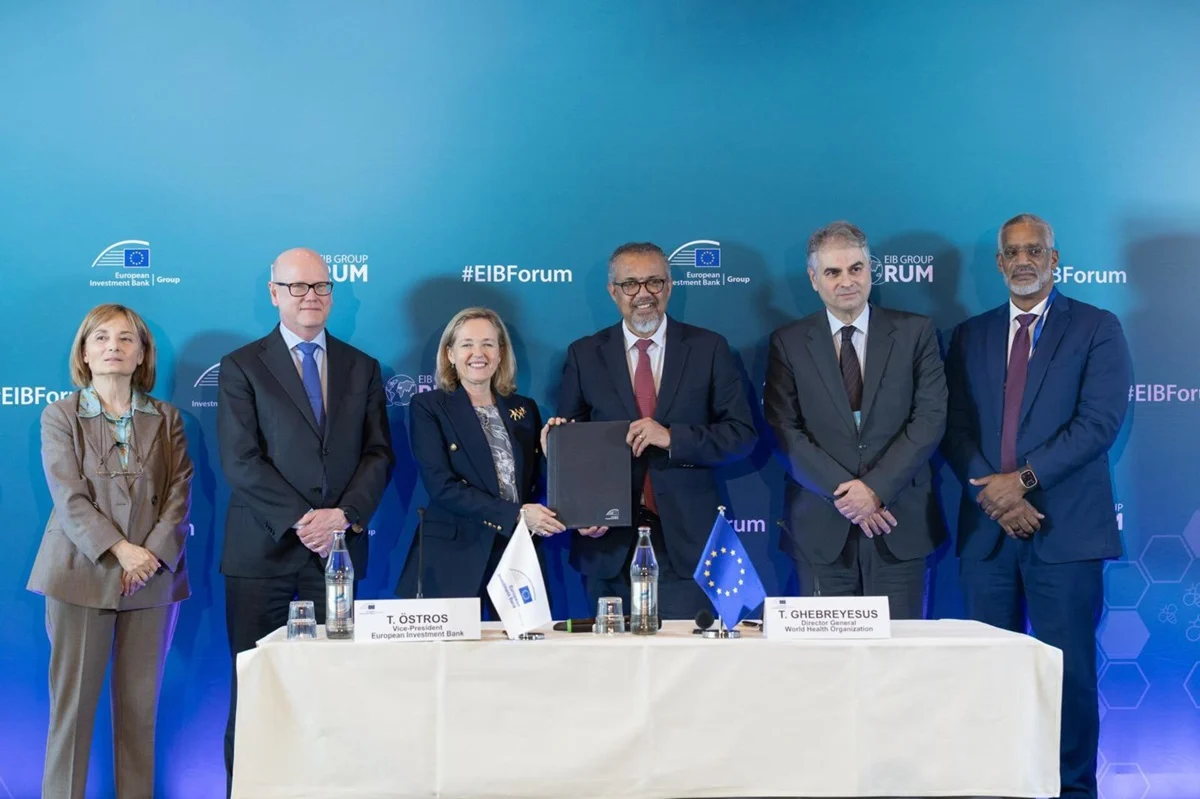
The public health infrastructure of Lebanon is set to receive a critical influx of international support following a landmark agreement formalized on 6 March 2025. Dr. Tedros Adhanom Ghebreyesus, Director-General of the World Health Organization (WHO), and Thomas Östros, Vice-President of the European Investment Bank (EIB Global), met at the high-level EIB Group Forum in Luxembourg to sign a €10 million grant agreement. This collaborative initiative is specifically designed to address acute vulnerabilities within Lebanon’s healthcare sector by re-establishing the nation’s Central Public Health Laboratory—a foundational institution that has suffered severe degradation—while simultaneously prioritizing the uninterrupted provision of life-saving medications and essential healthcare services to more than 50,000 vulnerable individuals suffering from debilitating chronic conditions, including diabetes, cardiovascular diseases, and cancer.
The signing of this agreement marks a pivotal moment in ongoing international efforts to stabilize a healthcare system that has been pushed to the brink of collapse by overlapping domestic crises. By targeting both diagnostic capabilities through the Central Laboratory and direct therapeutic interventions for chronic disease patients, the EIB Global and WHO partnership aims to bridge the immediate humanitarian gap while laying the groundwork for long-term health system resilience in the Eastern Mediterranean nation.
Background Context of the Lebanese Healthcare Crisis
To fully understand the gravity and necessity of the €10 million grant, it is essential to examine the cascading crises that have crippled Lebanon over the past half-decade. Once praised as the medical hub of the Middle East, boasting a sophisticated network of private and public healthcare facilities, Lebanon has experienced a catastrophic economic collapse beginning in late 2019. This financial crisis, compounded by the COVID-19 pandemic, the devastating Port of Beirut explosion in August 2020, and subsequent regional geopolitical instabilities, severely eroded the country’s socio-economic fabric.
The Lebanese pound (LBP) lost more than 98 percent of its value against the US dollar, wiping out the purchasing power of ordinary citizens and devastating the national healthcare budget. Hyperinflation made the importation of essential medical supplies, diagnostic reagents, and pharmaceutical drugs nearly impossible without heavy government subsidies—subsidies that the central bank could not sustain indefinitely. As foreign currency reserves dwindled, the government was forced to lift subsidies on many chronic disease medications, sending the prices of insulin, cancer treatments, and hypertension drugs soaring beyond the reach of the average citizen.
Simultaneously, the country’s health infrastructure faced a mass exodus of medical professionals. Thousands of doctors, specialized physicians, and registered nurses emigrated in search of better economic prospects and security abroad, leaving public hospitals critically understaffed. Against this backdrop of systemic decay, public health surveillance mechanisms—anchored primarily by the Central Public Health Laboratory—degraded significantly, leaving the country vulnerable to infectious disease outbreaks, foodborne illnesses, and an inability to accurately monitor public health threats.
Chronology of International Intervention and Partnership
The partnership formalized in Luxembourg on 6 March 2025 is the culmination of years of targeted assessments, emergency appeals, and strategic planning between Lebanese health authorities, the WHO, and international financial institutions like the European Investment Bank.
During the initial phase of the multi-layered crisis between 2020 and 2022, the WHO and international partners focused predominantly on emergency response—delivering emergency trauma kits, coordinating COVID-19 vaccination campaigns, and providing stopgap supplies of basic medicines. However, international health officials quickly recognized that emergency distributions were unsustainable without systemic structural rehabilitation.
By late 2023, discussions intensified regarding the restoration of Lebanon’s diagnostic backbone: the Central Public Health Laboratory. The facility, which serves as the national reference laboratory for disease surveillance, food safety, and water quality testing, had become partially non-operational due to power outages, lack of maintenance, and expired equipment.
Throughout 2024, technical delegations from EIB Global and the WHO conducted comprehensive feasibility studies on the ground in Beirut to design a funding mechanism that would bypass bureaucratic bottlenecks and ensure transparent execution. These preparatory months culminated in the formal finalization of the €10 million grant proposal in early 2025, leading directly to the high-profile signing ceremony between Dr. Tedros and Vice-President Östros at the EIB Group Forum in Luxembourg on 6 March 2025.
Core Pillars of the €10 Million Initiative
The newly minted €10 million agreement focuses on two interconnected strategic priorities: the physical and technical resurrection of the Central Public Health Laboratory, and the sustained clinical support of over 50,000 chronic disease patients.
Re-establishing the Central Public Health Laboratory
The reconstruction and re-equipping of the Central Public Health Laboratory is arguably the most critical component for long-term national health security. A functional central laboratory is indispensable for epidemiological surveillance, antimicrobial resistance tracking, and the verification of food and drug safety standards.
With the grant funding, the WHO and EIB Global will oversee the comprehensive overhaul of the laboratory’s infrastructure. This includes procuring state-of-the-art diagnostic machinery, installing reliable backup power systems to withstand Lebanon’s chronic electricity shortages, and retraining laboratory technicians to international biosafety standards. By restoring this facility, Lebanon will regain its autonomous capacity to detect emerging pathogens, manage routine public health screenings, and formulate evidence-based health policies without relying entirely on costly external laboratories.
Chronic Disease Medication and Healthcare Support
Beyond laboratory diagnostics, the initiative directly targets human suffering by ensuring continuity of care for more than 50,000 individuals suffering from non-communicable diseases (NCDs). In a developing health crisis, patients with chronic conditions are often the most vulnerable. Conditions such as cardiovascular diseases, diabetes, and various forms of cancer require un-interrupted, lifelong pharmacological management. Any disruption in medication supply often leads to catastrophic health outcomes, emergency hospitalizations, or premature death.
The grant will secure bulk procurement of critical pharmaceutical supplies, funneling them directly into the public primary healthcare center network managed in coordination with the Lebanese Ministry of Public Health. This targeted intervention is designed to protect vulnerable populations—particularly low-income households, refugees residing in Lebanon, and the elderly—from having to choose between purchasing life-saving medicines and meeting basic daily survival needs.
Official Responses and Stakeholder Perspectives
The announcement of the grant has drawn widespread praise from international humanitarian organizations, regional health advocates, and European financial leaders, who view the partnership as a model for bridging development finance with humanitarian relief.
Speaking at the EIB Group Forum, EIB Global Vice-President Thomas Östros emphasized the bank’s commitment to fostering human capital and social resilience in neighboring regions. "Investing in public health is a fundamental prerequisite for economic stability and social cohesion," Östros stated. "Through our reinforced partnership with the World Health Organization, EIB Global is proud to provide tangible, life-changing support to the people of Lebanon. By restoring the Central Public Health Laboratory and securing essential chronic disease treatments, we are helping to safeguard the most vulnerable populations during these testing times."
Dr. Tedros Adhanom Ghebreyesus, Director-General of the WHO, echoed these sentiments, highlighting the urgency of sustainable health investments in crisis-affected areas. "Lebanon’s health workers and citizens have shown extraordinary resilience in the face of compounding adversities, but the health system cannot rely indefinitely on emergency Band-Aids," Dr. Tedros noted. "This €10 million collaboration with EIB Global is a vital step toward sustainable recovery. It will restore essential diagnostic capacities that protect the entire population while ensuring that tens of thousands of patients with chronic diseases can continue to access the medicines they need to survive."
Representatives from the WHO Media Team and regional public health offices further elaborated that the implementation framework has been structured to ensure absolute transparency, accountability, and direct delivery to end-users, minimizing administrative overhead and safeguarding against logistical bottlenecks.
Broader Impact, Economic Implications, and Future Outlook
The implications of the €10 million EIB Global and WHO initiative extend far beyond the immediate humanitarian relief provided to the 50,000 chronic disease patients. Economically, a functioning public health infrastructure reduces the macro-level burden on Lebanon’s underfunded public hospital system. When chronic conditions are effectively managed at the primary healthcare level, costly emergency room visits and intensive care admissions plummet, preserving scarce financial resources for the broader healthcare sector.
Furthermore, the revitalization of the Central Public Health Laboratory restores confidence in Lebanon’s regulatory and export standards. A certified, operational national reference laboratory is essential for verifying the safety of locally produced and exported food and pharmaceutical products, potentially revitalizing regional trade avenues that have stalled due to compliance uncertainties.
While €10 million represents a fraction of the total capital required to fully modernize Lebanon’s devastated healthcare apparatus, international development economists view the grant as a strategic catalyst. By re-establishing foundational diagnostic pillars and securing critical pharmaceutical supply chains, the project establishes a reliable template for subsequent international donor engagement.
As implementation gets underway following the March 2025 agreement, the international community will closely monitor the rollout. If successful, the EIB Global and WHO partnership could serve as a blueprint for stabilizing other fragile health systems across the globe, proving that targeted development finance can effectively intersect with emergency public health mandates to protect human dignity and foster long-term national resilience.