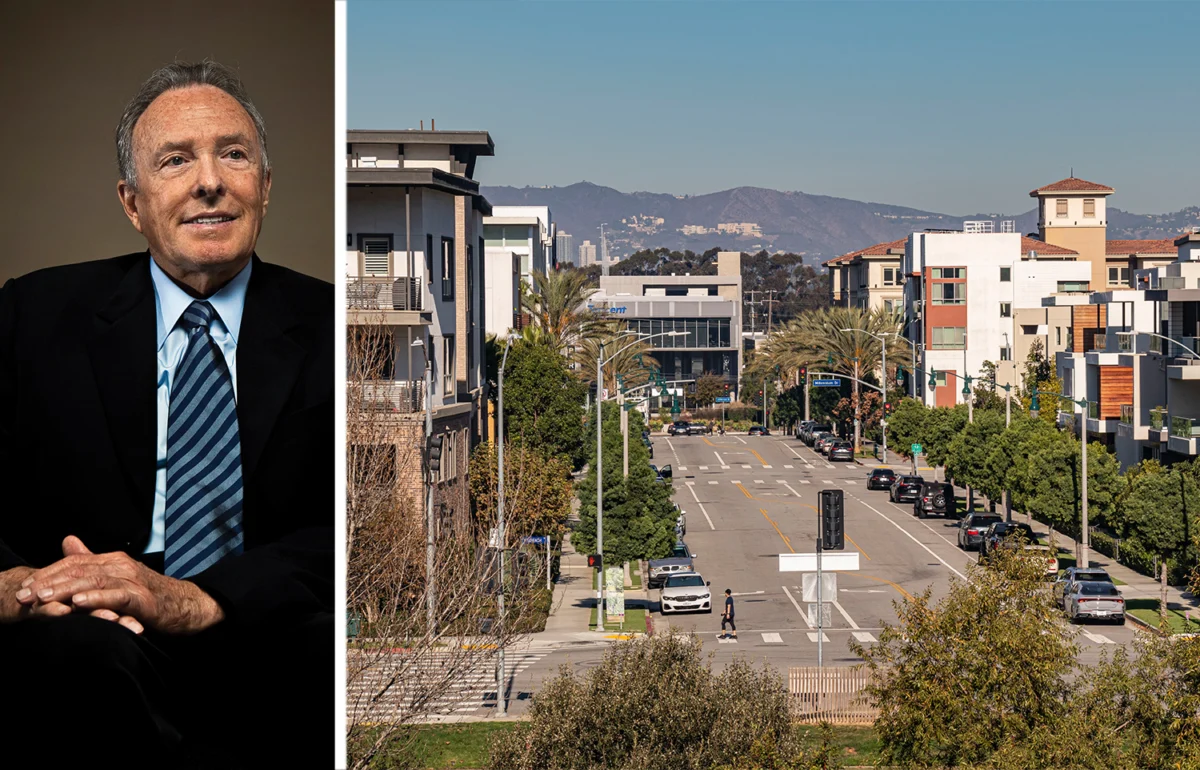
The Irvine Company, one of the most prominent real estate developers and operators in the United States, has successfully secured a $157.2 million refinancing package for its Villas at Playa Vista – Montecito property. The transaction, facilitated by Capital One, underscores the ongoing resilience and institutional appeal of high-end multifamily assets within the Southern California market, despite broader macroeconomic headwinds that have impacted commercial real estate valuations nationwide.
This new financing, structured as a Fannie Mae loan, effectively replaces a previous $136 million debt obligation that had been originated by PGIM. The transaction represents a significant capital injection, providing the Irvine Company with approximately $21 million in additional liquidity. While the specific interest rate, amortization schedule, and maturity date remain undisclosed, the successful closing of such a substantial loan in the current high-interest-rate environment serves as a testament to both the strength of the sponsor and the high performance of the underlying asset.
The Evolution of the Playa Vista Portfolio
The Villas at Playa Vista – Montecito, located at 12855 Runway Road, represents a cornerstone of the Irvine Company’s Westside Los Angeles holdings. Opened in 2016, the property serves as a high-end rental destination for professionals working in the nearby "Silicon Beach" tech and media corridor. The community offers a curated selection of one- and two-bedroom residences, with an average unit size of 1,113 square feet, tailored to meet the demands of a demographic that values both proximity to workplace hubs and high-end lifestyle amenities.
The development of the Montecito was a strategic move by the Irvine Company, which had acquired the development site from Brookfield in 2015. This acquisition was part of a larger, ambitious master-planned strategy to densify the Playa Vista submarket. The Montecito was developed in tandem with two other significant residential communities: the 703-unit Sausalito and the 491-unit Malibu. Together, this three-property cluster accounts for 1,503 total apartments, allowing the Irvine Company to achieve operational efficiencies through centralized management and shared neighborhood identity.
The amenities package at the Montecito is reflective of modern luxury standards, featuring a resort-style swimming pool, a comprehensive fitness center, and dedicated coworking spaces and conference facilities. These features have become increasingly vital in the post-pandemic era, where remote and hybrid work models have shifted the requirements of the average luxury renter toward integrated "live-work-play" environments.
Historical Context: From Aerospace to Urban Hub
To understand the significance of this refinancing, one must look at the unique history of the land itself. The 460-acre Playa Vista development is one of the most transformative urban planning projects in recent Southern California history. The area was formerly the site of Howard Hughes’ legendary aerospace operations, including the iconic hangar where the Spruce Goose was constructed.
Following the closure of the aerospace facilities, the land remained a point of contention and planning for decades. The eventual conversion into a master-planned, mixed-use community has turned the area into a premier address for major technology and media firms, including Google, which occupies the historic Spruce Goose hangar, as well as various creative agencies and entertainment studios.
The neighborhood now boasts a total residential footprint exceeding 6,000 apartment units, supported by approximately 3 million square feet of office space and 200,000 square feet of neighborhood retail. This density provides the critical mass necessary to support a walkable urban lifestyle, a rarity in the sprawling geography of Los Angeles. The Irvine Company’s ability to secure favorable terms for the Montecito refinancing is directly linked to the stability and maturity of this master-planned environment, which has consistently commanded premium rents and maintained low vacancy rates compared to the broader Los Angeles basin.
Financial Analysis and Market Implications
The $21 million increase in financing over the previous PGIM loan is particularly noteworthy. In many sectors of the commercial real estate market, lenders have been tightening underwriting standards, leading to "funding gaps" where borrowers are often required to bring additional equity to the table to refinance existing debt. The fact that the Irvine Company was able to increase its loan amount suggests that the property’s Net Operating Income (NOI) has seen robust growth since the original loan was originated, or that the valuation of the asset has remained resilient in the face of rising capitalization rates.
According to Yardi Matrix data, the multifamily sector in Los Angeles has experienced a stabilization period following the pandemic-era rent spikes. While demand for luxury units remains high, developers are facing increased construction costs and rising property insurance premiums. By opting for a Fannie Mae loan, the Irvine Company is utilizing a government-sponsored enterprise (GSE) execution, which often provides more competitive pricing and favorable long-term terms compared to traditional bank or life insurance company financing.
This move signals a strategic emphasis on balance sheet liquidity. By tapping into the equity created by the property’s appreciation and rent growth over the past eight years, the Irvine Company is positioning itself to weather potential market volatility while maintaining its status as a top-tier operator. It also indicates a continued confidence in the Playa Vista submarket’s ability to attract and retain high-earning tenants who are less sensitive to economic downturns.
The Role of Institutional Lenders
Capital One’s involvement as the lender highlights the continued appetite of major financial institutions for Class-A multifamily assets. In a market where office assets are struggling due to work-from-home trends and retail is undergoing a structural transition, multifamily remains the "darling" of the institutional investment community. Lenders are prioritizing properties with strong occupancy histories, institutional-grade management, and desirable locations.
The choice of a Fannie Mae loan is also characteristic of large-scale portfolio management. Fannie Mae and Freddie Mac remain the primary sources of liquidity for the U.S. multifamily market, providing a layer of stability that is crucial for major developers. For the Irvine Company, which manages a massive portfolio across California, the ability to recycle capital from stabilized assets into new developments or further property enhancements is essential to its business model.
Future Outlook for Playa Vista
Looking ahead, the Playa Vista neighborhood is expected to continue its role as a focal point for the Los Angeles economy. The synergy between the residential units and the local office parks creates a sustainable demand cycle. As long as the major tech and media companies remain committed to their Playa Vista footprints, the demand for high-end housing like the Montecito is likely to remain stable.
However, the broader Los Angeles housing market does face challenges, including restrictive land-use policies and the ongoing housing affordability crisis. While the Montecito is a luxury product, its existence contributes to the total supply of housing in a city that is notoriously supply-constrained. By keeping these assets well-capitalized through institutional refinancing, the Irvine Company ensures that the properties remain competitive, well-maintained, and fully occupied.
Conclusion
The refinancing of the Villas at Playa Vista – Montecito serves as a clear indicator of the current health of high-end multifamily assets in prime urban infill locations. By securing $157.2 million in new debt, the Irvine Company has demonstrated that even in a complex economic climate, top-tier assets backed by experienced sponsors continue to be highly attractive to institutional lenders.
As the industry navigates the remainder of the decade, the focus on operational efficiency and the ability to leverage existing portfolio value will be paramount. The Playa Vista development remains a textbook example of successful urban transformation, and this recent financial transaction is a reflection of the long-term value creation that has defined the project since its inception. For stakeholders, investors, and observers of the Southern California real estate market, the Montecito refinancing is a benchmark event that highlights the continued, albeit disciplined, flow of capital into the residential sector.