The main hallway of the 2026 U.N. biodiversity conference (COP17) in Yerevan, Armenia, greets delegates with a poignant installation: a mural of a herd of elephants. Orchestrated by the NGO Friends of the Earth International, the exhibit does not serve to highlight the conservation successes of recent decades. Instead, it leans into the classic idiom of the "elephant in the room," symbolizing the massive, systemic financial flows that continue to fuel the global collapse of biodiversity, even as international leaders gather to stem the tide of extinction.
The juxtaposition is stark. While delegates negotiate the granular details of conservation policy, the global economy continues to prioritize activities that actively degrade the natural world. According to the United Nations Environment Programme’s (UNEP) 2026 State of Finance for Nature report, the disparity is staggering: for every $1 spent on protecting nature, $30 is channeled into investments that hasten its destruction.

The Financial Disconnect
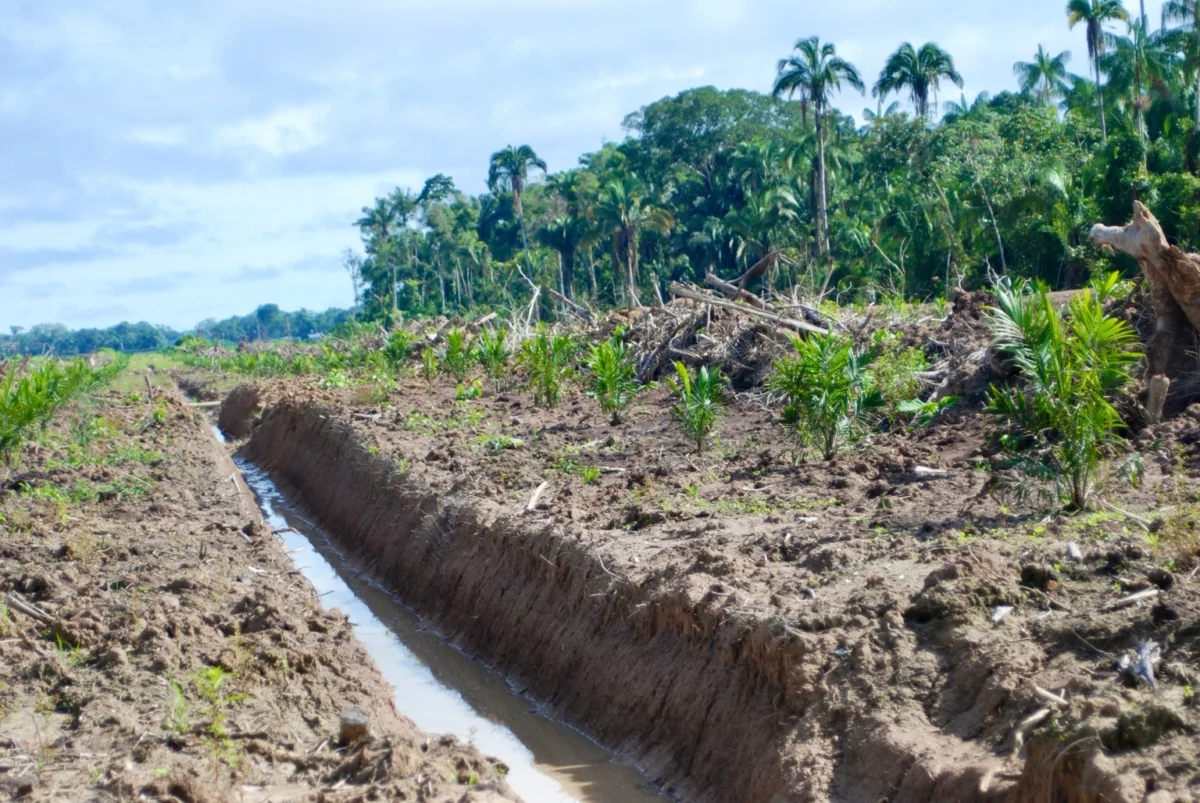
The core of the crisis lies in a fundamental misalignment of capital. While the 196 parties to the Kunming-Montreal Global Biodiversity Framework (GBF) set an ambitious target—Target 18—to slash $500 billion in environmentally harmful subsidies annually by 2030, the reality on the ground remains stubbornly different. Current estimates suggest that global spending on "nature-negative" activities, such as unsustainable industrial agriculture, destructive logging, and overfishing, hovers at approximately $7.3 trillion per year.
This massive capital flow acts as a direct counter-force to the $200 billion annual target for biodiversity conservation established by the GBF. Data from the Organisation for Economic Co-operation and Development (OECD) indicates that by 2025, total global biodiversity finance reached only $92 billion—less than half of the agreed-upon goal. As Inger Andersen, executive director of UNEP, noted during a press conference, nature is not a luxury good to be addressed when budgets allow; it is the fundamental infrastructure upon which the entire global economy rests. The presence of finance ministers at COP17 is a long-overdue acknowledgement that the biodiversity crisis is, at its heart, an economic crisis that requires a complete overhaul of global fiscal policy.
Chronology and Pledges at COP17
The conference, which concluded on October 31, 2026, saw a flurry of financial announcements, yet these figures remain drops in the bucket compared to the $7.3 trillion in harmful annual spending.

- October 16, 2026: Ahead of the official summit opening, the Species Recovery Alliance, a coalition of private donors, pledged $500 million to support the recovery of threatened species.
- October 26, 2026: COP17 President Hambardzum Matevosyan announced a total of $1.8 billion in new commitments. Key contributions included:
- The Netherlands pledged $500 million to the Tropical Forest Forever Facility (TFFF), designed to reward nations that maintain low deforestation rates, with a 20% mandate for Indigenous and local communities.
- The Global Environment Facility (GEF) committed an additional $500 million for nature-based actions, with $60 million specifically earmarked for the Global Biodiversity Framework Fund.
- October 27, 2026: Germany unveiled a 300 million Euro ($334 million) package aimed at the Legacy Landscapes Fund, focusing on national biodiversity strategies.
- Ongoing: The Value Nature Fund announced a $334 million investment in regenerative farming and forestry practices across Europe and North America.
Despite these pledges, the efficacy of these funds is hindered by a lack of speed in disbursement. Furthermore, the "Cali Fund"—a mechanism intended to capture profits from companies utilizing digital sequence information from genetic resources—has failed to gain traction. With a target of $1 billion per year, the fund has received a mere $10,000 in deposits since its inception, highlighting the profound difficulty in mobilizing private sector contributions toward global conservation goals.
The 30×30 Hurdle and Global Inequity
The overarching goal of the GBF, known as "30 by 30"—the commitment to protect 30% of the world’s land and marine areas by 2030—is currently in jeopardy. A recent U.N. review published just before the Yerevan summit revealed that 22 of the 23 targets set in the framework are currently off-track.
The divide between the Global North and the Global South remains a critical friction point. The GBF stipulated that international finance from wealthy nations to developing ones should reach $20 billion annually by 2025. OECD data suggests this target was missed by approximately $4 billion. Meanwhile, funding for the management of existing protected areas actually saw a decline, dropping from $1.2 billion in 2023 to $1 billion in 2025, according to the Campaign for Nature.

Addressing the Elephant in the Room: Subsidy Reform
The most significant shift at COP17 was the elevation of subsidy reform from a taboo subject to a central pillar of the agenda. Experts argue that until governments stop paying for their own ecological destruction, conservation efforts will remain largely performative.
"We cannot continue subsidizing the destruction of nature at the same time as trying to find the money that is needed for implementation of action," said Guido Broekhoven of WWF International. This sentiment was echoed by An Lambrechts of Greenpeace, who characterized tax incentives for fossil fuel production and other destructive industries as "indefensible."
The Armenian presidency took a proactive step by launching the "Yerevan Call on Incentives Positive to Biodiversity." This initiative encourages parties to identify and phase out harmful subsidies. Armenia itself has led by example, reviewing 24 national programs under the UNDP’s BIOFIN initiative to ensure public funds are redirected toward regenerative outcomes.

Implications and Future Outlook
The path forward is fraught with political and economic complexity. As Alfred DeGemmis of the Wildlife Conservation Society observed, the consensus at COP17 was that the "elephant in the room"—the role of harmful subsidies—can no longer be ignored. The transition from acknowledging the problem to implementing concrete, legislative reform is the next great hurdle.
The implications for the private sector are equally profound. If nations follow through on their commitments to reform tax incentives and public spending, industries that have historically relied on nature-negative subsidies will face significant operational shifts. This could lead to a "snowball effect," where the removal of perverse incentives makes sustainable practices more competitive by default.
However, the current data offers a sobering reality check. With the majority of GBF targets lagging, the international community is at a halfway point between the 2022 adoption of the framework and the 2030 deadline. The "finance gap" is not merely a lack of liquidity; it is a lack of political will to decouple economic growth from ecological liquidation.

As delegates departed Yerevan, the message was clear: the era of incremental change is insufficient. Whether the "Yerevan Call" and the modest pledges made during the conference will translate into a structural shift in global finance remains to be seen. For now, the "elephants in the room"—the trillions of dollars flowing toward environmental degradation—continue to dominate the landscape, casting a long shadow over the future of the planet’s remaining biodiversity. The challenge for the next iteration of the COP is to turn these rhetorical acknowledgments into verifiable, systemic economic transformation, ensuring that the financial architecture of the 21st century supports, rather than cannibalizes, the natural world.