ANCHORAGE, Alaska — The top federal prosecutor for the District of Alaska announced a significant mobilization of law enforcement resources on Friday, responding to explosive new investigative reporting regarding the origins of an independent candidate’s campaign in one of the country’s most fiercely contested Senate races.
U.S. Attorney Michael Heyman addressed reporters during a press conference in Anchorage, confirming that federal authorities have stepped up their scrutiny following recent media reports detailing allegations of a coordinated conspiracy. The controversy centers on Daniel J. Sullivan, an independent candidate who shares the exact first and last name of the incumbent Republican Senator, Dan Sullivan. The unusual ballot setup has injected profound confusion, partisan friction, and rapid legal maneuvering into the final days of the high-stakes election cycle.
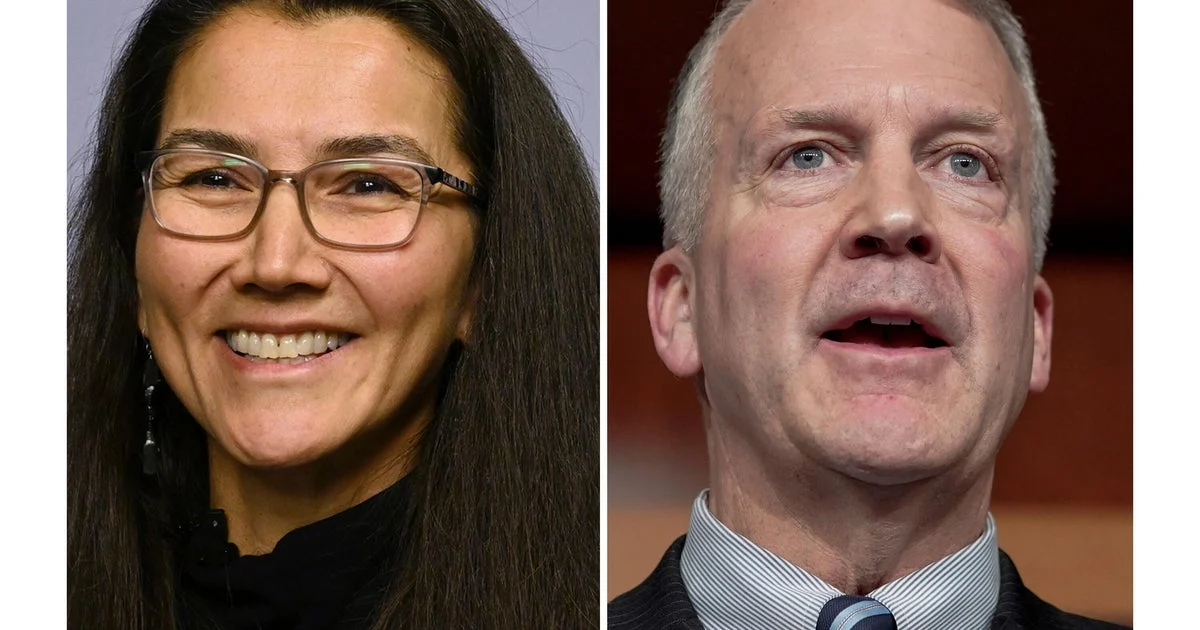
Heyman described the allegations as "troubling," noting that the Justice Department is reviewing recent reports published by The New York Times. The reporting asserted that operatives linked to the campaign of Democratic candidate Mary Peltola and the Democratic Senatorial Campaign Committee (DSCC) allegedly orchestrated a sprawling effort to recruit and financially support the second Sullivan as a sham candidate intended to split conservative votes and confuse the electorate.
Despite the deployment of additional investigative assets and the issuance of federal subpoenas targeting several Democratic officials, Heyman exercised caution regarding potential legal charges. He emphasized that the office has not yet determined whether any criminal laws were broken.
"We are aware of the recent New York Times reporting regarding the Peltola campaign and the Democratic Senatorial Campaign Committee, that they orchestrated a sprawling conspiracy to recruit and prop up Daniel J. Sullivan as a sham candidate, and we are taking that extremely seriously," Heyman said. He added, "We’re not making any assumptions on whether a crime has been committed or not. That’s what we do, is we investigate whether a crime has been committed under several theories, so I’m not going to comment on what those theories are, and I’m also not going to put the cart before the horse."
Asked why federal prosecutors chose to escalate public visibility so close to Election Day, Heyman defended the timeline, explaining that the office had been conducting inquiries quietly for months without wishing to disrupt the democratic process. He maintained that the decision to increase visible activity was driven purely by the emergence of new public reporting rather than political motivations. Furthermore, Heyman revealed that he had previously recused himself from the matter while being considered for a federal judicial nomination, but noted that his recusal had recently been officially rescinded now that judicial consideration is no longer active.
Chronology of the Alaska Senate Ballot Controversy
The controversy surrounding the duplicate-name candidacy did not materialize overnight; rather, it has evolved through a contentious series of legal challenges, administrative decisions, and investigative developments stretching back months.
- Candidate Filing and Initial Rejection: Earlier in the election cycle, Daniel J. Sullivan successfully filed paperwork to run as an independent candidate for the U.S. Senate seat currently held by Republican incumbent Dan Sullivan. State election officials initially reviewed the filing and determined the candidate was ineligible to appear on the ballot, accusing him of a "deliberate attempt" to confuse Alaska voters.
- Judicial Intervention: The administrative decision to bar the independent candidate was swiftly challenged in state courts. Judges ultimately overturned the state’s ruling, concluding that election officials lacked the legal authority to exclude a candidate based solely on their subjective interpretation of whether the filing was made in "good faith." Consequently, Daniel J. Sullivan was ordered onto the ballot.
- Media Revelations: The controversy intensified dramatically when The New York Times published an investigative report detailing alleged behind-the-scenes coordination between political operatives tied to Mary Peltola’s campaign, the DSCC, and the recruitment of the second Sullivan.
- State and Federal Inquiries: Following the report, Alaska Governor Mike Dunleavy ordered a formal state-level investigation. Simultaneously, the Department of Justice intensified its own inquiry, issuing federal subpoenas to various political figures and stepping up investigative assets.
- The Federal Civil Lawsuit and Injunction Request: As Election Day approached, the Trump administration’s Justice Department filed a federal civil lawsuit arguing that the duplicate candidacy violated the National Voter Registration Act. On Friday, the DOJ filed a motion for a preliminary injunction, requesting that the federal court order the segregation of ballots that rank Daniel J. Sullivan, citing concerns over voter confusion and requesting an expedited judicial ruling by Monday.
- State Pushback and Dismissal Motions: The Alaska Attorney General’s Office fought back aggressively, filing a motion on Saturday to dismiss the DOJ’s lawsuit. The state argued that the federal government’s claims lacked legal merit, that ballot segregation would violate mandatory voter secrecy laws, and that existing state protocols already require the long-term preservation of all cast ballots.
Partisan Reactions and Defense Statements
The allegations have triggered fierce denials and counter-accusations from all political camps involved in the multi-way race.
Republicans have consistently asserted that the independent candidate’s presence on the ballot is a deliberate Democratic maneuver designed to siphon votes from the incumbent Republican and artificially inflate the prospects of Mary Peltola. GOP leaders argue that the strategy exploits Alaska’s ranked-choice voting system to create widespread confusion among the electorate.
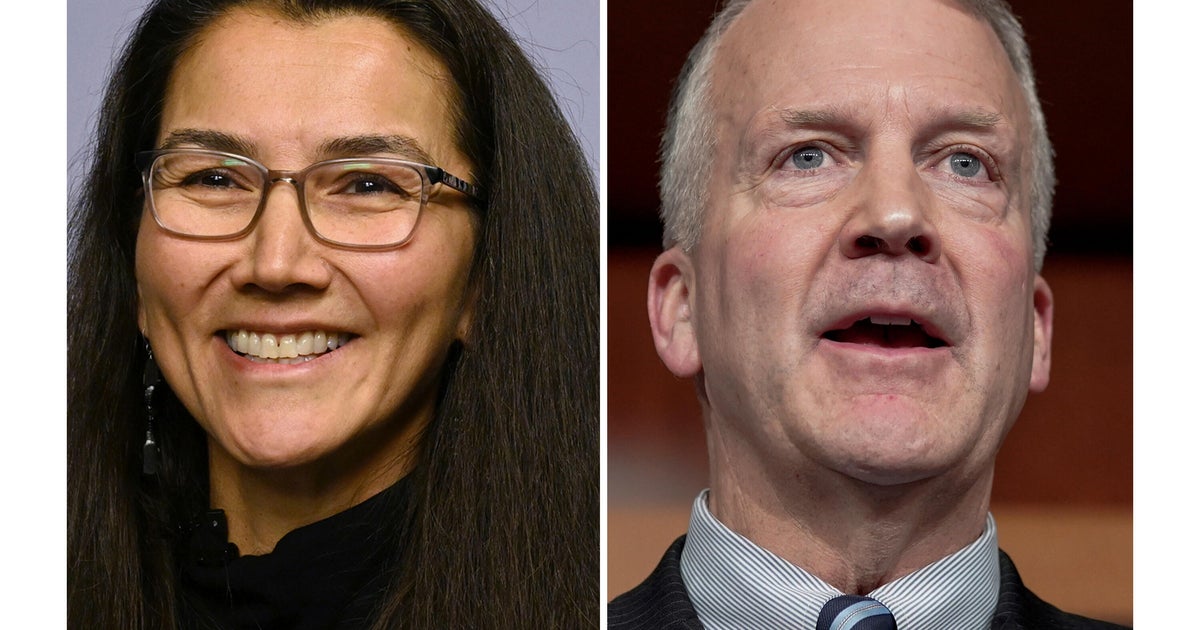
Conversely, Mary Peltola and national Democratic organizations have strenuously denied any involvement in recruiting or managing the independent candidate’s campaign. Peltola publicly addressed the controversy, stating firmly that she had no knowledge of other candidates beyond herself and the incumbent, and emphasized that she is "not interested in tricking voters."
The Democratic Senatorial Campaign Committee has similarly dismissed the Republican claims, turning the focus back on the GOP. The DSCC argued that Republican operatives have historically engaged in similar efforts to manipulate ballot compositions and support favorable independent candidates in previous primary and general elections across Alaska and nationwide.
Legal Arguments and the Clash Over Ballot Segregation
At the center of the ongoing legal battle is the Justice Department’s push for a federal injunction to preserve and segregate ballots that rank Daniel J. Sullivan. In its Friday filing, government lawyers argued that the candidate’s primary function is to sow confusion rather than serve in public office.
"Daniel J. Sullivan does not seek to serve in the U.S. Senate but rather seeks to confuse voters," federal lawyers wrote in the injunction request. "Accordingly, there will indeed be voter confusion caused by this frivolous candidacy."
The federal government maintained that segregating these specific ballots is essential for potential post-election investigations into whether voter confusion materially impacted the outcome of the race.
The State of Alaska, however, pushed back forcefully against the federal government’s legal standing and proposed remedies. In their Saturday motion to dismiss, attorneys from the Alaska Attorney General’s Office contended that the DOJ’s lawsuit rests on a nonexistent legal foundation and represents an improper eleventh-hour intervention in state election administration.
Furthermore, state officials argued that segregating ballots is practically impossible without compromising the fundamental right to a secret ballot, noting that votes are automatically comingled within ballot boxes on Election Day. They also stressed that an emergency court order is entirely redundant, given that Alaska state law already mandates the preservation of all election ballots for a period of 22 months.
Highlighting the timing of the federal action, the state’s legal filing noted: "The United States’ delay further undermines its request for expedited consideration. It waited until two weeks before Election Day to file a lawsuit about issues that arose months ago."
Broader Implications for Election Integrity and Ranked-Choice Voting
The unfolding legal and criminal investigations in Alaska carry profound implications that extend well beyond the immediate Senate race. The controversy highlights the growing legal and administrative vulnerabilities associated with ballot access laws, candidate naming conventions, and the complexities of ranked-choice voting systems.
As federal prosecutors continue their investigations into potential conspiracy and election integrity violations, the outcome of the civil and criminal proceedings could establish vital legal precedents regarding the extent of federal oversight in state-administered elections. With the federal court expected to rule swiftly on the emergency injunction motions ahead of Election Day, all eyes remain fixed on Anchorage as Alaska navigates one of the most legally contentious and politically volatile elections in its modern history.