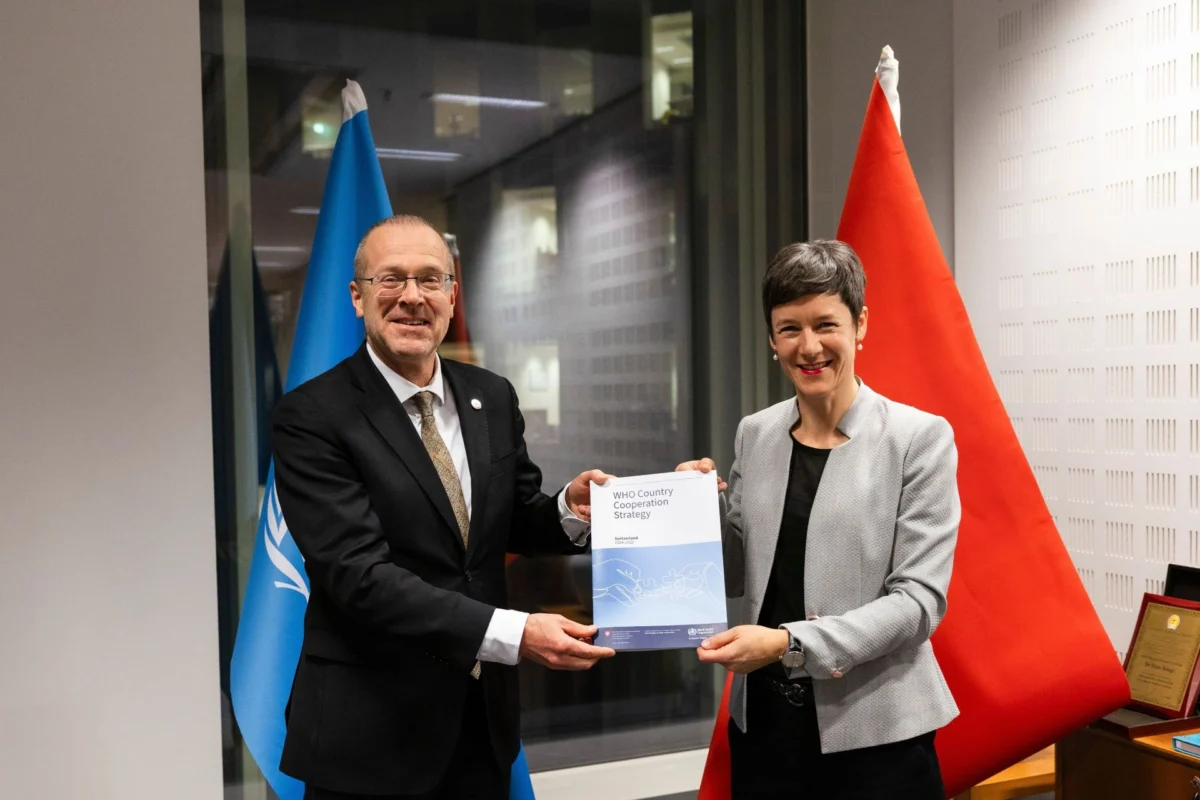
The World Health Organization (WHO) and the Swiss Confederation have officially formalized the extension of their bilateral partnership, signing a renewed Country Cooperation Strategy (CCS) designed to guide joint public health initiatives through 2028. The formal signing ceremony took place on March 4, 2025, at the WHO Regional Office for Europe in Copenhagen, Denmark. This milestone agreement builds on a unique diplomatic and technical relationship that began more than a decade ago, establishing Switzerland as a trailblazer among high-income nations in aligning its domestic and international health agendas directly with the strategic frameworks of the global health body.
The newly minted 2024–2028 strategy sets a comprehensive agenda focused on strengthening health security, tackling emerging infectious diseases, reinforcing health systems across Europe and globally, and fostering innovation in medical countermeasures. By cementing this alliance, both entities aim to address post-pandemic vulnerabilities, accelerate progress toward the United Nations Sustainable Development Goals (SDGs), and address systemic inequities in healthcare access that continue to threaten global stability.
Historical Context and Evolution of the Partnership
To fully understand the significance of the 2024–2028 cooperation framework, one must examine the evolution of the partnership between Switzerland and the WHO. Historically, Country Cooperation Strategies were primarily deployed in low- and middle-income nations to help ministries of health navigate resource constraints, build administrative capacity, and optimize the delivery of international aid. High-income countries typically interacted with the WHO through multilateral funding mechanisms, governance boards, and specialized technical committees rather than structured, country-specific operational roadmaps.
However, in 2013, Switzerland broke new ground by becoming the first high-income country in the WHO European Region to pilot a formal cooperation strategy. This pioneering decision recognized that even wealthy, highly developed nations face complex public health challenges—such as aging populations, chronic disease burdens, antimicrobial resistance, and health security threats that transcend national borders—which require structured, collaborative multilateral intervention.
Over the subsequent decade, the initial pilot matured into an institutionalized model of cooperation. Switzerland, acting both as a sovereign European state and as the host nation for the WHO headquarters in Geneva, used the CCS framework to align its foreign policy, humanitarian aid, and scientific research capabilities with the WHO’s global mandates. The success of this initial phase laid the groundwork for subsequent renewals, culminating in the decision by WHO and Swiss authorities in 2022 to initiate a comprehensive update for the post-pandemic era.
The Signing Ceremony and Key Leadership Roles
The official endorsement of the 2024–2028 framework took place in a high-level diplomatic setting in Copenhagen. The document was formally endorsed by Dr. Hans Henri P. Kluge, WHO Regional Director for Europe, and Barbara Schedler, Ambassador for Global Health at the Swiss Federal Office of Public Health.
During the ceremony, both leaders emphasized the vital role of multilateralism in confronting modern health crises. Dr. Kluge noted that the partnership serves as a benchmark for how high-income nations can leverage their scientific and financial capital not only for domestic resilience but for the greater global good. Ambassador Schedler reiterated Switzerland’s longstanding commitment to international solidarity, highlighting that global health security is inextricably linked to national security and economic prosperity.
The visual centerpiece of the event—capturing Dr. Kluge and Ambassador Schedler displaying the newly signed CCS document—symbolized a shared dedication to transparent governance, scientific rigor, and operational accountability over the next four years.
Core Pillars of the 2024–2028 Cooperation Strategy
The WHO-Switzerland Cooperation Strategy for 2024–2028 is organized around several strategic priorities tailored to contemporary public health challenges. While maintaining continuity with past objectives, the updated framework places increased emphasis on digitalization, pandemic preparedness, and equity.

-
Strengthening Health Emergency Preparedness and Response
In the wake of the COVID-19 pandemic, both parties have prioritized fortifying early-warning systems, supply chain resilience, and cross-border coordination. The strategy outlines joint efforts to implement the updated International Health Regulations (IHR) and support ongoing negotiations surrounding global pandemic agreements. Switzerland’s advanced medical research infrastructure and pharmaceutical sector will play a pivotal role in testing, manufacturing, and distributing life-saving countermeasures equitably. -
Advancing the Global BioHub System
A critical component of the broader Swiss-WHO partnership is active participation in the WHO BioHub System. Established to facilitate the rapid, safe, and transparent sharing of novel biological materials—such as epidemic- and pandemic-potential pathogens—the Global BioHub relies heavily on Swiss laboratory networks and logistical support. The 2024–2028 strategy reinforces Switzerland’s commitment to hosting and expanding these secure repository facilities, ensuring that global scientists can analyze variants and develop diagnostics and vaccines without administrative or geopolitical bottlenecks. -
Addressing Non-Communicable Diseases (NCDs) and Mental Health
Beyond acute emergencies, the strategy addresses the silent epidemics of cardiovascular diseases, cancer, diabetes, and mental health disorders. Switzerland and the WHO will collaborate on translating policy guidelines into actionable national interventions, focusing on preventive measures, digital health interventions, and reducing health disparities within vulnerable populations. -
Tackling Antimicrobial Resistance (AMR)
Antimicrobial resistance remains one of the most pressing biological threats of the 21st century. The cooperation strategy outlines joint research initiatives and policy frameworks to optimize antibiotic stewardship, encourage the development of novel antimicrobials through public-private partnerships, and monitor resistance patterns across human, animal, and environmental sectors using a One Health approach.
Broader Impacts and Implications for Global Health
The renewal of this partnership carries implications that extend far beyond the borders of Switzerland and the broader European Region. As a major diplomatic hub and a primary financial contributor to the WHO, Switzerland’s reaffirmation of its strategic alignment sends a strong signal to the international community regarding the enduring value of multilateral institutions.
At a time when geopolitical tensions and nationalistic tendencies have occasionally strained international cooperation, the Switzerland-WHO framework demonstrates that high-income nations can effectively integrate their domestic health strategies with global normative frameworks. This synergy not only optimizes resource allocation but also enhances technical knowledge transfer between Swiss academic institutions, public health agencies, and low-resource countries via WHO’s global network.
Furthermore, the integration of advanced data analytics, artificial intelligence in healthcare, and climate-health resilience into the 2024–2028 strategy ensures that the partnership remains forward-looking. Climate change, recognized by the WHO as the single biggest health threat facing humanity, introduces vectors for infectious diseases and strains healthcare infrastructure globally. The cooperation framework provides a structured mechanism for deploying Swiss environmental and epidemiological expertise to mitigate these emerging risks.
Next Steps and Implementation Roadmap
With the agreement formally signed, the implementation phase has officially commenced. A joint steering committee comprising representatives from the Swiss Federal Office of Public Health, the Swiss Agency for Development and Cooperation, and the WHO Regional Office for Europe will oversee the execution of the biennial work plans derived from the CCS.
These work plans will be subjected to regular monitoring, mid-term reviews, and stakeholder consultations to ensure transparency and adaptability in a rapidly changing global health landscape. Publicly accessible reports and technical briefs published via the WHO/Europe web portal will document the progress of specific initiatives, allowing civil society, academic researchers, and member states to evaluate the tangible outcomes of the collaboration.
As the international community continues to absorb the lessons of past health emergencies while bracing for future uncertainties, the renewed WHO-Switzerland partnership stands as a vital pillar of stability, innovation, and unwavering commitment to universal health coverage and global health security.