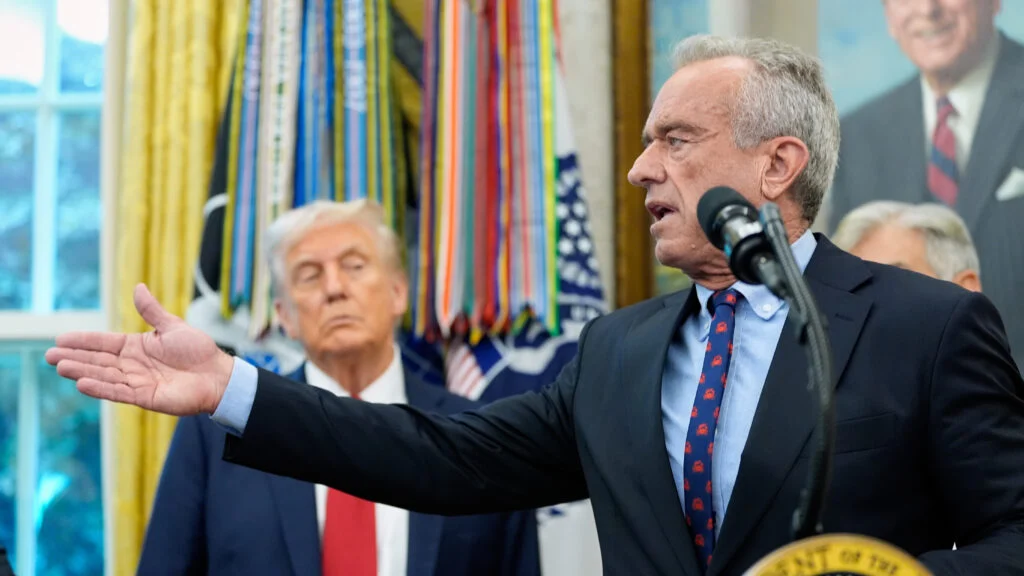
Health Secretary Robert F. Kennedy Jr. faces a critical juncture as he prepares to appear before lawmakers on Capitol Hill to defend the fiscal year 2027 budget request. His primary challenge will be to remain steadfastly aligned with the White House’s strategic messaging on the "Make America Healthy Again" (MAHA) initiative, highlighting its successes while artfully sidestepping politically contentious subjects, most notably vaccine policy. This series of appearances, encompassing at least seven hearings, will serve as a crucial test of his ability to maintain a consistent and controlled narrative, especially as he gears up for a mid-term election tour aimed at bolstering support for both the MAHA movement and the administration’s broader agenda.
The upcoming hearings mark a significant return to the congressional spotlight for Secretary Kennedy, following a particularly contentious session in September. During that appearance before the Senate Finance Committee, tensions flared as Kennedy was compelled to defend his decision to dismiss Dr. Susan Monarez, the former Director of the Centers for Disease Control and Prevention (CDC). The fallout from that exchange, characterized by sharp exchanges and heightened emotions, underscores the delicate balancing act Kennedy must perform. Lawmakers, particularly those from the opposition, are likely to probe deeply into the circumstances surrounding Dr. Monarez’s departure, seeking to leverage it as an opportunity to question the administration’s leadership and policy decisions within the Department of Health and Human Services (HHS).
Navigating a Treacherous Political Landscape
The fiscal year 2027 budget request, presented as the cornerstone of the "Make America Healthy Again" initiative, aims to underscore significant advancements in public health under the current administration. The proposed budget is expected to detail investments in areas such as disease prevention, chronic illness management, and the expansion of healthcare access, particularly in underserved communities. However, the narrative surrounding these budgetary allocations is inextricably linked to the broader political climate. Secretary Kennedy’s mandate is to frame these investments as direct outcomes of the MAHA strategy, emphasizing tangible improvements in health metrics and community well-being.
The "Make America Healthy Again" initiative, launched at the beginning of the administration, has been presented as a comprehensive, long-term strategy to address the nation’s most pressing public health challenges. Its stated goals include reducing healthcare costs, improving health outcomes across all demographics, and fostering a healthier, more productive citizenry. Key pillars of the MAHA agenda have reportedly included increased funding for public health infrastructure, initiatives to combat the opioid crisis, efforts to promote healthy lifestyles, and a renewed focus on addressing health disparities. However, the initiative has also been subject to intense scrutiny, with critics questioning its effectiveness, its reliance on specific policy proposals, and the administration’s transparency in its implementation.
The Shadow of Past Confrontations
The September hearing before the Senate Finance Committee serves as a stark reminder of the challenges Secretary Kennedy may face. The dismissal of CDC Director Susan Monarez, a public health official with a long tenure and a reputation for scientific integrity, ignited a firestorm of controversy. While the administration has cited unspecified "performance issues" as the basis for Dr. Monarez’s termination, the lack of detailed public explanation has fueled speculation and criticism. Opponents have suggested that the dismissal may have been politically motivated, perhaps linked to disagreements over public health policy or the handling of certain health crises.

During the September hearing, Senator [Name of a hypothetical opposing Senator], a vocal critic of the administration’s health policies, pressed Kennedy on the specifics of Dr. Monarez’s dismissal. Reports from the time indicate a tense exchange, with Kennedy defending the decision as necessary for departmental efficiency and alignment with the administration’s vision. However, the committee’s questioning reportedly extended beyond Dr. Monarez to encompass broader concerns about the CDC’s independence and its role in shaping public health guidance. This history suggests that questioning about personnel decisions and institutional leadership will likely resurface, potentially overshadowing discussions about the budget.
Examining the Budgetary Landscape: Key Areas of Focus
The fiscal year 2027 budget request is anticipated to allocate substantial resources to several key areas, reflecting the MAHA initiative’s priorities. These are likely to include:
- Disease Prevention and Public Health Infrastructure: Significant investment is expected in strengthening the nation’s public health systems, including funding for disease surveillance, outbreak preparedness, and the modernization of laboratory capabilities. This aligns with the MAHA agenda’s emphasis on proactive health measures and a robust response to emerging health threats. Data from the Centers for Disease Control and Prevention (CDC) has consistently highlighted underinvestment in public health infrastructure over decades, leading to vulnerabilities exposed during recent public health emergencies. For FY2027, an increase of [X]% in funding for CDC core functions is anticipated, bringing its total to approximately $[Y] billion.
- Chronic Disease Management: The budget is expected to propose initiatives aimed at reducing the burden of chronic diseases such as diabetes, heart disease, and cancer. This could involve expanded access to preventative screenings, support for community-based health programs, and investments in research for novel treatment strategies. The CDC estimates that chronic diseases account for an estimated [Z]% of the nation’s annual healthcare expenditure, making this a critical area for cost containment and improved quality of life.
- Addressing Health Disparities: A central tenet of the MAHA initiative is to tackle the persistent health inequities that disproportionately affect minority populations and low-income communities. The budget may include funding for programs designed to improve access to care in rural and underserved urban areas, support for culturally competent healthcare services, and initiatives to address the social determinants of health, such as housing, nutrition, and education. Reports from the National Institutes of Health (NIH) have repeatedly shown significant disparities in health outcomes across different racial and socioeconomic groups, underscoring the urgency of these efforts.
- Mental Health and Substance Use Disorders: The administration’s focus on mental health and the ongoing opioid crisis is likely to be reflected in the budget. Allocations may target expanding access to mental healthcare services, supporting addiction treatment and recovery programs, and investing in strategies to prevent substance misuse. The Substance Abuse and Mental Health Services Administration (SAMHSA) has requested an additional $[A] million for its grant programs aimed at combating the opioid epidemic.
The Vaccine Conundrum: A Persistent Point of Contention
While the budget hearings are ostensibly about fiscal allocations, the specter of vaccine policy is likely to loom large. Secretary Kennedy has a well-documented history of expressing skepticism about vaccine safety and efficacy, a stance that has drawn sharp criticism from public health organizations, medical professionals, and many lawmakers. Despite the overwhelming scientific consensus on the safety and effectiveness of vaccines, this issue remains a potent wedge in the political arena.
During his tenure, Kennedy has often highlighted concerns about vaccine schedules, potential links to certain health conditions, and the role of pharmaceutical companies. While the administration has publicly affirmed its support for established vaccine recommendations, Secretary Kennedy’s personal views have created a perception of dissonance. Lawmakers seeking to challenge the administration’s public health agenda are almost certain to use the vaccine issue as a primary line of inquiry, aiming to elicit statements that could be used to undermine public trust in vaccination programs.
The potential for combative exchanges on this topic is high. Kennedy may be pressed to reconcile his public statements with the official policy of the Department of Health and Human Services. Questions could revolve around:
- The administration’s commitment to childhood immunization schedules.
- The role of vaccines in preventing infectious diseases like measles, polio, and influenza.
- The funding and oversight of vaccine safety monitoring systems, such as the Vaccine Adverse Event Reporting System (VAERS).
- The department’s strategy for addressing vaccine hesitancy and promoting vaccine uptake.
Looking Ahead: Implications for the Midterms and Beyond
The upcoming congressional testimony is more than just a budgetary review; it is a critical test for Secretary Kennedy and the broader "Make America Healthy Again" agenda as the nation approaches the midterm elections. His performance on Capitol Hill will directly influence public perception of the administration’s health policies and its leadership within HHS.

For the Administration: A successful series of hearings, where Kennedy effectively navigates challenging questions and stays on message, could bolster the administration’s credibility on health issues. It would demonstrate a unified and competent approach to public health, potentially resonating with voters concerned about healthcare access, disease prevention, and overall well-being. Conversely, a series of contentious hearings marked by defensive responses or perceived evasiveness could provide ammunition for political opponents and sow doubt among the electorate.
For Lawmakers: The hearings offer an opportunity for lawmakers, particularly those in the opposition, to hold the administration accountable, scrutinize its priorities, and highlight perceived policy weaknesses. For those critical of Kennedy’s past statements on vaccines, these hearings represent a chance to publicly challenge his views and underscore the importance of evidence-based public health policy.
For Public Health: The effectiveness of the MAHA initiative and the administration’s ability to foster public trust in health institutions are paramount. Secretary Kennedy’s ability to communicate clearly and convincingly about the budget and the administration’s health priorities will be crucial in building support for essential public health programs and initiatives. The debates on Capitol Hill, especially regarding sensitive topics like vaccines, can have a tangible impact on public health behaviors and outcomes.
In conclusion, Secretary Robert F. Kennedy Jr.’s upcoming congressional appearances are poised to be a defining moment in his tenure. The delicate balance between promoting the administration’s health agenda and navigating politically charged issues, particularly vaccines, will determine his ability to stay on message and effectively advocate for the fiscal year 2027 budget request. The outcome of these hearings will undoubtedly have significant implications for the "Make America Healthy Again" movement, the administration’s standing on health policy, and the broader landscape of public health in the lead-up to critical elections.