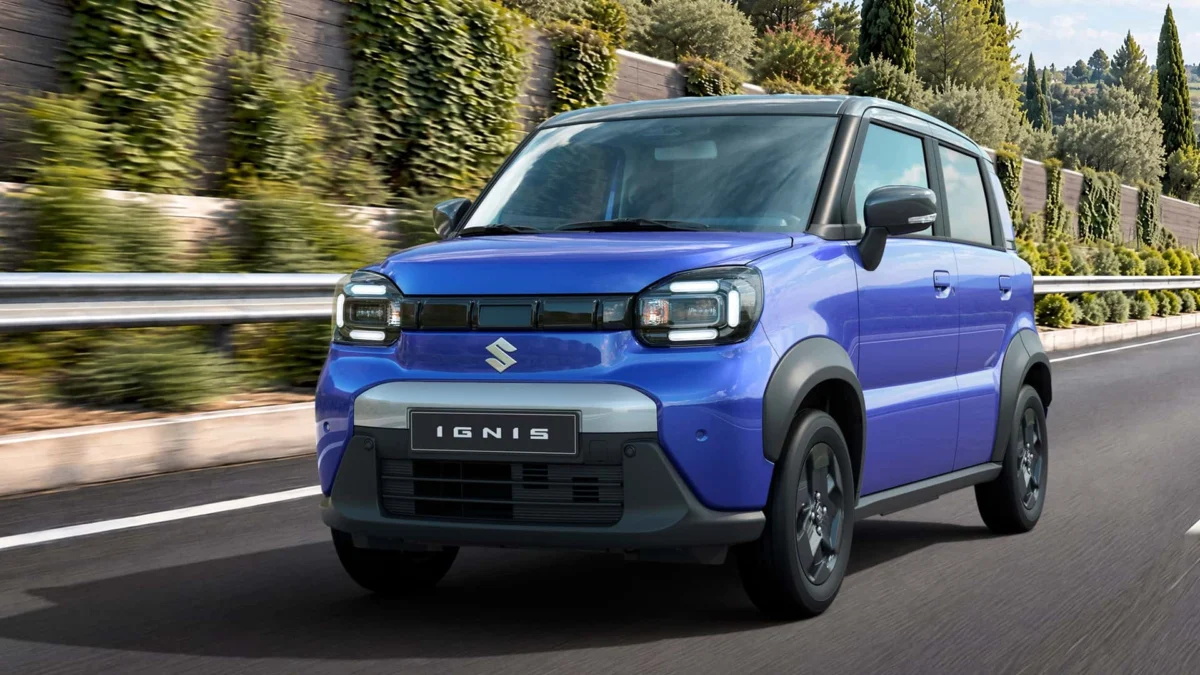
Although Suzuki withdrew from the United States automotive market in 2012 to refocus its global strategy, the company has remained a dominant force in the compact vehicle segment across Asia and Europe. Now, in a strategic pivot toward electrification, the Japanese manufacturer is preparing to launch the Ignis EV, an all-electric city car designed specifically to navigate the dense urban landscapes of the European continent. Scheduled for a summer 2027 market introduction, the Ignis EV represents a critical evolution for the brand, marking its first global subcompact electric vehicle developed to compete against an increasingly crowded field of both legacy European manufacturers and aggressive Chinese entrants.
Measuring just 11 feet and 9 inches (3.57 meters) in length, the Ignis EV is engineered to prioritize maneuverability and space efficiency. This dimensions-first approach is rooted in the success of Japan’s "kei car" regulations, which dictate strict size limits to facilitate easy parking and navigation through the nation’s narrow streets. By leveraging the design philosophy of the recently launched e Sky—a domestic electric kei car—Suzuki has created a platform that offers a unique "wheel-at-each-corner" stance. This design choice serves a dual purpose: it provides the vehicle with a distinct visual identity characterized by a floating roof effect and LED digital-numeral lighting signatures, while simultaneously maximizing interior cabin volume within an extremely small footprint.
Technical Specifications and Platform Engineering
At the heart of the Ignis EV lies the company’s dedicated Heartect-e electric architecture. Suzuki has opted for a 26-kilowatt-hour lithium iron phosphate (LFP) battery pack, which is integrated directly into the vehicle’s floor to maintain a low center of gravity. LFP chemistry was selected primarily for its thermal stability, safety profile, and long-term cycle life, addressing common consumer concerns regarding battery degradation in small, frequently charged city vehicles.
The powertrain consists of a single, integrated assembly housing the electric motor, inverter, and reduction gears, all positioned at the front of the vehicle. This configuration delivers a modest but sufficient 90 horsepower and 98 pound-feet (133 Nm) of torque. While Suzuki has not yet disclosed official range or charging metrics for the European-spec model, the integration of the Heartect-e platform and the focus on weight reduction suggests that the vehicle will be optimized for efficiency rather than raw performance. Furthermore, the car features a remarkably tight 29.5-foot (9-meter) turning circle, a critical metric for a vehicle intended to serve as a primary urban commuter.
The Evolution of the European Micro-EV Segment
The entry of the Ignis EV into Europe comes at a transformative time for the regional automotive industry. For decades, the European small-car segment was defined by iconic models such as the Fiat Panda, the Renault Twingo, and the Volkswagen Up. These vehicles became staples of European urban mobility due to their affordability and agility. However, as the automotive industry shifts toward zero-emission mandates, these traditional combustion-engine staples are being forced to evolve or face discontinuation.
This transition has created a power vacuum that Chinese manufacturers have been quick to exploit. Firms such as Leapmotor and BYD have introduced highly competitive offerings, often leveraging vertical integration to keep costs low while maintaining high feature counts. The Leapmotor T03, brought to European markets via a strategic partnership with Stellantis, and the BYD Dolphin Surf (a derivative of the Chinese-market Seagull) have set a high bar. Recent industry reviews of the Dolphin Surf have highlighted the surprising build quality and technology integration found in vehicles priced under €20,000, signaling that European buyers no longer associate "small" and "cheap" with "low-quality."
Competitive Landscape and Market Readiness
By the time the Ignis EV reaches dealerships in 2027, the market landscape will be significantly more mature. European legacy manufacturers are already deep into their respective electrification programs. Renault has successfully revived the Renault 5 and is preparing a new electric Twingo, while the Dacia Spring—produced in Slovenia—has become a benchmark for accessible, low-cost electric transportation in the region.
The demand for these vehicles is substantial. In September, industry reports indicated that a major Volkswagen dealer group received over 30,000 orders for the new ID. Polo, with waiting lists extending up to ten months. This backlog demonstrates that there is a significant appetite among European consumers for smaller, more affordable EVs, provided they offer a balance of range, utility, and price. Other manufacturers are also positioning themselves to capture this segment, with the Cupra Raval and Skoda Epiq representing the Volkswagen Group’s broader strategy to electrify the compact crossover market.
Strategic Implications and Economic Analysis
The primary challenge facing the Suzuki Ignis EV will be its price point. Dacia’s success with the redesigned Spring, which starts at approximately €17,900 in markets like Italy, provides a clear target. Dacia managed to achieve this by moving production from China to Europe and sharing components with other electric models, proving that cost-efficiency is achievable through modular engineering.
For Suzuki, the Ignis EV is more than just a new product; it is a test of the company’s ability to remain relevant in a market that has become increasingly hostile to internal combustion engines. President Toshihiro Suzuki has emphasized that the company’s decades of experience in the Japanese "mini vehicle" sector provide a competitive advantage. This expertise in packaging and efficiency is expected to translate into a cabin that feels significantly more spacious than its exterior dimensions suggest.
However, the road ahead is not without obstacles. Suzuki must navigate the tightening of emissions regulations in Europe and the potential for increased import tariffs on vehicles manufactured outside of the European Union. Furthermore, the company will need to establish a charging infrastructure strategy and service network that can match the long-standing presence of domestic rivals like Renault, Volkswagen, and Stellantis.
Looking Ahead: The 2027 Timeline
The chronology of the Ignis EV’s development reflects a deliberate, phased approach. Having successfully established the technology in the Japanese domestic market with the e Sky, Suzuki has spent the intervening years conducting rigorous road testing on European city streets and winding rural roads. This local tuning process, focused on suspension geometry and power delivery characteristics, is intended to ensure that the Ignis EV feels familiar to European drivers who value handling dynamics alongside practicality.
As the industry moves closer to 2027, the success of the Ignis EV will likely hinge on three factors:
- Manufacturing Efficiency: Can Suzuki keep the unit cost low enough to compete with Chinese-made EVs and the Dacia Spring?
- Technological Parity: Will the 26-kWh battery provide enough range (likely exceeding 200 kilometers/124 miles) to satisfy the average urban commuter without frequent charging?
- Brand Perception: Can Suzuki leverage its historical reputation for durability and reliability to win over a new generation of electric car buyers?
In summary, the 2027 Suzuki Ignis EV is a calculated attempt to reclaim a foothold in a segment the brand knows intimately. While the market is far more complex than it was when the company left the U.S. in 2012, the focus on compact, efficient, and technologically sound urban mobility remains the cornerstone of Suzuki’s global identity. Whether this strategy will be sufficient to overcome the surge of Chinese competition and the deep roots of European legacy brands remains the most significant question for the company’s future in the European market.