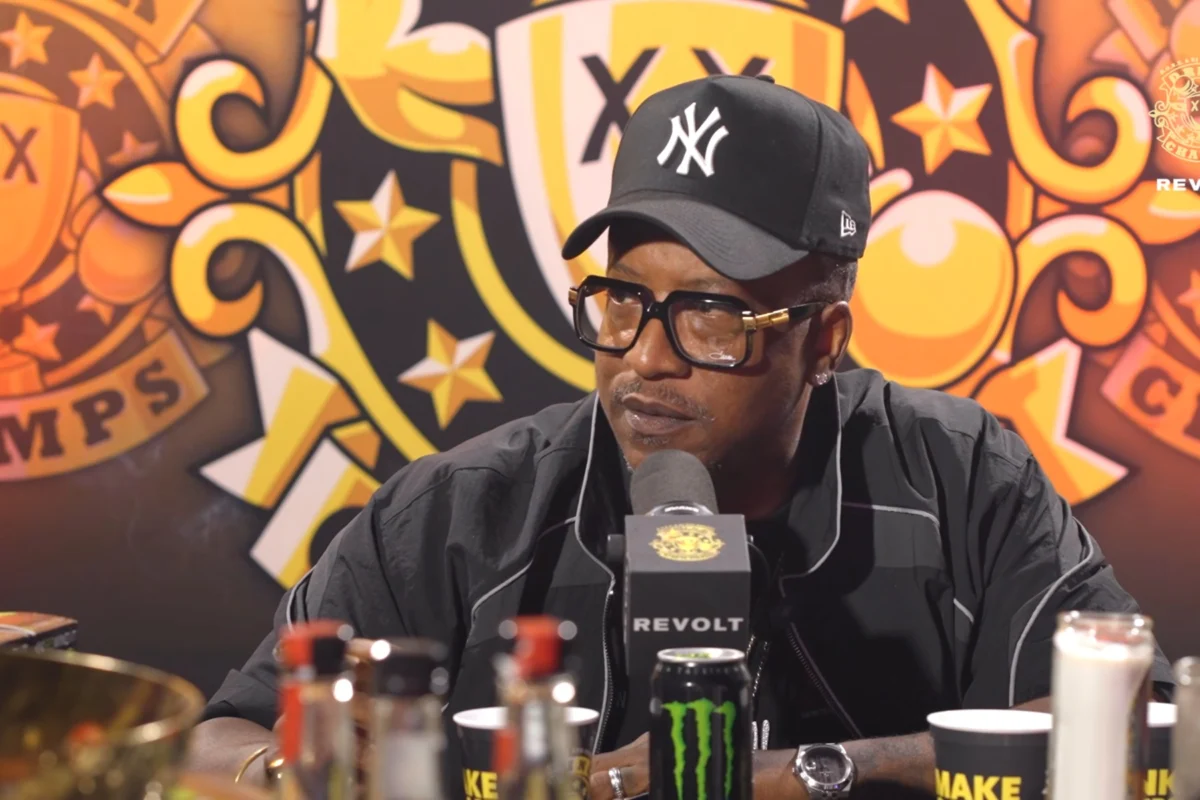
The narrative surrounding the fatal East Coast-West Coast hip-hop rivalry of the mid-1990s has long been defined by violence, lyrical warfare, and tragic loss. However, recent revelations from E.D.I. Mean, a core member of Tupac Shakur’s group, the Outlawz, suggest that the final chapter of the rapper’s life was not defined by a desire for continued conflict, but by a concerted effort to unify the industry. According to E.D.I. Mean, who appeared on the Drink Champs podcast, Tupac Shakur was in the midst of a significant shift in perspective, moving away from the vitriolic "East vs. West" narrative that had dominated the headlines for months.
A Turning Point in the Conflict
The tension between Tupac Shakur and Christopher Wallace—The Notorious B.I.G.—was the centerpiece of 1990s rap media. What began as a friendship between two rising stars in the early 1990s dissolved following the 1994 shooting of Shakur at Quad Recording Studios in New York City. Shakur openly blamed the Bad Boy Records camp for the incident, leading to a series of escalating diss tracks, most notably "Hit ‘Em Up."
However, E.D.I. Mean clarifies that upon his return from New York in 1996, shortly before the fateful trip to Las Vegas, Shakur expressed a desire to move beyond the hostility. "When ‘Pac came back from New York, he said to us before we went to Vegas, he was like, ‘I’m squashing the shit. I’m deading everything,’" E.D.I. Mean recounted. This declaration was not merely a fleeting sentiment; it was, according to associates, part of a broader strategy to reposition his career and influence within the music industry.
The Vision for One Nation
The most concrete evidence of Shakur’s intent to reconcile was the development of his project titled One Nation. During this era, as the industry fractured along geographic lines, Shakur sought to bridge the gap by recording with artists from both coasts. The project was intended to serve as a symbolic and literal peace treaty, bringing together the most respected voices in hip-hop to demonstrate that the regional animosity was largely a manufactured product of media sensationalism and internal industry friction.
E.D.I. Mean noted that the sessions for One Nation were happening in parallel with the recording of his final studio album released during his lifetime, The Don Killuminati: The 7 Day Theory. The ambition was to dilute the regionalism that had resulted in the deaths of various associates and left the hip-hop community in a state of high alert. By collaborating with New York artists and producers, Shakur intended to dismantle the "East vs. West" binary that he believed was stifling the artistic and political growth of the genre.
The Influence of Afeni Shakur
The shift in Shakur’s outlook was not entirely self-initiated. E.D.I. Mean highlights the pivotal role played by Afeni Shakur, Tupac’s mother and a former Black Panther. Afeni, who had lived through the turbulent political climate of the 1960s and 70s, provided her son with a historical framework to understand the current conflict.
She drew parallels between the hip-hop rivalry and the government-led counter-intelligence operations of the past. Specifically, she discussed the tactics used by COINTELPRO, which allegedly fueled internal divisions within the Black Panther Party by circulating fabricated information and exploiting regional differences. Afeni explained to her son that the "beef" he was engaged in mirrored the methods used by authorities to neutralize influential Black voices by encouraging them to turn on one another. This perspective allowed Shakur to view his rivalry with Biggie not just as a personal or artistic dispute, but as a destructive cycle that served outside interests.
Historical Context: The Media-Driven Rivalry
The 1996 climate in hip-hop was volatile. Major publications were heavily invested in the "Coast vs. Coast" narrative, which served as a marketing machine that drove record sales but also exacerbated real-world violence. The death of Tupac Shakur in September 1996, followed by the murder of The Notorious B.I.G. in March 1997, marked the tragic climax of this era.
Data from the era indicates that while the music was highly profitable, the culture had become increasingly dangerous. The public perception of the feud was fed by radio DJs and magazine editors who stood to gain from the heightened drama. Shakur’s realization—that he was being manipulated into a position that served a narrative of self-destruction—marks a critical, often overlooked moment in hip-hop history. Had he lived to complete the One Nation project, the trajectory of the genre, and the subsequent "East vs. West" discourse, might have looked significantly different.
Implications and Legacy
The testimony provided by E.D.I. Mean serves as a sobering reminder of the "what-if" scenarios that continue to haunt the music world. The realization that one of the genre’s most confrontational figures was attempting to act as a peacemaker complicates the established legacy of both Shakur and Wallace.
The broader implications are clear: the rivalry was not an inevitable outcome of geographic origin, but a preventable conflict exacerbated by external pressures and a lack of mediation. As researchers and historians continue to analyze the cultural impact of the 1990s, the One Nation project stands as a testament to what might have been—a moment of unity that could have prevented one of the darkest periods in American music.
Fact-Based Analysis of the Shift
While the desire to "dead" the beef is now well-documented by those in Shakur’s inner circle, it is essential to consider why this did not manifest sooner. Shakur was a man of intense passion and volatile reactions. His public image was deeply tied to his confrontational stance, and stepping away from that persona was a risky move for his brand. However, the maturation of his political consciousness, guided by his mother’s experience, suggests that he was evolving from a combatant into a leader who prioritized the longevity of the culture over personal vendettas.
The influence of Afeni Shakur is the missing link in many traditional biographies of the rapper. Her ability to frame his immediate life challenges within the context of systemic struggle provided him with the necessary distance to see the "bigger picture." By viewing the conflict through the lens of history, Shakur was able to recognize that the destruction of his peer would eventually lead to the destruction of the platform they both occupied.
Conclusion
The narrative of Tupac Shakur as a man seeking to end the violence that defined his career provides a necessary, humanizing correction to the history books. While the tragic end of his life prevented the realization of his final artistic goals, the testimony of his friends and the evidence of the One Nation sessions confirm that he was actively working to change the course of hip-hop history. As the industry looks back at the events of 1996, the emphasis shifts from the fatal shots fired in Las Vegas to the intellectual and emotional growth that defined the rapper’s final months. His legacy is not just one of intensity and conflict, but of a man who ultimately recognized the importance of unity in the face of division.