The current crisis in automotive maintenance is not the result of a single economic failure but rather a "perfect storm" of converging factors. These include the rapid integration of complex digital technologies, a persistent shortage of skilled labor, geopolitical trade tensions resulting in aggressive tariffs, and the lingering fragility of global supply chains. For the average motorist, this means that even a minor fender bender or a routine component failure can now result in a repair bill that rivals the down payment on a new vehicle.
The Statistical Surge: Tracking the Monthly Climb
Recent data from the Consumer Price Index (CPI) paints a sobering picture of the current trajectory. In the first half of 2026, the cost of motor vehicle maintenance and repair demonstrated a relentless month-over-month increase that has left economists and consumer advocates concerned. The year began with a 2.1% increase in January, followed by a sharp 2.4% jump in February. While the growth slowed slightly in the following months—1.9% in March, 1.4% in April, and 1.5% in May—it surged again by 2.1% in June.
When viewed in aggregate, these figures represent a 5% increase compared to the same period in the previous year. To put this in perspective, automotive repair costs are rising significantly faster than the cost of groceries, housing, and other essential services. This trend suggests that the "repair or replace" math that consumers have relied on for decades is being fundamentally rewritten. The financial "sweet spot" of owning a vehicle past its warranty period is evaporating as the cost of specialized parts and high-tech diagnostics consumes the savings typically found in avoiding a monthly car payment.
The Technological Evolution: From Mechanical to Digital
The primary driver of these escalating costs is the sheer complexity of modern vehicles. For much of the 20th century, cars were primarily mechanical machines. A bumper was a piece of chrome or plastic designed to absorb impact; a windshield was a piece of glass designed for visibility. Today, these components are integral parts of a vehicle’s central nervous system.
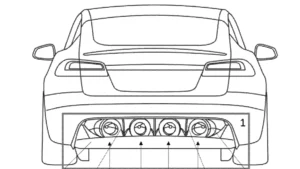
The advent of Advanced Driver’s Assistance Systems (ADAS) has revolutionized vehicle safety, but it has also exponentially increased repair complexity. Modern bumpers are now "smart" components, housing ultrasonic sensors, radar units, and cameras. A minor impact that once required a simple buffing or a $300 plastic cover replacement now necessitates the replacement of sensitive electronic arrays and, crucially, a labor-intensive recalibration process.
According to data from the American Automobile Association (AAA), ADAS-related repairs now account for more than one-third of total repair costs following a collision. Even a task as common as a windshield replacement has become a high-stakes technical operation. Because forward-facing cameras—which control lane-keeping assist and emergency braking—are often mounted behind the rearview mirror, a new windshield requires precise calibration to ensure the safety systems function correctly. If the calibration is off by even a fraction of a degree, the vehicle’s safety software may fail to detect an obstacle or inadvertently steer the car into danger. This calibration alone can add hundreds, if not thousands, of dollars to a bill that used to be covered by a modest glass deductible.

The Labor Crisis: A Shortage of Skilled Technicians
Compounding the technological challenges is a deepening crisis in the automotive labor market. There is a profound shortage of skilled technicians capable of servicing the modern fleet. For years, the industry has struggled to attract new talent as the perception of the "mechanic" remained tethered to an outdated image of grease-stained overalls and heavy wrenches.
In reality, a modern automotive technician must be as much a software engineer as a mechanical repairer. Industry leaders, including Ford Motor Company, have frequently highlighted the thousands of unfilled technical positions across the country. The barrier to entry has risen; technicians now require expensive specialized training and proprietary diagnostic equipment to communicate with a vehicle’s onboard computers.
This scarcity of labor gives repair shops significant pricing power. To retain the talent capable of working on high-tech European imports or complex domestic EVs, shops must offer higher wages and better benefits, costs that are invariably passed on to the consumer. Furthermore, the time required to diagnose "ghost in the machine" electronic glitches is often much higher than the time required for mechanical fixes, leading to higher billable hours for the customer.
Global Trade and Supply Chain Fragility
The geopolitical climate has also played a significant role in the rising cost of parts. The automotive industry is one of the most globalized sectors in the world, relying on a "just-in-time" delivery model that sources components from every corner of the globe. However, recent trade policies and the implementation of tariffs have disrupted this flow.
Tariffs on imported steel, aluminum, and electronic components have forced manufacturers to raise prices on replacement parts. When a specific microchip or sensor is caught in a trade dispute or a regional supply chain bottleneck, the "backorder" effect takes hold. Not only does the price of the part increase due to scarcity, but consumers are often forced to pay for rental cars for weeks or months while their vehicle sits in a shop waiting for a single component. This "hidden cost" of repair is often omitted from official inflation data but represents a significant drain on the average household’s finances.
The Aging Fleet and the "Lesser of Two Evils"
Faced with the high cost of new vehicles, Americans are keeping their cars longer than ever before. The average age of a vehicle on U.S. roads has reached a record high of approximately 12.5 years. While this speaks to the improved mechanical durability of modern engines, it also means that more vehicles are entering the "major repair" phase of their lifecycles.
Older vehicles require more intensive maintenance—timing belts, suspension overhauls, and transmission services—that are naturally more expensive than the routine oil changes required during the first 50,000 miles. However, because even these older cars are now equipped with early-generation electronic modules that are no longer in production, finding replacement parts can be an expensive scavenger hunt.

This has left consumers facing a difficult choice, often described as the "lesser of two evils." On one hand, an owner can choose to keep an aging vehicle and face the brunt of unpredictable, high-cost repairs that are no longer covered by warranty. On the other hand, they can trade in the vehicle for a new model, thereby locking themselves into a high-interest monthly payment and insurance premiums that have also spiked to account for the increased cost of total-loss payouts.
Future Implications and Industry Outlook
The trend of rising repair costs shows no signs of reversing. As the industry transitions toward Electric Vehicles (EVs), the complexity is expected to shift rather than diminish. While EVs have fewer moving mechanical parts, their battery packs and high-voltage systems require specialized tools and environments for repair. A damaged battery pack in a minor collision can often lead to a vehicle being "totaled" by an insurance company because the cost of replacement exceeds the vehicle’s value.
Industry analysts suggest that this may lead to a shift in how we perceive car ownership entirely. We may be entering an era where "Right to Repair" legislation becomes a central political issue, as consumers demand the ability to take their high-tech vehicles to independent shops rather than being tethered to expensive dealership service centers.
Furthermore, insurance companies are already reacting to these rising costs by hiking premiums across the board. As the cost of a "simple" repair rises, the threshold for what constitutes a totaled vehicle lowers, leading to higher claims and, subsequently, higher costs for every driver on the road, regardless of their driving record.
In conclusion, the era of affordable car maintenance appears to be a relic of the past. The convergence of sophisticated safety technology, a strained labor market, and a volatile global economy has turned the garage into a place of significant financial anxiety. For the modern driver, the cost of the "open road" has never been higher, and the path toward relief remains obscured by the very technology designed to move us forward.