The landscape of contemporary jewelry is undergoing a significant transformation as heritage houses and modern designers converge to redefine the boundaries of luxury, craftsmanship, and wearable art. From the unexpected fusion of Japanese pearl mastery with American rock-and-roll aesthetics to the reimagining of high jewelry through the lens of human emotion and modular engineering, the industry is entering a new era of creative expansion. This shift is characterized by a move away from static, traditional designs toward pieces that offer versatility, personal storytelling, and a dialogue between different artistic disciplines. As major players like Mikimoto, Pandora, and Boucheron unveil their latest collections, they signal a broader market trend that prioritizes artisanal savoir-faire and innovative materials, catering to a consumer base that increasingly values both heritage and avant-garde expression.
The Synergy of Contrast: Mikimoto and Chrome Hearts Expand Partnership
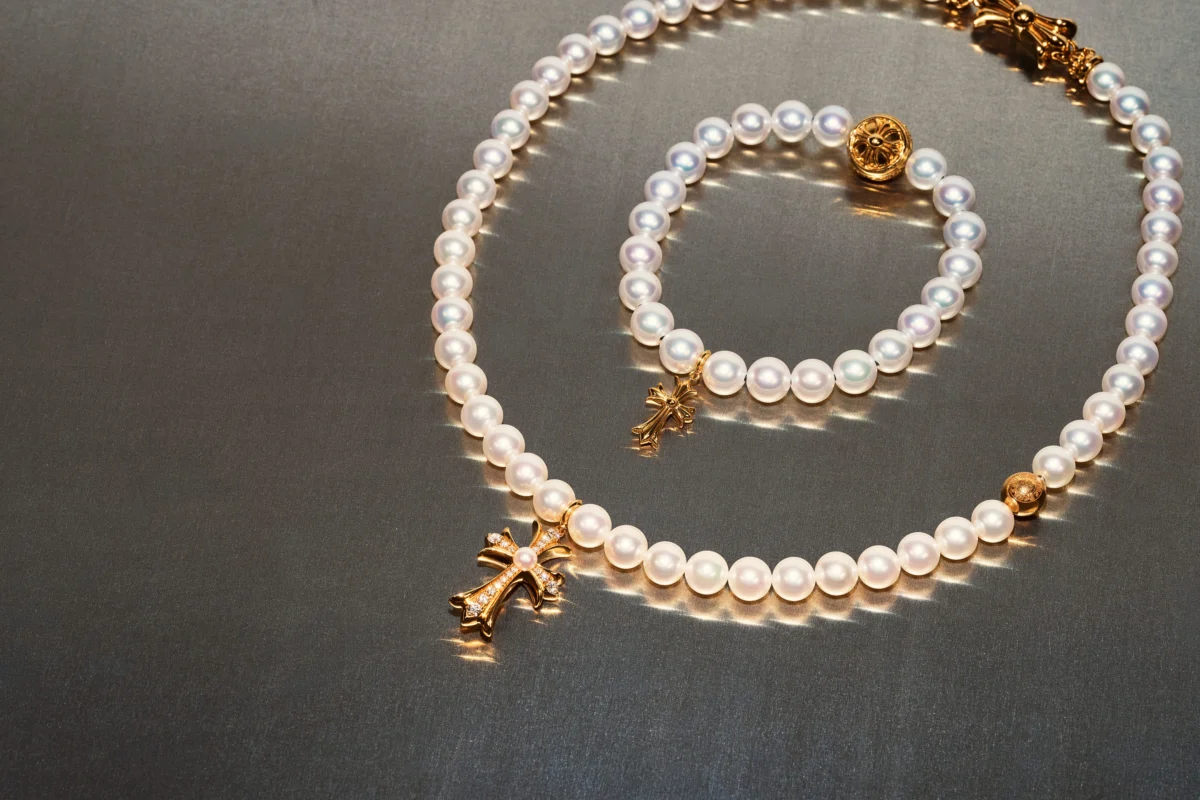
Two years after their initial groundbreaking collaboration, the partnership between the legendary Japanese pearl house Mikimoto and the Los Angeles-based luxury brand Chrome Hearts has entered a sophisticated new chapter. This alliance, which initially appeared as an unlikely pairing between the "King of Pearls" and a brand synonymous with gothic, silver-heavy hardware, has proven to be a commercial and critical success. The latest iteration of the collection centers on Mikimoto’s world-renowned cultured pearls, now integrated with Chrome Hearts’ signature motifs and meticulous artisan work.
In a departure from the silver hardware that defined their first drop, the new collection reworks five signature designs—including a necklace, bracelet, safety pin brooch, and drop earrings—using rich 22K gold hardware. This choice of material brings a distinct warmth and opulence to the pieces, softening Chrome Hearts’ characteristic edge while elevating the natural luster of the pearls.

Historical Context and Market Positioning
The collaboration represents a strategic move for Mikimoto, founded in 1893 by Kokichi Mikimoto, the creator of the world’s first cultured pearls. By aligning with Chrome Hearts, Mikimoto successfully bridges the gap between traditional high jewelry and contemporary luxury streetwear. This "high-low" or "classic-edgy" fusion targets a demographic that appreciates the investment value of pearls but seeks a design language that aligns with modern, individualistic fashion. For Chrome Hearts, the partnership reinforces their standing as more than just a lifestyle brand, positioning their intricate metalwork alongside the world’s most prestigious gemstones.
Pandora Wonders: A New Creative Platform for Wearable Storytelling
Pandora, the world’s largest jewelry brand by volume, is embarking on a multiyear creative journey titled "Pandora Wonders." This platform is designed to celebrate craftsmanship and playful design through high-profile artistic collaborations. The inaugural collection under this banner has been co-created with celebrity stylist Harry Lambert, known for his whimsical and gender-fluid approach to fashion, most notably for his work with pop icon Harry Styles.
The collection features one-of-a-kind freshwater pearls that have been transformed into imaginative charms. Eschewing the traditional spherical pearl, Lambert and Pandora’s design team selected pearls for their naturally sculptural and irregular forms. These "baroque" shapes served as the inspiration for charms resembling mushrooms, squid, rockets, and ice cream cones. Each pearl is hand-set with 14K gold-plated "tails" or attachments, turning organic marine treasures into collectible art.
Strategy and Brand Elevation
The launch of Pandora Wonders marks a significant pivot for the Danish company. Historically known for its accessible silver charm bracelets, Pandora is moving toward a "brand elevation" strategy. By introducing limited-edition, designer-led collections and hosting immersive marketing events—such as the surrealist pop-up in Montauk, New York—Pandora is positioning itself within the luxury conversation while maintaining its core identity of personalization. Market data suggests that the demand for unique, "imperfect" organic materials like freshwater pearls is rising among Gen Z and Millennial consumers, who value authenticity over uniform perfection.

Boucheron’s 2026 Carte Blanche: The Human Being as High Jewelry
At the pinnacle of Place Vendôme’s high jewelry traditions, Boucheron’s Creative Director Claire Choisne continues to push the limits of what constitutes "luxury." For the 2026 "Carte Blanche" collection, Choisne has moved beyond nature or architecture to focus on the human being as the ultimate treasure. This collection is a profound exploration of identity, featuring five distinct jewelry sets: Rain, Flower, Light, Tattoo, and Checkers.
The technical specifications of the collection are staggering. It required over 14,000 hours of craftsmanship to bring Choisne’s vision to life. The collection utilizes a diverse array of artisanal techniques, including:
- Glyptic Engraving: Hand-carving on rose quartz to create floral textures.
- Laser Etching: Precision work on onyx to create the "Checkers" and "Tattoo" motifs.
- Hand-Painting: Adding subtle depth to gemstones to mimic human skin tones or natural phenomena.
Philosophical Implications in Luxury
Choisne’s approach is a direct response to an increasingly digital and artificial world. By centering a high jewelry collection on the human form and human similarities/differences, Boucheron asserts that the "greatest luxury" is humanity itself. This narrative-driven approach to jewelry design—where the value lies as much in the conceptual depth and the hours of human labor as it does in the carat weight of the diamonds—reflects a shift in the high jewelry sector toward philosophical and artistic expression.
Engineering Movement: Marie Mas and the Caustic Light Collection
Paris-based designer Marie Cabriou, founder of Marie Mas, has unveiled "Caustic Light," a collection that redefines modularity in fine jewelry. Inspired by the optical phenomena of light passing through water, the collection captures the essence of shimmering ripples through mechanical innovation.

The hallmark of Marie Mas is its patented hidden mechanisms that allow pieces to evolve with the wearer’s movements. In the Caustic Light collection:
- Earrings can be reconfigured into brooches.
- Hoops can be transformed into bracelets.
- Rings feature rotating elements that change color or shape.
This modularity is not merely a gimmick but an engineering feat that addresses the modern consumer’s desire for versatility. The ability to recompose jewelry into different forms allows the wearer to interact with their pieces, making the jewelry a fluid part of their daily life rather than a static ornament.
De Beers London: The Continued Legacy of the Talisman Collection
De Beers, a name synonymous with the diamond industry for over a century, has expanded its "Talisman" high jewelry collection. Originally introduced in 2005, Talisman was a pioneer in the industry for being the first high jewelry collection to combine rough, unpolished diamonds with faceted, polished ones.
The new additions—a sculptural cuff, a cocktail ring, a medallion, and earrings—continue to utilize the "poinçon" technique. This method involves hand-sculpting textured 18-karat gold around the diamonds, securing them without the traditional use of prongs. This creates a raw, ancient aesthetic that pays homage to the origins of diamonds in Southern Africa.

Chronology and Craftsmanship
The 2005 launch of Talisman was a gamble that changed the industry’s perception of "rough" stones. By 2024, the collection has become a signature of the De Beers London atelier. The use of rough diamonds emphasizes the stone’s natural state, appealing to a segment of the market that seeks a connection to the earth and the geological history of their jewelry. The "poinçon" setting requires a high degree of skill, as the goldsmith must adapt the metal to the unique, irregular shape of each rough diamond.
Sophie Bille Brahe: Bringing "Tangerine Sky" to the Everyday
Danish designer Sophie Bille Brahe has launched her first full high jewelry collection, "Tangerine Sky," exclusively at Harrods. This collection represents a decade of work and a personal milestone for the designer, who is known for her minimalist, celestial-inspired aesthetic.
Inspired by the weightless paintings of Cy Twombly, particularly after Bille Brahe visited an exhibition at Gagosian’s Madison Avenue gallery, the collection seeks to translate the fluidity of brushstrokes into 18K white gold and diamonds. The eight-piece collection includes asymmetrical necklaces and cloud-like sculptural rings.
The Concept of "Lived-In" High Jewelry
Bille Brahe’s mission is to democratize the feeling of high jewelry, creating pieces that are "meant to be lived in" rather than stored in a safe. This reflects a significant trend in the luxury market: the "casualization" of high jewelry. Consumers are increasingly looking for investment-grade pieces that can be worn with a t-shirt as easily as with an evening gown. By launching with a retail giant like Harrods, Bille Brahe is ensuring that her vision of "intimate and effortless" luxury reaches a global audience.

Conclusion: Broader Impact and Industry Implications
The simultaneous release of these diverse collections points to several key trends shaping the future of the jewelry industry. First, the boundaries between different tiers of jewelry—from Pandora’s accessible luxury to Boucheron’s high jewelry—are blurring as brands across the spectrum adopt designer collaborations and artisanal storytelling. Second, there is a clear emphasis on "wearability" and "versatility," whether through modular mechanics or designs intended for everyday use.
Furthermore, the integration of diverse materials—from 22K gold and high-quality pearls to rough diamonds and laser-etched onyx—demonstrates an industry-wide commitment to innovation. As these brands continue to explore the intersection of art, engineering, and heritage, the jewelry market is poised for a period of sustained creative growth. The focus is no longer just on the intrinsic value of the materials, but on the narrative, the craftsmanship, and the emotional connection the jewelry fosters with the wearer.