The legal battle over Missouri’s congressional map has intensified dramatically, plunging the state’s upcoming general election administration into profound uncertainty. A federal judge ordered that Missouri must temporarily utilize a newly drawn, Republican-leaning congressional map for the November elections. This federal intervention arrived merely hours after the United States Supreme Court declined to disturb a ruling from the Missouri Supreme Court, which had mandated that the state revert to older, established district boundaries.
The colliding judicial orders have left election officials, candidates, and voters grappling with a chaotic administrative landscape. At the heart of the dispute is an aggressive redistricting effort initiated by Republican state leaders at the urging of President Trump. The maps were explicitly designed to reshape the political geography of the state, most notably targeting the long-standing Democratic stronghold held by U.S. Representative Emanuel Cleaver in the Kansas City area. As legal teams race through federal and appellate courts, the ultimate configuration of Missouri’s congressional districts for the November ballot remains unresolved.
Chronology of the Redistricting Controversy
The roots of the current constitutional crisis trace back to last year, when Missouri Governor Mike Kehoe convened the state legislature for a special session. Prompted by national Republican strategies to secure a firmer majority in the U.S. House of Representatives, lawmakers passed a revised congressional map.
The newly enacted boundaries fundamentally altered the 5th Congressional District, historically represented by Representative Cleaver. The legislature split portions of Kansas City, allocating them to adjacent, conservative-leaning districts, while extending the remainder of Cleaver’s district deep into rural, heavily Republican territory. State Senator Rick Brattin subsequently won the Republican primary in this newly configured district, while Cleaver ran unopposed in the Democratic primary.
However, a grassroots political organization known as "People not Politicians" launched a statewide citizen petition drive to challenge the newly drawn map. In December, the group submitted tens of thousands of signatures, seeking to force a statewide referendum on the legislation under a provision of the Missouri Constitution allowing public votes on "any act" of the Legislature.
On the day of the August primary elections—which were conducted using the newly drawn maps—Republican Secretary of State Denny Hoskins rejected the referendum petition. Hoskins argued that the state constitution did not permit public referendums on federal congressional redistricting. Although a lower court initially supported Hoskins, the Missouri Supreme Court reversed the decision last week. The state’s highest court ruled that the referendum petition had successfully frozen the new map retroactively in December, meaning it never legally took effect, and ordered the state to use the older districts adopted after the 2020 census. Complying with the order, Hoskins officially designated the redistricting referendum as Proposition A for the November ballot.
Legal Escalation: State Versus Federal Courts
Following the Missouri Supreme Court ruling, Republican State Attorney General Catherine Hanaway mounted an aggressive legal defense to preserve the new map. Hanaway filed an emergency application with the U.S. Supreme Court, warning that switching congressional boundaries between the primary and general elections would trigger an unprecedented administrative disaster. She argued that conducting a primary under one set of maps and a general election under another would render the primary pointless and create widespread confusion among voters.
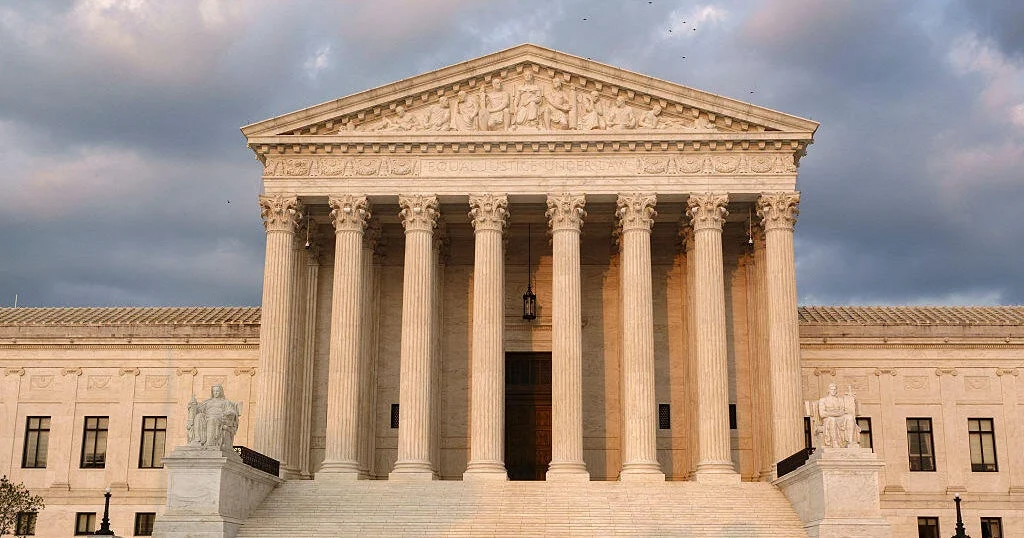
Despite these warnings, Supreme Court Justice Brett Kavanaugh rejected the emergency application on Tuesday, effectively leaving the Missouri Supreme Court’s ruling intact.
Simultaneously, a separate legal challenge was unfolding in federal court. Plaintiffs who supported the new congressional map filed suit, arguing that reverting to the old map would disenfranchise voters who participated in primaries tailored to the new districts. U.S. District Judge Stephen Clark agreed, issuing a temporary restraining order on Tuesday afternoon. Clark reasoned that plaintiffs faced "irreparable harm" because voters would otherwise be forced to cast general election ballots for candidates they had no role in nominating.
The legal ping-pong continued when opponents of the redistricting effort, represented by People not Politicians, appealed Judge Clark’s restraining order. On Wednesday, the U.S. Court of Appeals for the 8th Circuit declined to grant a temporary stay of Clark’s ruling, citing jurisdictional questions and a failure to meet necessary stay factors.
Immediately following the 8th Circuit’s decision, the challengers escalated the matter back to the U.S. Supreme Court. Justice Kavanaugh subsequently requested a formal response from the proponents of the new map, setting a tight deadline for Thursday morning.
Broader National Implications for the House Majority
The high-stakes litigation in Missouri is part of a broader, nationwide partisan struggle for control of the United States House of Representatives. Last year, President Trump called upon Republican-led state legislatures across the country to aggressively redraw congressional boundaries to secure a legislative advantage ahead of the midterm elections.
Missouri was the second state, following Texas, to answer that call. Ultimately, Republicans pursued map redesigns in eight states: Texas, Missouri, North Carolina, Ohio, Florida, Tennessee, Louisiana, and Alabama. National strategists had initially calculated that these combined efforts could yield as many as 16 additional Republican seats.
In response, Democrats attempted counter-redistricting strategies in states like California and Utah, hoping to offset potential losses by securing up to six additional seats. However, the Democratic counter-offensive encountered numerous legal and procedural setbacks.
Despite the sweeping ambitions of the Republican redistricting campaign, political analysts note that implementing new maps does not guarantee electoral success. Historically, the party holding the White House tends to lose congressional seats during midterm cycles. Furthermore, fluctuating approval ratings for President Trump present an additional variable that could complicate the paths of Republican candidates running in newly reconfigured districts.
Official Statements and Reactions
The intensifying legal battle has drawn sharp retorts from key political and legal figures across the state. Attorney General Hanaway’s office emphasized the administrative impossibility of executing a smooth election under rapidly shifting judicial directives. In her filings, Hanaway underscored that election administrators were genuinely uncertain whether they could reconfigure polling logistics, update voter registration databases, and print accurate ballots in time for November.
Conversely, voting rights advocates and plaintiffs challenging the maps have accused state officials of manufacturing a crisis. Richard Von Glahn, a leading plaintiff in the litigation against the new maps, argued that state leaders intentionally delayed addressing the referendum petitions until late in the cycle, thereby creating an artificial sense of urgency to force judicial intervention in their favor.
As the U.S. Supreme Court weighs the latest emergency appeals, county election boards across Missouri are left in administrative limbo. With early voting preparations underway and statutory deadlines fast approaching, the final boundaries of Missouri’s congressional districts—and the political fate of its voters and candidates—hang in a delicate balance.