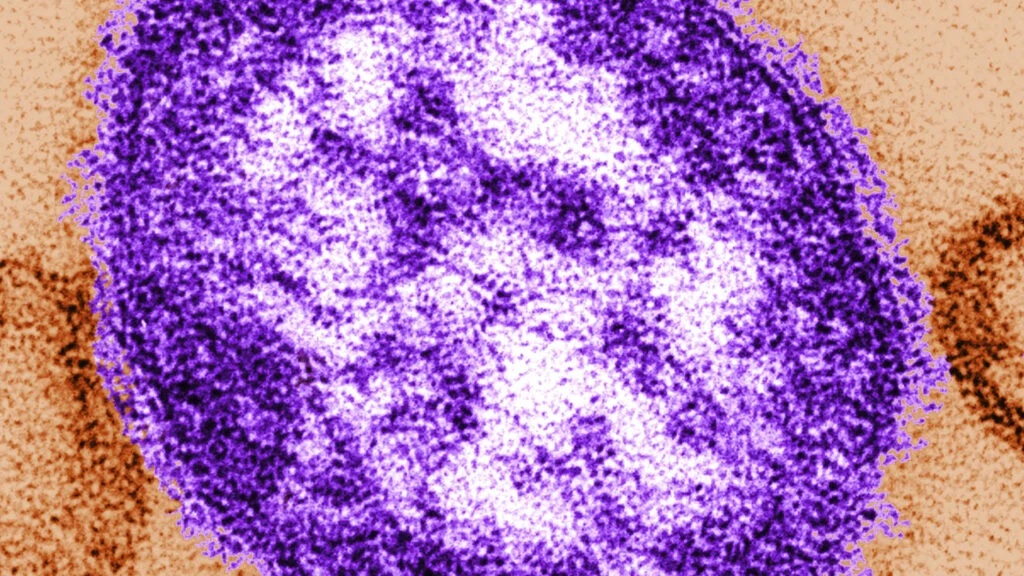
The confirmation by Lancaster County Coroner Dr. Stephen Diamantoni regarding two infant deaths linked to measles has injected significant medical clarity into an increasingly polarized national conversation. Following a right-to-know request filed by local media, Dr. Diamantoni released formal findings that distinguish the specific medical causes behind the passing of two infants who had been central to a heated public debate between state officials and federal leadership. While the coroner has officially reported his conclusions to the Centers for Disease Control and Prevention (CDC), the federal agency’s ongoing reticence to formally classify these cases has fueled broader concerns regarding the politicization of public health data.
Chronology of the Medical Findings
The deaths occurred in August, involving two infants who were too young to receive the measles, mumps, and rubella (MMR) vaccine, which is typically administered at the one-year mark. The first infant, Ivan Miller, passed away on August 14 shortly after birth. An autopsy performed by the coroner’s office determined the primary cause of death to be a ruptured spleen. While measles was identified as a concurrent infection—and subsequently listed on the death certificate as a significant contributing condition—Dr. Diamantoni clarified that the virus was not the direct cause of the splenic injury.
The second infant, Mary Stoltzfus, died at six weeks of age on August 18. Unlike the case of the Miller infant, no autopsy was performed; rather, the cause of death was determined by the attending physicians. Stoltzfus was born with "Amish lethal microcephaly," a genetic condition characterized by severe underdevelopment of the brain and skull, which typically limits life expectancy to six months or less. Dr. Diamantoni stated that in this instance, a measles infection was the precipitating factor that led to her death.
The Backdrop of a Growing Outbreak
These tragedies have occurred against the backdrop of a significant and expanding measles outbreak within Pennsylvania. As of late Wednesday, state health officials reported that the number of confirmed cases has surpassed 620, spanning across 37 different counties. This surge represents a stark departure from the medical landscape of the last two decades, during which the United States had successfully maintained a status of measles elimination.
The domestic eradication of measles, achieved in 2000, was predicated on sustaining vaccination coverage rates of at least 95 percent of the population. However, that threshold has been increasingly difficult to maintain. Public health experts have noted a steady decline in immunization rates, which leaves vulnerable populations—particularly infants, the immunocompromised, and those with underlying genetic conditions—at heightened risk. The current outbreak in Pennsylvania is viewed by many epidemiologists as a bellwether for what may happen if vaccination rates continue to falter, with international health bodies now preparing to determine if the United States has officially lost its measles-free status during an upcoming summit in November.
Political Friction and the Federal Response
The deaths of these two infants became the nexus of a sharp political disagreement between Pennsylvania Governor Josh Shapiro and the federal administration. Governor Shapiro had initially announced the deaths, emphasizing the preventable nature of the virus and urging public adherence to vaccination schedules. His comments were met with a forceful rebuttal from U.S. Health Secretary Robert F. Kennedy Jr., a prominent critic of established vaccine protocols.
Secretary Kennedy’s public suggestion that the deaths might have been "fabricated" sparked immediate backlash from the medical community. His stance mirrors previous rhetoric regarding measles fatalities, where he has historically challenged the validity of official death certificates that list measles as a cause of death. Because the Department of Health and Human Services (HHS) oversees the CDC, this conflict has raised profound questions about the integrity of federal data dissemination.
Dr. Georges Benjamin, executive director of the American Public Health Association, articulated the anxieties held by many in the scientific community. "Frankly, the CDC is not to be trusted in sharing information," Dr. Benjamin remarked. "People are questioning their motives." This erosion of trust is exacerbated by the observation that the CDC’s official website, which previously acknowledged the existence of two measles-associated deaths, underwent an editorial change. The site now carries a disclaimer stating that the agency will update its reporting only after "relevant reviews are completed," a move critics argue is a concession to political pressure rather than a standard medical procedure.
Clinical Context and Public Health Implications
The challenge of attributing death in the context of viral infection is a standard, albeit complex, task for medical examiners. When a patient dies with a known, highly contagious pathogen like measles, clinicians must determine if the virus acted as the primary agent of mortality or as a co-morbidity. In the case of Mary Stoltzfus, the presence of a pre-existing, life-limiting genetic condition did not preclude the conclusion that the measles infection was the final, fatal insult to her system.
Conversely, the case of Ivan Miller highlights the nuances of pathology; while the virus was present, the physical trauma of a ruptured spleen was the terminal event. The inclusion of measles on his death certificate as a "significant condition" reflects the medical reality that a systemic infection can complicate the recovery or stability of a patient even when it is not the direct mechanism of death.
For public health officials, the broader implication is clear: the decline in vaccine uptake is no longer an abstract statistical concern but a tangible threat to child mortality. Measles is one of the most infectious diseases known to science, and its resurgence in a population where it was once eliminated requires a robust, data-driven response. When the institutions responsible for tracking such data—specifically the CDC—appear to oscillate under political influence, it hampers the ability of local health departments to communicate risk effectively to the public.
The Road Ahead for Vaccination Policy
As the United States approaches a potential loss of its measles-free status, the path forward remains contentious. The focus of state and local health officials is currently on containment and increasing vaccination coverage, but this effort is hampered by the current climate of misinformation. The skepticism voiced by federal leadership regarding the veracity of the Pennsylvania deaths serves to embolden vaccine hesitancy, making it increasingly difficult for pediatricians and public health advocates to bridge the gap in community immunity.
In the coming months, the international health community will scrutinize U.S. data with greater intensity. The criteria for maintaining "elimination status" are rigorous, and a failure to meet them would represent a significant setback for American public health. Furthermore, the reliance on the CDC for transparent, unvarnished information is a cornerstone of the global response to infectious diseases. Should the agency continue to delay or obscure findings related to the Pennsylvania cases, it may invite further scrutiny from global health monitors and erode the public’s confidence in federal health reporting for years to come.
Ultimately, the deaths in Pennsylvania serve as a grim reminder of the high stakes involved in immunization policy. While the political debate continues to swirl, the medical reality remains that measles is a vaccine-preventable disease, and its return to the United States is a consequence of systemic, cultural, and political factors that are only just beginning to be addressed. As the coroner’s office has finalized its reporting, the focus now shifts back to the CDC to determine whether it will align its federal reporting with the established medical evidence from the field, or if the current climate of doubt will continue to leave the public without a clear, definitive accounting of the outbreak’s toll.