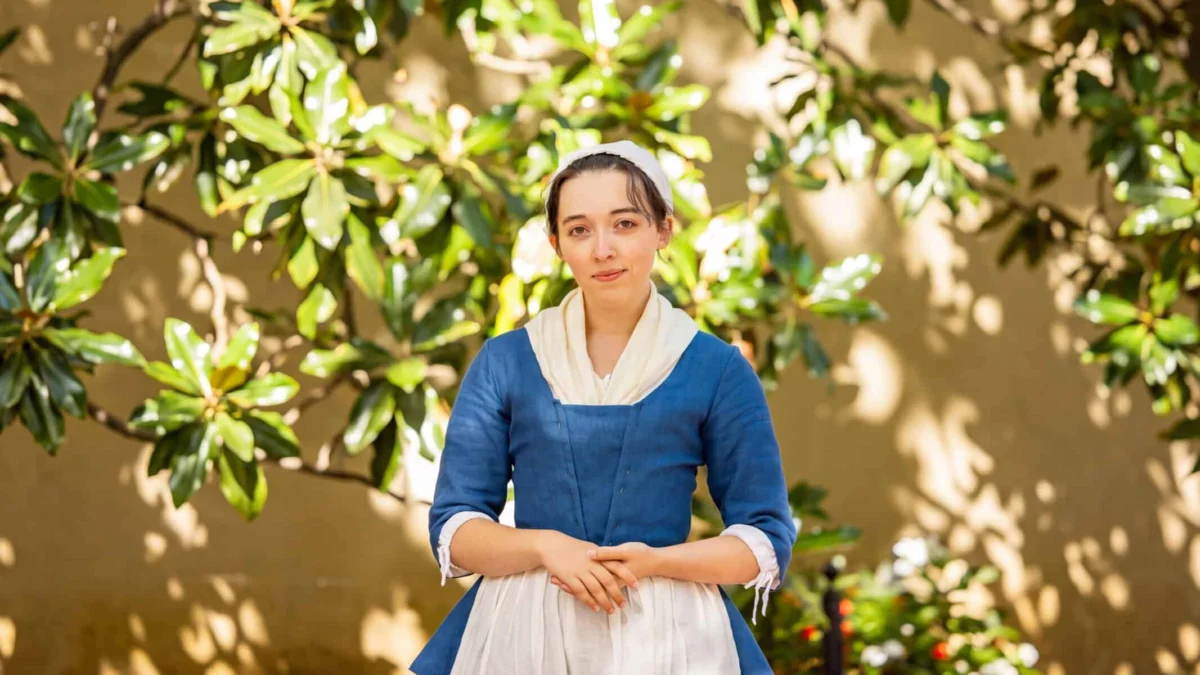
Preserving the tangible threads of American history requires more than textbooks and static museum displays; it demands meticulous historical interpretation, period-accurate craftsmanship, and sustained community engagement. This philosophy takes center stage at 239 Arch Street in Philadelphia, Pennsylvania, where the historic Betsy Ross House continues to bridge the gap between the 18th century and the modern era. Through a collaborative initiative with real estate brokerage Redfin, visitors are being offered free admission to the landmark on November 7, providing a renewed opportunity for the public to experience living history firsthand. This partnership highlights not only the architectural legacy of one of the nation’s most visited historic sites but also the rigorous daily efforts of the interpreters—known as History Makers—who embody the iconic seamstress and upholsterer.
Background Context of the Betsy Ross House and the Landmark Partnership
The Betsy Ross House, located in Philadelphia’s historic district, stands as a symbol of early American independence and domestic life. While historical debates often surround the precise origins of the first American flag, the cultural and educational impact of the site remains indisputable. Historic Philadelphia, Inc., the nonprofit organization charged with operating the museum, utilizes living history interpretation to engage visitors of all ages, transforming abstract historical narratives into interactive human experiences.
In an effort to expand accessibility to American historical landmarks, Redfin has launched the "Iconic Homes of America" initiative under Redfin Presents. By sponsoring free admission days—such as the upcoming November 7 event at the Betsy Ross House—the corporation aims to encourage public interaction with physical spaces that define the nation’s architectural and cultural heritage. This corporate-cultural collaboration underscores a growing trend of private sector support for historical preservation, ensuring that museums can maintain public outreach during economic shifts affecting the tourism and non-profit sectors.
The Rigorous Audition and Training Process for History Makers
Bringing an 18th-century icon to life is a selective and demanding undertaking. Madeline Burk, a History Maker with Historic Philadelphia, details the stringent evaluation process required to transition from a general museum storyteller to portraying Betsy Ross. Candidates are evaluated not merely on their acting abilities, but on their comprehensive knowledge of colonial history, public speaking endurance, memory retention, and occasionally, musical proficiency.
Unexpectedly, the audition process also tests practical domestic skills. Prospective interpreters must demonstrate basic proficiency in period-accurate hand-sewing, specifically executing a straight running stitch on a piece of linen. This requirement reflects the reality of the profession: History Makers at the site do not simply recite lines; they actively engage in historical trades, particularly 18th-century upholstery and flag-making, which serve as both educational demonstrations and functional craftwork for museums across the country.
Daily Routine and Physical Realities of 18th-Century Portrayal
Recreating the daily existence of an 18th-century artisan involves profound physical and psychological preparation. Interpreters undergo a literal and figurative transformation each morning, donning period-accurate garments including structured corsetry and caps. According to Burk, the physical constraints of 18th-century attire fundamentally alter posture, respiration, and movement, enforcing a natural alignment with the physical realities of the period.
This transformation extends directly into vocal delivery and demeanor. Portraying Ross necessitates a heightened level of mindfulness, formal speech patterns, and measured physical composure. Interpreters are trained to navigate unscripted inquiries from modern visitors—ranging from earnest historical questions to playful or testing remarks designed to break character. By responding through the analytical lens of an 18th-century artisan, History Makers maintain an immersive educational environment, employing wit, historical context, or polite disinterest when confronted with topics outside of Ross’s historical scope, such as the duties of contemporary ship captains or candle makers.
Chronology of Betsy Ross: Myth, Reality, and Historical Documentation
Understanding the life of Betsy Ross requires separating well-documented archival records from popular patriotic folklore. Born Elizabeth Griscom on January 1, 1752, Ross lived through the tumultuous era of the American Revolution, experiencing significant personal triumphs and hardships.
- 1752: Elizabeth Griscom is born in Philadelphia, the eighth of seventeen children.
- 1773: Betsy elopes with John Ross, an Anglican apprentice upholsterer, at a tavern in New Jersey. Due to religious differences—Betsy being a birthright Quaker and John an Anglican—she is disowned ("read out") by the Philadelphia Quaker meeting.
- 1775–1776: John Ross dies while serving in the local militia, leaving Betsy a young widow and establishing her independence as an upholsterer.
- 1777: According to family oral history first presented to the Historical Society of Pennsylvania in 1870 by her grandson William Canby, Ross is visited by a committee including George Washington to commission the first American flag. While primary documentation for this specific meeting remains scarce, historians acknowledge her active business presence as an upholsterer and flag maker in Philadelphia during the Revolutionary War.
- Subsequent Marriages: Ross marries twice more—to Joseph Ashburn in 1777 and John Claypoole in 1783—both of whom also predeceased her.
- 1836: Betsy Ross passes away at the age of 84. Throughout her life, historical records indicate she continuously rented her residences rather than owning property, reflecting the economic realities common for women and independent artisans of her social standing in early America.
The Craft of History: Upholstery, Flag-Making, and Preservation
A vital component of the interpretive work at the Betsy Ross House involves traditional craftsmanship. The site operates an active upholstery shop where interpreters create reproduction items for museums, including doll-bed mattresses stuffed with horsehair, cotton chintz bed curtains, and camp bed furnishings for historic sites such as Fort Ticonderoga.
In producing reproduction flags, interpreters rely on traditional hand-sewing techniques. Professional insights from the shop emphasize the utility of running stitches for felled seams over more permanent back-stitch and whip-stitch combinations, allowing artisans to efficiently correct errors across long stretches of fabric. This hands-on preservation of perishable skills ensures that the material culture of the 18th century is not merely observed behind glass, but actively practiced and understood.
Broader Implications: Historical Preservation in the Digital and AI Era
As digital technologies, artificial intelligence, and virtual reality reshape how information is consumed, the preservation of physical historic sites and living history programs takes on heightened significance. Cultural analysts and historians argue that physical spaces offer sensory and emotional engagements that digital mediums cannot replicate.
The preservation of places like 239 Arch Street emphasizes human narratives—art, literature, interpersonal connection, and resilience—that anchor contemporary society in shared historical patterns. By maintaining physical contact with the past through architecture, material crafts, and direct human interpretation, institutions like Historic Philadelphia and sponsors like Redfin provide a counterweight to digital isolation. The initiative to open the Betsy Ross House to the public free of charge on November 7 serves as a strategic effort to sustain this vital civic engagement, ensuring that future generations continue to explore the tangible foundations of American history.