
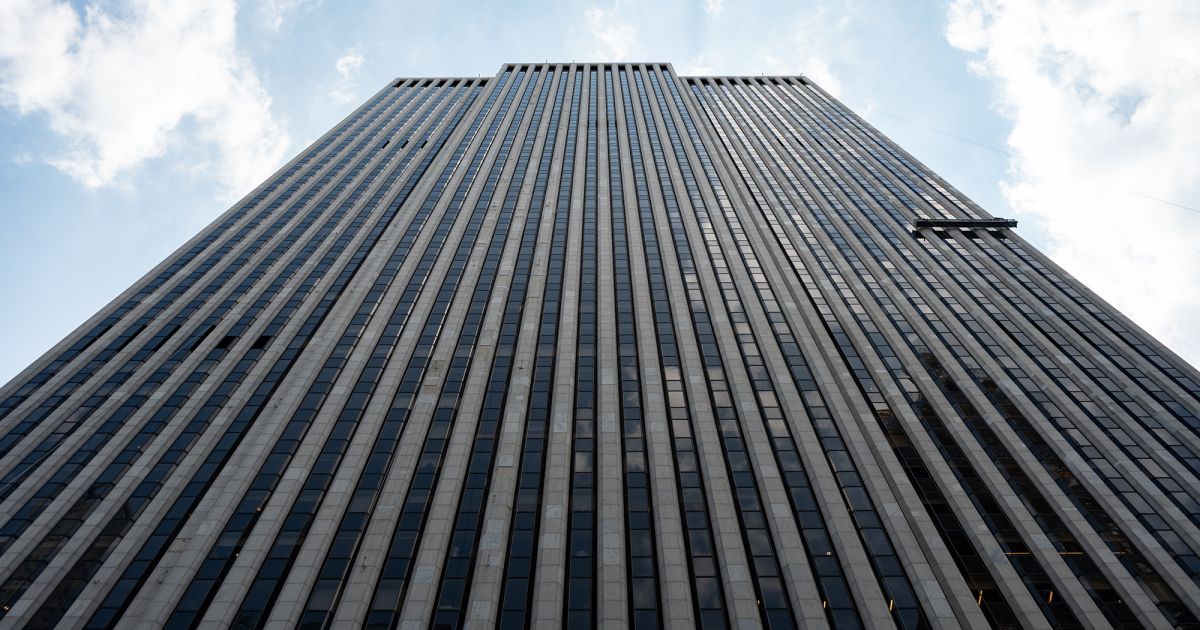
The sudden and unexpected dissolution of Weil, Gotshal & Manges, a legal titan founded in 1931, has sent shockwaves through the Manhattan commercial real estate sector. After failing to secure a merger with Willkie Farr & Gallagher and facing a cascading series of partner departures, the firm announced this week that it will wind down operations. This decision leaves a massive void at the General Motors Building at 767 Fifth Avenue, where the firm has occupied approximately 447,000 square feet across 11 floors since 1968. As one of the country’s 30 largest law firms—generating nearly $2.1 billion in annual revenue as recently as last year—the collapse of Weil represents a rare and stunning fall for a cornerstone of the legal industry, carrying profound implications for the city’s high-end office market.
A Legacy Untethered: The Rise and Fall of a Legal Pioneer
For decades, Weil, Gotshal & Manges was synonymous with elite corporate restructuring and bankruptcy law. Its footprint in the professional world was marked by its involvement in the most high-profile corporate insolvencies in American history, including the liquidations and reorganizations of Lehman Brothers, General Motors, Enron, and Drexel Burnham Lambert. The firm’s stature was bolstered by a global workforce of approximately 2,000 people, including 1,200 attorneys.
However, the firm’s recent trajectory suggests that even the most established institutional players are not immune to the modern pressures of the legal market. Increased competition for top-tier legal talent, combined with a shift in institutional loyalty among senior partners, created a fragile internal environment. The failed merger talks with Willkie Farr & Gallagher served as the final catalyst, prompting a leadership decision to dissolve the firm rather than face a protracted period of attrition. Bloomberg reported that the firm has assured its associates and staff that they will be compensated for 90 days, while the partnership prepares for a formal vote on the specific mechanics of the wind-down. Importantly, the firm has signaled its intent to fulfill its remaining obligations to clients throughout the transition period, avoiding a disorderly bankruptcy filing.
The GM Building: A Trophy Asset in Transition
The General Motors Building, owned 60 percent by BXP (formerly Boston Properties) in a joint venture with Goldman Sachs and Meraas Capital, has long been considered the crown jewel of Manhattan’s office stock. Weil’s departure from its 447,000-square-foot premises—a lease to which the firm was committed until 2034—creates a significant, albeit highly desirable, vacancy.
For BXP, the timing of this vacancy is complex. On an earnings call held on October 28, just hours before the dissolution was confirmed, BXP President Douglas Linde noted that average rents at the GM Building were currently sitting under $150 per square foot. In contrast, newer developments in the portfolio, such as the upcoming 343 Madison Avenue, are commanding premiums ranging from $190 to over $300 per square foot.
“There is a vast gap between where the in-place rent is at the General Motors Building and where we believe and perceive the market is,” Linde remarked during the call. This discrepancy suggests that while the loss of a major tenant is a significant operational hurdle, it may present an opportunity for BXP to reset the rent roll to align with current market highs.
Market Context: Scarcity and Demand in Manhattan
The broader Manhattan office market is currently characterized by a trend of tightening supply, particularly in the "Class A" and trophy segments. According to recent data from Savills, leasing activity through the end of the third quarter of 2026 reached 33.5 million square feet, a 5.6 percent increase over the previous year. This demand has been driven primarily by the legal and financial services sectors.
Notable recent transactions illustrate the aggressive expansion of these firms:
- Simpson Thacher & Bartlett: Finalized a 916,000-square-foot lease at Extell’s 570 Fifth Avenue.
- Proskauer Rose: Expanded to 478,000 square feet at 11 Times Square.
- Kirkland & Ellis: Secured 257,135 square feet at 900 Third Avenue.
- Morgan Lewis: Relocated to 205,000 square feet at 1251 Avenue of the Americas.
- Loeb & Loeb: Expanded to 178,959 square feet at 345 Park Avenue.
Colliers’ third-quarter report indicates that total Manhattan office availability has fallen to 12.4 percent—its lowest level since August 2020—marking ten consecutive quarters of inventory contraction. Furthermore, sublet availability has plummeted to 10.07 million square feet, a 22.3 percent decline year-over-year. This competitive landscape suggests that the space vacated by Weil, Gotshal & Manges will likely be absorbed rapidly by competing firms or financial institutions looking for a prestigious address.
Financial Implications and Future Hurdles
Despite the long-term potential for higher rental income, the immediate impact on BXP’s balance sheet may be disruptive. Josh Winefsky, a partner at Herbert Smith Freehills Kramer, highlights the logistical and financial burdens inherent in such a transition. “There is going to be a meaningful amount of time where BXP will be receiving zero revenue for this space,” Winefsky noted. “You have to locate the replacement tenant, negotiate a lease, and either build out the space or provide a substantial tenant improvement allowance.”
Moreover, the GM Building faces a significant financial milestone: a $2.3 billion refinancing loan, originally secured in 2017 at a fixed rate of 3.43 percent, which is set to mature in June 2027. The sudden emergence of a 447,000-square-foot vacancy in the property’s stack could complicate the refinancing process. Lenders typically evaluate the "rent roll" and tenant credit quality when underwriting eight-figure commercial loans. BXP will need to manage the marketing of this space with extreme precision to reassure stakeholders of the building’s continued income stability.
Strategic Outlook: A Blessing or a Burden?
Industry analysts remain divided on whether this event signals a broader fragility in the legal sector. Matthew Schreck, research director for the New York tri-state area at Savills, characterizes the Weil collapse as an idiosyncratic, "one-off" event rather than a systemic failure. “There are always consolidations and movement, and law firms have been very proactive,” Schreck said. “I don’t necessarily want to call it a blessing in disguise for BXP, but there are worse times in the marketplace for this to be happening.”
The prevailing sentiment among commercial real estate experts is that the "voracious" demand for trophy space in Midtown Manhattan will insulate BXP from a prolonged vacancy. Josh Kuriloff, an executive vice chairman at Cushman & Wakefield, echoed this, stating, “There will be a lot of interest in this large block of space, especially given the quality of this asset and the lack of currently available trophy office space in Midtown.”
Conclusion: The Path Forward
As the wind-down process continues, all eyes will be on the specifics of the lease termination. Whether BXP opts to re-lease the entire block or divide the floors for multiple smaller tenants remains to be seen. Given that market-rate rents for Class A trophy space in Midtown have risen nearly 10 percent over the past year, the potential for BXP to secure a higher revenue stream is significant.
The saga of Weil, Gotshal & Manges serves as a sobering reminder of the volatility inherent in even the most storied professional institutions. However, for the Manhattan real estate market, the vacancy created by the firm’s departure is likely to be viewed as a rare entry point into one of the world’s most exclusive office buildings. With limited supply and consistent demand, the transition of 767 Fifth Avenue will likely be a litmus test for the resilience and pricing power of the city’s top-tier office market in the years to come.