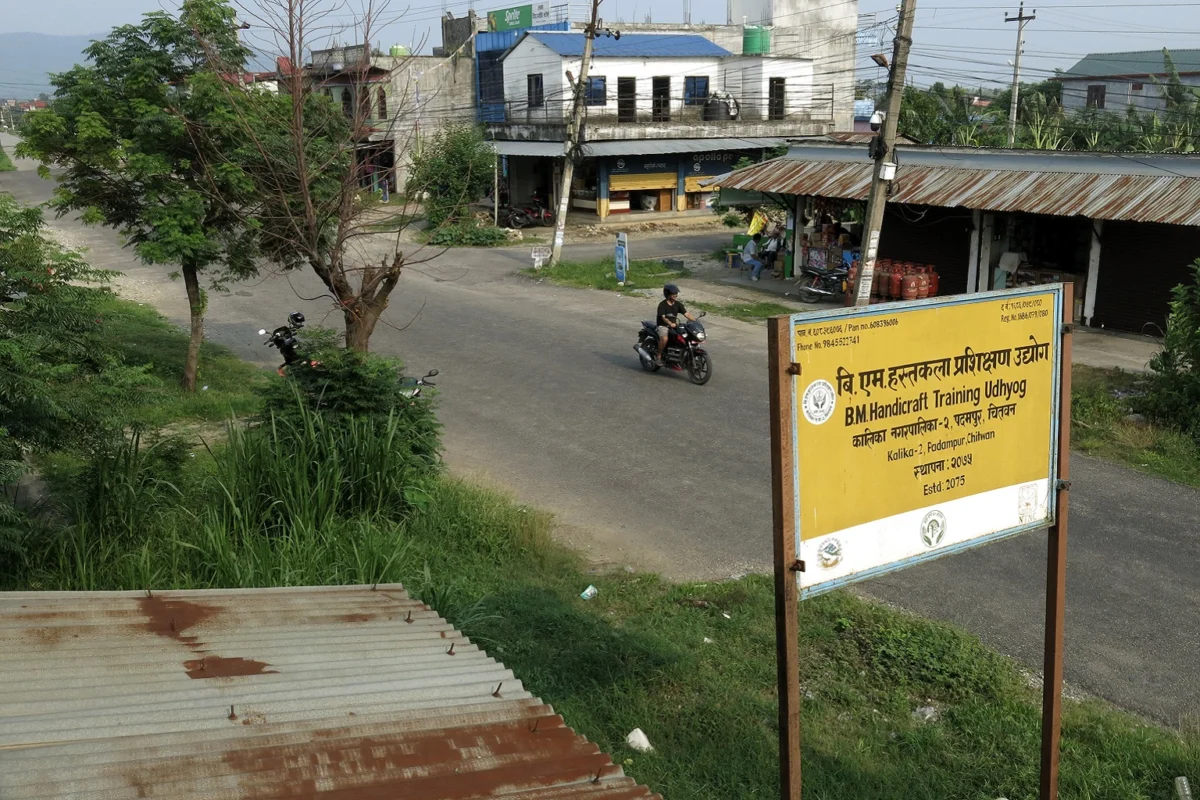
NAYA PADAMPUR, Nepal — The rhythmic, mechanical whir of a spinning wheel on a rooftop in Naya Padampur serves as a heartbeat for a shifting economic landscape in rural Nepal. As ivory strands of wool glide through the calloused, practiced fingers of 73-year-old Bin Maya Gurung, the motion is more than a craft; it is a declaration of autonomy. For Gurung, these movements represent a hard-won transition from a life defined by the perils of forest dependency to one of financial independence. Her story is a microcosm of a broader national trend: the rise of women-led microenterprises that are simultaneously transforming local economies and reshaping the human relationship with Nepal’s protected wilderness.
The emergence of these enterprises is not merely a social phenomenon but a strategic evolution in rural development. Following decades of shifting government regulations and evolving societal norms, thousands of women across Nepal have transitioned from subsistence labor to entrepreneurial roles. Research underscores the depth of this shift; a 2022 study conducted in the Parbat district indicated that 96% of women engaged in microenterprises reported a significant increase in their confidence to provide for their families. This empowerment, however, carries profound environmental implications, as these income streams provide a viable alternative to the extractive practices that once defined life on the edges of Nepal’s national parks.

A Chronology of Relocation and Resilience
To understand the necessity of this economic shift, one must look back to the 1990s. For residents like Bin Maya Gurung, the environment was not a place of tourism or conservation, but a landscape of constant risk. Gurung was a resident of the original Padampur settlement, which sat within the boundaries of what is now the Chitwan National Park. The park, a UNESCO World Heritage site, is a sanctuary for endangered species including the one-horned rhinoceros, the Bengal tiger, and the gharial crocodile.
In the mid-1990s, the Nepali government mandated the relocation of all residents living within the park’s core zones to mitigate human-wildlife conflict and protect habitat integrity. The displaced families were moved to what became known as Naya (New) Padampur. The transition was brutal. The new settlement was carved out of previously forested land, leaving residents with little infrastructure, no irrigation, and a landscape still frequented by large predators.
During those early years, the primary survival mechanism for many women was the production of raksi, a traditional Nepali spirit. The distillation process required constant supplies of firewood, compelling women to venture daily into the dense forests surrounding their homes. This created a high-stakes environment where the search for fuel often intersected with the hunting grounds of tigers and rhinos.

The danger was not theoretical. A 2026 study on human-wildlife conflict in Nepal revealed a harrowing disparity: while women accounted for less than half of the total recorded tiger attacks between 2010 and 2024, they suffered a fatality rate exceeding 70%, compared to less than 50% for men. This discrepancy is directly attributed to the gendered nature of daily chores, which tethered women to the forest edge for water and fuel collection.
The Rise of Community-Based Entrepreneurship
The shift away from these hazardous routines was facilitated by a legislative change in the national approach to land management. The 1993 Forest Act was a watershed moment, granting community forest user groups the legal authority to manage state-owned national forests. This decentralized model, which today covers approximately one-third of Nepal’s forest land, provided the institutional framework for local agencies to flourish.
Simultaneously, international and national NGOs, such as the United Nations Development Programme (UNDP) and the National Trust for Nature Conservation (NTNC), began investing in human capital. By providing workshops on business literacy, skill-based training, and financial management, these organizations equipped women with the tools to transition from raw material collectors to value-added producers.

The results are visible across the Chitwan buffer zones. Today, local collectives manage a diverse portfolio of enterprises, including beekeeping, soap manufacturing, the weaving of elephant grass, and nature-guiding services. These businesses are intentionally designed to be "nature-positive." By shifting to non-timber forest products or moving away from forest dependency entirely, these enterprises reduce the pressure on local ecosystems while generating sustainable revenue. For instance, the promotion of bamboo and broom grass cultivation on fallow land has been shown to stabilize soil, thereby preventing the erosion and landslides common in the region.
Economic Empowerment and Social Transformation
Bin Maya Gurung’s journey from a fire-wood collector to a business mentor demonstrates the ripple effect of these programs. After organizing 25 women to contact the NTNC for a wool-spinning workshop, she sparked a movement that eventually grew to employ 600 women in Naya Padampur and another 300 across the country.
The financial impact is quantifiable. Depending on the time invested, these women earn between 8,000 and 40,000 Nepalese rupees ($52–$263) per month. For many, this income has been life-altering. Gurung, for example, successfully financed her grandson’s university education and established savings accounts—a luxury that was once unthinkable.

Beyond the ledger, the social transformation is perhaps the most significant result. Buddhimaya Ghale, who succeeded Gurung as the head of the spinning enterprise, notes that the ability to generate income has granted women a seat at the table in local governance and household decision-making. Sanjay Chaudhary, co-founder of the Tharu Community Women’s Hand, observes that as women demonstrate their competence as entrepreneurs, the community’s perception of them shifts. "They are more empowered, and they started challenging so many social norms, and it is very good that they have started questioning so many conventional narratives," Chaudhary notes.
Barriers to Growth and Structural Impediments
Despite these success stories, the path to formalizing and scaling these businesses remains steep. The current landscape is fraught with regulatory and financial hurdles that prevent many microenterprises from reaching their full potential.
A primary obstacle is the lack of land ownership. In rural Nepal, only about 20% of women own the land they work on, which significantly complicates the process of securing business loans that require collateral. While the 2015 Constitution mandates equal rights to property, the implementation remains inconsistent. As Arjun Chapagain, a sustainable forest management coordinator for the Federation of Community Forestry Users Nepal, explains, "Even in that case, the people just keep only their name here, but again, the control is with the man."

Formal financial institutions also present a formidable challenge. While specialized initiatives, such as Nabil Bank’s "Nari Ghar Karja" (a homeownership and entrepreneurship loan), have been introduced, they remain inaccessible to many. Data from a 2026 Climate Policy Initiative report shows that 88% of surveyed women relied entirely on personal savings to launch their businesses, with only 56% successfully accessing formal credit. The burden of bureaucratic hurdles—including registration requirements, the need for formal guarantors, and deep-seated gender biases—often deters women from seeking the very support designed to help them.
Furthermore, the cost-benefit analysis of formalization is often negative for the smallest enterprises. According to a 2026 World Bank Group report, nearly 80% of informal microenterprises find that the costs associated with formal registration—taxes, compliance reporting, and administrative overhead—far outweigh the benefits. This is reflected in a 75% drop in new microenterprise registrations over the past five years, as reported by The Kathmandu Post.
Implications for Future Conservation
The broader implication of this study is clear: there is a symbiotic relationship between economic stability and environmental conservation. Sanjay Chaudhary argues that if park administrations were to actively promote these women-led enterprises, it could mitigate the existing tensions between local communities and wildlife authorities. Currently, many residents in buffer zones view conservation as a set of restrictive regulations—prohibitions on fishing, hunting, and firewood collection—that impede their survival.

By framing conservation as an economic opportunity rather than a limitation, the administration could secure the cooperation of the very populations that live alongside endangered species. If women are given the resources to engage in high-efficiency, low-impact production, the necessity of encroaching upon protected lands disappears.
As for Bin Maya Gurung, she no longer needs to walk the forest trails that once held the threat of a tiger attack. Her work is now done on the rooftop, where the rhythmic spinning of the wheel has become the engine of a more secure future for her family and her community. Her legacy is not just in the rugs and yarn her enterprise produces, but in the blueprint she has provided for others. As the wheels continue to turn in Naya Padampur, they carry the momentum of a movement that is proving that the most effective way to protect the wild is to empower the women who call its borders home.