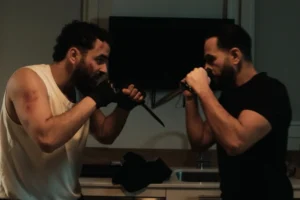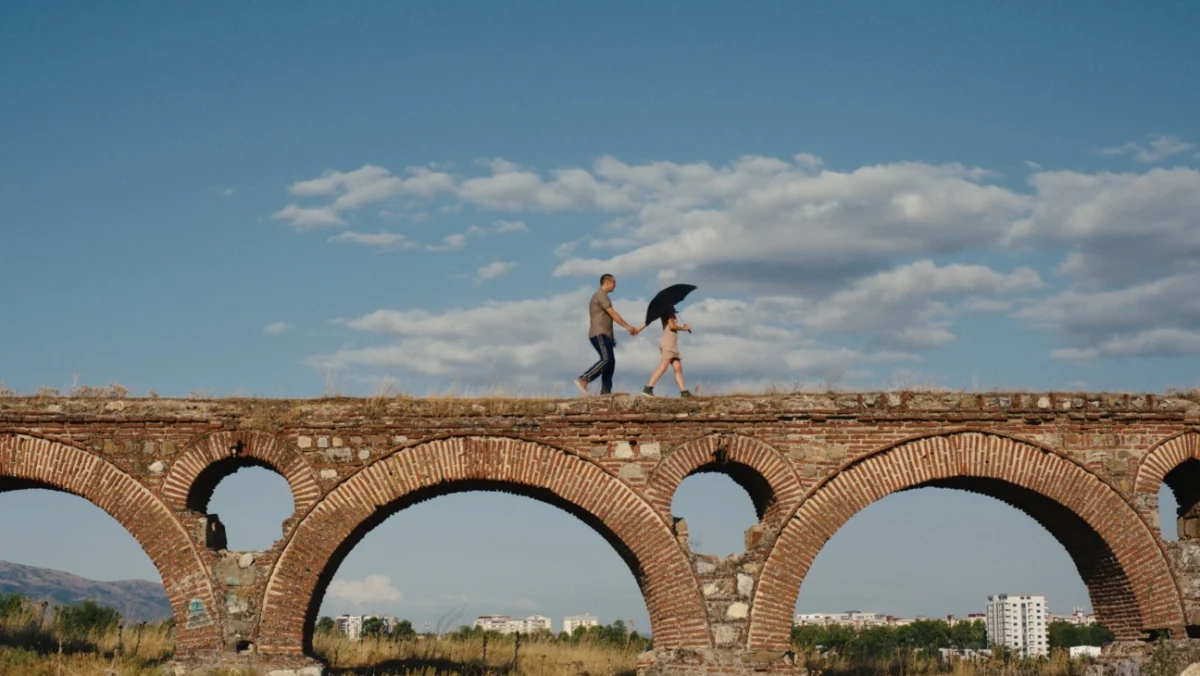
The world premiere of the film on October 30 served as a focal point for discussions regarding the current state of global cinema, specifically the prevalence of what Manchevski identifies as "neo-social realism." His latest work, which explores the lives of those existing on the periphery of society, continues a career-long exploration of the human condition that began with his 1994 Venice Golden Lion winner, Before the Rain.
A Career Defined by Artistic Versatility and Resilience
Milcho Manchevski’s professional trajectory spans decades and continents, reflecting a protean talent that has seen him excel as a photographer, educator, and director. His early work, including the influential 1991 music video for Arrested Development’s Tennessee, established a visual language characterized by raw realism and rhythmic storytelling. His transition into television, most notably directing a pivotal episode of HBO’s critically acclaimed series The Wire, demonstrated an ability to navigate complex, multi-layered narratives within highly structured environments.
Despite his international accolades—which include an Academy Award nomination—Manchevski’s recent years have been marked by significant institutional friction in his native Macedonia. His creative output was nearly stifled by a series of administrative obstacles that the director explicitly links to his whistleblowing activities regarding corruption within the national film agency.
The Conflict with the Macedonian Film Agency
The production of Sister Brother Manhole Cover was not immune to the political climate in North Macedonia. According to Manchevski, the project faced a total freeze beginning in 2020 after he reported systemic financial irregularities to high-ranking government officials. The subsequent legal and bureaucratic battle saw the filmmaker embroiled in a smear campaign orchestrated through government-affiliated media outlets.
The conflict reached a critical juncture when criminal charges were filed against the director, an action he successfully challenged in court. The legitimacy of his claims was bolstered by findings from the State Audit Office and the Anti-Corruption Commission, both of which corroborated his reports of misappropriated funds. With the support of international advocacy groups such as Transparency International and Whistleblowing International, Manchevski eventually secured the release of production funds for his latest feature through favorable court rulings.
This saga highlights a broader, systemic issue within smaller national film industries, where the intersection of state funding and political patronage can stifle dissent. Manchevski’s experience serves as a case study for the risks faced by artists who challenge state institutions, yet it also underscores the vital role of international festivals like Venice and Tokyo in providing a platform for filmmakers whose work is targeted by domestic political entities.
Thematic Foundations of Sister Brother Manhole Cover
At its core, the new film investigates the dynamics of fraternal love—specifically the bond between a brother and sister—as a counterpoint to the growing wealth gap. Manchevski notes that his inspiration was drawn from traditional Macedonian folk music, which often portrays such bonds with a mixture of profound devotion and unsettling intensity.
By framing these themes within a satirical narrative, the director attempts to bypass the didacticism he perceives in much of contemporary cinema. He argues that the modern industry trend of "message-driven" films often sacrifices artistic depth for the sake of political or social posturing. For Manchevski, the inclusion of beauty and nuanced character work is essential; without these elements, he asserts, a film risks becoming a mere pamphlet.

Documentary Filmmaking and the Pursuit of Truth
Parallel to his narrative work, Manchevski has ventured into the documentary genre with Good People, a project focused on a devastating nightclub fire in the Macedonian town of Kočani. This work represents a departure from his usual creative process, serving as an emotional and creative outlet during the height of his legal battles.
His approach to the documentary—minimalist and austere—was intended to force the audience to engage directly with the survivors and victims’ families. The production of the film was entirely self-funded, a decision made to insulate the project from political interference and to maintain creative autonomy. Despite his long-held skepticism regarding the documentary genre—which he critiques for its frequent "pomposity" and the false claim that a filmmaker can objectively handle "the truth"—the success of Good People at festivals such as Sarajevo and Torino demonstrates his ability to adapt his directorial vision to non-fiction formats effectively.
Broader Implications for Global Cinema
The director’s vocal opposition to the current trends in international film festivals and funding bodies is noteworthy. Manchevski expresses concern that films are increasingly being judged by "non-film things"—such as the background of the creator, their political associations, or the external context of the production—rather than the quality of the narrative itself.
This critique arrives at a time when the global film community is debating the balance between diverse representation and artistic merit. Manchevski’s stance is that the ultimate goal of narrative art should be the exploration of human nature, complete with its inherent contradictions and flaws. He posits that the most effective stories are those that allow the audience to experience characters who are neither purely heroic nor villainous, but deeply, recognizably human.
Looking Toward the Future: Homecoming
As he looks toward his next project, titled Homecoming, Manchevski is returning to an idea that has been in development for over three decades. The narrative follows a man returning to his roots to confront his past and find self-forgiveness. Having spent years refining the structure and emotional core of the story, he describes it as a work that required a lifetime of experience to properly execute.
The resilience displayed by Manchevski—moving from a period of being blacklisted to premiering two films within months of each other—serves as a testament to his endurance. His recent output challenges the notion that state-led attempts to censor or silence an artist can permanently derail a career. Instead, it suggests that such pressures can, at times, sharpen the focus and urgency of an artist’s work.
Analysis of the Current Film Landscape
The challenges faced by Manchevski reflect a wider trend in international cinema where independent directors are increasingly navigating a landscape of precarious funding and ideological gatekeeping. The success of Sister Brother Manhole Cover in securing its place at a prestigious venue like the Tokyo International Film Festival suggests that there remains a strong demand for films that prioritize nuanced storytelling over the more commercialized, message-heavy narratives currently dominating the festival circuit.
The implication for the industry is clear: the health of independent cinema depends on the ability of filmmakers to operate outside the influence of state-controlled funding agencies when those agencies become politicized. Manchevski’s victory in court, while significant, highlights the necessity for stronger legal protections for artists and creators globally.
As he continues to develop his future projects, Manchevski remains an uncompromising voice in the industry. Whether he is exploring the dark humor of social inequality or the raw, immediate tragedy of a community fire, his work continues to demand that the audience look past the external labels and focus on the universal complexities of the human experience. His journey from the Black Wave of his youth in Yugoslavia to his current status as an international auteur serves as a reminder that the most persistent, and perhaps the most important, stories are those that prioritize the integrity of the art above all else.