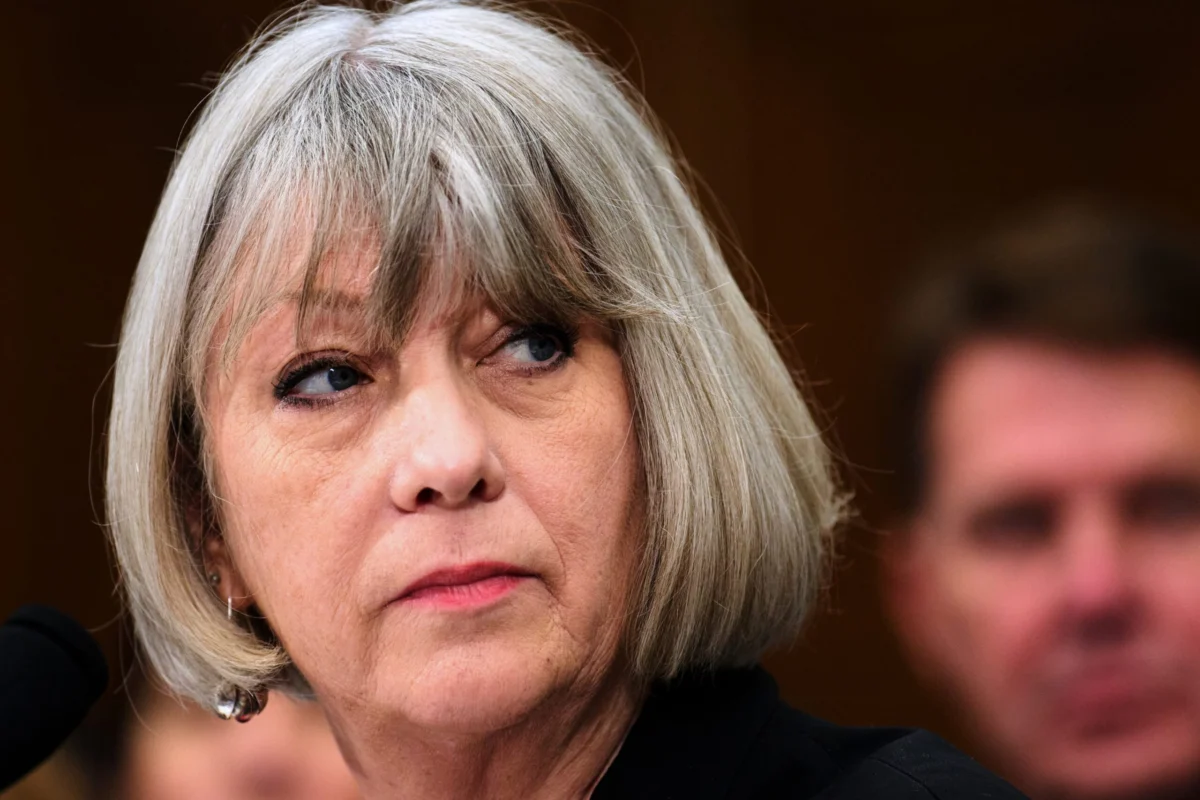
The director of the Smithsonian’s National Museum of American History (NMAH), Anthea M. Hartig, vigorously pushed back on Tuesday against a scathing White House report that branded the institution’s leadership as "radical activists" who could not be trusted with the nation’s historical narrative. Her testimony before a House Oversight subcommittee came amidst a broader, concerted national effort by the then-President Donald Trump administration to reshape the stories of America told by cultural institutions under federal influence, particularly seeking to purge elements related to diversity, equity, and inclusion (DEI) from these narratives. This push has sparked significant alarm among professional historians and academic communities, who view it as an unprecedented politicization of historical scholarship and a dangerous form of revisionism.
Hartig, the first woman to serve as director of the venerable National Museum of American History, mounted a robust defense of the museum’s curatorial practices and its commitment to presenting a comprehensive and fact-based account of the American experience. "As we continue to fact-check the report, we unwaveringly attest that it does not fairly or accurately characterize the full body of work at the museum," Hartig asserted to the subcommittee. While acknowledging that "there is always room for improvement," she passionately emphasized "the beauty and the inspiration and the expertise that lies in our collections, our exhibits, and our programming." Her remarks underscored a fundamental clash over the purpose and interpretation of national history, pitting a desire for a unifying, celebratory narrative against an academic approach that seeks to incorporate a broader array of voices and perspectives, including those that challenge traditional interpretations.
The Administration’s Broader Cultural Offensive
The White House report, issued by the Domestic Policy Council, arrived on July Fourth, coinciding with the anticipation of the nation’s 250th anniversary of American independence. This timing was deliberate, designed to amplify its message that the NMAH, a centerpiece of the sprawling Smithsonian complex on the National Mall, was failing to tell history "in a way that is inspiring, unifying, and worthy of our great republic." This report was not an isolated incident but rather a significant component of a wider ideological battle waged by the Trump administration against what it perceived as "woke" or "divisive" interpretations of American history.
Throughout its term, the administration had frequently signaled its dissatisfaction with contemporary historical scholarship, particularly criticism directed at projects like "The 1619 Project," which re-examined American history through the lens of slavery’s enduring legacy. In late 2020, President Trump established the "1776 Commission," an advisory committee designed to promote "patriotic education" and counter what he described as "radical ideologies" infiltrating American schools and institutions. This commission’s mandate was to produce a report promoting a "pro-American" curriculum that highlighted the nation’s founding principles and achievements, often downplaying or omitting less celebratory aspects of its past, such as racial injustice or historical inequalities. The report targeting the NMAH can be seen as a direct extension of this ideological offensive, aiming to bring federal cultural institutions into alignment with the administration’s preferred historical narrative. Critics of this approach, including numerous professional historical organizations, argued that it sought to impose a singular, government-sanctioned version of history, thereby undermining academic freedom, scholarly integrity, and the very complexity inherent in historical inquiry. They contended that a truly "patriotic" understanding of history necessitates confronting both the triumphs and the failures of the nation.
Chronology of Disagreement and Defense
The dispute intensified with the release of the White House Domestic Policy Council’s report on July 4th. Titled, "The National Museum of American History: An Examination of the Smithsonian’s Flagship Museum," the document meticulously outlined its grievances, painting a picture of an institution adrift from its core mission. The report accused the museum of neglecting foundational aspects of American history, stating that it "has refused to celebrate the Nation and its history." Specifically, it claimed the museum "has not created any exhibit dedicated to presenting a general narrative of American history or telling the story of any of our Founding Fathers, the Second Continental Congress, the Declaration of Independence, the American Revolutionary War, or the achievement of independence and the establishment of the constitutional rule of law."
This report set the stage for the contentious House Oversight subcommittee hearing. During the hearing, Republican members echoed the White House’s concerns, articulating their belief that the museum’s current approach presented a skewed and overly critical view of the nation’s past. Representative Tim Burchett, a Republican from Tennessee, encapsulated this sentiment, stating, "In the museum’s current telling, history is just an ongoing power struggle between oppressors and the oppressed." He further asserted that "The report makes clear that the museum’s woke exhibits and materials reflect a broader vision held by the museum leadership," signaling a deep ideological chasm between the administration’s view of history and the museum’s curatorial direction.
Hartig’s testimony represented a direct rebuttal to these allegations, serving as a critical juncture in the ongoing debate over the stewardship of national memory. She sought to clarify the museum’s methodology, emphasizing that its objective was to enrich, not diminish, the national story.
Supporting Data and Curatorial Philosophy
Contrary to the White House report’s claims, Hartig highlighted the museum’s concerted efforts to commemorate the nation’s upcoming milestone anniversary. In May, just months before the report’s release, the NMAH unveiled a major initiative titled "In Pursuit of Life, Liberty and Happiness." This ambitious undertaking involved the strategic placement of 250 iconic objects throughout the museum’s vast exhibition spaces, each chosen to celebrate America’s 250th anniversary. Among these priceless artifacts are the very desk used by Thomas Jefferson to draft the Declaration of Independence, a tangible link to the nation’s foundational principles; a Revolutionary War-era gunboat, symbolizing the struggle for independence; and the Star-Spangled Banner, a powerful emblem of national identity and resilience.
During the hearing, some Republican panel members acknowledged the presence of these important materials but maintained that they were not sufficiently prominent or easily accessible. Representative Michael Cloud, a Republican from Texas, recounted his recent visit, expressing his expectation for more overt references to the Declaration of Independence. "I’m not saying it’s not there, but it’s hard to find," he remarked, suggesting a failure in the museum’s presentation or narrative flow, or perhaps a difference in what visitors are conditioned to expect from a national museum.
A significant point of contention for Republicans was the exhibit "Girlhood (It’s Complicated)," which ran from 2020 through 2023. This exhibit explored the complex experiences of American girls through various historical periods, touching upon themes like education, work, fashion, and social activism. It notably included a diary from a 13-year-old that explored issues including gender identity, sparking particular scrutiny. Hartig clarified that the exhibit, designed for a broader audience, included clear labeling indicating it was not exclusively designed for young children, aiming to address parental concerns about age-appropriateness. This exhibit exemplified the museum’s commitment to telling a more inclusive story, delving into previously underrepresented narratives and addressing contemporary social issues through a historical lens.
Hartig meticulously articulated the museum’s underlying curatorial philosophy, which she framed as an evolutionary process rather than a destructive one. "When historians talk about reframing a traditional narrative, we don’t mean erasing it," she explained. "We mean adding the evidence, the voices, the objects, that earlier tellings left out, so that more Americans can see themselves reflected in the national story." This approach aligns with contemporary historical scholarship, which emphasizes a multi-faceted understanding of the past, acknowledging the contributions and experiences of all demographic groups, including women, minorities, and marginalized communities, alongside the traditional focus on political leaders and military heroes. This methodology seeks to provide a richer, more nuanced, and ultimately more accurate understanding of American history, recognizing that the national story is a tapestry woven from countless individual threads.
Official Responses and Broader Implications
Director Hartig’s unwavering defense was rooted in the Smithsonian’s long-standing tradition of academic independence and non-partisanship. She reiterated that the institution "does not take sides in America’s political debates," emphasizing its role as a steward of national history and culture, guided by scholarly rigor rather than political expediency. Her tenure as the first woman to lead the NMAH itself reflects a commitment to expanding perspectives within leadership roles in cultural institutions.
The "alarm" among historians, mentioned in the initial report, stems from a deep concern that attempts to impose a singular, "patriotic" narrative risk distorting historical truth, suppressing critical inquiry, and ultimately undermining the educational mission of museums. Organizations like the American Historical Association (AHA) and the Organization of American Historians (OAH) have consistently advocated for the importance of robust, evidence-based historical scholarship, free from political interference. They argue that history is inherently complex and often uncomfortable, requiring an examination of both the commendable and the challenging aspects of the past to foster genuine understanding and informed citizenship.
The implications of such political pressure extend beyond the immediate controversy. The hearing cast a shadow over Hartig’s future as the museum’s director, echoing a previous instance of White House intervention in Smithsonian leadership. Last year, President Trump had publicly called for the firing of the longtime leader of the National Portrait Gallery, Kim Sajet. Although the Smithsonian museums operate as trust instrumentalities of the United States, independently of the executive branch, such public pressure carries significant weight. Sajet ultimately stepped down from her position in the face of this intense White House scrutiny, raising questions about the autonomy of these vital cultural institutions and the resilience of their leadership against political dictates. This precedent undoubtedly loomed large during Hartig’s testimony. When Rep. Burchett directly asked Hartig why she should continue in her job, her simple yet profound response – that overseeing the museum is "the honor of my career" – underscored the personal and professional stakes involved in defending the institution’s integrity.
This episode highlights a broader cultural battle unfolding in the United States over how the nation defines itself through its history. It pits a vision of national unity built on a selective, idealized past against a more inclusive, critical perspective that embraces complexity and acknowledges historical injustices alongside achievements. The outcome of these debates, and the degree to which cultural institutions like the NMAH can maintain their scholarly independence, will have lasting implications for public education, national identity, and the very fabric of American memory. The challenge for these institutions is to navigate political crosscurrents while upholding their commitment to comprehensive, fact-based storytelling that resonates with an increasingly diverse populace, ensuring that all Americans can indeed see themselves reflected in the national story.