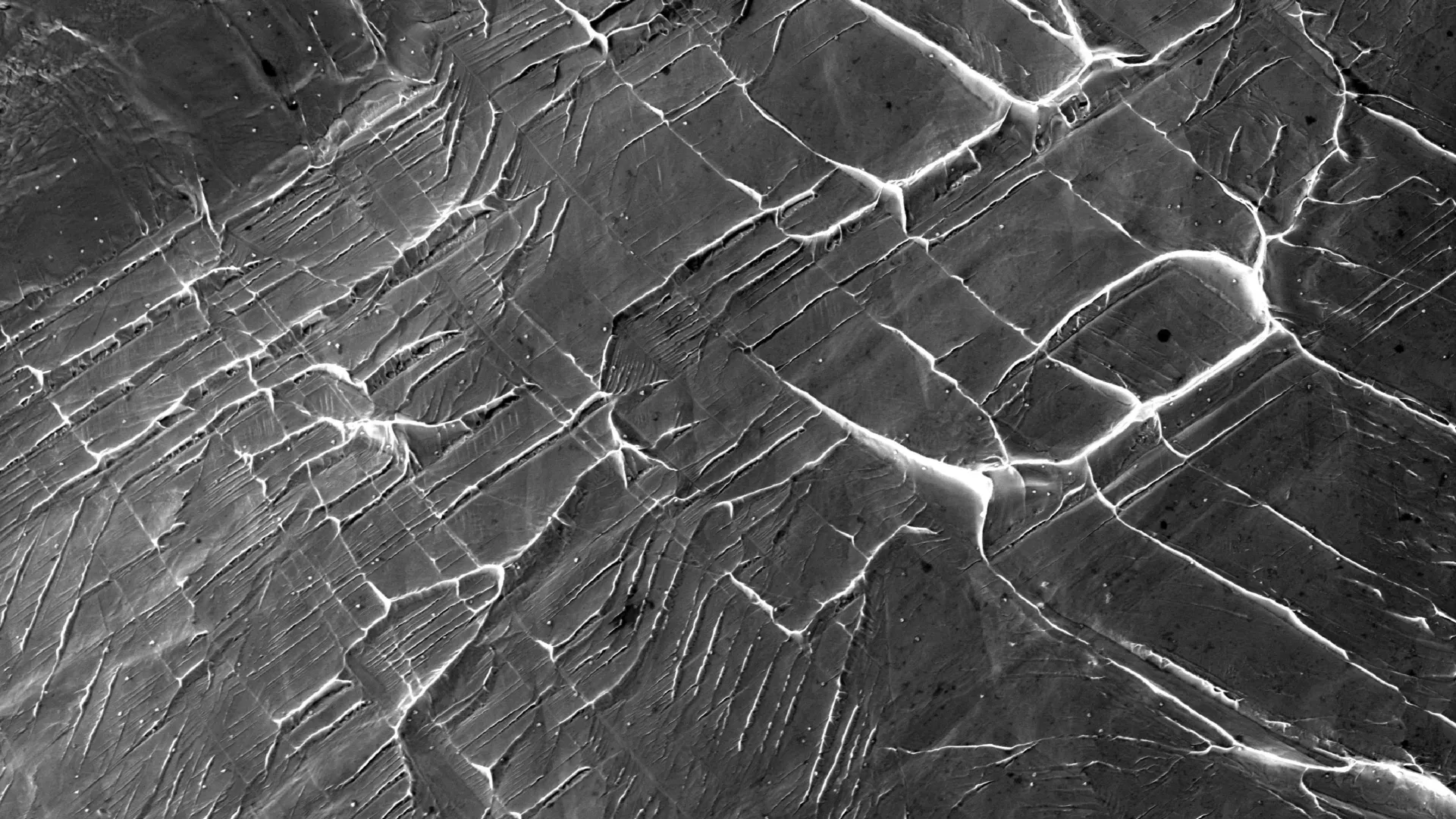
For decades, the field of materials science has been governed by a rigid paradigm: as temperatures approach absolute zero, structural metals—particularly those with a body-centered cubic (BCC) crystal structure—inevitably transition from ductile to brittle. This phenomenon, which has historically caused catastrophic failures in infrastructure ranging from deep-space exploration vessels to industrial cryogenic storage tanks, was long considered an immutable physical constraint. However, a landmark study published on October 14 in the journal Nature has effectively upended this orthodoxy. An international research coalition, spearheaded by the University of California, Berkeley, Lawrence Berkeley National Laboratory, and the University of Oxford, has demonstrated that specific experimental niobium-titanium alloys can defy this transition, maintaining exceptional damage tolerance at temperatures as low as 20 kelvin (-253°C or -424°F).
The Historical Context of the Ductile-to-Brittle Transition
The challenge of brittle fracture in metals is a cornerstone issue in mechanical engineering. BCC metals, such as iron, tungsten, and chromium, are prized for their high strength-to-weight ratios and thermal stability. Yet, their atomic architecture—a central atom surrounded by eight neighbors at the corners of a cube—presents a structural weakness when thermal energy is removed.
Under ambient conditions, metals deform plastically through a process called "dislocation motion." Think of these dislocations as small, shifting ripples within the crystalline lattice that allow the material to bend and absorb energy when subjected to stress. However, as temperatures plummet toward the cryogenic range, the thermal energy required to move these dislocations becomes insufficient. The atoms become "locked" in place, and the metal loses its ability to redistribute localized stress. Consequently, any microscopic crack—even one of negligible size—tends to propagate at the speed of sound, leading to sudden, brittle failure. This transition point is the primary reason why specialized, expensive materials are required for any equipment intended for use in extreme cold, such as liquid hydrogen storage or deep-space probes.
Chronology of the Breakthrough
The research project represents the culmination of several years of collaborative effort across multiple continents. The initiative began with the identification of specific, high-entropy or complex concentrated alloy systems that might exhibit unique phase-stability properties at cryogenic temperatures.
In the lead-up to the October 2024 publication, the research team utilized the Engin-X instrument at the ISIS Neutron and Muon Source in the United Kingdom. The experimental timeline followed a rigorous protocol:
- Material Synthesis: The creation of refined niobium-titanium alloys, specifically designed to test the limits of crystalline rearrangement.
- Cryogenic Preparation: Using advanced gaseous helium cooling systems to achieve a stable testing environment of 20 kelvin.
- Neutron Diffraction Analysis: The samples were subjected to high-flux neutron beams to observe the lattice-level response to mechanical tension in real-time.
- Post-Mortem Microscopy: Following physical deformation, the samples were analyzed using transmission electron microscopy (TEM) and atom-probe tomography to map the atomic-scale changes that occurred during the experiment.
Unmasking the Mechanism: Nanoscale Twinning
The most significant finding of the study is the identification of a secondary deformation mechanism that functions when conventional dislocation motion is suppressed by the cold. The researchers observed "nanoscale twinning," a process where sections of the crystal lattice effectively rotate to form a mirror-image structure.
This twinning process is not an isolated event; it is accompanied by a localized phase transformation. As these twin boundaries form, they collide with the interfaces of neighboring grains within the alloy. This interaction generates high-stress concentration zones, which act as "defect factories." By generating new dislocations at these interfaces, the metal is able to circumvent the "frozen" state of its existing internal structure.
The analogy provided by the researchers is particularly illustrative: if a highway is blocked by a blizzard (the cold-induced suppression of dislocation motion), the metal does not simply stop traffic. Instead, it creates a new network of backroads (twinning and phase transformation) that allows the energy—or the "traffic"—to flow safely around the potential fracture point. This internal redirection of stress prevents the brittle failure that would otherwise occur.
Quantitative Evidence and Data Insights
The performance of these niobium-titanium alloys at 20 kelvin was statistically significant. Traditional BCC metals typically show a sharp drop-off in fracture toughness as temperatures dip below the ductile-to-brittle transition temperature (DBTT). In contrast, the experimental alloys maintained consistent mechanical integrity throughout the entire testing range.
Data collected during the neutron diffraction experiments revealed that the stress-strain curves for these materials remained robust, with no evidence of the abrupt "snap" that characterizes typical brittle failure. Furthermore, the atom-probe analysis provided evidence that the elements within the alloy were distributed in a manner that promoted the formation of these twin boundaries, suggesting that the chemical composition of the alloy is directly responsible for activating this "hidden" deformation pathway.
Official Responses and Academic Implications
Professor Dong Liu of the University of Oxford’s Department of Engineering Science, a corresponding author of the study, emphasized the shift in how the field must now perceive BCC metals. "For decades, the ductile-to-brittle transition has been viewed as a fundamental limitation," Professor Liu noted. "By uncovering how twinning and phase transformation work together to generate plasticity, we have identified a new pathway for designing structural BCC metals that can operate in extreme cryogenic environments."
Dr. David Cook, the study’s lead author, now at the University of Cambridge, highlighted the shift in design philosophy: "Traditionally, the focus was on how readily existing dislocations can move through a metal. Now, it appears that the ability to create new dislocations at interfaces is just as critical. We are moving from a passive model of material failure to an active model of material design, where we can engineer microstructural conditions that allow a metal to ‘build’ its own resistance to cold."
Broader Impacts: From Space to Energy
The implications of this discovery extend far beyond the laboratory. Engineering applications that require materials to endure extreme thermal gradients are currently hampered by the weight and complexity of traditional cryogenic alloys.
- Aerospace and Deep Space: Future missions to the icy moons of Jupiter or Saturn, or long-duration space flights requiring liquid hydrogen fuel, could benefit from lighter, tougher materials that do not require complex thermal shielding.
- Energy Infrastructure: As the global transition to green energy accelerates, the storage and transport of liquid hydrogen—a key fuel for a carbon-neutral future—require materials that can handle the extreme cold of liquefied gases without the risk of catastrophic tank failure.
- Advanced Manufacturing: The ability to "program" a material to resist brittleness at the atomic level opens the door to a new generation of structural components that are both lighter and more durable, potentially reducing the material costs and carbon footprints of heavy industrial machinery.
Conclusion and Future Outlook
The research led by the UC Berkeley, Berkeley Lab, and Oxford teams serves as a profound reminder that our understanding of material science is far from complete. By proving that the ductile-to-brittle transition is not an insurmountable barrier, but rather a hurdle that can be bypassed through intelligent microstructural design, these scientists have provided a roadmap for the next generation of materials.
The next phase of this research will likely involve scaling these experimental alloys for industrial production and testing them under even more extreme conditions. As the team continues to refine the composition and processing of these niobium-titanium alloys, the dream of "cold-proof" metals moves from the realm of theoretical physics into the domain of practical, high-performance engineering. The ability to manipulate the very architecture of a metal at the atomic level is a testament to the power of modern microscopy and computational modeling, signaling a new era in the development of materials capable of conquering the coldest frontiers of our universe.