Christopher Nolan’s ambitious adaptation of Homer’s epic poem, The Odyssey, has achieved monumental success at the global box office, with early projections indicating a staggering opening weekend. However, amidst this triumphant reception, the acclaimed filmmaker has revealed that audiences will need to exercise the same patience as Odysseus himself, as his next cinematic endeavor is at least three years away from gracing the silver screen. This extended hiatus aligns with Nolan’s established pattern of meticulously crafting his projects, a testament to his dedication to cinematic innovation and storytelling depth.
A Monumental Opening for a Legendary Tale
The Odyssey, a project that has long been rumored and highly anticipated, has not only met but exceeded expectations, drawing massive crowds into theaters worldwide. The film is currently projected to debut with over $257 million globally, marking Nolan’s most robust worldwide opening since The Dark Knight Rises in 2012, which raked in $249 million. This impressive figure underscores the universal appeal of both the ancient Greek epic and Nolan’s distinctive directorial vision, which has consistently captivated audiences with intellectually stimulating narratives and breathtaking visual spectacles. The ensemble cast, featuring a constellation of Hollywood’s brightest stars including Matt Damon, Anne Hathaway, Lupita Nyong’o, Robert Pattinson, Tom Holland, Zendaya, and Charlize Theron, undoubtedly contributed to the film’s immense draw. Their collective star power, combined with Nolan’s reputation, created an irresistible cinematic event.
Nolan’s Deliberate Pace: A Commitment to Craftsmanship
In a recent interview with Today, Nolan candidly addressed the timeline for his future projects. When asked about the gap between his films, he confirmed that a minimum of three years would be dedicated to the development and production of his next work. This announcement comes as no surprise to industry observers, given Nolan’s consistent release schedule. His previous films, including Oppenheimer (2023), Tenet (2020), Dunkirk (2017), and Interstellar (2014), have typically followed a three-year interval. This deliberate pace is a hallmark of his creative process, allowing ample time for intricate script development, extensive pre-production, and the execution of his ambitious filmmaking techniques.
The sheer scale and complexity of bringing The Odyssey to life, a project Nolan helmed as writer, director, and producer, appear to have significantly taxed his creative and physical stamina. He described the undertaking as pushing him and his entire team to their absolute limits. “I definitely hit the limits of my own stamina and everybody’s stamina, I think,” Nolan shared with Today. “I mean, it’s The Odyssey, of course it should be difficult. We’re not doing the job right making a film of The Odyssey if it doesn’t seem difficult.” This statement reflects the immense challenge of translating an ancient, sprawling narrative, rich with mythological elements and profound human themes, into a modern cinematic experience. The arduous nature of the production is, in Nolan’s view, an inherent part of honoring the spirit of the source material, which itself chronicles a hero’s perilous and protracted journey home.
Technological Innovation: IMAX 70mm for an Epic Canvas
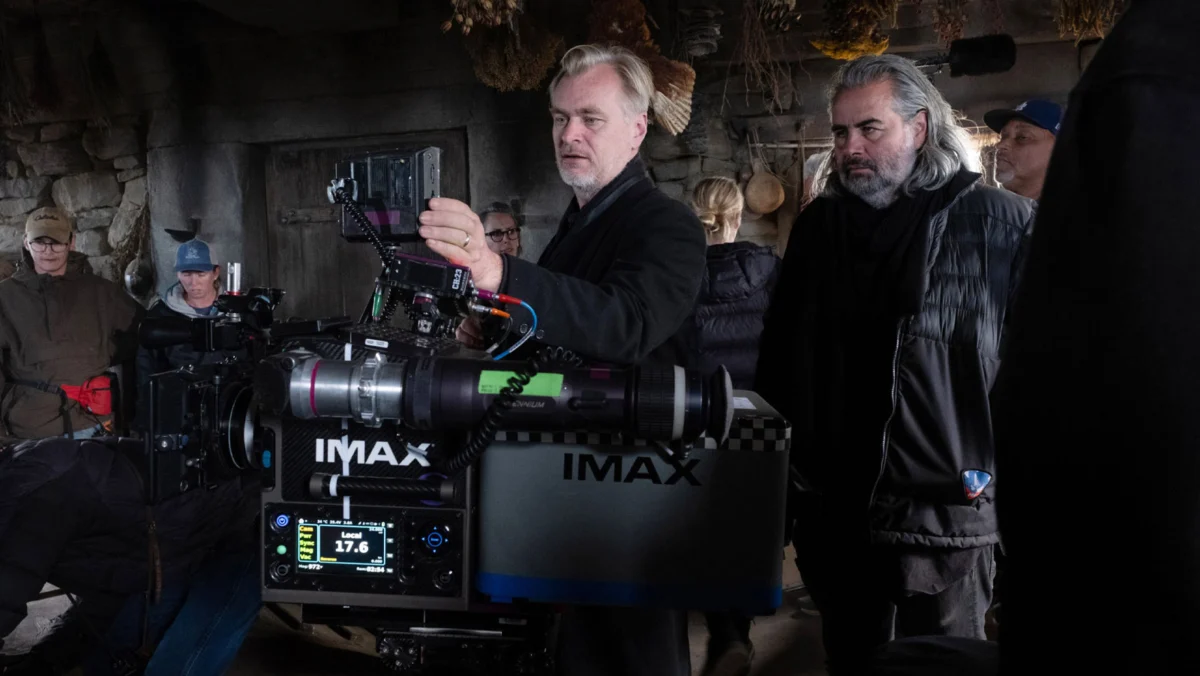
A significant aspect of The Odyssey‘s production and its subsequent critical acclaim has been Nolan’s unwavering commitment to pushing the boundaries of cinematic technology. For this particular film, he made the bold decision to shoot the entire movie on IMAX 70 millimeter film. This choice was not arbitrary but deeply rooted in the narrative itself. Nolan explained his rationale to Today, stating, "I went to IMAX, and I said, ‘Look, if ever we are going to fulfill this dream of shooting the entire movie that way, this is the one. This is The Odyssey.’"
The IMAX 70mm format, renowned for its unparalleled clarity, immense scale, and immersive quality, provided the perfect canvas for Nolan to capture the grandeur and visceral experience of Odysseus’s epic voyage. This format allows for a significantly larger image area than standard 35mm film, resulting in a more detailed and dynamic viewing experience. By committing to this format for the entirety of The Odyssey, Nolan aimed to transport audiences directly into the heart of the ancient world, allowing them to witness the vastness of the seas, the ferocity of storms, and the epic scale of the mythological encounters with unprecedented realism. This commitment to shooting entirely on film, particularly in an era increasingly dominated by digital capture, further solidifies Nolan’s reputation as a purist and an innovator dedicated to the art of filmmaking. The decision to employ IMAX 70mm for The Odyssey is a testament to his belief that certain stories demand the most immersive and impactful presentation possible, and he saw this epic as the ultimate vehicle for such an experiment.
Background and Context: The Enduring Legacy of Homer’s Epic
Homer’s The Odyssey is one of the cornerstones of Western literature, an epic poem believed to have been composed in ancient Greece around the 8th century BCE. It chronicles the arduous ten-year journey of the Greek hero Odysseus, King of Ithaca, as he strives to return home after the Trojan War. His voyage is fraught with peril, divine intervention, and encounters with mythical creatures and enchantresses, including the Cyclops Polyphemus, the sorceress Circe, and the Sirens. Intertwined with Odysseus’s story is the plight of his wife, Penelope, and his son, Telemachus, who face a horde of suitors vying for Penelope’s hand and Odysseus’s throne. The epic is a profound exploration of themes such as homecoming, loyalty, perseverance, cunning, and the relationship between mortals and the gods.
Previous cinematic adaptations of The Odyssey have been varied in scope and interpretation, often focusing on specific episodes or condensing the narrative for television. However, a definitive, large-scale cinematic realization that fully captures the scope and thematic richness of the original poem has remained elusive. Christopher Nolan’s undertaking, therefore, represents a significant and ambitious attempt to bring this timeless story to a modern global audience with a level of fidelity and cinematic grandeur never before attempted. His decision to shoot on IMAX 70mm suggests an intent to immerse viewers in the sensory experience of Odysseus’s journey, from the turbulent seas to the mystical landscapes, aiming to create a visceral connection to the ancient narrative.
Chronology of Nolan’s Recent Cinematic Output
Understanding Nolan’s current production pace requires a look at his recent filmography:
- 2014: Interstellar – A science fiction epic exploring themes of space travel, time dilation, and humanity’s survival.
- 2017: Dunkirk – A World War II film that depicted the Dunkirk evacuation from three distinct perspectives: land, sea, and air.
- 2020: Tenet – A complex espionage thriller that played with the concept of time inversion.
- 2023: Oppenheimer – A biographical drama detailing the life of J. Robert Oppenheimer, the physicist credited as the "father of the atomic bomb."
The consistent three-year gap between these major releases highlights Nolan’s methodical approach. Each of these films was a significant undertaking, demanding extensive research, intricate visual effects, and often complex narrative structures. The production of Oppenheimer, for instance, involved meticulous historical research and the reconstruction of significant historical events. The transition from a biopic about a pivotal historical figure to a fantastical epic like The Odyssey showcases Nolan’s versatility and his continued drive to explore diverse genres and storytelling frameworks.
Industry Reactions and Broader Implications
The overwhelming box office success of The Odyssey is a powerful endorsement of Nolan’s directorial prowess and his ability to attract mass audiences to ambitious, original projects, even those based on classical literature. In an era where franchise films often dominate the box office, Nolan’s continued ability to deliver such massive returns with non-sequel, non-superhero properties is a significant achievement.
Industry analysts are likely to view The Odyssey‘s performance as a positive indicator for the theatrical exhibition model. The film’s success, particularly its strong international performance, demonstrates that audiences are willing to return to cinemas for event films that offer a unique and unparalleled viewing experience. Nolan’s insistence on shooting in IMAX 70mm further reinforces the argument for the continued relevance of premium large formats in drawing audiences.
The extended three-year hiatus for Nolan’s next project, while perhaps disappointing for eager fans, is a signal of the industry’s ongoing reliance on auteur-driven cinema. It suggests that Nolan, like other visionary directors, requires significant time to develop and execute projects that align with his exacting standards. This timeframe also allows for the market to absorb and appreciate his latest work before the next major release, potentially preventing audience fatigue and maintaining a sense of anticipation for his future endeavors. Furthermore, the success of The Odyssey could encourage other studios and filmmakers to invest in similarly ambitious, non-IP-driven projects, provided they are executed with the same level of artistic integrity and technical mastery. The financial validation from The Odyssey‘s box office performance provides a strong argument for supporting directors who can deliver both critical acclaim and commercial success.
The lengthy post-production and meticulous sound mixing required for IMAX 70mm productions, coupled with the complex narrative and thematic depth of The Odyssey, likely contribute to the extended development cycle. Nolan’s commitment to practical effects and innovative camera techniques often necessitates a more extended pre-production and principal photography phase, followed by a substantial period of post-production. This comprehensive approach ensures that each element of his films is meticulously crafted to serve the overall vision.
As audiences continue to flock to theaters to witness The Odyssey, the anticipation for Christopher Nolan’s next cinematic chapter will undoubtedly grow. His confirmed three-year hiatus underscores a commitment to quality over speed, a philosophy that has consistently yielded some of the most impactful and memorable films of the 21st century. The epic scale of The Odyssey‘s box office triumph, coupled with Nolan’s own challenging experience in bringing it to life, sets a high bar for his future endeavors, and his dedication to the craft promises that the wait, however long, will be worth it.