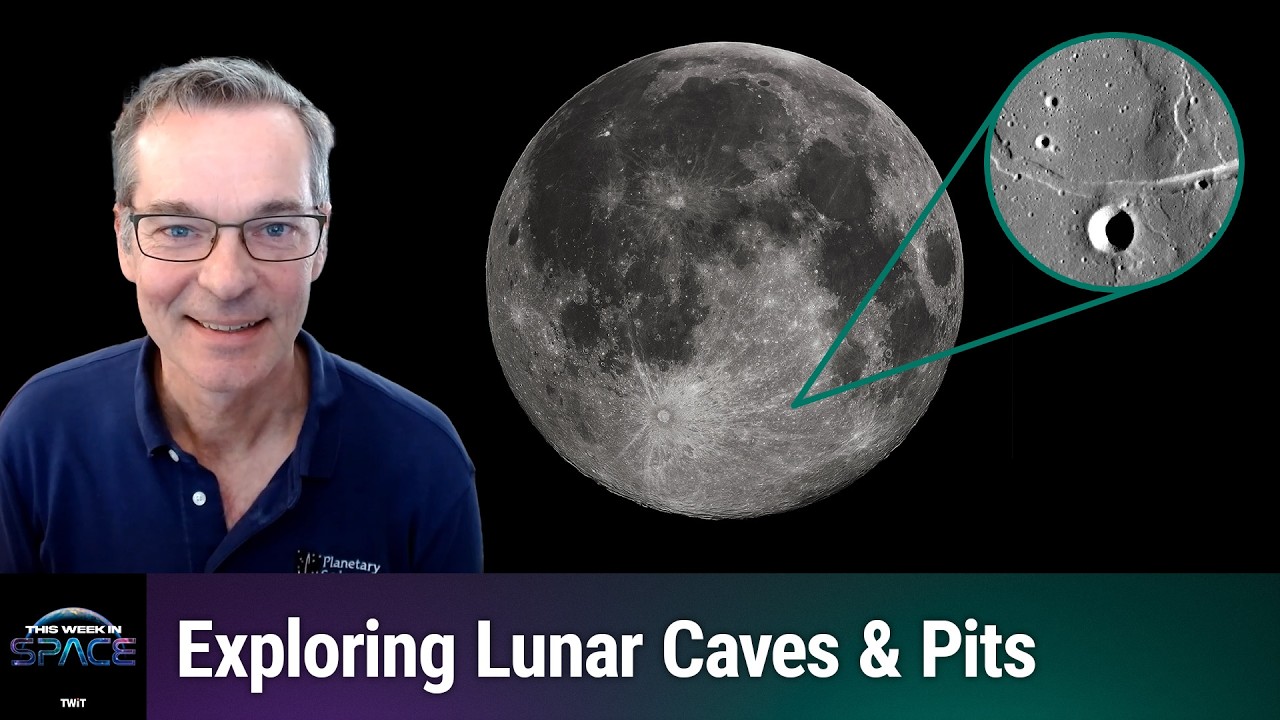
As humanity stands on the precipice of a new era in space exploration, the conversation surrounding lunar colonization has shifted from the realm of science fiction to practical engineering. While space agencies and private aerospace companies alike have long fixated on building surface-level habitats, a compelling alternative is rapidly gaining traction within the scientific community: moving underground. Recent developments, highlighted in discussions surrounding NASA-backed initiatives targeting formations like the Marius Hills Pit, suggest that the future of human habitation on the Moon may lie hidden beneath its desolate, cratered crust.
Unlocking the Subterranean Lunar Frontier
For decades, lunar observation has revealed winding, sinuous rilles and deep, vertical pits scattered across the volcanic plains of the Moon. Planetary geologists have long suspected that these features are the collapsed ceilings of ancient lava tubes—vast, subterranean conduits carved out by flowing basaltic magma billions of years ago when the Moon was volcanically active.
The prospect of utilizing these natural caverns for human habitation offers profound engineering advantages. The lunar surface is a hostile environment subject to extreme thermal fluctuations, ranging from boiling temperatures during the sunlit lunar day to freezing depths of cryogenic cold during the two-week-long night. Furthermore, surface habitats are constantly bombarded by galactic cosmic rays, solar particle events, and micrometeorites that pose an unceasing hazard to both equipment and human biology.
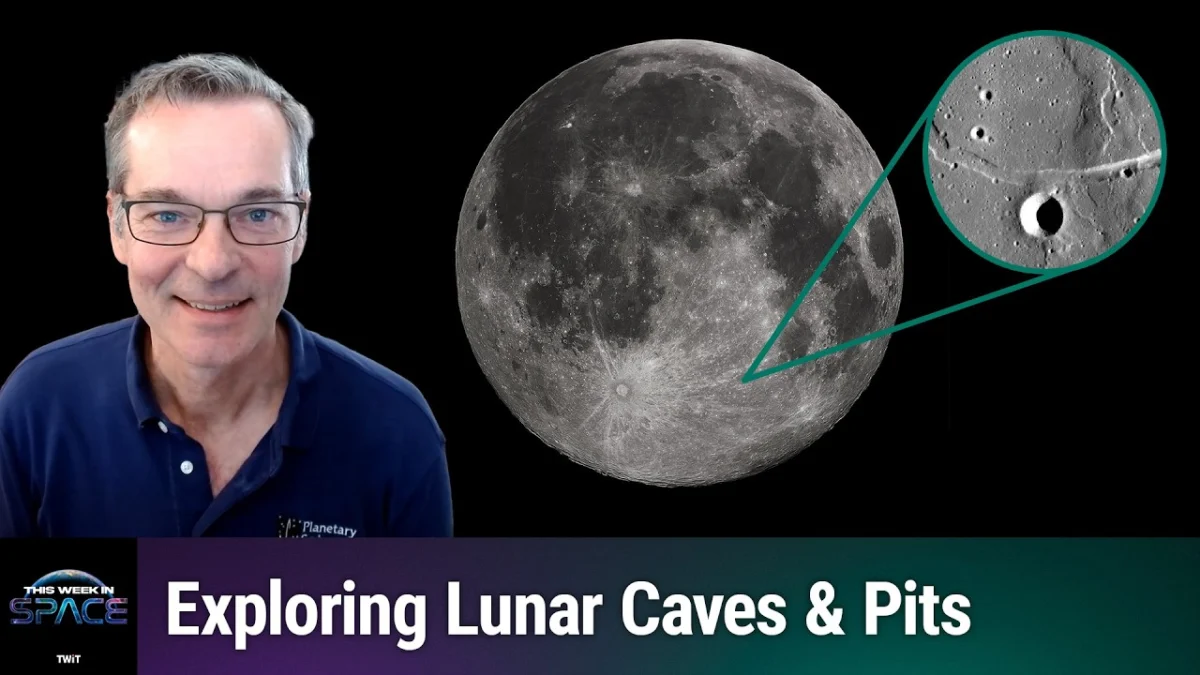
By contrast, a deep lunar lava tube offers natural shielding. Geotechnical models indicate that just a few meters of solid basalt rock overhead could provide adequate radiation protection, stabilize internal temperatures, and safeguard inhabitants from the constant rain of high-speed debris. Consequently, attention has increasingly focused on specific geological anomalies, most notably the Marius Hills Pit, a roughly 50-meter-wide opening that is widely believed to be a skylight leading directly into an expansive subterranean network.
The Mission to Marius Hills: Probing the Voids
In the ongoing quest to establish a sustainable human presence on Earth’s only natural satellite, understanding the structural integrity and internal geometry of these lava tubes is paramount. To bridge the gap between theoretical speculation and actionable exploration, NASA has thrown its weight behind advanced geophysical payloads bound for the Marius Hills region.
The logistical challenge of investigating a subterranean cave system without risking human lives requires sophisticated robotic ingenuity. Planetary scientists, including experts from the Planetary Science Institute, have been instrumental in developing specialized payloads designed to ride aboard future lunar rovers. These instruments utilize advanced geophysical techniques—such as ground-penetrating radar, gravimetry, and seismic sounding—to detect hidden voids beneath the regolith and accurately measure the dimensions, depth, and roof thickness of the underlying lava tubes.
The integration of these instruments marks a critical pivot in lunar exploration methodology. Rather than merely mapping the surface topography from orbit, robotic explorers are now poised to probe the subsurface architecture of the Moon, answering fundamental questions about how these structures formed and whether they remain structurally sound enough to support pressurized human habitats.
Chronology of Lunar Cave Research
The path toward exploring and potentially utilizing lunar lava tubes has evolved significantly over the past decade, shifting from orbital observation to targeted surface investigation:
- 2009: The Japan Aerospace Exploration Agency’s (JAXA) Kaguya spacecraft discovers the first lunar "skylight" in the Marius Hills region, confirming the existence of deep vertical shafts leading underground.
- 2011–2014: NASA’s Lunar Reconnaissance Orbiter (LRO) captures high-resolution imagery of multiple pit craters across Mare Tranquillitatis, Mare Ingenii, and Marius Hills, prompting renewed scientific interest in lunar volcanism and subsurface voids.
- 2017–2020: Radar data analysis from international research teams suggests that some lunar lava tubes could be wide enough to house entire cities, with structural stability capable of spanning hundreds of meters without collapse.
- 2021–2023: Conceptual designs for robotic cave-drones and tethered rovers are funded through NASA’s Innovative Advanced Concepts (NIAC) program, paving the way for hardware development.
- Present: NASA-backed payloads prepare for deployment to evaluate the Marius Hills Pit, directly aligning subsurface research with broader exploration frameworks like the Artemis campaign.
Synergy with the Artemis Program and Surface Infrastructure
As NASA and its international partners press forward with the Artemis program—which aims to establish a sustainable human presence on the lunar south pole—the integration of subterranean research offers a complementary pathway for long-term expansion. While the south pole remains an attractive initial landing site due to the presence of water ice in permanently shadowed regions, polar locations present unique operational challenges, including low-angle sunlight and harsh lighting conditions.
Subsurface habitats in equatorial or mid-latitude regions, such as Marius Hills, could eventually serve as secondary research outposts or permanent settlements. The methodologies developed to explore these lava tubes will directly inform how future astronauts might anchor habitats, extract local resources, and manage life-support infrastructure underground. Experts note that robotic explorers deployed to these pits will act as scouts, verifying whether the internal environments are stable enough to bypass the need for thick, heavy artificial radiation shielding on surface modules.
Broader Implications for Deep Space Exploration
The investigation of lunar caves extends far beyond the immediate goals of the Artemis campaign. Successfully adapting lava tubes for human habitation serves as a critical technological stepping stone for future crewed missions to Mars. The Red Planet also features extensive networks of volcanic caves and lava tubes, which have long been identified as prime candidates for shielding early Martian colonists from the harsh planetary environment.

By learning how to detect, map, and seal lunar lava tubes using autonomous robotic systems, space agencies are effectively writing the blueprint for deep-space colonization. The transition from building vulnerable habitats on the barren surface of a celestial body to integrating human settlements within its geological framework represents a fundamental evolution in aerospace engineering. As data begins to flow back from payloads targeting formations like the Marius Hills Pit, humanity moves one step closer to turning the ancient dream of living beneath the lunar surface into a tangible reality.