The landscape of international public health is continually tested by emerging biological threats, widening health inequities, and systemic economic pressures that strain national healthcare infrastructures. Against this complex backdrop, representatives from the Kingdom of Belgium and the World Health Organization (WHO) recently concluded a comprehensive three-day strategic dialogue in Geneva, Switzerland. The high-level talks culminated in a renewed commitment to deepen their longstanding bilateral cooperation, focusing specifically on advancing universal health coverage (UHC), fortifying resilient health systems, and ensuring equitable global access to essential medicines, vaccines, and advanced health technologies.
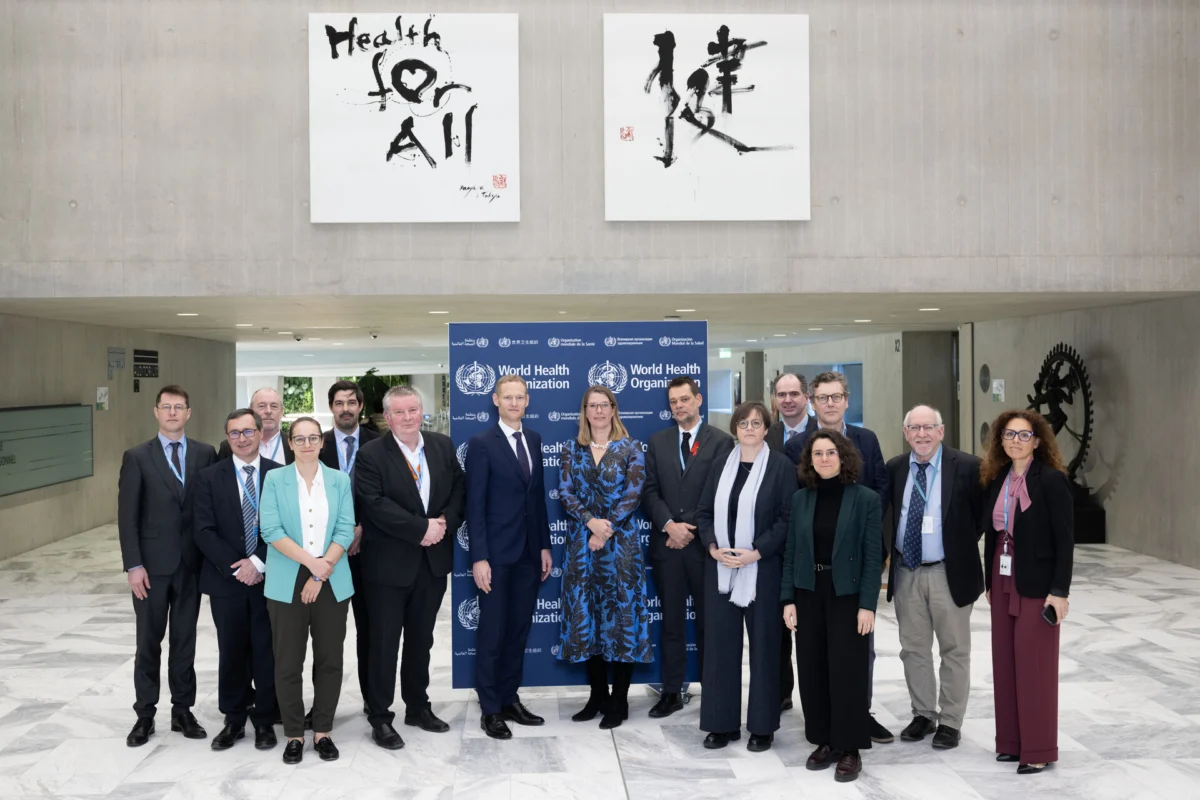
The high-level Belgian delegation was led by His Excellency Christophe Payot, Ambassador and Permanent Representative of Belgium to the United Nations and other international organizations in Geneva. The delegation reflected a unified national approach, drawing high-ranking policymakers and technical experts from the federal government, as well as the regional governments of Flanders and Wallonia. Representing the global health body were senior WHO leaders and technical experts spanning headquarters in Geneva alongside representatives from the WHO Regional Office for Africa and the WHO Regional Office for Europe. This multi-layered representation enabled both institutions to evaluate localized field implementation while simultaneously aligning their broader macroeconomic and developmental strategies for the years ahead.
Chronology and Evolution of the Strategic Dialogue
The strategic dialogue forms part of an institutionalized framework designed to regularly review, evaluate, and adapt joint developmental initiatives between Belgium and the WHO. Over the course of the intensive three-day engagement, participants evaluated the tangible milestones achieved under their existing multi-year cooperation agreements, specifically looking at progress made between 2021 and 2025.
The timeline of cooperation has historically adapted to pressing global health challenges. In 2024, the partnership gained additional momentum during Belgium’s Presidency of the Council of the European Union, a period marked by heightened European advocacy for global health security, equitable access to medical countermeasures, and strengthened multilateral cooperation. The recent Geneva consultations served as a direct extension of those European priorities, translating high-level policy declarations into concrete country-level interventions. Throughout the sessions, delegates examined how to smoothly synchronize the WHO’s overarching strategic frameworks—such as the forthcoming 14th General Programme of Work (GPW14)—with Belgium’s official development cooperation priorities.
Accelerating Equitable Access to Vaccines, Medicines, and Health Technologies
A central pillar of the bilateral discussions was the ongoing evaluation of the Access to Medicines programme, a critical global health initiative funded significantly by the Belgian government. The program aims to address severe market failures that traditionally restrict low- and middle-income countries from acquiring life-saving pharmaceutical products and advanced medical technologies on fair terms.
To ground the high-level policy debate in operational reality, WHO technical experts presented detailed case studies illustrating both the successes and the institutional hurdles encountered during country-level implementation in Senegal. The discussions highlighted the intricate mechanics of market shaping—a strategic intervention designed to lower procurement costs, stabilize supply chains, and incentivize sustainable manufacturing practices.
Furthermore, the parties explored the growing importance of regional and local manufacturing capacity for vaccines and therapeutics in Africa. By fostering domestic production capabilities, nations can significantly mitigate vulnerabilities associated with global supply chain shocks, such as those witnessed during previous pandemic peaks. Both delegations concurred that long-term financial and operational sustainability must remain the guiding principle for the Access to Medicines initiative, ensuring that market-shaping efforts endure well beyond initial grant cycles.
Strengthening Health Emergencies and Pandemic Preparedness
In an era defined by accelerating biological risks, zoonotic spillover events, and complex humanitarian crises, the dialogue dedicated substantial time to global health security and emergency response frameworks. The discussions closely examined the WHO’s ongoing leadership in strengthening the global architecture for emergency prevention, preparedness, response, and resilience.
Particular attention was devoted to the complex negotiations surrounding the international pandemic agreement, as well as the practical operationalization of the One Health approach—an integrated framework recognizing that human health is inextricably linked to animal health and the shared environment. To demonstrate the real-world application of these principles, WHO officials provided operational updates regarding emergency health interventions in severely affected zones, including the Gaza Strip. The sobering operational realities in the field underscored the absolute necessity of maintaining robust, flexible emergency response mechanisms capable of operating in active conflict zones and fragile states.
The dialogue also addressed the escalating threats posed by biological hazards and the rapid mutation of zoonotic diseases. Delegates analyzed risk-mitigation strategies designed to enhance early detection systems and rapid containment protocols at the animal-human interface, aiming to prevent regional outbreaks from escalating into global public health emergencies.
Advancing Universal Health Coverage and Primary Healthcare
Universal health coverage remains the bedrock upon which resilient health systems are built. During the strategic dialogue, participants reviewed the extensive achievements of the UHC-Partnership, a collaborative platform through which Belgium provides vital financial and technical backing to WHO support programs across numerous partner countries.

A prominent focal point of this review was the Democratic Republic of Congo (DRC), where WHO and Belgian bilateral cooperation intersect closely at the community and district levels. Officials analyzed localized data, programmatic achievements, and institutional bottlenecks encountered in strengthening primary healthcare delivery within the DRC.
In addition to traditional clinical services, the consultations placed a distinct emphasis on the integration of mental health into primary healthcare frameworks—a historically underfunded domain that has gained urgent prominence in the post-pandemic global health agenda. The delegations also evaluated ongoing collaborative efforts in tackling neglected tropical diseases (NTDs) and safeguarding sexual and reproductive health and rights (SRHR). Experts from both sides reiterated that all interventions in these sensitive and critical areas must remain firmly anchored in rigorous, evidence-based public health methodologies.
Official Statements and Multilateral Perspectives
The depth of the collaboration and the mutual respect between the participating entities were underscored by prominent statements from key leaders throughout the proceedings.
"After listening to the leaders and experts of WHO, we now better understand how they are navigating these challenging times," stated Mr. Koen Van Acoleyen, Minister Counselor at the Permanent Representation of Belgium to the UN. "We are honoured that we can walk this road together."
The sentiment of partnership and accountability was echoed by WHO leadership. Dr. Catharina Boehme, WHO Assistant Director-General for External Relations and Governing Bodies, commended the Belgian government for its steadfast political and financial backing.
"We thank you for your support, honesty, and strong engagement for global health," Dr. Boehme remarked. "Your efforts in supporting our work in Mozambique and Senegal are clear examples of the crucial work we accomplish together."
From the perspective of Belgium’s development cooperation apparatus, the strategic dialogue served as a validation of multilateral investment. Mr. Dirk Brems, Director of Thematic and Multilateral Cooperation within the Directorate-General for Development Cooperation and Humanitarian Aid, emphasized the tangible return on investment realized through the partnership.
"We recognize WHO as a trustworthy partner in global health. We felt proud hearing how crucial our support is to the Organization and how it is having a positive impact at country, regional, and global levels," Mr. Brems stated. "It’s important we continue these discussions as we tread uncharted territories, and we look forward to working together for strong and sustained multilateralism."
Broader Implications and Future Outlook
As the three-day dialogue drew to a close, representatives established a forward-looking agenda to guide their bilateral framework and multi-year agreements into the next decade. Central to this future roadmap is the ongoing formulation of a renewed WHO-Belgium Country Cooperation Strategy, designed to maximize administrative efficiency, eliminate redundancies, and direct resources where the need is most acute.
The enhanced collaboration is positioned to play an instrumental role in supporting the ambitious targets outlined in the WHO’s 14th General Programme of Work (GPW14). By placing universal health coverage and health-systems strengthening at the core of GPW14, the partnership between Belgium and the WHO seeks to provide a predictable, evidence-based, and resilient foundation for global health governance.
In an international political climate frequently characterized by fragmentation and shifting geopolitical priorities, the enduring alliance between Belgium and the WHO offers a functional model of sustained multilateral cooperation. By aligning flexible financial contributions with rigorous technical expertise and local ownership, the partnership demonstrates that strategic, long-term investments in public health infrastructure remain the most effective defense against future global health crises.