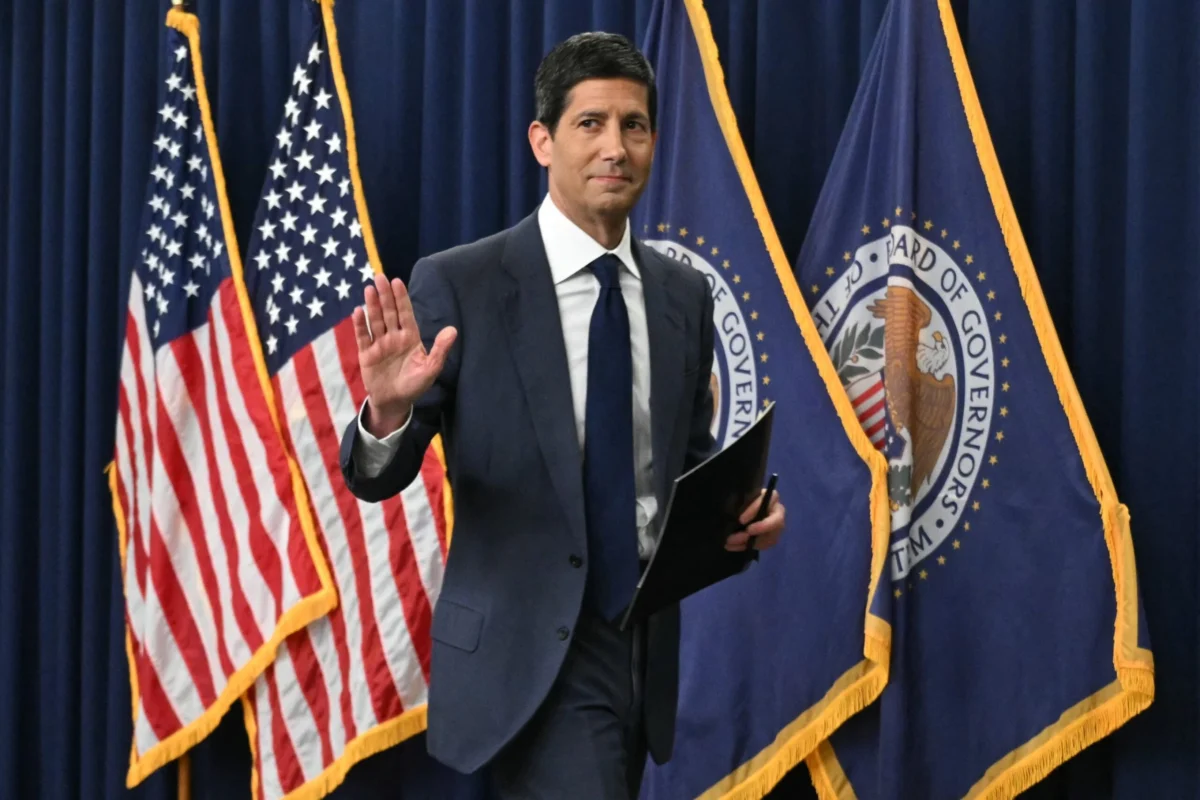
The Federal Reserve has long operated under the foundational principle of independence, a mandate designed to insulate the central bank from political pressures while it steers the economy toward stable prices and maximum employment. Yet, under the leadership of Chairman Kevin Warsh, hand-picked by President Donald Trump, the traditional binary categorization of central bankers as either “hawks” or “doves” appears to have lost its analytical utility. Wall Street observers and economists are increasingly grappling with a series of contradictory policy signals that suggest the Federal Reserve is no longer acting solely on the basis of inflation and employment data, but is instead engaged in a delicate, high-stakes dance of yield curve management necessitated by a precarious U.S. national debt burden.
A Chronology of Policy Ambiguity
The ambiguity surrounding Warsh’s tenure began almost immediately upon his appointment. Initial market expectations were anchored in the belief that a Trump-appointed chairman would naturally lean toward looser monetary policy to stimulate growth. However, those expectations were swiftly disrupted when Warsh characterized inflation as a “choice,” a rhetorical shift that signaled a potential readiness to adopt a more aggressive, hawkish stance to curb price volatility.
The summer of 2026 served as a period of significant recalibration for the Federal Open Market Committee (FOMC). During this time, Warsh hinted at a departure from conventional indicators, suggesting that the Fed should look toward alternative inflation gauges. Furthermore, he posited that the bond market itself might perform some of the heavy lifting regarding monetary tightening, a narrative that suggested a less aggressive policy path for the Fed.
This dovish lean was abruptly abandoned in August 2026 during the Jackson Hole Economic Symposium. In a high-profile speech, Warsh delivered a distinctly hawkish message, setting the stage for a unanimous rate hike by the FOMC in September. Yet, the momentum of this hawkish trajectory faltered just weeks later. When faced with renewed inflationary pressures last week, Warsh opted to pause further rate hikes. His refusal to provide a clear rationale or offer forward-looking guidance on future policy decisions left the financial markets in a state of confusion, producing a net effect that many analysts interpreted as dovish, despite the underlying economic data suggesting the need for restraint.
The Brookings Perspective: Redefining the Fed’s Objective
Robin Brooks, a senior fellow at the Brookings Institution, argues that the confusion stems from asking the wrong questions. By focusing on whether Warsh is a hawk or a dove, market participants are missing the broader structural reality: the Federal Reserve is currently operating under the shadow of a $40 trillion national debt.
“We’re not in hawkish or dovish land,” Brooks noted in a recent analysis. “What’s happening is yield curve management, which itself is a function of how precarious the U.S. debt picture is.” According to this framework, inflation readings and unemployment data have been relegated to secondary importance. The primary driver of the Fed’s recent maneuvers is the volatility of long-term Treasury yields, which, if left unchecked, threaten to make the servicing of the U.S. federal debt unsustainable.
The Burden of $40 Trillion
The mathematical reality of the U.S. fiscal position is increasingly dire. Publicly held debt has reached 100% of GDP, and in the 2026 fiscal year, the interest payments alone on this debt surpassed $1 trillion, exceeding the total expenditure allocated to national defense. This shift has forced a de facto alignment between the Federal Reserve and the Treasury Department.
Evidence of this coordination surfaced during Treasury Secretary Scott Bessent’s tenure, most notably when the Treasury announced surprise buybacks of long-term bonds to suppress yields. Simultaneously, the Treasury intervened in foreign exchange markets to bolster the Japanese yen. By propping up the yen, the U.S. effectively prevented Japan—a major holder of U.S. Treasuries—from being forced to sell off its American debt holdings to defend its own currency, an action that would have caused Treasury yields to spike further.
The Threat of Fiscal Dominance
The current environment has reignited discussions regarding “fiscal dominance,” a scenario in which the sheer scale of government debt and the necessity of financing deficits override the central bank’s ability to act independently. When the cost of borrowing becomes the primary concern, the Fed may be forced to keep interest rates lower than what would be optimal for price stability to ensure the Treasury can continue to fund the government.
This tension is exacerbated by the Congressional Budget Office’s (CBO) recent stress tests. The CBO evaluated scenarios where interest rates consistently exceed their 4.3% baseline. Under a scenario where rates are 150 basis points higher, the CBO projects that net interest costs would balloon by an additional $4.9 trillion over the coming decade, with the debt-to-GDP ratio climbing to 133% by 2036.
Analysts at Bank of America have underscored the gravity of these projections. Their research indicates that if the effective interest rate on government debt exceeds the long-term nominal GDP growth rate—which is currently assumed to be around 4%—the U.S. will enter a debt spiral. While nominal growth was a robust 5.6% in the third quarter of 2026, much of this expansion is attributed to the AI boom and inflationary tailwinds. Bank of America warned that these growth drivers may be temporary. “It is optimistic to assume the United States can simply grow its way out of its mounting debt burden,” the firm stated in an October note.
Market Volatility and the Safe Haven Status
The volatility in the bond market has been mitigated by several external factors, providing the Fed with breathing room. Geopolitical tensions, particularly the potential for the re-escalation of the Iran conflict, have periodically driven oil prices and yields upward. Conversely, fears regarding the longevity of the AI-driven productivity boom have occasionally acted as a dampener on yields.
The turmoil in the French economy has also inadvertently benefited the U.S. bond market. As investors fled European assets due to concerns over fiscal instability in the eurozone, they turned back to the relative safety of U.S. Treasuries, causing the 10-year yield to dip back below the critical 5% threshold.
Implications for the Future of Monetary Policy
The actions—and inactions—of Chairman Warsh suggest that the Federal Reserve is navigating a narrow corridor between two existential risks: the risk of runaway inflation and the risk of a fiscal crisis precipitated by a surge in borrowing costs. If the Fed remains committed to managing the yield curve, it effectively signals to the market that it is willing to tolerate higher inflation for longer periods to preserve the solvency of the federal government.
This creates a new paradigm for investors. The traditional signals used to predict Fed policy—such as the “Dot Plot” or the tone of the FOMC statement—may now be less reliable than monitoring the Treasury’s borrowing needs and the performance of the long-end of the bond market.
Ultimately, the ambiguity of Warsh’s tenure may not be a sign of indecision, but rather a reflection of the limited policy tools available when a central bank is constrained by the fiscal realities of the state. As the U.S. enters the next phase of its economic cycle, the divide between monetary and fiscal policy continues to blur, leaving the Federal Reserve with the unenviable task of maintaining market confidence while the structural foundations of the nation’s debt face their most significant test in modern history. The question remains whether the current approach of yield management can prevent the long-term erosion of the dollar’s purchasing power or if it is merely delaying an inevitable confrontation with the limits of deficit spending.