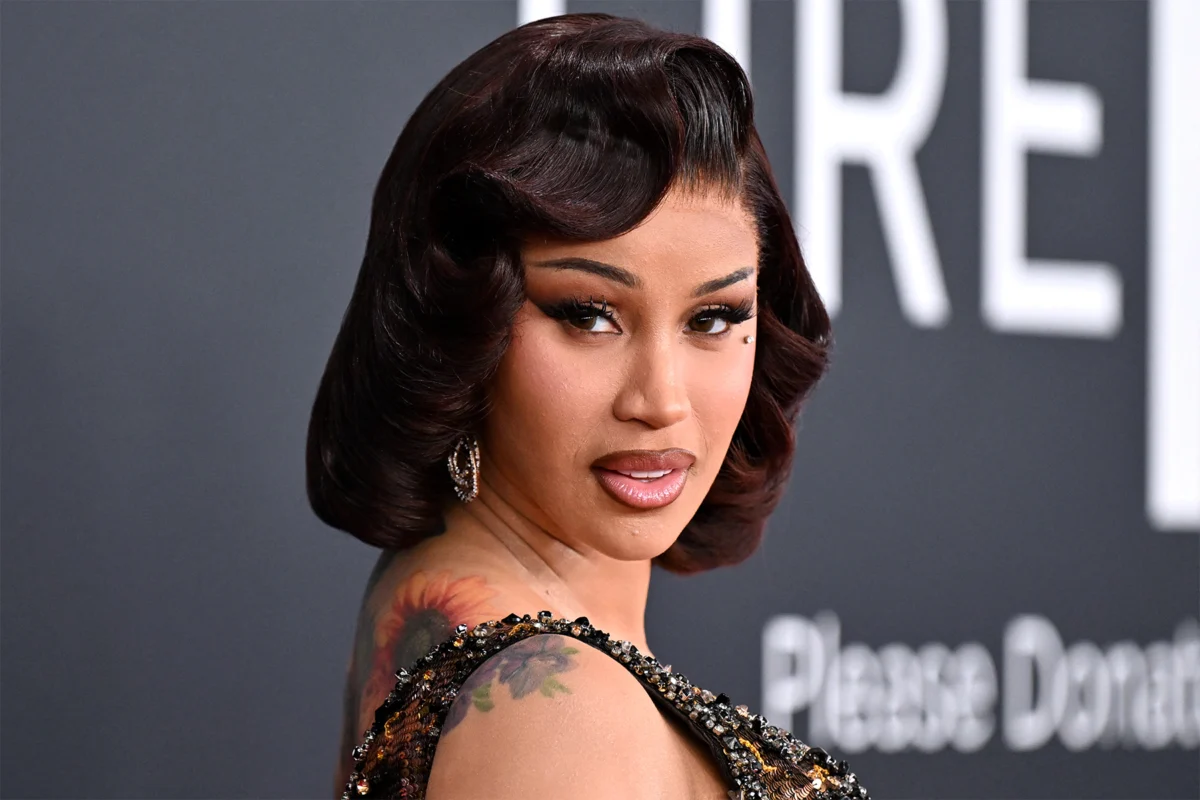
During an unexpected headlining performance at Johns Hopkins University’s annual Hoptoberfest, Grammy-winning artist Cardi B paused her set to offer students a candid piece of advice regarding their academic integrity: refrain from utilizing artificial intelligence to complete their coursework. Her comments, delivered to a crowd of students in Baltimore, served as both a lighthearted interaction with the audience and a reflection of her public stance against the proliferation of generative AI.
The event, organized by the Hopkins Student Organization for Programming (HOP), underwent a significant last-minute transition. The university had originally scheduled Canadian singer Daniel Caesar to headline the festivities. However, due to unforeseen circumstances, the university was forced to announce a cancellation of the original headliner, prompting a swift pivot to secure Cardi B as the replacement. The transition necessitated a shift in the event’s scheduling, moving the performance from Halloween night, October 31, to Sunday, November 1.
A Sudden Shift in Programming
The logistical challenge of replacing a major musical act on short notice is a common hurdle for university programming boards, yet the reaction from the student body at Johns Hopkins proved to be overwhelmingly positive. According to internal reports from the university’s student newspaper, The News-Letter, the administration informed ticketholders via email of the change, citing the inability of Daniel Caesar to perform.
While students like sophomore Bhavya Guru expressed initial surprise—and even skepticism regarding the authenticity of the announcement—the general sentiment quickly shifted toward excitement. The opportunity to see a high-profile artist like Cardi B live on campus outweighed the disappointment of the cancellation. Students noted that the inclusion of the rapper added a distinct energy to the event, with many attendees looking forward to a setlist filled with the artist’s notable discography and chart-topping hits.
Academic Integrity and the AI Discourse
Cardi B’s specific admonition to students regarding ChatGPT and other AI tools underscores a growing tension within higher education. As universities across the United States grapple with the integration of Large Language Models (LLMs) into the student experience, faculty and administrators have been forced to implement rigorous policies to define what constitutes academic dishonesty.
The rapper’s commentary, while delivered in her signature style, aligns with a broader societal concern regarding the reliance on automated systems for critical thinking and creative output. This is not the first time the artist has expressed a public disdain for AI. Earlier in 2025, she utilized her social media platform on X (formerly Twitter) to express frustration over the impact of AI-generated content on her own family, particularly regarding misinformation on social media platforms like Facebook. Her request to "free" her older family members from the influence of AI highlights a personal frustration with how rapidly evolving technology can distort reality and manipulate public perception.
The Evolution of the Music Industry and Public Engagement
Beyond her commentary on campus culture, Cardi B’s recent public appearances have highlighted her shifting perspective on the music industry. In recent months, she has been vocal about her departure from the "rap beef" culture that has historically characterized much of the hip-hop industry. During recent interactions on X Spaces and Instagram Live, the artist indicated that she no longer finds the cycle of public feuds productive or engaging, signaling a move toward prioritizing her own peace and creative focus over industry conflict.

This sentiment of personal evolution extends to her views on fame and the complications of success. She has recently spoken openly about the "scary" nature of extreme success, specifically noting the difficulty in discerning genuine connections within her inner circle. Her reflections on the "secret animosity" that can emerge when an individual reaches a certain level of notoriety offer a rare glimpse into the psychological toll of celebrity, suggesting that her recent campus appearance was part of a larger, more introspective phase of her career.
Data and Trends in University Event Programming
The successful pivot to a high-profile artist like Cardi B for a university event is a testament to the robust budget and planning capabilities of large-scale institutional student organizations. Historically, universities of the caliber of Johns Hopkins have utilized high-energy musical performances as a cornerstone of student retention and campus morale.
Data from the Association for the Promotion of Campus Activities (APCA) suggests that student engagement is significantly higher when universities can secure "top-tier" talent for annual events like homecoming or fall festivals. While the cost of booking an artist of Cardi B’s stature—who has topped the Billboard Hot 100 multiple times—is substantial, the return on investment is often measured in student satisfaction and the strengthening of institutional brand identity.
The logistical pivot at Johns Hopkins—moving from a soulful, R&B-leaning performance by Daniel Caesar to a high-octane hip-hop set by Cardi B—represents a shift in the "vibe" of the event, yet the reception suggests that the student body is highly adaptable. This flexibility is increasingly common in the post-pandemic era, where event organizers must be prepared for sudden cancellations due to travel issues, health concerns, or scheduling conflicts.
Broader Implications of Celebrity Influence on Campus
When high-profile figures interact directly with students, the impact often transcends the entertainment value of the concert. Remarks regarding academic honesty, while brief, can carry weight when delivered by an influential figure who has achieved significant success in a competitive industry. By explicitly naming AI tools as a negative shortcut, Cardi B tapped into the current anxiety surrounding the future of work and education.
For the students in attendance, the experience served as a reminder that the standards for success remain tethered to personal effort and integrity. As the academic year continues, the conversation regarding AI will likely remain a focal point for the Johns Hopkins administration. The university, known for its rigorous academic standards, has been proactive in addressing the challenges posed by generative technology, and the endorsement of these values—even in an informal setting—supports the broader mission of the institution.
Chronology of Events
- Late October 2026: Original scheduling for Hoptoberfest featuring Daniel Caesar as the headliner.
- Days Prior to Event: Announcement of cancellation due to unforeseen circumstances; rapid rescheduling of the event and the announcement of Cardi B as the new headliner.
- November 1, 2026: Rescheduled Hoptoberfest event takes place at Johns Hopkins University.
- Event Performance: During the set, Cardi B addresses the crowd, advising them to prioritize their studies and avoid using AI to complete assignments.
- Post-Event: Student reaction remains largely positive, with reports from The News-Letter confirming the successful transition to the new headliner.
Conclusion
The appearance of Cardi B at Johns Hopkins University served as a successful conclusion to an otherwise volatile scheduling process. By effectively replacing a cancelled act with a globally recognized star, the university’s student organizers demonstrated resilience and operational efficiency. Furthermore, the artist’s engagement with the audience—moving beyond simple performance to offer unsolicited, albeit firm, advice on academic integrity—underscores the unique platform that performers have to influence the next generation of students. As the semester progresses, the students at Johns Hopkins will undoubtedly remember the night for its energy, its spontaneity, and perhaps, the blunt reminder to put down the AI and finish their work.