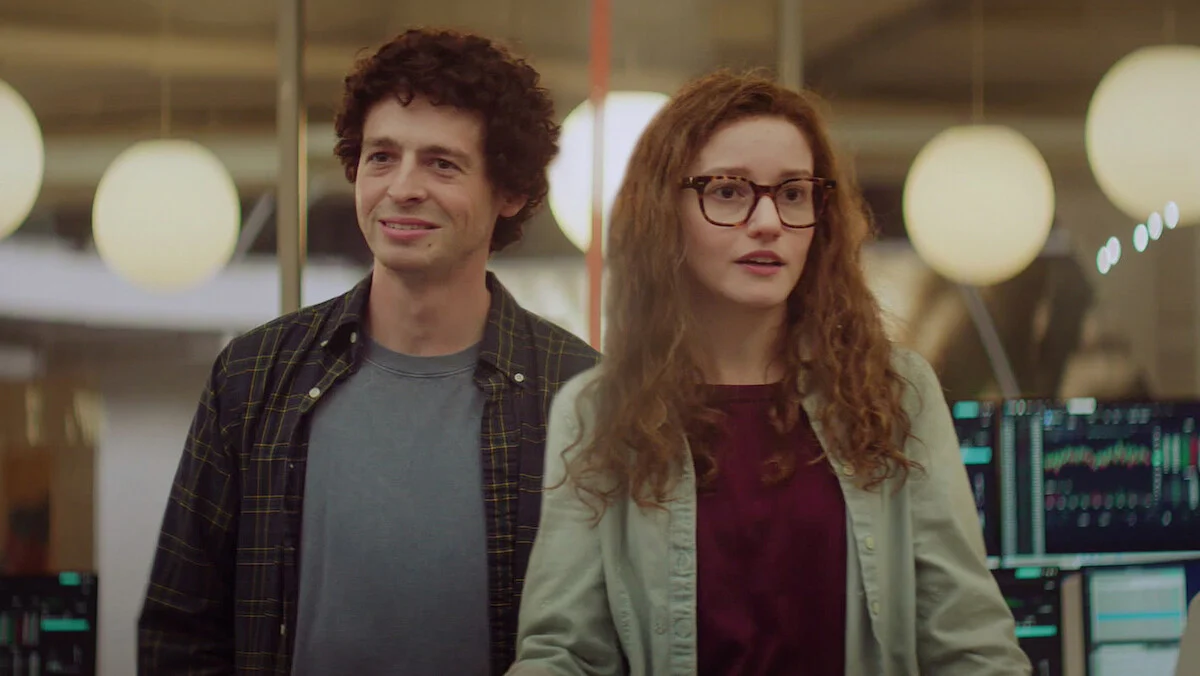
The release of the eight-part Netflix series The Altruists, a dramatized retelling of the meteoric rise and catastrophic fall of Sam Bankman-Fried’s cryptocurrency empire, has ignited a firestorm of criticism from within the financial and technology sectors. While the production—executive produced by Barack and Michelle Obama’s Higher Ground Productions—has garnered moderate praise from general audiences and television critics for its high-stakes narrative pacing, industry experts and those intimately familiar with the FTX collapse are calling it a dangerous distortion of established fact. The series has become the focal point of a heated debate concerning the responsibility of historical dramatization, the ethics of documentary-style storytelling, and the influence of political optics on public perception.
The Anatomy of a Collapse: Historical Context
To understand the intensity of the backlash, it is necessary to revisit the objective timeline of the FTX collapse, which serves as the bedrock of the real-world events the series claims to portray. In 2022, FTX was widely considered the most reputable exchange in the cryptocurrency space, with Bankman-Fried—frequently referred to as SBF—acting as a regulatory darling in Washington, D.C.
The crisis began in November 2022, when a leaked balance sheet revealed that Alameda Research, Bankman-Fried’s hedge fund, held a significant portion of its assets in FTT, a token created by FTX itself. This revelation triggered a bank run. Within days, FTX filed for Chapter 11 bankruptcy. Subsequent investigations by the Department of Justice (DOJ) and the Securities and Exchange Commission (SEC) uncovered that billions of dollars in customer funds had been funneled from FTX to Alameda to cover bad bets and personal expenditures. In March 2024, Bankman-Fried was sentenced to 25 years in federal prison after a jury found him guilty on seven counts of fraud and conspiracy. Caroline Ellison, his former romantic partner and the CEO of Alameda Research, provided pivotal testimony against him after pleading guilty to her role in the scheme.
Controversial Narrative Choices
The primary grievance voiced by industry professionals is that The Altruists appears to deviate from the established judicial record. Critics point to specific scenes—such as a sequence where Binance founder Changpeng Zhao (CZ) allegedly coerces Bankman-Fried into illicit activity—as entirely fabricated.
Don Wilson, CEO of the Chicago-based trading firm DRW, took to social media platform X to condemn the depiction. "Recasting this as something SBF and Caroline were forced to do in order to placate CZ—instead of highlighting the effective altruist ethos that drove them to commit yet another crime—is preposterous," Wilson wrote.
Legal observers note that at no point during the exhaustive criminal trial did the defense suggest that Binance exercised coercion over FTX. By framing the downfall as the result of a "villainous" rivalry with Zhao, the series arguably shifts the burden of culpability away from the convicted felons. Furthermore, critics argue that the series attempts to reframe the narrative to position Ellison as the primary architect of the accounting fraud, a portrayal that conflicts with federal evidence naming Bankman-Fried as the ultimate decision-maker.
Allegations of Racial Stereotyping
Beyond the factual disputes, the series is facing significant backlash for its portrayal of Changpeng Zhao. Critics have highlighted the creative decision to have actor Terry Chen perform with an exaggerated, forced Cantonese accent, a choice many describe as a regression into harmful anti-Asian stereotypes.
Industry analyst and journalist Laura Shin was among the most vocal critics, suggesting that the racialized depiction of a global business leader is inexcusable. "I’m just going to say it: Racism has to have played a role in how they portrayed Zhao. There’s no other explanation," Shin stated.
Zhao himself addressed the controversy on X, noting that while he has rarely felt targeted by racism during his career in Canada, Japan, and the United States, the depiction in the Netflix series warrants a serious cultural conversation. The use of caricatured speech patterns for an East Asian character in a contemporary setting has drawn sharp rebuke from media watchdogs, who argue that such tropes perpetuate xenophobic biases that have no place in modern prestige television.
The "Follow the Money" Argument: Political Implications
The involvement of the Obamas as executive producers has added a layer of political intrigue to the criticism. During the 2021–2022 election cycle, Bankman-Fried was a prominent donor to the Democratic Party, contributing nearly $40 million to various candidates and political action committees, including $5.2 million directed toward Joe Biden’s 2020 campaign.
Lawyer and commentator Hailey Lennon suggested that the series’ sympathetic framing of Bankman-Fried might be linked to this political history. The argument, which has gained traction in crypto-skeptical and partisan circles, posits that the production may be intentionally softening the image of a major party donor to distance the Democratic establishment from the fraud. While there is no direct evidence that political pressure influenced the editorial choices of the showrunners, the perception of bias is significant enough that it has become a central element of the discourse surrounding the show.
Constance Wang, former COO of FTX, summarized the frustration of those involved in the actual events, remarking that the show felt like "someone else’s story with our names attached." For those who lived through the liquidity crisis and the subsequent legal fallout, the series is less a documentary and more a work of "romanticized fiction" that ignores the human cost of the $8 billion shortfall.
Implications for Docudrama Ethics
The controversy surrounding The Altruists underscores a broader crisis in the "true crime" and "corporate drama" genres. As streaming platforms compete for market share, the incentive to prioritize dramatic arcs over historical accuracy has increased. When these productions cover events as recent and well-documented as the FTX collapse, the margin for error is razor-thin.
From an analytical standpoint, the backlash suggests that the public—or at least the segment of the public that followed the crypto industry—is increasingly weary of "prestige" narratives that sanitize the actions of financial criminals. By humanizing Bankman-Fried as a misguided idealist rather than a calculated fraudster, the series risks alienating its most informed viewers.
Furthermore, the accusations of racism serve as a reminder that creative license does not grant immunity from social responsibility. When a script relies on ethnic caricature to establish a "villain," it does more than just misrepresent the truth; it feeds into broader societal prejudices.
Conclusion and Future Outlook
As of late 2026, Sam Bankman-Fried remains incarcerated, with his release date not projected until 2047. The legal system has already reached its verdict on his actions. However, the battle over his legacy continues to play out in the court of public opinion.
Netflix has not issued a formal statement regarding the specific allegations of historical distortion or racial bias. As the series remains available for global streaming, the discourse highlights a growing divide between Hollywood’s pursuit of a compelling narrative and the reality of complex financial crimes. For those who lost savings in the FTX collapse, the series represents a frustrating attempt to rewrite history—a narrative where the lines between hero, victim, and perpetrator are intentionally blurred for the sake of entertainment. Whether this backlash will impact the series’ long-term reception or influence the future of similar "ripped-from-the-headlines" productions remains to be seen. What is clear, however, is that for many, the story of FTX is far too raw and far too complex to be reduced to the simplified, and allegedly inaccurate, tropes presented in The Altruists.