The automotive industry is currently undergoing a radical transformation as major manufacturers transition from traditional, static industrial automation toward the next frontier of robotics: general-purpose humanoid machines. Volvo Cars, a brand synonymous with engineering precision and safety, has officially confirmed that it is deploying AEON humanoid robots at its production facility in Ghent, Belgium. This pilot program represents a significant pivot in how automotive giants approach assembly line logistics, moving away from rigid, task-specific mechanical arms toward versatile, AI-driven entities capable of navigating complex, human-centric workspaces.
The Strategic Deployment of AEON Robots
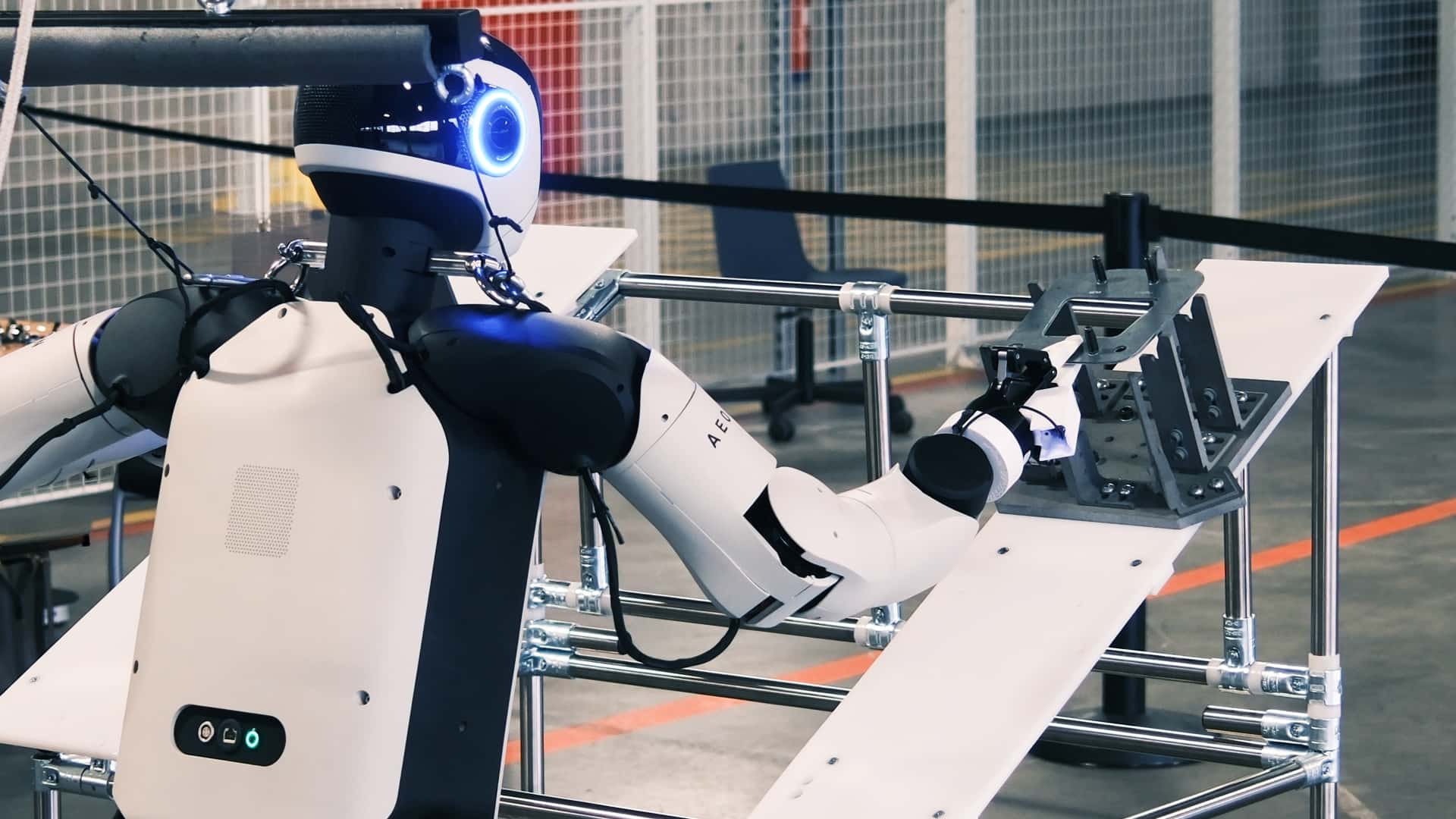
The deployment of these humanoid units in Ghent is not merely a technological demonstration; it is a calculated effort to mitigate the physical toll of repetitive manufacturing tasks on the human workforce. While automotive assembly has relied on robotic automation since the 1960s, these traditional systems were confined to cages or fixed zones due to their lack of sensory awareness. The AEON robots, by contrast, utilize sophisticated sensors and artificial intelligence to perceive their environment, allowing them to work safely in close proximity to human colleagues.
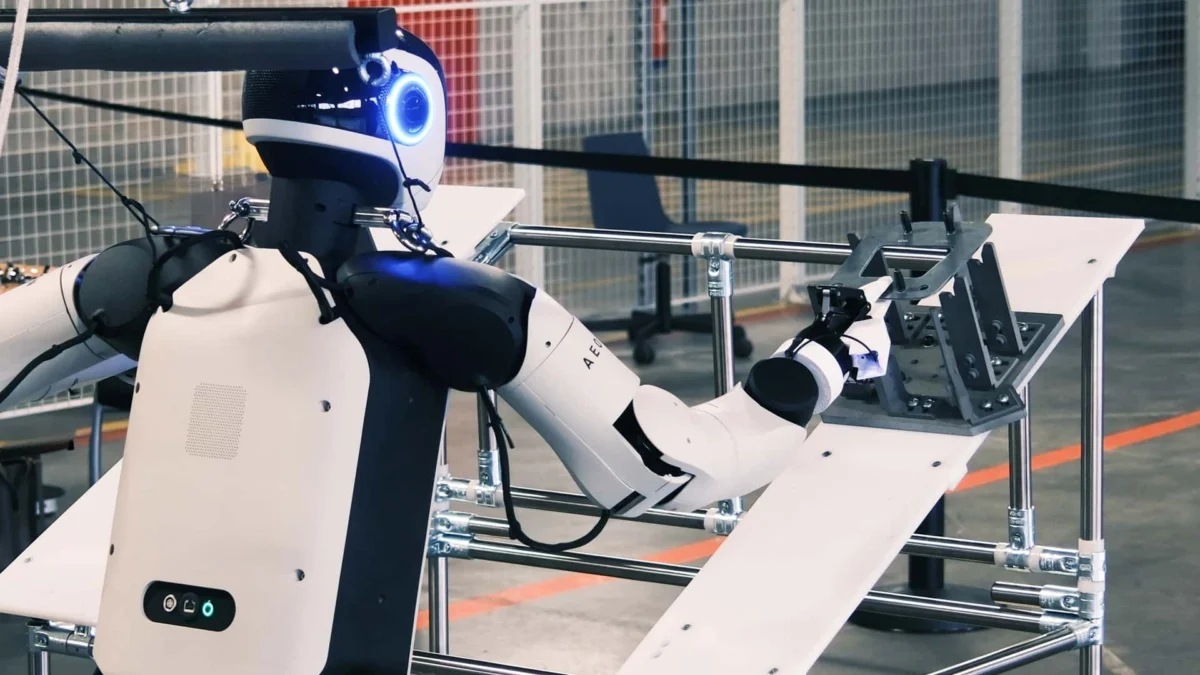
The AEON unit stands approximately 5.4 feet (1.65 meters) tall and weighs 132 pounds (60 kilograms). Unlike many bipedal robots currently in development elsewhere, the AEON platform is mobile on a wheeled base, which allows for increased stability and a maximum speed of 5.3 miles per hour (8.6 kilometers per hour). Despite its relatively compact footprint, the robot is designed to handle payloads of up to 22 pounds (10 kilograms), making it well-suited for the pick-and-place operations that define much of the interior assembly and sub-component logistics within a car plant.
A Chronology of Integration
The current phase of the initiative is centered on rigorous training. Volvo engineers are employing a method known as "imitation learning," where the robots observe and replicate the motions of human operators to master specific tasks. This training process is structured in tiers, beginning with basic object manipulation and evolving toward more complex coordination.
According to the current project roadmap:
- Late 2024 – Early 2025: Initial deployment and basic imitation learning training at the Ghent facility. The focus is on perfecting precision in pick-and-place tasks within isolated fixtures.
- Mid-2025 – 2026: Expanding the scope of robot tasks to include interacting with multiple components simultaneously and navigating dynamic, multi-station environments.
- Mid-2027: Anticipated commencement of real-world, full-scale production deployment. By this stage, the robots are expected to be fully integrated into the standard assembly line workflows, functioning alongside human teams to assist with physically demanding or repetitive tasks.
The Shift Toward Ergonomic Manufacturing
Magnus Nilsson, Chief Manufacturing Officer at Volvo Cars, has emphasized that the primary objective of this integration is not to eliminate human labor, but to enhance it. The goal is to offload the most "ergonomically challenging" tasks to the robots—activities that typically result in long-term musculoskeletal strain for human workers.
"Aeon’s humanoid design means it can fit into our production as it is today, alongside our teams and existing automation," Nilsson stated. By assigning robots to tasks that involve repetitive lifting, reaching, or awkward positioning, Volvo aims to decrease the incidence of workplace injuries and long-term health complications, thereby improving the overall safety and sustainability of the labor force.
Industry Context: The Humanoid Arms Race
Volvo is far from alone in this endeavor. The automotive sector is currently experiencing an "arms race" in robotics, driven by the need to increase efficiency and adapt to the rapid production requirements of the electric vehicle (EV) era. Tesla has been at the forefront of this shift with its Optimus project, aiming to utilize humanoid labor for both assembly and hazardous tasks. Similarly, companies such as General Motors, Ford, and Rivian have been aggressively investing in robotics companies to develop specialized AI agents capable of operating within existing factory infrastructures without the need for extensive (and expensive) facility retrofitting.
The economic rationale for this shift is compelling. Traditional automation is highly efficient but lacks flexibility; changing a production line often requires millions of dollars in mechanical retooling. Humanoid robots, which operate in the same space as humans and use the same tools, offer a more modular and adaptable solution. If a production process changes, the robot can be reprogrammed via software updates rather than physical hardware overhauls.
Technical Challenges and Future Implications
Despite the potential benefits, the transition to humanoid labor is fraught with technical and ethical hurdles. Current AI-driven robotics still struggle with the "edge cases" of manufacturing—scenarios where parts may be slightly misaligned, or the environment may be cluttered in ways the robot has not been trained to handle. Furthermore, the reliance on high-precision camera arrays and sensors requires robust data infrastructure within the factory to process information in real-time.
There is also the broader, socio-economic implication of workforce displacement. While Volvo maintains that the current initiative is aimed at "supporting employees," labor unions and industry analysts are watching closely to see how these roles evolve over the next decade. The expectation is that the role of the human factory worker will shift from "manual laborer" to "robot supervisor and maintenance technician," necessitating a massive upskilling effort across the manufacturing sector.
Assessing the Impact
The success of the Ghent project will likely serve as a blueprint for the wider Volvo Group. If the AEON units prove reliable in the high-stress, high-frequency environment of an automotive assembly line, it is probable that similar deployments will be rolled out across Volvo’s global manufacturing footprint, including its plants in China and the United States.
Furthermore, the integration of these robots signals a broader trend in Industry 4.0: the convergence of physical robotics and advanced machine learning. As these robots become better at navigating non-linear tasks—such as wiring, delicate interior upholstery installation, or complex sensor mounting—the efficiency gains could be substantial. Industry experts estimate that as these robots become more common, the cycle time for complex EV assemblies could be reduced by 10 to 15 percent, while simultaneously improving quality control through the consistent, error-free application of components.
Conclusion
As Volvo Cars moves toward its target of full-scale humanoid integration by mid-2027, the automotive industry finds itself at a critical junction. The deployment of the AEON robots is a testament to the fact that the future of manufacturing is not merely about faster machines, but about smarter, more adaptable ones. By prioritizing ergonomics and leveraging the mobility of humanoid platforms, Volvo is attempting to solve the age-old problem of balancing human welfare with the relentless demands of high-volume production. Whether this technology becomes the industry standard or remains a specialized tool for specific tasks will be determined by the performance of these units over the next three years of testing in Ghent.
Ultimately, the integration of robotics into the assembly line represents a fundamental shift in the definition of "factory work." As the line between human and machine collaboration blurs, the focus will increasingly shift toward how these technologies can best serve the human operators they are meant to support, rather than replace. With the automotive sector facing unprecedented pressure to produce electric vehicles faster and more efficiently than ever, the rise of the humanoid robot is no longer a vision of the distant future—it is the present reality of the factory floor.