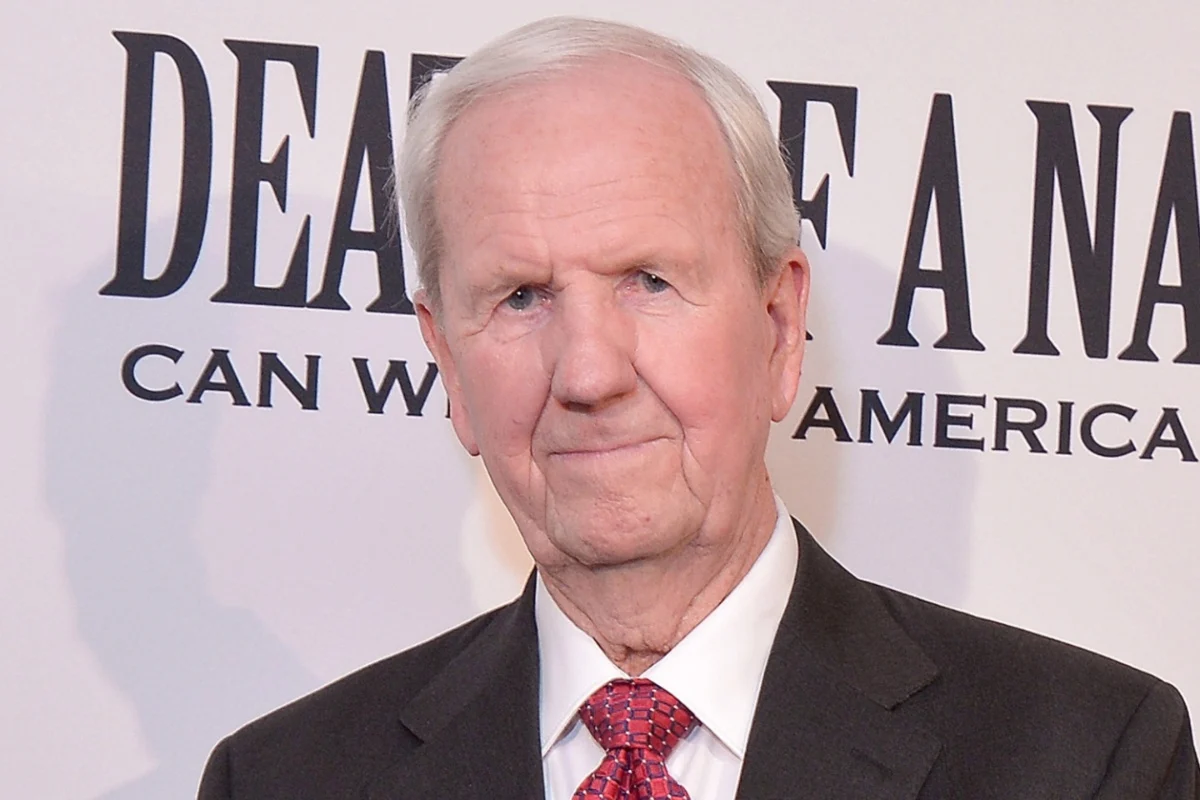
Gerald R. Molen, the celebrated Hollywood producer whose remarkable career spanned decades and yielded some of the most iconic and commercially successful films in cinematic history—most notably Steven Spielberg’s Academy Award-winning masterpiece Schindler’s List—has passed away at the age of 91. His death marks the loss of a foundational figure in modern filmmaking, a studio veteran who began his journey hauling equipment and driving trucks before ascending to the very pinnacle of the motion picture industry.
Molen’s passing was publicly shared by his great-niece, Rachel Lorraine Pullan, through a statement published on Instagram. In her heartfelt tribute, Pullan reflected on his legacy not only as a titan of cinema but as a man of unwavering principles. "This morning my great-uncle, Gerald R. Molen, passed on to join my great-grandma and his dear wife Pat on the other side of the veil," she wrote. "I am so happy for him, and also so very sad. Uncle Jerry was a man of great moral character and high integrity. He started doing work, moving set pieces and driving at a movie studio and worked his way up to the position of producer."
Throughout a career characterized by astonishing versatility, Molen seamlessly navigated between historical dramas, high-concept science fiction, family entertainment, and blockbuster action. His legendary partnership with Steven Spielberg defined a golden era of Hollywood blockbusters, producing cultural touchstones that continue to resonate with audiences worldwide. Yet, his professional footprint extended far beyond his collaborations with Spielberg, encompassing collaborations with other visionary directors on films that shaped the landscape of late 20th and early 21st-century cinema.
From Humble Beginnings to Studio Lots
Born in Great Falls, Montana, in 1935, Molen’s immersion in the world of motion pictures began at an early age following a family relocation to North Hollywood in 1947. Surrounded by the burgeoning studio culture of post-war Southern California, his parents, Gerald Sr. and Edith Molen, operated a local cafe situated directly adjacent to the Republic Pictures lot in Studio City. This strategic location placed the young Molen in the immediate orbit of the film industry, offering him an intimate view of the bustling studio system long before he ever worked behind a camera.
Rather than entering the industry through elite film schools or familial nepotism, Molen earned his entry through manual labor and sheer persistence. He took on blue-collar roles across various studio lots, moving set pieces, driving transport vehicles, and learning the intricate mechanics of physical production from the ground up. This grassroots experience provided him with a comprehensive, hands-on understanding of filmmaking logistics—a skillset that would later prove invaluable when he transitioned into production management and, ultimately, major-studio producing.
His early industry milestones paved the way for his pivotal entry into the Spielberg camp in 1985, when he served as a unit production manager on the critically acclaimed period drama The Color Purple. That collaboration established a professional trust and personal camaraderie that would endure for decades. Following The Color Purple, Molen stepped into the role of associate producer on the 1987 science fiction comedy *batteries not included, which featured Spielberg as an executive producer.
The Pinnacle of Artistic and Commercial Success: The Spielberg Collaboration
Molen’s definitive entry into Hollywood’s upper echelon solidified in the late 1980s and early 1990s as he became one of Steven Spielberg’s most trusted producers at Amblin Entertainment. This partnership yielded an extraordinary string of cinematic achievements that dominated both the box office and the Academy Awards.
In 1993, Molen reached the zenith of his professional career when he served as a producer on Schindler’s List, Spielberg’s harrowing and deeply moving chronicle of Oskar Schindler, the German industrialist who saved more than 1,000 Polish-Jewish refugees during the Holocaust. The film required immense logistical coordination, historical sensitivity, and emotional resilience. Released to widespread critical acclaim, Schindler’s List swept the 66th Academy Awards in 1994, capturing seven Oscars, including Best Picture. Molen shared the coveted Best Picture statuette with Spielberg and fellow producer Branko Lustig. The film remains a towering monument in cinematic history, praised for its moral urgency and uncompromising depiction of historical atrocity.
Simultaneously, Molen demonstrated a peerless ability to helm massive, technically complex commercial blockbusters. In the same year Schindler’s List dominated the cultural conversation, Molen produced Jurassic Park (1993), a groundbreaking milestone in visual effects and animatronics that shattered global box office records and redefined the summer blockbuster. He would later return to Isla Nublar as a producer on the 1997 sequel, The Lost World: Jurassic Park.
His extensive collaboration with Spielberg also produced such enduring titles as the fantasy-adventure Hook (1991), the dystopian sci-fi thriller Minority Report (2002), and a prolific slate of Amblin-backed family and adventure films throughout the 1990s, including The Flintstones (1994), The Little Rascals (1994), Little Giants (1994), Casper (1995), and the disaster epic Twister (1996).
Diverse Contributions Across the Cinematic Landscape
While his partnership with Spielberg remains his most widely recognized body of work, Molen’s production resume is remarkable for its breadth and commercial impact outside of the Amblin ecosystem.
In 1988, he served as an associate producer on Barry Levinson’s Rain Man, a poignant drama starring Tom Cruise and Dustin Hoffman that explored autism and familial bonds. The film was a critical and commercial phenomenon, winning four Academy Awards, including Best Picture. Molen’s involvement in both Rain Man and Schindler’s List places him in an elite class of producers who have shepherded multiple Best Picture winners to the screen.
Molen’s capacity for high-octane action and adrenaline-fueled storytelling was further demonstrated when he produced Tony Scott’s high-speed racing drama Days of Thunder (1990), starring Tom Cruise. Decades later, Molen continued to contribute to major commercial releases, holding producer or executive producer credits on family-friendly fare like Just Like Heaven (2005) and The Best Christmas Pageant Ever (2024), as well as high-budget shark thrillers such as The Meg (2018) and its 2023 sequel, Meg 2: The Trench.
Personal Life and Legacy
Outside of his monumental professional accomplishments, Molen shared a deeply committed personal life. He was married to his wife, Pat, for nearly seven decades. The couple shared a long and enduring partnership until Pat’s passing in January 2024 at the age of 86. Her death marked a profound loss for Molen in his later years, with family members noting his deep devotion to her throughout their nearly 70 years together.
Molen’s passing closes a vital chapter in the history of late-20th-century American cinema. Colleagues, industry peers, and film historians have long lauded him not merely for the box office receipts or critical accolades associated with his films, but for his steadfast professionalism, ethical grounding, and dedication to the craft of physical production.
As tributes continue to pour in from across the entertainment community, Gerald R. Molen will be remembered as a craftsman who rose from the fringes of the studio backlots to shape the cinematic imagination of generations, leaving behind an indelible body of work that will continue to influence storytellers and captivate audiences for decades to come.