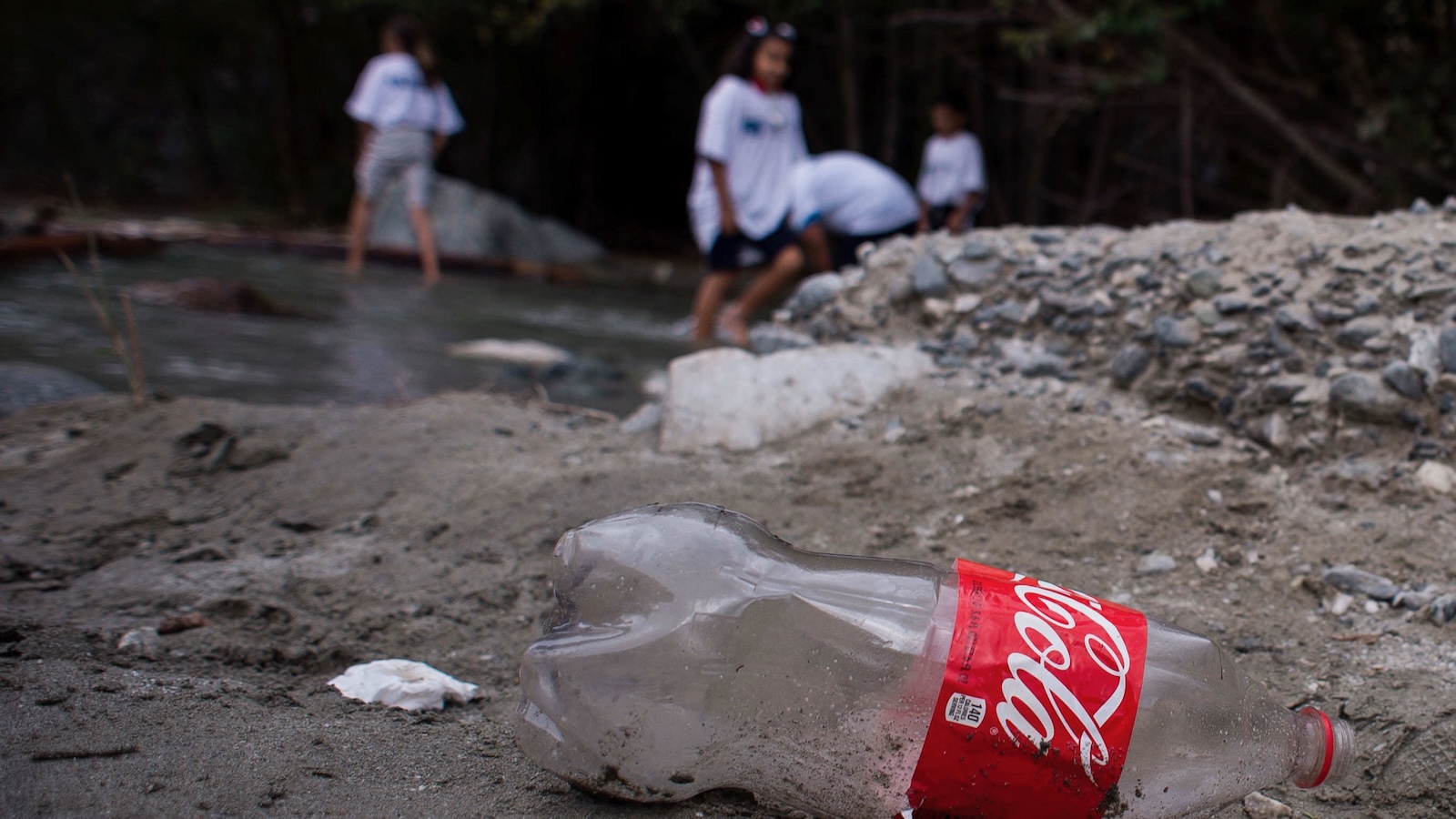
Plastic pollution remains a ubiquitous fixture across the urban landscapes, coastlines, municipal parks, and residential neighborhoods of Baltimore. Much of this accumulated debris bears the distinct corporate markers of major multinational beverage conglomerates, from the circular red-and-blue Pepsi logo to the flowing white script of Coca-Cola’s iconic branding. Yet, under current legal frameworks, none of this widespread environmental degradation is deemed the legal responsibility of PepsiCo, Coca-Cola, or other manufacturing giants.
This legal reality was reaffirmed this summer when a Baltimore city circuit court judge dismissed a high-profile lawsuit filed jointly by the city and county of Baltimore. The municipalities had sought substantial financial damages from PepsiCo, Coca-Cola, and other industrial defendants to fund extensive municipal cleanups of plastic debris.
In her ruling, Judge Audrey J.S. Carrión wrote that companies "conducting lawful activities," such as the production and sale of single-use plastics, "should not be held liable under public nuisance claims because others are misusing the products in an unlawful manner."
The decision underscores a central tenet of modern American tort law: under current interpretations of public nuisance statutes, a manufacturer’s liability effectively terminates at the point of sale. Consequently, the courts view municipal plastic accumulation not as a failure of corporate responsibility, but as a systemic issue driven by individual consumer behavior and unlawful littering.
The Legal Battleground: Public Nuisance and the Point of Sale
The legal strategy deployed in Baltimore is part of a broader, coordinated national effort by local governments and environmental organizations to hold plastic and fossil fuel producers financially accountable for the externalities of their products. Similar legal arguments have been tested across the United States. New York State filed a public nuisance lawsuit against PepsiCo and Frito-Lay targeting single-use packaging, while parallel litigation has emerged in jurisdictions ranging from Missouri to California.
These courtroom challenges have forced judges, legal scholars, and lawmakers to grapple with a fundamental question of modern jurisprudence: When does a manufacturer’s legal responsibility for its products officially end, and can centuries-old public nuisance laws successfully compel polluters to pay for widespread environmental remediation?
The doctrine of public nuisance traces its origins back to 13th-century English common law, where it was traditionally invoked to address localized violations of shared public rights, such as obstructed roadways or compromised access to clean air. However, beginning in the 1970s, plaintiffs began stretching this doctrine to target manufacturers whose products allegedly endangered public health, safety, and environmental integrity.
According to Timothy Lytton, a professor at the Georgia State University College of Law, these public nuisance lawsuits have experienced a decidedly mixed record of success. While high-profile litigation targeting opioid manufacturers, e-cigarette companies, and the historic Master Settlement Agreement with Big Tobacco yielded massive financial recoveries, those outcomes were predominantly secured through negotiated settlements rather than decisive judicial rulings affirming the public nuisance theory on its merits.
When public nuisance cases do reach the trial or appellate stages, plaintiffs frequently struggle to satisfy the rigorous legal standard of causation—the requirement to prove that corporate defendants are substantially and directly responsible for violating a public right. Judges remain intensely wary of extending corporate liability past the point of lawful sale, particularly when products are diverted or misused by third parties. For example, in pharmaceutical litigation, if a physician or illicit actor diverts prescription opioids to the black market, courts must determine whether the manufacturing corporation bears legal culpability for the resulting societal harm.
This judicial hesitation was clearly articulated during appellate arguments in New York’s parallel lawsuit against PepsiCo. Justice Stephen Lindley expressed deep skepticism toward the state’s legal theory, warning that holding manufacturers financially liable for the independent littering actions of consumers would create an unsustainable legal precedent. Justice Lindley appeared receptive to arguments raised by PepsiCo attorney Andrew Tulumello, who contended that the state faced a glaring causation problem because his client does not actively encourage consumers to discard packaging improperly.
Anatomy of a Public Nuisance Claim
Legal experts note that establishing a successful public nuisance claim typically requires satisfying three foundational elements. Albert Lin, co-director of the California Environmental Law and Policy Center at the University of California, Davis, identifies these core components as:
- Demonstrating a substantial and unreasonable interference with a right shared by the general public.
- Establishing direct causation linking the defendant’s commercial activities to that interference.
- Proving negligence, intentional misconduct, or other tortious conduct inherent in the defendant’s business operations.
To circumvent the traditional point-of-sale barrier, environmental advocates and municipal legal teams have increasingly focused on linking causation directly to corporate conduct. Their core argument posits that petrochemical and consumer goods companies intentionally produced and marketed single-use plastics while possessing advance knowledge that their widespread distribution would inevitably devastate public spaces and natural resources.
Central to this legal framing is the concept of foreseeability—determining whether it was reasonably foreseeable to manufacturers that their products would end up as environmental litter. The term "foreseeable" appeared twenty-two times in Baltimore’s original legal complaint, illustrating how central the concept is to the plaintiffs’ strategy.
Plaintiffs argue they possess substantial evidentiary documentation to support the claim of foreseeability. Internal corporate records and historical investigations indicate that major petrochemical and consumer goods companies have known for decades that the mass production of single-use plastics would trigger severe environmental contamination, and that municipal recycling systems were fundamentally incapable of managing the vast volume of waste generated.
Furthermore, growing regulatory and legal scrutiny has turned toward microplastics contamination. An investigative report published by the Los Angeles Times revealed that industry scientists have understood since at least the 1970s that microscopic plastic particles could fragment, persist in the environment, and lodge within human biological tissues.
Scott Hochberg, general counsel and litigation director for the nonprofit Earth Island Institute, summarized the core of the plaintiffs’ argument: "Companies induced consumers to purchase these products while knowing the likelihood that they would end up as trash, and that’s exactly what happened."
Jurisdictional Divides and Divergent Court Rulings
The ultimate viability of these public nuisance claims often depends heavily on the specific legal standards of the jurisdiction in which they are filed. While states like New York and Maryland maintain strict standards requiring plaintiffs to demonstrate that a defendant retained active "control" over a product at the exact time a nuisance occurred, other states have proven more hospitable to innovative environmental torts.

California courts, for instance, have historically demonstrated greater willingness to allow public nuisance claims against corporate polluters to proceed past preliminary dismissal motions. In the U.S. District Court for the Northern District of California, Judge Richard Seeborg permitted a public nuisance lawsuit brought by the Sierra Club against Exxon Mobil Corp. to advance toward trial, while reserving judgment on a separate, comprehensive lawsuit filed by the California Attorney General.
However, even in favorable jurisdictions like California, surviving early procedural challenges offers no guarantee of ultimate victory. A public nuisance lawsuit brought by the Earth Island Institute against ten major food and beverage companies—which centered largely on allegedly deceptive recycling labels—initially survived a motion to dismiss, only to be decisively rejected via summary judgment. Earth Island has indicated its intention to appeal that adverse ruling.
Representatives for PepsiCo, Coca-Cola, and Exxon Mobil did not respond to media requests for comment regarding ongoing litigation.
The Broader Legal Landscape and Legislative Pushback
As these cases wind through federal and state court systems, legal scholars emphasize that the public nuisance framework remains in its developmental infancy. Professor Lin noted that while judicial skepticism is particularly pronounced in ongoing climate change litigation, a pending case before the U.S. Supreme Court could introduce new nationwide restrictions on the ability of state and local governments to deploy public nuisance claims against large industries.
In response to the proliferation of these novel lawsuits, several state legislatures have enacted preemption laws designed to shield corporations from public nuisance liability. Last year, Montana passed a first-of-its-kind statute barring state and local public-nuisance lawsuits targeting lawful commercial activities. Lawmakers in Kansas and Utah quickly followed suit with similar statutory restrictions. All three state measures trace their origins to model legislation drafted by the American Legislative Exchange Council (ALEC), a conservative public policy organization that unites state legislators with private-sector stakeholders.
Despite these legislative hurdles and courtroom setbacks, Professor Lytton suggests that plastics litigation can achieve significant strategic victories outside of direct financial restitution. By compelling the discovery of internal corporate documents and elevating the plastic crisis on the public policy agenda, these lawsuits challenge the prevailing industry narrative that places sole blame on individual consumers.
"When you file a lawsuit, what you’re doing is you’re telling a story about some sort of structural or corporate wrongdoing," Lytton observed. "When you talk about tobacco, it’s not just about smokers. When you talk about opioids, it’s not just about users. It’s about the companies and their design and marketing decisions. The framing that goes on in these lawsuits is actively moving the discussion of plastics away from individual ‘litterbugs’ and toward systemic corporate accountability."