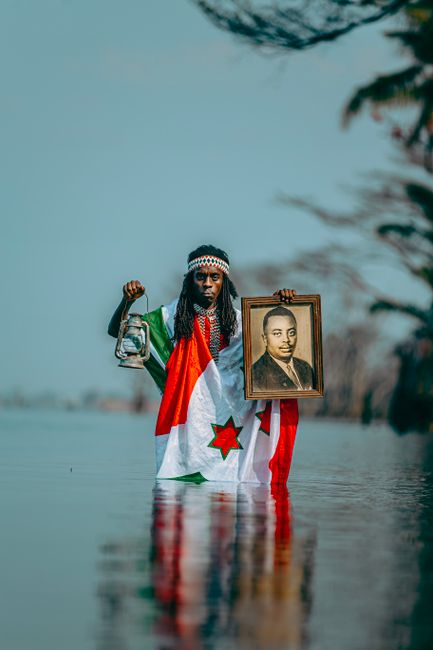
African History: A Deep Dive into the Continent’s Rich and Complex Past
The history of Africa is a sprawling, multifaceted narrative stretching back to the dawn of humanity itself. Far from a monolithic entity, the continent is a mosaic of diverse cultures, empires, innovations, and struggles that predate and profoundly shaped global civilization. Understanding African history is crucial to comprehending the trajectory of human development, the roots of modern global challenges, and the enduring resilience of its peoples. This exploration delves into key periods and themes, from the earliest human origins to the continent’s modern resurgence, emphasizing its significant contributions and internal complexities.
The cradle of humankind, Africa provides an unparalleled record of human evolution. Archaeological evidence, including the iconic "Lucy" (Australopithecus afarensis) discovered in Ethiopia, testifies to hominin origins dating back millions of years. The development of stone tools, the mastery of fire, and the eventual emergence of Homo sapiens all occurred on African soil. These early humans were hunter-gatherers who spread across the continent, developing intricate knowledge of their environments, leading to sophisticated survival strategies and the formation of early social structures. The migrations out of Africa, beginning tens of thousands of years ago, ultimately populated the rest of the world, making African history the fundamental prologue to all human history. This period also witnessed the development of early forms of art, symbolism, and spiritual practices, laying the groundwork for the diverse belief systems that would later characterize the continent. Genetic studies continue to reveal the deep ancestral ties of all global populations to Africa, underscoring its foundational importance.
The Neolithic Revolution and the rise of early civilizations in Africa were driven by the domestication of plants and animals and the development of settled agriculture. In regions like the Nile Valley, the fertile lands supported the development of complex societies, most notably ancient Egypt. Emerging around 3100 BCE, ancient Egypt was a civilization of immense scale and sophistication, renowned for its monumental architecture (pyramids, temples), advanced irrigation systems, hieroglyphic writing, mathematics, astronomy, and a complex religious and political system centered on pharaohs. Beyond Egypt, other significant early civilizations flourished. The Kingdom of Kush (Nubia), south of Egypt, was a powerful state that interacted extensively with Egypt, sometimes ruling it, and developing its own distinct cultural and artistic traditions, including its own form of hieroglyphic writing. In West Africa, by the first millennium BCE, iron smelting was being practiced, a technological leap that transformed agriculture and warfare. This indigenous development of iron technology is a testament to African ingenuity, preceding its widespread adoption in Europe.
The classical and pre-colonial periods in Africa witnessed the rise and fall of numerous influential kingdoms and empires, each with unique political, economic, and cultural characteristics. In West Africa, the Ghana Empire (c. 3rd to 11th centuries CE) dominated trans-Saharan trade, accumulating vast wealth through the control of gold and salt routes. Its successor, the Mali Empire (c. 13th to 16th centuries CE), under rulers like Mansa Musa, became one of the wealthiest states in the world, with Timbuktu evolving into a renowned center of Islamic scholarship and commerce. The Songhai Empire (c. 15th to 16th centuries CE) followed, further solidifying West African power. In East Africa, the Swahili city-states, such as Kilwa, Zanzibar, and Mombasa, emerged as vibrant centers of trade along the Indian Ocean coast, facilitating a rich exchange of goods and cultures between Africa, the Middle East, India, and even China. These city-states developed a unique Swahili language and culture, blending African and Arab influences. The Great Zimbabwe civilization (c. 11th to 15th centuries CE) in Southern Africa built impressive stone structures, a testament to sophisticated architectural and societal organization, controlling trade routes and a vast territory. The Kingdom of Kongo in Central Africa, established in the 14th century, was a highly centralized state that engaged in early diplomatic and trade relations with Portuguese explorers, showcasing a complex pre-colonial political landscape.
The arrival of Europeans and the subsequent transatlantic slave trade represent a catastrophic turning point in African history. Beginning in the 15th century, European powers established coastal forts and engaged in the brutal procurement of millions of Africans, who were forcibly transported across the Atlantic to labor in the Americas. This trade devastated African societies, destabilized political structures, fueled internal conflicts, and stripped the continent of its most vibrant human capital for centuries. The economic and social consequences were profound and long-lasting, contributing to widespread poverty, underdevelopment, and social fragmentation. While some African rulers and merchants participated in the trade, it fundamentally altered the power dynamics and introduced a systemic exploitation that had no parallel in pre-colonial African history. The psychological and cultural impacts of this forced displacement and dehumanization are still felt today.
The 19th century witnessed the "Scramble for Africa," a period of intense European colonization where, by the Berlin Conference of 1884-85, European powers carved up the continent among themselves with little regard for existing political boundaries or ethnic groups. This arbitrary division led to immense political instability and conflict that continues to plague many African nations. Colonial rule imposed European political and economic systems, extracted vast resources, and suppressed indigenous industries and cultural practices. While some infrastructure was built, it primarily served colonial interests. Resistance to colonial rule was widespread and varied, ranging from armed uprisings led by figures like Samori Touré and Yaa Asantewaa to diplomatic efforts and cultural preservation movements. These acts of defiance highlight the enduring spirit of African agency in the face of overwhelming power.
The 20th century brought about decolonization, a pivotal movement that saw African nations gradually gain independence from their colonial rulers. This struggle was often long and arduous, marked by nationalist movements, political activism, and sometimes armed conflict. Independence was achieved by most African nations between the 1950s and 1970s. The immediate post-independence period was characterized by optimism and the ambition to build new nations. However, the legacy of colonialism, including artificial borders, weak state institutions, and economic dependence, presented formidable challenges. Many nations faced internal conflicts, coups, and the rise of authoritarian regimes. The Cold War also played a significant role, with superpowers often supporting proxy regimes and exacerbating existing tensions. Despite these difficulties, African leaders and intellectuals worked to forge new identities, develop national economies, and foster Pan-Africanism, a movement advocating for the unity and solidarity of African peoples.
Contemporary Africa is a continent of immense dynamism and ongoing transformation. While facing persistent challenges such as poverty, inequality, and political instability, it is also a region of remarkable growth, innovation, and cultural vibrancy. The rise of new economic powers, the proliferation of technology and mobile communication, and a burgeoning youth population are driving significant change. African cities are becoming global hubs, and African artists, musicians, writers, and filmmakers are gaining international recognition. The continent is increasingly playing a more assertive role on the global stage, advocating for its interests and contributing to solutions for global issues. Understanding the long and intricate history of Africa, from its ancient origins to its present-day complexities, is essential for appreciating its enduring significance and its crucial role in shaping the future of humanity. The continuous study of African history is not merely an academic pursuit but a vital endeavor for fostering global understanding, addressing contemporary challenges, and celebrating the unparalleled richness and resilience of the African continent.
