The state of Massachusetts has become a primary staging ground for a transformative shift in energy management as a coalition of major utilities and technology firms launches a sophisticated vehicle-to-grid (V2G) pilot program. This initiative, a collaborative effort involving Eversource, National Grid, EnergyHub, Sunrun, and The Mobility House, seeks to turn electric vehicles (EVs) from simple consumers of electricity into active contributors to the regional power supply. By utilizing bidirectional charging technology, the program allows EV owners to discharge energy stored in their car batteries back into the electrical grid during periods of peak demand, effectively creating a decentralized, "virtual" power plant.
This rollout represents a significant milestone in the evolution of the American energy landscape. For years, the concept of V2G has been discussed as a theoretical solution to grid instability; however, the Massachusetts pilot marks one of the first large-scale, consumer-facing applications of the technology. Under the new system, participants integrate their vehicles into an existing framework known as ConnectedSolutions. This program, which already manages residential battery storage and smart thermostats, will now compensate EV owners for the electricity they provide to the grid during "demand response" events—typically hot summer afternoons or cold winter evenings when the strain on the electrical infrastructure is at its highest.
The Mechanics and Economics of Bidirectional Charging
At the heart of this initiative is the bidirectional charger, a piece of hardware that allows electricity to flow in two directions: from the grid to the vehicle and from the vehicle back to the grid. While standard EV chargers are unidirectional, the new generation of bidirectional units enables a car to function as a mobile backup generator. The potential for this technology is vast, considering the energy density of modern EV batteries. A typical passenger electric vehicle carries between 60 and 100 kilowatt-hours (kWh) of energy—roughly six times the capacity of a standard stationary home battery like the Tesla Powerwall.
The economic incentives for participants are designed to mirror those of residential solar panel owners. When a utility anticipates a spike in demand that could lead to brownouts or the need to activate expensive, high-emission "peaker" plants, it sends a signal to the V2G software. If the owner has opted in and the vehicle is plugged in, the battery discharges a portion of its stored energy into the grid. In exchange, the utility pays the owner a predetermined rate, creating a secondary revenue stream that can significantly offset the cost of vehicle ownership.
According to Russell Vare, vice president of vehicle-grid integration at The Mobility House North America, the actual impact on the driver’s daily routine is minimal. These discharge events are infrequent, occurring only during the most critical hours of the year. The goal is not a daily cycle of full depletion, but rather a surgical application of power when the grid is most vulnerable.
Addressing the Dual Challenges of Demand and Decarbonization
The push for V2G comes at a critical juncture for U.S. utilities, which are currently navigating two simultaneous and often conflicting pressures: a rapid increase in electricity demand and a mandatory transition toward renewable energy sources. Demand is surging due to the proliferation of energy-intensive data centers, the widespread adoption of air conditioning in a warming climate, and the domestic shift toward electric heat pumps and stoves. Simultaneously, the transportation sector’s transition to EVs is adding millions of new loads to a grid that was largely designed for the mid-20th century.
On the supply side, the transition to wind and solar energy introduces the challenge of intermittency. Unlike coal or gas plants, which can be ramped up or down on command, wind and solar produce power only when the elements cooperate. To maintain a stable 24/7 grid, utilities must find ways to store excess renewable energy produced during the day for use at night or during calm weather.
Building massive, centralized battery storage facilities is one solution, but it is capital-intensive and requires years of permitting and construction. V2G offers a faster, more cost-effective alternative by utilizing the "rolling batteries" already owned by consumers. By tapping into the idle capacity of parked EVs—which spend roughly 95 percent of their time stationary—utilities can access a massive, pre-existing storage resource without the need for additional land use or massive infrastructure projects.
A Chronology of V2G Development
The path to the Massachusetts pilot has been paved by nearly two decades of research and smaller-scale testing. The concept of V2G was pioneered in the late 1990s and early 2000s by researchers such as Willett Kempton at the University of Delaware. Early tests focused on the technical feasibility of frequency regulation—using car batteries to maintain the precise 60Hz frequency required for the U.S. power grid.
In the 2010s, pilots moved into the commercial sphere. In Europe, companies like Nissan and Enel launched projects in Denmark and the United Kingdom to test how EV fleets could support the grid. In the United States, California has led several initiatives, including a notable project by San Diego Gas & Electric that utilized electric school buses to provide backup power. These buses are ideal candidates for V2G because they have massive batteries and follow predictable schedules, sitting idle during the very hours (late afternoon) when peak demand typically occurs.
The Massachusetts initiative is the latest and most refined iteration of this timeline, moving beyond fleet-only tests to include individual residential customers. It also reflects a growing standardization in the industry, as more manufacturers, including Ford and Nissan, equip their vehicles with the necessary hardware for bidirectional power flow.
Broader Implications for Utility Ratepayers
One of the most significant arguments for V2G is its potential to lower electricity costs for all consumers, including those who do not own an electric vehicle. Utility companies traditionally pass the costs of grid upgrades and the operation of expensive peaker plants onto their entire customer base. When the grid is strained, utilities often have to buy power on the "spot market" at exorbitant prices.
By using V2G to flatten demand peaks, utilities can avoid these high costs and defer or cancel the need for multi-billion-dollar infrastructure projects, such as building new substations or stringing new high-voltage transmission lines. "It’s the cheapest cost of flexible energy storage that will be available for the grid," noted Russell Vare. Over time, these savings can be reflected in lower base rates for all utility customers, making the transition to a clean energy grid more equitably affordable.
Challenges and the Path to Mainstream Adoption
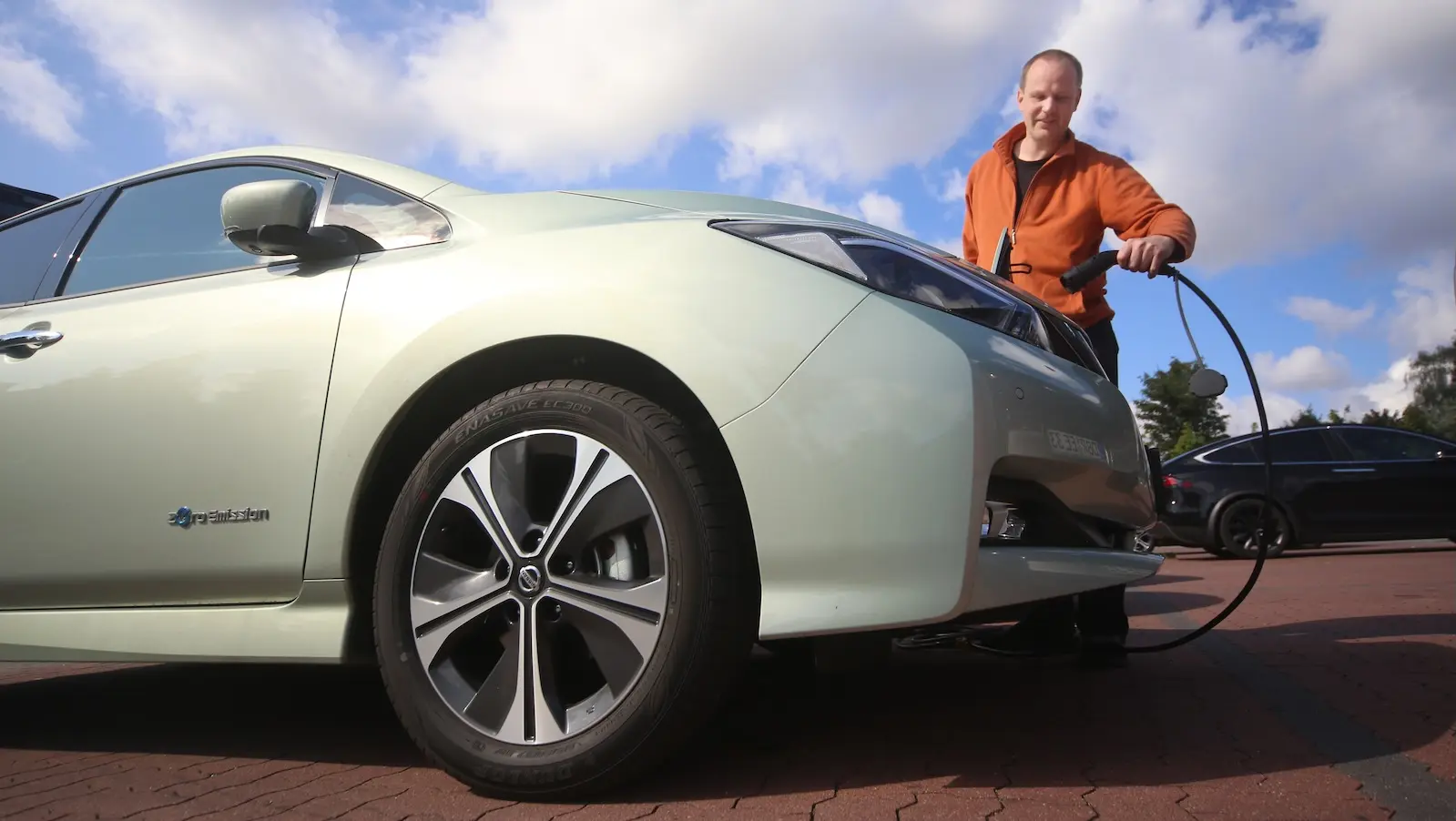
Despite the promise of V2G, several hurdles remain before the technology reaches mainstream ubiquity. The primary challenge is hardware compatibility. While the Nissan Leaf has long supported bidirectional charging via the CHAdeMO plug standard, the industry is currently transitioning toward the North American Charging Standard (NACS). Ensuring that bidirectional capabilities are integrated into this new standard is a priority for engineers and policymakers.
There is also the concern of battery degradation. Some EV owners fear that frequent discharging and recharging for the grid will shorten the lifespan of their vehicle’s battery. However, recent studies suggest that managed, shallow discharges—which are the hallmark of V2G programs—have a negligible impact on battery health compared to the stresses of high-speed driving and rapid DC charging.
Furthermore, the success of programs like ConnectedSolutions depends on consumer participation. To encourage adoption, utilities and tech providers are developing user-friendly apps that allow drivers to set "buffer" limits. For instance, a driver can specify that the grid can only tap into their battery if the car has at least 70 percent charge remaining, ensuring they always have enough range for their morning commute.
The Future: From Pilot to Virtual Power Plant
As the Massachusetts pilot gathers data over the coming months, the results will likely influence utility strategies across the Northeast and the wider United States. The ultimate goal is the creation of a "Virtual Power Plant" (VPP)—a sophisticated, software-driven network that can coordinate the energy flow of millions of devices, including EVs, home batteries, and smart appliances.
Seth Frader-Thompson, president of EnergyHub, emphasized that as hardware costs decrease and installation becomes simpler, V2G will become a standard feature of the American home. The integration of EVs into the grid represents a fundamental shift in the relationship between the consumer and the utility. In this new paradigm, the consumer is no longer just a passive end-user, but a "prosumer" who helps maintain the stability and sustainability of the nation’s infrastructure.
The Massachusetts project serves as a vital proof of concept. If successful, it will demonstrate that the transition to electric transportation does not have to be a burden on the electrical grid. Instead, by leveraging the "superpower" of bidirectional charging, EVs may prove to be the very tool that saves the grid from the challenges of the 21st century.