The tension surrounding the proposed redevelopment of the Nairobi Animal Orphanage reached a flashpoint this week as conservationists and legal petitioners accused the Kenya Wildlife Service (KWS) of intimidation and obstruction during a court-mandated inspection of the site. The dispute centers on a controversial plan to relocate and upgrade the historic orphanage to integrate it into the larger Bomas International Conference Complex (BICC) project, a move that would see between 76 and 89 acres of the Nairobi National Park repurposed for infrastructure. While the KWS maintains the project is a necessary modernization that will bolster conservation education and the local economy, environmental groups and civil society activists warn of irreparable damage to one of the world’s most unique ecological havens.
The confrontation occurred following a July 16 order from the Environment and Land Court in Nairobi. The court’s deputy registrar, Vincent Kiplagat, was tasked with visiting the park alongside all involved parties to observe the proposed construction site firsthand and file a formal report. However, the site visit, intended to provide clarity for the judiciary, instead became a source of further legal and public relations friction.
Allegations of Obstruction and Narrative Control
Representatives from the Nairobi-based non-governmental organization Save the Nairobi National Park (SaveNNP) reported that their members were initially denied access to the site, despite the explicit court order permitting all parties to be present. In a formal statement, SaveNNP condemned what it described as "threats and intimidation" by KWS personnel stationed at the park. The group, alongside JustAct and Friends of Nairobi National Park, alleged that the KWS attempted to "control the narrative" by limiting who could witness the proceedings and speak to the media during the inspection.
According to the activists, the KWS rangers enforced a restrictive entry protocol that effectively sidelined the majority of the co-petitioners. They claimed they were only allowed to enter the specific project area after the court officers, KWS representatives, and selected media personnel had already completed the bulk of the tour. This delay, they argue, was a calculated move to ensure that the court’s deputy registrar received a curated version of the project’s impact, devoid of the immediate counter-arguments and visual evidence of environmental sensitivity highlighted by the conservationists.
In response to these allegations, KWS spokesperson Duncan Wanyama denied any deliberate blocking of the inspection. Referring to local media reports, Wanyama stated that the visitors were not obstructed but were instead subject to standard park protocols and security screenings. He emphasized that the rangers were fulfilling their duty to maintain order within the protected area and that the site visit was eventually concluded with the presence of legal representatives.
The Scope of the Proposed Redevelopment
At the heart of the legal battle is the scale of the proposed "modernization." The Nairobi Animal Orphanage, established in 1964 as the first of its kind in Kenya, currently serves as a treatment and rehabilitation center for wild animals found abandoned or injured across the country. The new proposal seeks to transform this facility into a world-class rescue and rehabilitation center integrated with the BICC.
The technical specifications of the project have raised alarms within the conservation community. The plans include:
- Acreage: The carve-out of 76 to 89 acres within the Nairobi National Park boundaries.
- Infrastructure: The construction of a state-of-the-art wildlife hospital, enhanced visitor amenities, and expanded rescue facilities.
- Traffic and Parking: The inclusion of a parking facility designed to accommodate 1,300 vehicles.
- Economic Impact: KWS estimates the project will create approximately 500 jobs and serve as a significant economic driver for the region.
Conservationists argue that the introduction of high-volume traffic and large-scale permanent structures within the park’s northern corridor poses a direct threat to the indigenous forest and the resident wildlife. Of particular concern is the impact on the critically endangered black rhino. Nairobi National Park is a global stronghold for the species, and activists fear that the noise, light pollution, and habitat fragmentation caused by a 1,300-car parking lot and conference facilities will disrupt rhino breeding and movement patterns.

A Chronology of Escalating Tensions
The legal and social opposition to the project has been building for several months, characterized by a series of protests and judicial filings.
- June 2024: Public outcry intensifies as details of the BICC expansion into the park are leaked. Protests break out in Nairobi, led by environmentalists and concerned citizens.
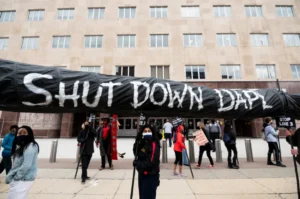
- Late June 2024: In a move that drew international attention, Kenya’s former Chief Justice David Maraga was arrested during a peaceful protest against the park construction. The Law Society of Kenya (LSK) issued a scathing rebuke of the arrest, labeling it a "direct assault on civic space" and reminding the government that national heritage sites are not "state property to barter behind closed doors."
- July 6, 2024: A citizen-driven petition is filed with the Environment and Land Court. By mid-July, at least 4,642 Kenyans had signed the document, asking the court to determine the legality of the construction within a protected national park.
- July 16, 2024: The Environment and Land Court orders the site visit by Deputy Registrar Vincent Kiplagat to assess the environmental claims made by the petitioners.
- Late July 2024: The controversial site visit takes place, leading to the current allegations of harassment and the KWS’s subsequent denials.
Ecological and Legal Implications
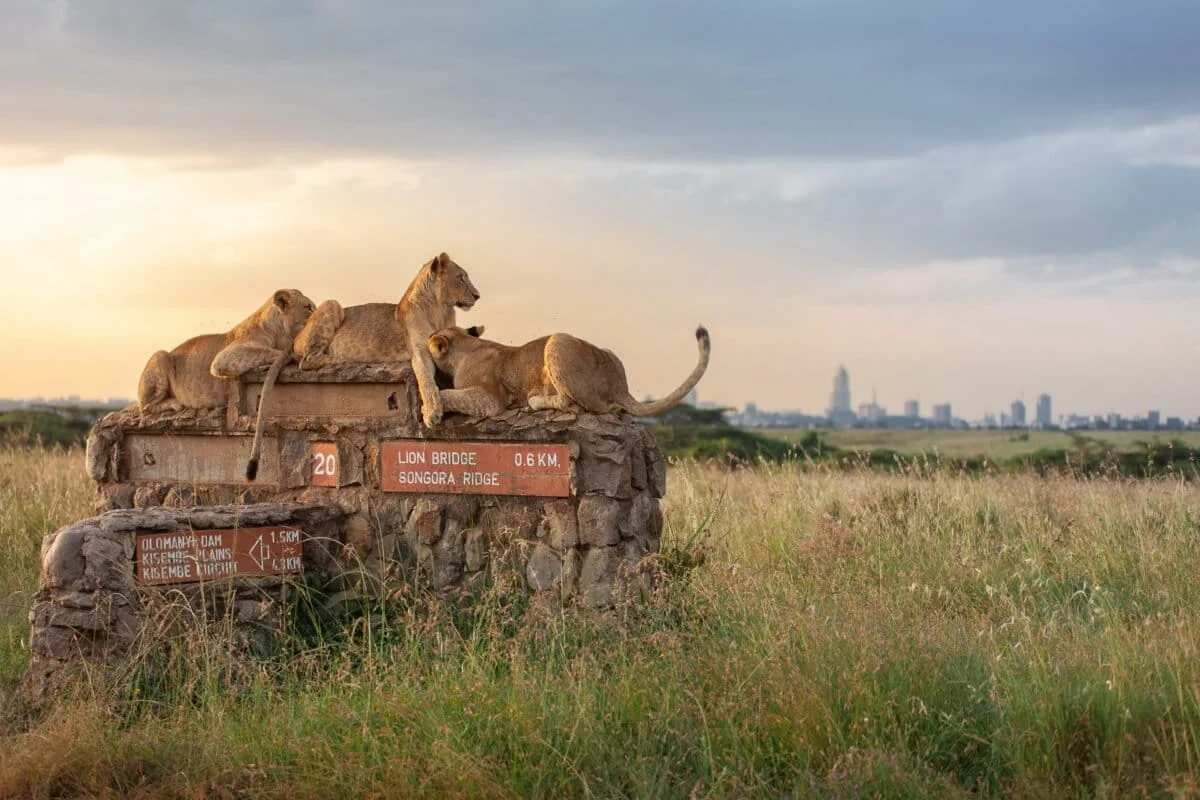
Nairobi National Park holds a unique status as the only national park in the world located within the precincts of a capital city. This proximity to an urban center makes it both a jewel of Kenyan tourism and a highly vulnerable ecosystem. The park is home to lions, leopards, cheetahs, and over 400 species of birds, but it is the black rhino sanctuary that remains its most sensitive feature.
Under Article 69 of the Kenyan Constitution, the state is obligated to ensure the sustainable exploitation, utilization, management, and conservation of the environment and natural resources. Petitioners argue that the KWS and the Ministry of Tourism are violating this constitutional mandate by prioritizing commercial infrastructure over ecological integrity.
KWS Director General Erastus Kanja has defended the project as a move toward a more "semi-wild" approach to rehabilitation. He argues that the current orphanage facilities are outdated and that the new expansion will allow for better reintroduction programs, where animals can transition from clinical care to a controlled wild environment before full release. "The upgrades will improve our capacity for wildlife rescue, rehabilitation, and conservation education," Kanja stated, suggesting that the project is a net positive for the animals.
However, independent environmental impact analysts remain skeptical. They point out that the northern section of the park, where the construction is slated, contains some of the few remaining pockets of indigenous forest that provide essential shade and forage for the park’s megafauna. The introduction of thousands of visitors and vehicles daily for conference purposes is, in their view, incompatible with the quietude required for a wildlife hospital and a "semi-wild" rehabilitation zone.
The Broader Context of Urban Encroachment
This is not the first time Nairobi National Park has faced threats from infrastructure development. In recent years, the park has been bisected by the Standard Gauge Railway (SGR) and bordered by major highway expansions. Each project was met with similar promises of "mitigation measures," yet conservationists argue that the cumulative effect is a "death by a thousand cuts" for the ecosystem.
The BICC project represents a new type of threat: internal commercialization. Unlike a road or a railway that passes through, this project seeks to establish a high-density human activity hub inside the park’s administrative boundaries. The outcome of the current court case is expected to set a major legal precedent regarding the "inviolability" of protected areas in Kenya.
Conclusion and Future Outlook
As the Environment and Land Court awaits the formal report from the Deputy Registrar, the standoff between the state and its citizens continues. The 4,642 petitioners and the NGOs involved have signaled that they will not back down, citing the arrest of former Chief Justice Maraga as a rallying point for the defense of the rule of law and environmental justice.
The KWS faces a difficult balancing act. On one hand, it must modernize its facilities and generate revenue to sustain its operations; on the other, it must act as the primary guardian of the very land it now proposes to develop. The coming weeks will reveal whether the court views the Bomas International Conference Complex as a legitimate conservation upgrade or an unlawful encroachment on Kenya’s natural heritage. For now, the "City under the Sun" remains divided over the future of its most famous wild residents.