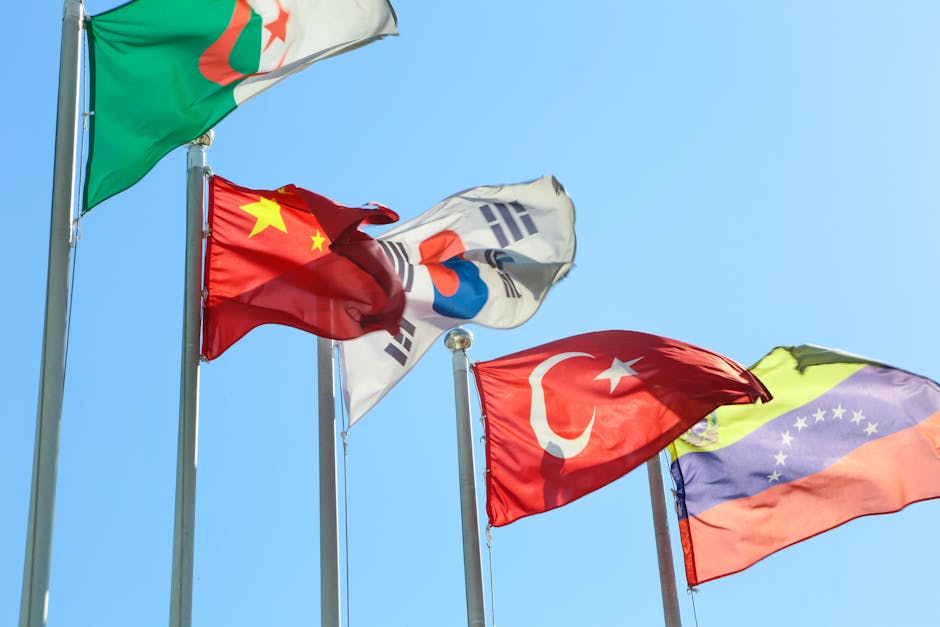
International Relations: Understanding Global Interconnections and Power Dynamics
International Relations (IR) is an academic discipline and a field of study dedicated to comprehending the complex web of interactions, relationships, and power dynamics that exist between states, international organizations, non-governmental organizations (NGOs), multinational corporations (MNCs), and other transnational actors. At its core, IR seeks to explain why states and other actors behave the way they do on the global stage, how they cooperate and conflict, and what factors shape the distribution of power and influence in the international system. This multifaceted field draws upon insights from various disciplines, including political science, economics, history, sociology, and law, to construct a holistic understanding of global affairs. The primary objective of IR is not merely descriptive but also analytical and, in some cases, prescriptive, aiming to identify patterns, predict trends, and offer potential solutions to pressing global challenges such as war, poverty, climate change, and human rights abuses. The contemporary international system is characterized by an unprecedented level of interconnectedness, making the study of IR more critical than ever for navigating a world increasingly defined by globalization, technological advancements, and diverse forms of interdependence.
The origins of the academic study of International Relations can be traced back to the aftermath of World War I, a cataclysmic event that profoundly shocked the international community and fostered a desire to understand and prevent future large-scale conflicts. Early IR scholarship, often termed "idealism" or "liberalism," emphasized the potential for cooperation, the importance of international law and organizations, and the belief that democratic states were less likely to engage in war. Thinkers like Woodrow Wilson championed the idea of collective security through the League of Nations. However, the failures of the League and the outbreak of World War II led to a significant shift in theoretical perspectives. "Realism" emerged as a dominant paradigm, asserting that the international system is inherently anarchic, meaning there is no overarching authority to enforce order. Realists, such as Hans Morgenthau and Kenneth Waltz, argued that states are primarily driven by self-interest, a desire for power, and a relentless pursuit of security in a competitive environment. This perspective views international politics as a struggle for dominance, where states prioritize their survival above all else. The Cold War era further solidified the influence of realism, as the bipolar world order was largely understood through the lens of power balances and strategic competition between the United States and the Soviet Union.
Over time, the discipline has evolved beyond the realist-idealist dichotomy, giving rise to a multitude of theoretical frameworks that attempt to capture the nuances of global interactions. "Neorealism," also known as structural realism, focuses on the impact of the international system’s structure (anarchy and the distribution of power) on state behavior, distinguishing between defensive realism (which emphasizes security) and offensive realism (which suggests states are always seeking to maximize their power). "Neoliberalism," or liberal institutionalism, revisits the importance of international institutions and cooperation, arguing that they can mitigate the effects of anarchy by facilitating communication, reducing transaction costs, and promoting shared norms and interests. Beyond these foundational theories, a range of critical perspectives emerged to challenge dominant paradigms and highlight underrepresented voices and issues. "Constructivism" posits that international relations are shaped by shared ideas, norms, and identities, arguing that actors’ perceptions and beliefs about the world are as crucial as material capabilities. This perspective emphasizes the social construction of reality and how collective understanding can transform the international landscape. "Marxism" and its various offshoots, such as "world-systems theory," focus on the role of economic structures, class conflict, and global inequality in shaping international relations, particularly the persistent disparities between core and peripheral countries. "Feminist IR" critiques traditional theories for their male-centric biases and analyzes how gender shapes power, conflict, and cooperation on a global scale. Post-structuralism, another critical approach, deconstructs dominant narratives and power structures, questioning taken-for-granted assumptions about security, sovereignty, and international order.
The actors within international relations are diverse and their influence varies significantly. States remain the primary actors, possessing sovereignty and the monopoly over legitimate use of force within their territories. However, the nature of state power is not static; it encompasses not only military might but also economic strength, diplomatic influence, cultural appeal, and technological innovation. Beyond states, international organizations (IOs) play an increasingly vital role. The United Nations (UN), with its various agencies and peacekeeping operations, serves as a forum for diplomacy, conflict resolution, and the promotion of international law and cooperation on issues ranging from human rights to development. Regional organizations like the European Union (EU), the African Union (AU), and ASEAN foster economic integration, political cooperation, and security arrangements within their respective regions. Non-governmental organizations (NGOs) are another significant category of actors, operating independently of governments and often advocating for specific causes, such as environmental protection (e.g., Greenpeace), human rights (e.g., Amnesty International), or humanitarian aid (e.g., Médecins Sans Frontières). Multinational corporations (MNCs) exert considerable economic power, influencing global trade, investment, and labor practices, and sometimes wielding influence comparable to that of states. Lastly, transnational terrorist groups, criminal networks, and even influential individuals can impact global affairs, highlighting the increasingly complex and decentralized nature of international interactions.
Key concepts are fundamental to understanding international relations. "Sovereignty" refers to the supreme authority of a state within its territory and its independence from external control. In the contemporary era, sovereignty is often debated and challenged by global norms and the interconnectedness of issues. "Anarchy," as previously mentioned, denotes the absence of a central world government, leading states to rely on self-help for their security and interests. "National interest" is a central concept, representing the goals and objectives that a state seeks to achieve in its foreign policy, often related to security, economic prosperity, and ideological promotion. "Balance of power" describes a situation where states seek to prevent any single state from becoming too powerful, often through alliances and military buildup, to maintain stability and prevent hegemony. "Deterrence" is a strategy aimed at preventing an adversary from taking a certain action by threatening retaliation, particularly relevant in the context of nuclear weapons. "Diplomacy" is the art and practice of conducting negotiations between representatives of states, aiming to resolve disputes peacefully and promote cooperation. "International law" comprises a body of rules, principles, and norms that govern relations between states and other international actors, though its enforcement mechanisms are often weaker than domestic law. "Globalization" refers to the increasing interconnectedness of economies, cultures, and populations, driven by cross-border trade in goods and services, technology, and flows of investment, people, and information.
Contemporary challenges in international relations are vast and interconnected. "Security" remains a paramount concern, encompassing not only traditional military threats but also emerging challenges such as terrorism, cyber warfare, pandemics, and climate change. The proliferation of nuclear weapons and the risks of nuclear conflict continue to be a significant threat. "Economic interdependence" has fostered both opportunities for growth and vulnerabilities, with global financial crises, trade wars, and resource scarcity posing significant challenges. "Human rights" violations persist in many parts of the world, and international efforts to promote and protect them are often met with resistance from states prioritizing sovereignty. "Climate change" represents an existential threat that requires unprecedented international cooperation to mitigate its impacts and adapt to its consequences, demanding global solutions to a problem that transcends national borders. The rise of populism and nationalism in various countries presents challenges to international cooperation and multilateral institutions. Furthermore, the increasing influence of non-state actors, the diffusion of technology, and the complexities of managing global commons like the oceans and outer space all demand new approaches and understandings within the field of international relations. The study of IR is thus a dynamic and evolving endeavor, constantly seeking to adapt to the ever-changing global landscape and the complex interplay of actors and forces that shape our interconnected world. Understanding these dynamics is crucial for navigating the complexities of the 21st century and for fostering a more peaceful, prosperous, and sustainable global future.
