MLB Games: A Comprehensive Guide to Understanding and Enjoying Baseball’s Strategic Depth
Major League Baseball (MLB) games are more than just a series of physical contests; they are intricate tapestries woven with strategic decision-making, individual skill, and team cohesion. Understanding the nuances of an MLB game is crucial for appreciating its full complexity and for developing effective betting strategies or simply becoming a more informed fan. This comprehensive guide will delve into the fundamental elements that define an MLB game, from the basic rules and scoring to the advanced tactical considerations that unfold on the diamond. By dissecting these components, we aim to provide readers with a deep understanding of what makes baseball a enduringly popular and intellectually engaging sport.
At its core, an MLB game pits two teams of nine players against each other in a contest of offense and defense. The objective for the offensive team is to score runs by hitting a ball and advancing runners around a series of bases, ultimately reaching home plate. The defensive team’s objective is to prevent the offensive team from scoring by getting three outs per inning. An MLB game is divided into nine innings, with each team taking turns batting and fielding in each inning. An inning concludes when the defensive team records three outs. The team with the higher score after nine complete innings wins. If the score is tied after nine innings, the game proceeds to extra innings until one team holds a lead at the end of a complete inning.
The scoring in baseball is straightforward: a run is scored when a player legally advances around first base, second base, third base, and home plate. This is typically achieved through a combination of hits, walks, errors, and stolen bases. A "hit" occurs when a batter strikes the ball and safely reaches base without the benefit of a defensive error. The most common types of hits are singles (reaching first base), doubles (reaching second base), triples (reaching third base), and home runs (scoring a run directly from the hit, with the batter circling all bases). A "walk" occurs when the pitcher throws four pitches outside the strike zone before the batter has swung at three strikes or hit the ball. This allows the batter to advance to first base. "Errors" are defensive misplays that allow a batter or runner to advance when they would have otherwise been out. "Stolen bases" occur when a runner advances to the next base while the pitcher is delivering the ball to the batter, without the aid of a hit or walk.
The game is officiated by a crew of umpires, typically four to six, who are responsible for enforcing the rules and making crucial calls. The home plate umpire is positioned behind the catcher and calls balls and strikes, as well as rulings on plays at home plate. The base umpires are positioned around the bases and make rulings on plays at first, second, and third base, as well as fair/foul ball calls. Their decisions, while sometimes contentious, are final and instrumental in the flow of the game.
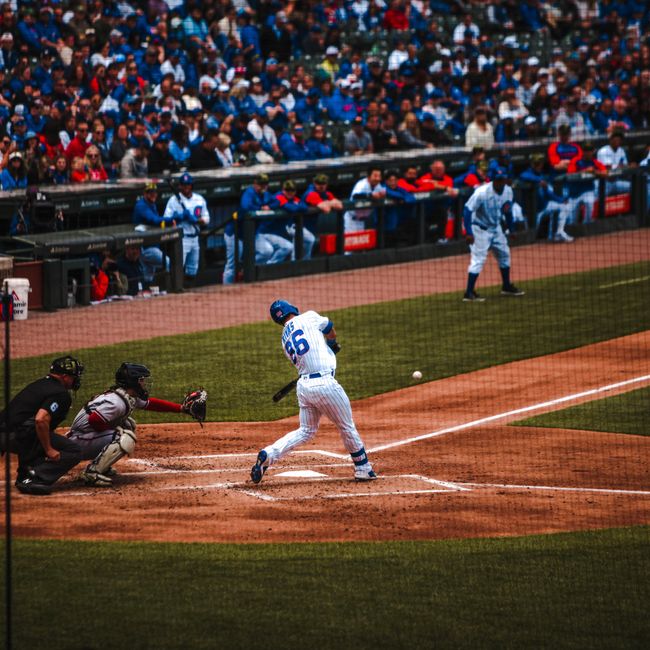
The intricate dance between pitcher and batter is arguably the most compelling individual duel in baseball. The pitcher, standing on a raised mound 60 feet, 6 inches from home plate, attempts to throw the ball past the batter into the catcher’s mitt for a "strike." A strike can be called in several ways: if the batter swings at a pitch and misses, if the batter does not swing at a pitch that is in the "strike zone" (an imaginary rectangle over home plate that extends from the batter’s knees to the midpoint of his torso), or if the batter hits the ball foul with fewer than two strikes. If the pitcher throws four balls outside the strike zone before accumulating three strikes against the batter, it results in a walk. The objective for the pitcher is to induce outs, either by striking out the batter (three strikes) or by forcing them to hit the ball in a way that results in an out. For the batter, the goal is to hit the ball into fair territory and safely reach base, or to drive in runs by hitting the ball effectively.
Beyond the fundamental mechanics, baseball is a game steeped in strategy. The manager, occupying the dugout, is the chief strategist, making crucial decisions that can significantly impact the game’s outcome. These decisions include setting the batting order, choosing the starting pitcher, making pitching changes, employing defensive shifts, calling for hit-and-run plays, and deciding when to attempt stolen bases. Each decision is a calculated risk, weighing the potential rewards against the likelihood of success. For instance, a pitching change might be made to exploit a matchup advantage against a particular batter, or to bring in a reliever with a specific pitch to counter a dangerous hitter. Defensive shifts, where infielders reposition themselves to anticipate where a batter is likely to hit the ball, have become increasingly sophisticated and are a prime example of how analytics have influenced modern baseball strategy.
The defensive side of the game involves a coordinated effort to prevent runs. Each position player has a specific role and responsibility. The catcher is not only responsible for receiving pitches but also for calling pitches, directing the defense, and blocking errant throws. The infielders (first baseman, second baseman, shortstop, and third baseman) are positioned to field ground balls and line drives, and to make throws to other bases to record outs. The outfielders (left fielder, center fielder, and right fielder) are responsible for fielding fly balls and ground balls hit into the outfield, and for making strong throws to prevent runners from advancing. The communication and synergy between these players are paramount to successful defense.
The offensive strategy is equally complex. Batters don’t just swing for the fences; they often aim for contact, looking to hit the ball into gaps in the defense or to hit it hard enough to avoid being thrown out. The concept of "on-base percentage" (OBP) has gained significant traction in modern baseball, highlighting the importance of batters who consistently get on base, whether through hits or walks. Situational hitting, such as a "bunt" (a softly tapped ball designed to advance runners) or a "hit-and-run" (where the runner on base attempts to steal while the batter attempts to make contact), are tactical maneuvers designed to create scoring opportunities. The running game, with stolen bases and aggressive baserunning, can put pressure on the defense and create chaos.
Advanced statistics, often referred to as sabermetrics, have revolutionized the way baseball is analyzed and understood. Metrics like "ERA" (Earned Run Average, a measure of a pitcher’s effectiveness), "WAR" (Wins Above Replacement, a comprehensive measure of a player’s overall value), and "OPS" (On-base Plus Slugging, a measure of a hitter’s offensive production) provide deeper insights than traditional statistics. These advanced metrics are used by teams to evaluate players, make strategic decisions, and inform betting strategies. For example, a team might prioritize acquiring players with high OBP even if their batting average isn’t spectacular, recognizing the value of consistently getting runners on base.
The dynamics of an MLB game are also influenced by external factors. The "ballpark" itself plays a significant role. Some ballparks are known for being "hitter-friendly," with short outfield fences or warm weather that tends to carry the ball further. Others are considered "pitcher-friendly," with larger dimensions or cooler temperatures that make it harder to hit for power. Pitching matchups are crucial; facing a dominant ace pitcher presents a far greater challenge than facing a weaker starter. The "bullpen," consisting of relief pitchers who enter the game later, is vital for closing out games and preserving leads. The effectiveness of a team’s bullpen can be as important as its starting pitching.
Understanding the various types of pitches thrown by pitchers is also a key component of appreciating an MLB game. Common pitches include the "four-seam fastball" (thrown with maximum velocity), the "two-seam fastball" or "sinker" (which tends to move downwards), the "slider" (a breaking ball that moves horizontally and downwards), the "curveball" (a breaking ball that drops significantly), and the "changeup" (a pitch thrown with fastball arm speed but at a slower velocity to deceive the batter). Each pitch has its own unique trajectory and speed, and mastering their use is a testament to a pitcher’s skill.
The mental aspect of baseball cannot be overstated. Baseball is often described as a game of adjustments. Pitchers must adjust their pitch selection and location based on the batter’s tendencies and the game situation. Batters must adjust their approach based on the pitcher they are facing and the counts. Players must also maintain focus and composure throughout a long game, dealing with the pressure of critical at-bats or crucial defensive plays. The ability to "shake off" a bad at-bat or a missed defensive opportunity and refocus is a hallmark of successful players.
In conclusion, MLB games are a sophisticated blend of athleticism, strategy, and mental fortitude. From the fundamental rules of scoring and outs to the complex tactical decisions made by managers and the intricate dance between pitcher and batter, each element contributes to the rich tapestry of the sport. By understanding these components, fans can gain a deeper appreciation for the strategic depth and individual brilliance that define Major League Baseball, enhancing both their enjoyment of the game and their ability to engage with its analytical aspects. The continuous evolution of strategy and the introduction of new analytical tools ensure that MLB games remain a dynamic and endlessly fascinating spectacle.
