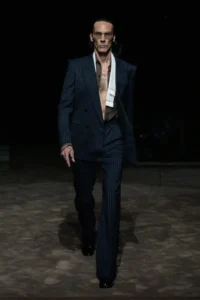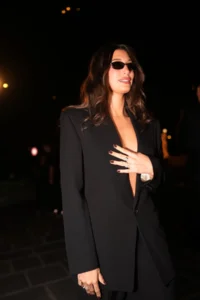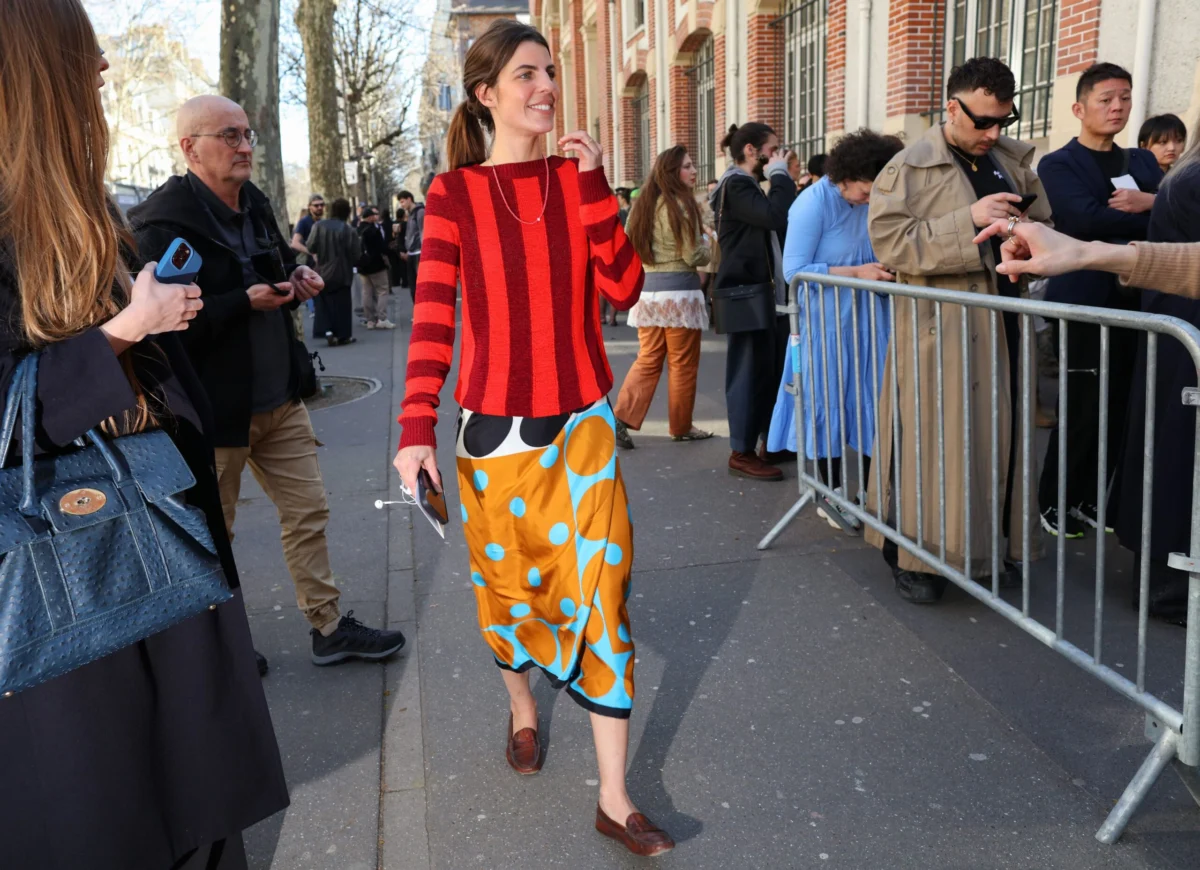
The landscape of global fashion capitals has undergone a significant transformation as the monochromatic, minimalist palettes that dominated the previous decade give way to a more complex and vibrant aesthetic known as tasteful clashing. Observers at the recent Paris Fall 2025 menswear shows and the London Spring 2026 ready-to-wear presentations have noted a distinct departure from the "Quiet Luxury" movement, replaced by a deliberate collision of patterns, textures, and historical references. This shift represents more than a mere change in seasonal preference; it signals a broader cultural move toward individualism and the abandonment of traditional, prescriptive fashion dictums that have governed the industry since the late 20th century.
Historical Roots and the Linguistic Evolution of the Clash
The term "clash" finds its origins in the 1700s, initially used as an onomatopoeic descriptor for the harsh, discordant sound produced when two metal objects—such as swords or cymbals—struck one another. In the context of the 17th and 18th centuries, a clash was an indicator of conflict or accidental impact. However, in the modern aesthetic vernacular, the industry has repurposed the term to describe a visual strategy where disparate elements are brought together to create a high-energy, albeit harmonious, friction.
Historically, fashion has cycled between periods of austerity and periods of excess. The current embrace of clashing is a direct reaction to the minimalist dominance of the 1990s and early 2000s. That era, defined by figures such as Carolyn Bessette-Kennedy, prioritized a "uniform of sophistication" consisting of neutral tones, the perfect white T-shirt, and straight-leg denim. This minimalism emerged as a psychological and aesthetic antidote to the volatile, neon-soaked trend shifts of the 1980s. Today, the industry is witnessing a secondary reversal, where the perceived sterility of minimalism is being challenged by a "buffet" of visual stimuli.
The Dissolution of Prescriptive Fashion Rules
The contemporary fashion environment is increasingly characterized by the dissolution of traditional rules. Previous generations of stylists and editors adhered to strict guidelines: patterns were rarely mixed, certain colors were deemed incompatible (such as navy and black, or red and pink), and seasonal tropes were non-negotiable. Plaid was reserved for autumn, while florals were strictly a springtime endeavor.

Data from recent street style archives, particularly those captured by photographers like Phil Oh during the Paris and London circuits, indicate that these boundaries have effectively vanished. The "new normal" involves year-round integration of diverse motifs. This shift is partly attributed to the globalization of the fashion market, where consumers in different hemispheres and climates access the same collections simultaneously, rendering traditional seasonal boundaries obsolete. Furthermore, the rise of digital "mood-boarding" and social media platforms has encouraged a more experimental approach to personal styling, where the goal is to stand out rather than to fit into a pre-established mold of "correctness."
The Strategic Mechanics of Visual Disharmony
While the current trend celebrates eccentricity, industry experts suggest that "tasteful clashing" is governed by a subtle set of internal logics. It is not an absence of thought, but rather a complex layering of visual information. Professional stylists often point to three primary pillars that distinguish a successful clash from a disorganized ensemble:
- Scale Variation: To prevent patterns from "fighting" for the viewer’s attention, experts recommend mixing prints of different sizes. For instance, a large-scale geometric print on a coat might be paired with a micro-floral or a fine pinstripe on a shirt. This creates a hierarchy that allows the eye to travel across the outfit without becoming overwhelmed.
- Color Cohesion: Despite the diversity of patterns, a unifying color story often anchors the look. By maintaining a consistent palette—perhaps various shades of earth tones or a recurring primary color—the wearer can bridge the gap between animal prints and stripes.
- Neutral Anchoring: The use of neutral-colored accessories, such as a black leather handbag or a beige trench coat, serves to balance the visual intensity of clashing prints, providing a "rest" for the eye.
Despite these guidelines, much of the movement’s appeal lies in a certain je ne sais quoi—an intuitive sense of style that defies easy categorization. This individualism is what has made recent street style in Paris and London particularly compelling for photographers and trend analysts alike.
Chronology of the Shift: From Minimalism to Maximalism
The trajectory of this aesthetic shift can be traced through the last three decades of fashion history:
- 1990–1999: The Era of the Essential. Driven by designers like Helmut Lang and Calvin Klein, fashion focused on silhouette and fabric quality over ornamentation. The "off-duty" look of supermodels and socialites prioritized simplicity.
- 2000–2010: The Rise of Logomania and Fast Fashion. A transition period where branding became a pattern in itself, paving the way for more complex visual identities.
- 2011–2019: The Streetwear Boom and "Quiet Luxury." The industry saw a split between the graphic-heavy world of high-end streetwear and the ultra-minimalist "Old Celine" aesthetic.
- 2020–Present: The Post-Pandemic Maximalist Surge. Following periods of lockdown and social restriction, there has been a documented "revenge dressing" phenomenon. Consumers began opting for bolder colors and more expressive combinations as a form of escapism and personal reclamation.
Market Data and Consumer Response
Market analysis suggests that the demand for expressive, patterned apparel is on the rise. According to retail data from the first quarter of 2024, sales of patterned knitwear and non-traditional outerwear increased by 18% compared to the previous year. Search engine queries for "how to mix prints" and "maximalist fashion" have seen a 45% uptick on platforms like Pinterest and TikTok, particularly among Gen Z and Millennial demographics.

Industry analysts attribute this to a desire for "authenticity" and "uniqueness" in an era of mass-produced fast fashion. By clashing items in idiosyncratic ways, consumers feel they are creating a look that cannot be easily replicated by a mannequin or an algorithm. This has also fueled a resurgence in the vintage and resale markets, as shoppers seek out one-of-a-kind prints from different eras to incorporate into their modern wardrobes.
Global Impact and Industry Implications
The impact of this trend extends beyond the streets of Paris and London. Luxury fashion houses are increasingly incorporating "pre-clashed" looks into their runway collections, recognizing that the consumer appetite for bold combinations is a lucrative market. Designers are now creating garments that feature "patchwork" prints or mismatched sleeves, essentially doing the work of the street-style stylist within a single piece of clothing.
Furthermore, the trend has significant implications for the sustainability movement. Tasteful clashing encourages the "shopping of one’s own closet" and the mixing of old and new items. It validates the idea that a garment does not have to belong to a specific "set" to be wearable. This fluidity can lead to a longer lifecycle for individual clothing items, as they are no longer discarded when a specific matching trend fades.
Future Outlook: The Longevity of the Maximalist Wave
As the fashion world looks toward the latter half of the decade, the question remains whether tasteful clashing will remain a staple of the sartorial landscape or if a return to minimalism is inevitable. Historically, fashion is cyclical; however, the current digital infrastructure supports a permanent fragmentation of trends. It is likely that clashing will not "go out of style" but will instead become a permanent tool in the modern wardrobe, coexisting alongside minimalism.
The street style seen at the Paris Fall 2025 menswear and London Spring 2026 shows serves as a definitive record of this transition. By trading the "weapons" of the 1600s for the vibrant prints of the 2020s, the fashion community has redefined what it means to be sophisticated. Sophistication is no longer synonymous with simplicity; it is now defined by the ability to navigate complexity with confidence and a sense of play. As the industry moves forward, the "gray clouds" of prescriptive fashion continue to clear, leaving behind a landscape that is as varied and unpredictable as the people who inhabit it.