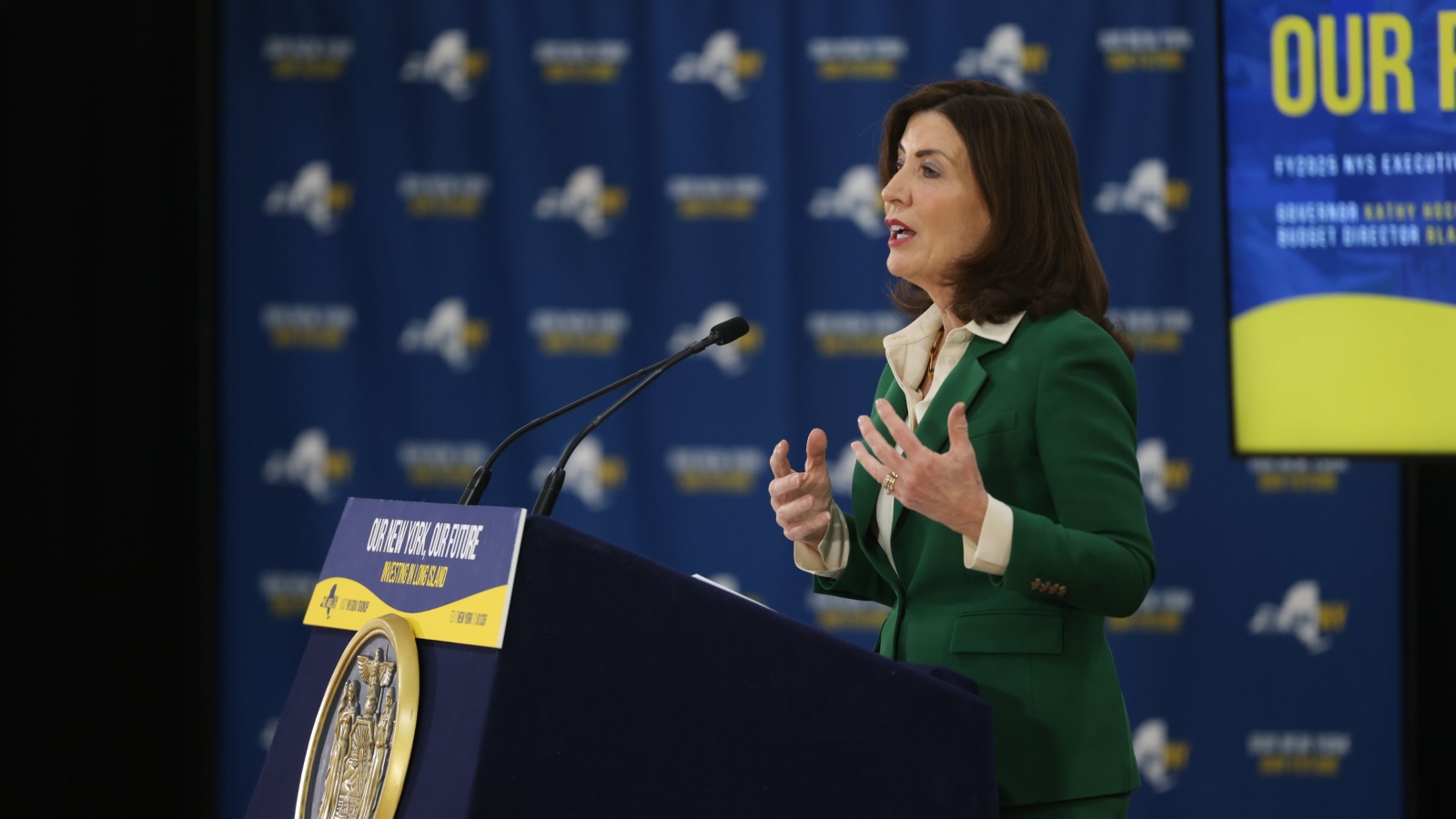
New York Governor Kathy Hochul issued an executive order on Tuesday, July 14, 2026, establishing a one-year moratorium on the development of new large-scale data centers across the state. This landmark decision marks the first time a U.S. state has implemented a comprehensive pause on the construction of these energy-intensive facilities at a statewide level. The move comes as lawmakers, environmental advocates, and utility consumers express mounting alarm over the rapid expansion of "hyperscale" data centers and their potential to destabilize the electrical grid, inflate residential utility bills, and undermine the state’s ambitious climate goals.
The executive order directs the New York State Department of Public Service (DPS) to cease issuing new permits for large-scale data centers for a duration of 12 months. During this period, state agencies will conduct an exhaustive environmental and economic analysis to determine how these facilities impact the state’s resources. Governor Hochul emphasized that while New York remains a hub for technological innovation, the sheer scale of current data center proposals threatens to outpace the state’s infrastructure capabilities.
As data center development threatens to hike up utility bills, deplete our natural resources, and create uncertainty for New Yorkers, it’s my responsibility to take action and lead, Hochul stated in an official release. This pause is not a rejection of technology, but a necessary step to ensure that our growth is sustainable and that our residents are not footing the bill for the massive energy demands of private corporations.
The Surge of Artificial Intelligence and Data Demand
The primary driver behind the sudden influx of data center proposals is the global explosion of artificial intelligence (AI) and machine learning applications. Unlike traditional data centers that handle web hosting or cloud storage, AI-focused facilities require significantly more power to operate the advanced graphical processing units (GPUs) necessary for training large language models.
Over the past three years, technology giants including Microsoft, Google, Amazon Web Services, and Meta have committed hundreds of billions of dollars toward building physical infrastructure to support the AI boom. New York, with its proximity to global financial markets and its legacy of hydroelectric power in the northern regions, has become a prime target for these developments.
However, the energy profile of a modern hyperscale data center is staggering. According to data from the International Energy Agency (IEA), a single large-scale data center can consume as much electricity as a mid-sized city. In some regions of the United States, data centers are projected to account for nearly 10% of total electricity demand by 2030. For New York, which is currently transitioning its grid to renewable sources under the Climate Leadership and Community Protection Act (CLCPA), the addition of several gigawatts of new, constant demand poses a significant challenge to grid reliability.
Detailed Provisions of the Executive Order
Governor Hochul’s executive order is multifaceted, addressing not only the immediate construction of buildings but also the underlying economic and regulatory frameworks that govern them.
First, the Department of Public Service is tasked with a formal proceeding to investigate rate structures. The Governor’s office indicated that the state will explore requirements for data centers to either "pay more for their energy or supply their own." This reflects a growing sentiment that large-scale industrial users should not benefit from the same subsidized or regulated rates as residential consumers when their presence necessitates costly grid upgrades.
Second, the order mandates the creation of a new fund. This fund would require data center developers to invest directly into New York’s grid infrastructure and clean energy supply. The goal is to ensure that any new load added to the system is offset by an equivalent or greater investment in renewable energy generation, such as wind or solar, or in battery storage technology.
Third, the Governor has directed the state’s economic development agency, Empire State Development (ESD), to create a standardized framework for local municipalities. This framework is designed to empower local communities to negotiate more effectively with tech companies. It will prioritize community benefits such as:
- Significant infrastructure improvements beyond the facility’s footprint.
- Mandatory investments in local child care services.
- Strict labor and wage standards for both construction and long-term operational staff.
- Direct financial support for local school districts or emergency services.
Finally, Governor Hochul called upon the New York State Legislature to repeal existing sales tax exemptions for large data centers. These exemptions, originally designed to attract tech jobs, are now viewed by many critics as unnecessary subsidies for some of the world’s wealthiest corporations.
A Growing National Conflict: New York vs. Maine
New York’s decision to implement a moratorium follows a series of high-profile legislative battles across the country. Earlier in 2026, Maine Governor Janet Mills, also a Democrat, faced a similar crossroads. The Maine legislature had passed a measure that would have established a statewide data center ban, citing concerns over the impact on the state’s pristine natural environment and limited grid capacity.
However, Governor Mills ultimately vetoed the bill, arguing that a blanket ban would send a negative signal to the burgeoning tech sector and stifle economic diversification. Her veto was met with significant criticism from environmental groups who argued that Maine’s renewable energy progress was being "cannibalized" by data centers that provide relatively few long-term jobs compared to their massive resource consumption.
In contrast, New York’s legislature had already moved toward a more restrictive stance. Last month, lawmakers passed S10642, a bill that proposed an even more extensive moratorium than the one enacted by Hochul’s executive order. While the Governor has not yet signed that specific bill into law, her executive order serves as a middle-ground approach—allowing the state to pause development immediately while maintaining executive control over the study and regulatory process.
Grid Stability and the Water-Energy Nexus
The technical concerns surrounding data centers extend beyond simple electricity consumption. New York’s electrical grid is currently in a state of flux as it retires fossil-fuel-burning "peaker" plants in favor of intermittent renewable energy. The "baseload" demand required by data centers—which must run 24 hours a day, 365 days a year—is difficult to reconcile with a grid increasingly dependent on the sun and wind.
Furthermore, the "water-energy nexus" is a growing point of contention. Hyperscale data centers require millions of gallons of water daily for evaporative cooling systems to prevent servers from overheating. In parts of Western New York and the Hudson Valley, residents have expressed fears that large-scale data facilities could deplete local aquifers or place undue strain on municipal water treatment systems.
"We are seeing a collision between the digital economy and the physical realities of our environment," said an analyst from the New York Energy Policy Institute. "You cannot run a 1,000-megawatt data center on a grid that is struggling to meet peak summer demand for residential air conditioning without something giving way. Either the prices go up for everyone, or the reliability goes down. New York is saying it won’t let that happen blindly."
Industry and Stakeholder Reactions
The reaction to Governor Hochul’s order has been swift and divided. Tech industry trade groups, such as the Data Center Coalition and NetChoice, issued statements expressing disappointment. They argue that the moratorium could lead to a "brain drain" and cause New York to lose out on the infrastructure that will power the next generation of the economy.
"Data centers are the backbone of the modern economy, supporting everything from telemedicine to financial services," a spokesperson for a major tech advocacy group stated. "By imposing a moratorium, New York is effectively closing its doors to the AI revolution and the high-tech jobs that come with it. We urge the Governor to focus on expanding energy production rather than restricting energy use."
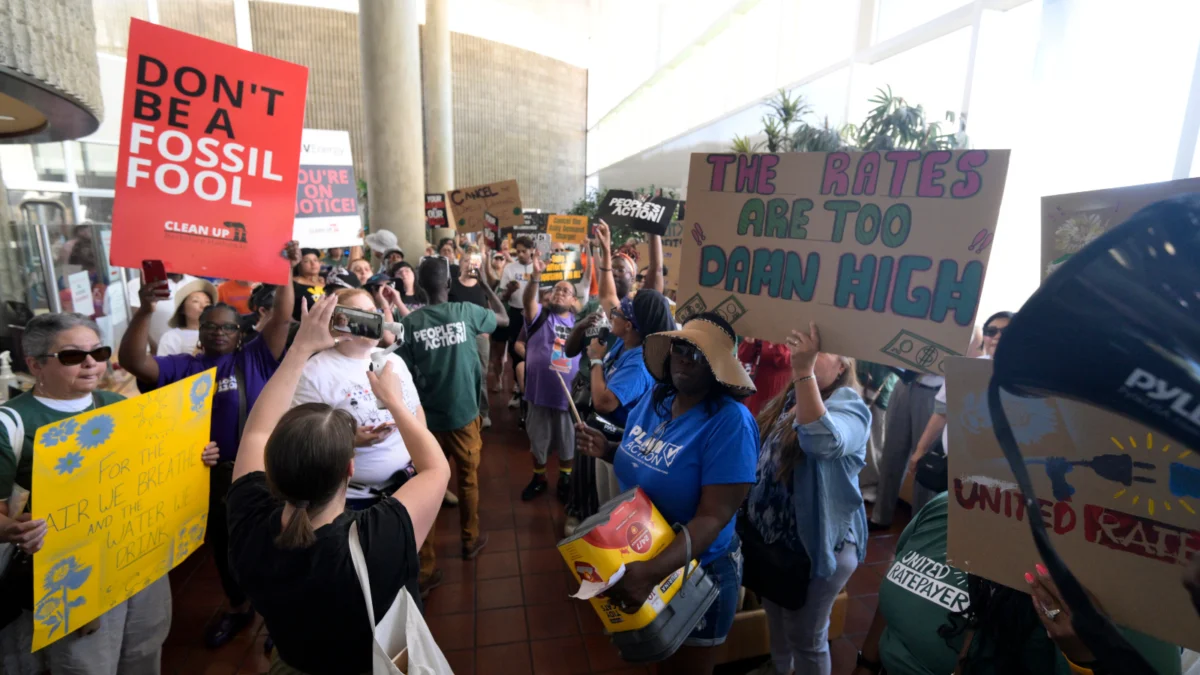
Conversely, environmental organizations and consumer advocacy groups hailed the decision as a victory for the public interest. Groups like the Sierra Club and the Public Utility Law Project (PULP) have long argued that the rapid build-out of data centers is a form of "digital extraction" that offers little benefit to local residents while externalizing environmental and financial costs.
"For too long, these companies have been allowed to plug into our grid with no regard for the carbon footprint or the cost to the average ratepayer," said a representative for a coalition of New York environmental justice groups. "Governor Hochul is right to put the brakes on until we have clear rules that protect our climate and our wallets."
Chronology of the Data Center Debate in New York
The path to the July 14 moratorium has been marked by several key milestones:
- January 2024: New York sees a 300% increase in inquiries for large-scale data center connections in Upstate New York, primarily seeking low-cost hydropower.
- November 2025: A coalition of utility companies warns the New York Independent System Operator (NYISO) that projected data center loads could lead to "reliability margins tightening" by 2028.
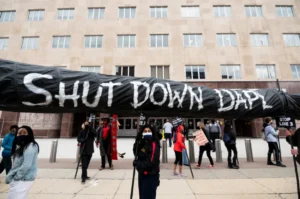
- March 2026: Local protests erupt in the Hudson Valley over a proposed 500,000-square-foot data center complex, citing noise and water usage.
- April 2026: Maine Governor Janet Mills vetoes the nation’s first proposed statewide data center ban, shifting the spotlight to New York’s pending legislation.
- June 2026: The New York State Senate and Assembly pass S10642, a bill to halt data center development.
- July 14, 2026: Governor Hochul issues the executive order, bypassing the immediate need to sign the legislative bill while enacting a state-led moratorium.
Broader Implications and Future Outlook
New York’s moratorium is likely to serve as a bellwether for other states facing similar pressures. Virginia, currently the data center capital of the world, and states like Texas and Georgia are also grappling with the massive power requirements of the tech sector. If New York successfully implements a "pay-to-play" model where data centers must fund their own renewable energy sources, it could create a new regulatory standard for the industry nationwide.
The one-year study period will be a critical time for the Department of Public Service. The findings of their environmental analysis will likely dictate the permanent regulations that follow the moratorium. If the state determines that the costs outweigh the benefits, the temporary pause could evolve into a permanent, highly restrictive permitting process.
For the tech industry, the message is clear: the era of unrestricted, subsidized growth in energy-constrained markets is coming to an end. As artificial intelligence continues to demand more from the physical world, the tension between digital expansion and environmental preservation will only intensify. New York has taken the first definitive step in deciding that, for now, the stability of the grid and the protection of its citizens take precedence over the speed of the silicon revolution.