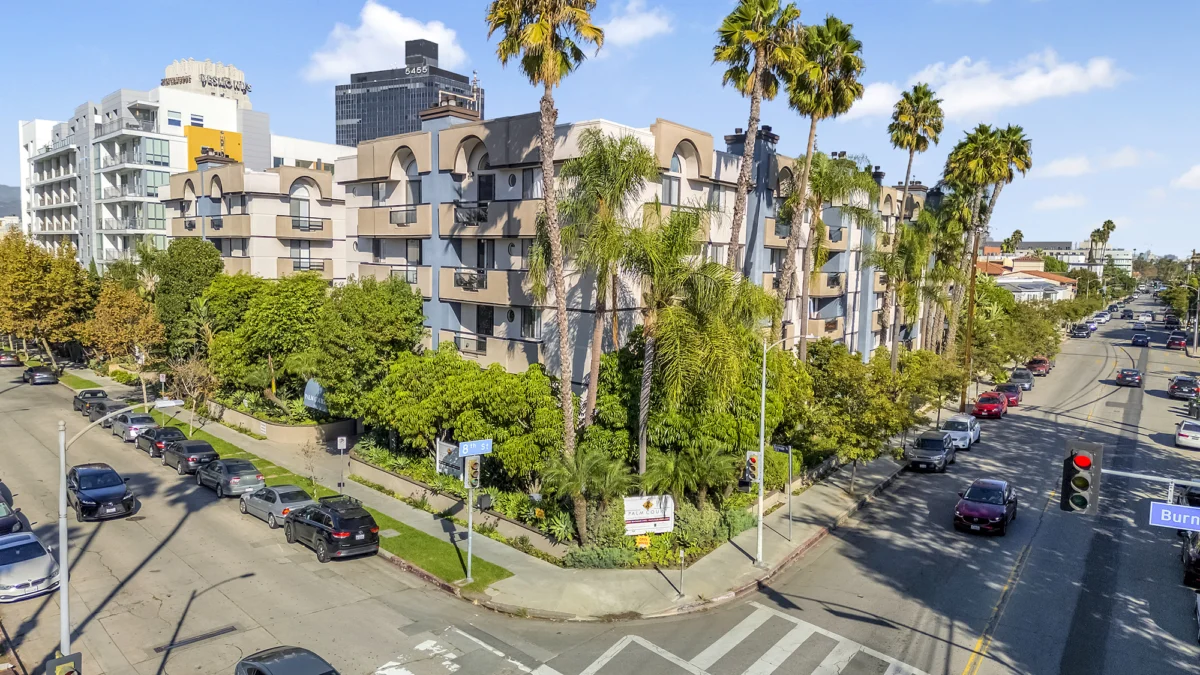
The multifamily real estate landscape in Los Angeles continues to demonstrate resilience and strategic consolidation as Prime Residential, a prominent investment firm known for its extensive holdings in the region, has officially acquired the Palm Court Apartments for $51.3 million. The 132-unit residential complex is situated in the heart of the Miracle Mile neighborhood, a high-demand submarket characterized by its cultural institutions and transit-oriented development. The seller was identified as an LLC associated with Studio City-based Harrison Properties, which offloaded the asset at a valuation of approximately $388,000 per unit. This transaction marks a significant move for Prime Residential, further solidifying its dominance in an area where it already manages one of the largest residential communities in the United States.
The deal was facilitated by a veteran team from Marcus & Millichap. Jeff Louks, Gayle Factor, and Elliot Sabag represented the seller, while Matt Ziegler procured the buyer. According to statements from the brokerage team, the property was highly sought after due to its physical condition and prime location. Harrison Properties had recently executed a series of extensive upgrades to the complex, positioning it as a premium "value-add" or "core-plus" asset in a market where modern amenities are essential for maintaining high occupancy and competitive rental rates.
Property Profile and Strategic Location
Palm Court Apartments, located at 740 South Burnside Avenue, was originally completed in 1988. The building features a diverse unit mix designed to cater to various demographic segments, ranging from young professionals to small families. The inventory includes 48 one-bedroom units, 72 two-bedroom units, and 12 three-bedroom apartments. This balance is particularly advantageous in the Miracle Mile district, where the demand for larger units is often underserved compared to the proliferation of studio and one-bedroom luxury developments.
The amenity package at Palm Court reflects the standards of Los Angeles’ mid-to-high-tier multifamily market. Residents have access to a swimming pool and spa, a fitness center, saunas, and a rooftop sundeck that offers views of the surrounding urban landscape. These features, combined with the recent interior renovations conducted by Harrison Properties, allow the asset to compete effectively with newer construction in the area.
Geographically, the property sits in one of the most culturally significant corridors in Southern California. Palm Court is located within walking distance of Museum Row on Wilshire Boulevard, which houses the Los Angeles County Museum of Art (LACMA), the Academy Museum of Motion Pictures, and the La Brea Tar Pits. Furthermore, the property is a short distance from major retail and dining hubs, including The Grove and the Original Farmers Market.
Perhaps the most critical factor in the long-term appreciation of the asset is its proximity to the Metro D Line (Purple Line) Extension. The new subway station at Wilshire and Fairfax Avenue is poised to transform the Miracle Mile into a major transit hub, providing direct, high-speed rail access to both Downtown Los Angeles and the Westside. Historically, multifamily assets located within a half-mile radius of new transit infrastructure in Los Angeles have seen accelerated rent growth and higher terminal values.
The Prime Residential Strategy and Park La Brea
For Prime Residential, the acquisition of Palm Court is a logical extension of its existing footprint. The firm is perhaps best known as the owner of the landmark Park La Brea community, located just north of Miracle Mile. Since acquiring Park La Brea in 1995, Prime Residential has managed what is widely considered the largest apartment complex west of the Mississippi River.
Park La Brea is a sprawling 144-acre estate featuring 4,249 rent-controlled units distributed across 18 high-rise towers and 175 garden-style buildings. By adding Palm Court to its portfolio, Prime Residential gains a smaller, more modern counterpart to the massive Park La Brea, allowing for operational efficiencies and a broader range of price points and unit styles for prospective renters in the immediate vicinity. The company’s long-term commitment to the Miracle Mile area suggests a strong belief in the submarket’s ability to withstand broader economic volatility.
Market Context: Investment Trends and Regulatory Hurdles
The sale of Palm Court comes at a pivotal time for the Los Angeles multifamily market. According to the most recent market report from Marcus & Millichap, investment sales in the city saw a roughly 25 percent increase during the 12-month period ending in March. Los Angeles continues to be a primary target for institutional and private capital, accounting for more than 20 percent of all apartment trades across primary U.S. markets during that timeframe.
However, the "mansion tax," officially known as Measure ULA, remains a significant headwind for the industry. Implemented in April 2023, Measure ULA imposes a 4 percent documentary transfer tax on real estate sales exceeding $5.1 million and a 5.5 percent tax on sales exceeding $10.3 million. For a $51.3 million transaction like the Palm Court sale, the ULA tax represents a substantial additional cost—approximately $2.82 million—paid by the seller.
The impact of this tax is evident in the data. While mid-market transactions remain active, deals valued above $10 million have plummeted by 50 percent compared to the year before the measure took effect. Many investors have shifted their focus to smaller assets or have sought opportunities in neighboring municipalities like Beverly Hills, West Hollywood, or Santa Monica, which are not subject to the City of Los Angeles’ specific transfer tax. The fact that the Palm Court deal closed at over $50 million indicates that for high-quality assets in irreplaceable locations, the underlying fundamentals can still outweigh the tax burden.
Rent Performance and Vacancy Projections
As of early 2026, the multifamily sector in Los Angeles has shown signs of stabilization. The vacancy rate held steady at 4.8 percent at the start of the year. Meanwhile, average effective rents have seen a modest but steady increase of 1.4 percent year-over-year, reaching an average of $2,853 per month.
Market analysts forecast that the vacancy rate may tick upward to approximately 5 percent by the end of 2026. This slight increase is attributed to the delivery of approximately 8,500 new units currently in the construction pipeline. While the influx of new supply usually puts downward pressure on rents, the persistent housing shortage in Southern California and the high cost of homeownership continue to keep demand for rental units robust.
In the Miracle Mile submarket specifically, the barriers to entry for new development are high due to zoning restrictions and the scarcity of available land. This supply constraint works in favor of existing owners like Prime Residential, as it limits the competition from new luxury "glass box" developments that might otherwise lure tenants away from established buildings.
Analysis of Implications for the Miracle Mile Submarket
The acquisition of Palm Court by an established player like Prime Residential signals a "flight to quality" among investors. In an environment characterized by fluctuating interest rates and regulatory uncertainty, capital is gravitating toward "safe-haven" neighborhoods. Miracle Mile, with its blend of cultural prestige, employment centers, and upcoming transit improvements, fits this profile perfectly.
The $388,000 per-unit price point is also a telling metric. While lower than the $500,000+ per-unit prices often seen for brand-new Class A construction in areas like Downtown L.A. or Hollywood, it represents a strong valuation for a building nearly four decades old. It reflects the value of the recent renovations and the inherent desirability of the 740 South Burnside Avenue location.
Furthermore, this transaction may serve as a benchmark for other sellers in the region who have been hesitant to list properties due to Measure ULA. By demonstrating that large-scale deals can still be executed successfully, the Palm Court sale could encourage a thawing of the "wait-and-see" approach that has characterized the $10 million-plus market over the last 24 months.
Conclusion and Future Outlook
The transition of Palm Court Apartments from Harrison Properties to Prime Residential is more than a simple exchange of keys; it is a testament to the enduring appeal of Los Angeles’ historic core neighborhoods. As the city prepares for the 2028 Olympic Games and continues to expand its rail network, the Miracle Mile is positioned to remain a cornerstone of the L.A. residential experience.
Prime Residential’s acquisition strategy highlights a focus on long-term stability and regional concentration. By leveraging their existing infrastructure at Park La Brea, the firm is well-positioned to manage Palm Court with high efficiency. For the tenants of Palm Court, the change in ownership likely means a continuation of the high management standards associated with a large-scale professional landlord.
As the year progresses, market watchers will be looking to see if other institutional investors follow Prime Residential’s lead in navigating the ULA tax environment. For now, the $51.3 million deal stands as a significant marker of confidence in the Los Angeles multifamily market, proving that despite regulatory challenges and shifting economic forecasts, the demand for well-located housing in the City of Angels remains a primary driver of investment activity.