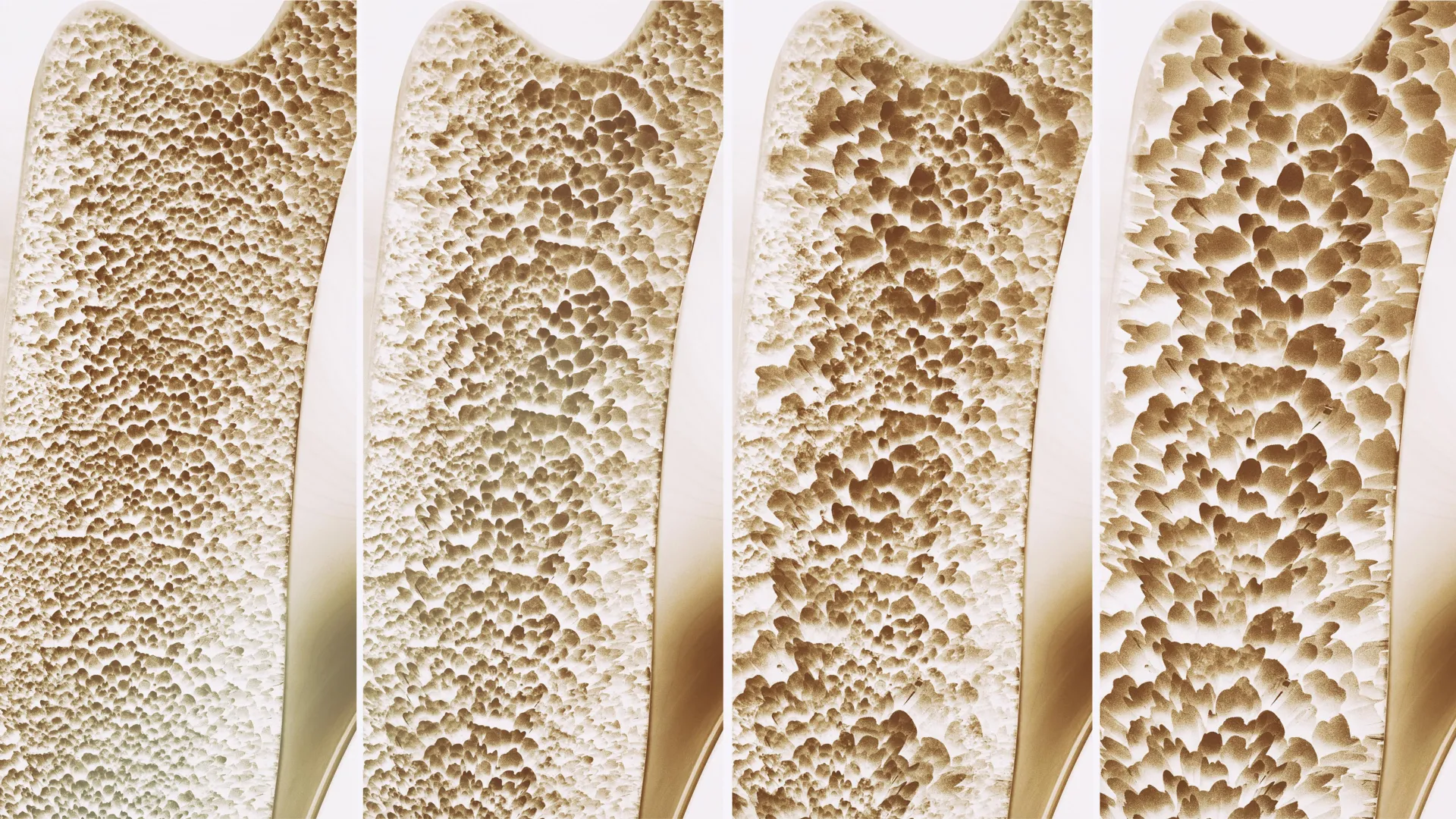
Osteoporosis represents a silent but profound global health crisis, characterized by the progressive deterioration of bone tissue and a concomitant increase in fracture risk that compromises the independence of millions of aging individuals. In Germany alone, approximately six million people—a demographic skewed heavily toward post-menopausal women—grapple with the condition. Despite the clinical availability of various bisphosphonates and anabolic agents, the medical community has long sought a therapeutic target that avoids the limitations and side effects associated with long-term pharmacological intervention. A significant stride toward this goal has been achieved by researchers at Leipzig University, who have identified a previously overlooked biological "switch" that may hold the key to both skeletal and muscular rejuvenation.
The discovery centers on GPR133, an adhesion G protein-coupled receptor (aGPCR) located on the surface of bone cells. By modulating this receptor using a novel compound known as AP503, scientists have successfully demonstrated the ability to bolster bone density and strength in preclinical models. This development is not merely an isolated finding; it is the culmination of over a decade of intensive research into GPCR signaling dynamics at Leipzig University, positioning the institution at the vanguard of musculoskeletal regenerative medicine.
The Biological Mechanism: Balancing Bone Remodeling
To understand the gravity of the Leipzig team’s findings, one must first recognize the delicate equilibrium of the human skeleton. Bone is a dynamic tissue, constantly undergoing a process known as remodeling. This cycle is driven by two primary cell types: osteoblasts, which are responsible for the synthesis and mineralization of new bone matrix, and osteoclasts, which resorb and break down old or damaged bone tissue. In a healthy adult, the rate of bone formation matches the rate of resorption. However, in conditions like osteoporosis—often exacerbated by the drop in estrogen levels following menopause—this balance is disrupted, with osteoclast activity outstripping bone formation, leading to net bone loss and increased porosity.
GPR133 functions as a mechanical sensor, residing on the surface of cells and interpreting signals from the extracellular environment. The research team, led by Professor Ines Liebscher of the Rudolf Schönheimer Institute of Biochemistry, discovered that GPR133 acts as a regulatory checkpoint for these cells. When the receptor is activated, it triggers a signaling cascade that effectively recalibrates the remodeling process. Specifically, the stimulation of GPR133 promotes the differentiation and activity of osteoblasts while simultaneously dampening the activity of osteoclasts. By shifting this ratio, the receptor encourages the skeleton to transition from a state of decline to one of reinforcement.
Experimental Validation and the Role of AP503
The identification of GPR133 as a therapeutic target was verified through rigorous genetic and pharmacological testing. Researchers observed that mice lacking a functional GPR133 receptor exhibited accelerated bone loss at a young age, creating a phenotypic profile that closely mirrors human osteoporosis. This established a causal link between the receptor’s integrity and skeletal health.
The breakthrough, however, arrived with the deployment of AP503. Identified via sophisticated computer-assisted screening, AP503 functions as a pharmacological agonist, or stimulator, of the GPR133 receptor. In a series of controlled experiments, the administration of AP503 resulted in a measurable increase in bone strength across two distinct groups: healthy mice and those specifically bred or conditioned to exhibit osteoporosis-like bone loss.
"Using the substance AP503, which was only recently identified via a computer-assisted screen as a stimulator of GPR133, we were able to significantly increase bone strength in both healthy and osteoporotic mice," explained Professor Liebscher. The ability to restore bone integrity rather than simply slowing its degradation marks a potential paradigm shift in how clinicians might eventually approach fracture prevention.
A Dual-Action Benefit: Addressing the Frailty Syndrome
One of the most compelling aspects of the Leipzig research is the potential for systemic, multi-tissue benefits. The modern clinical approach to aging often struggles with "sarcopenia"—the age-related loss of muscle mass and strength—which frequently occurs in tandem with osteoporosis. This combination, often referred to as "osteosarcopenia," significantly increases the risk of falls and subsequent life-altering fractures.
In an earlier, foundational study, the same research team determined that AP503 does not act exclusively on bone tissue; it also exhibits a positive influence on skeletal muscle. This dual-action capability could prove vital for geriatric care. By addressing both the skeletal frame and the muscular motor, a therapy based on GPR133 modulation could theoretically improve patient mobility, stability, and overall quality of life.
Dr. Juliane Lehmann, the lead author of the study, emphasized the broader clinical implications of these findings. "The newly demonstrated parallel strengthening of bone once again highlights the great potential this receptor holds for medical applications in an aging population," she noted. The prospect of a single compound capable of mitigating two major drivers of frailty represents an attractive, albeit nascent, prospect for future pharmaceutical development.
The Leipzig Legacy: A Decade of GPCR Excellence
The discovery of the GPR133 pathway did not occur in a vacuum. For more than ten years, Leipzig University has maintained a dedicated research priority focused on the structural dynamics of GPCR activation. Through the Collaborative Research Center (CRC) 1423, the university has fostered an interdisciplinary environment where biochemists, structural biologists, and computational scientists collaborate to map the complex "shapes" these receptors assume during signal transduction.
The aGPCR family, to which GPR133 belongs, has historically been one of the more challenging areas of receptor biology due to their unique structure and the difficulty of finding specific ligands that can bind to them. The success of the Leipzig team in utilizing computer-assisted modeling to identify AP503 is a testament to the maturation of structural biology tools in drug discovery. This institutional expertise provided the necessary foundation for identifying not just the receptor, but the specific, high-affinity mechanism required to activate it safely.
Implications and Future Research Directions
While the results from the laboratory are promising, the research team is cautious in framing the timeline for clinical translation. The current findings represent a proof-of-concept phase. Before AP503 or its derivatives can reach clinical trials, several critical hurdles must be cleared, including the rigorous assessment of long-term safety, potential off-target effects in other organ systems, and the development of a delivery mechanism that ensures the compound reaches bone and muscle tissues with the required precision.
Current follow-up projects at the Rudolf Schönheimer Institute are multifaceted. Researchers are moving beyond the initial bone and muscle findings to investigate whether GPR133 activation has functional roles in other tissues. Furthermore, they are refining the pharmacological profile of AP503 to ensure it can withstand the metabolic demands of a potential therapeutic regimen.
The societal impact of such a discovery cannot be overstated. As global life expectancy continues to rise, the economic and human costs of bone-related diseases are projected to soar. According to the International Osteoporosis Foundation, the global burden of osteoporosis is immense, with millions of fractures occurring annually. If the Leipzig University team can successfully transition the GPR133 pathway from a laboratory model to a viable clinical treatment, it could redefine the standard of care for millions.
By moving beyond traditional approaches—which largely focus on preventing bone loss through calcium or bisphosphonates—and entering the realm of regenerative receptor modulation, this research provides a roadmap for a new generation of musculoskeletal medicine. The integration of structural biology, computer-aided drug design, and a deep understanding of cellular signaling has placed GPR133 firmly on the map as a cornerstone for future osteoporosis therapy, offering a glimmer of hope that the frailty associated with aging may one day be a manageable, rather than inevitable, condition.