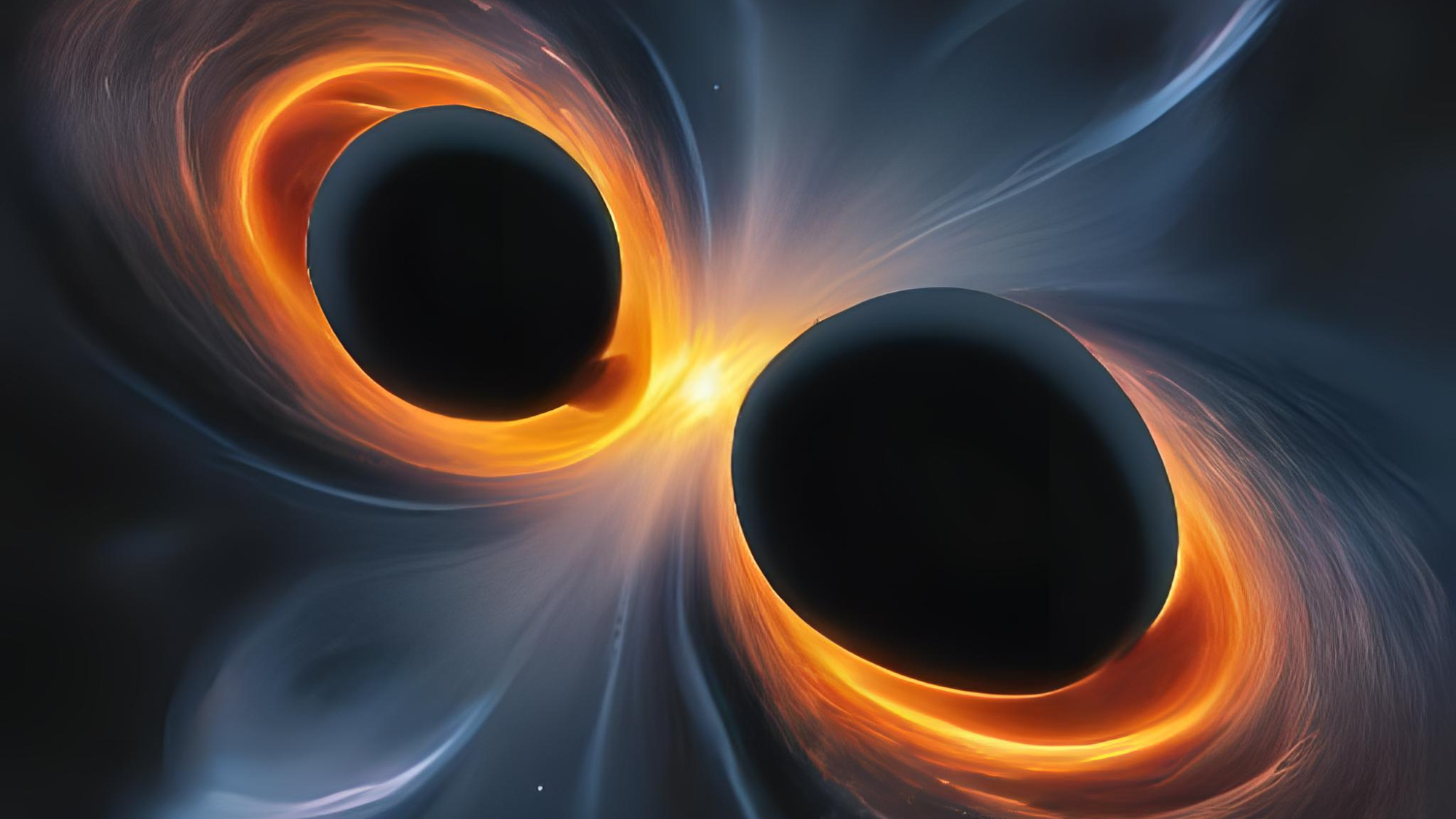
On November 23, 2023, the Laser Interferometer Gravitational-Wave Observatory (LIGO) captured a faint, fleeting signal that sent shockwaves through the astrophysical community. Designated GW231123, the signal was initially interpreted as the catastrophic merger of two gargantuan black holes—one weighing approximately 140 times the mass of our sun, and the other tipping the scales at roughly 100 solar masses. When combined, the resulting entity pushed the boundaries of theoretical physics, yielding an object of unprecedented size that directly challenged current models of stellar evolution and black hole formation.
For months, astrophysicists grappled with a profound dilemma. Standard evolutionary pathways for stars suggest that black holes of this immense scale should not easily form, let alone spin at the rapid rates observed in the binary system. However, groundbreaking new research published on August 25 in the Astrophysical Journal Letters offers an elegant and startling resolution: the colossal masses of these merging black holes may simply be an optical illusion caused by the warping of spacetime itself.
Understanding the Anomaly of GW231123
To appreciate the gravity of the recent discovery, one must examine how stellar-mass black holes are traditionally believed to form. When massive stars exhaust their nuclear fuel, they collapse under their own gravity, typically resulting in black holes ranging from roughly 5 to 60 solar masses. Theoretical boundaries, often referred to as pair-instability mass gaps, suggest that stellar collapse should struggle to produce black holes in the intermediate range of 60 to 120 solar masses.
When LIGO detected GW231123, the implied masses of 140 solar masses and 100 solar masses placed both objects squarely outside standard formation channels. Furthermore, the high spin rates measured by the detector compounded the mystery. Researchers were left with two possibilities: either standard stellar physics was deeply flawed, or a rare, complex mechanism—such as hierarchical merging, where previously merged black holes collide a second time—was at play.
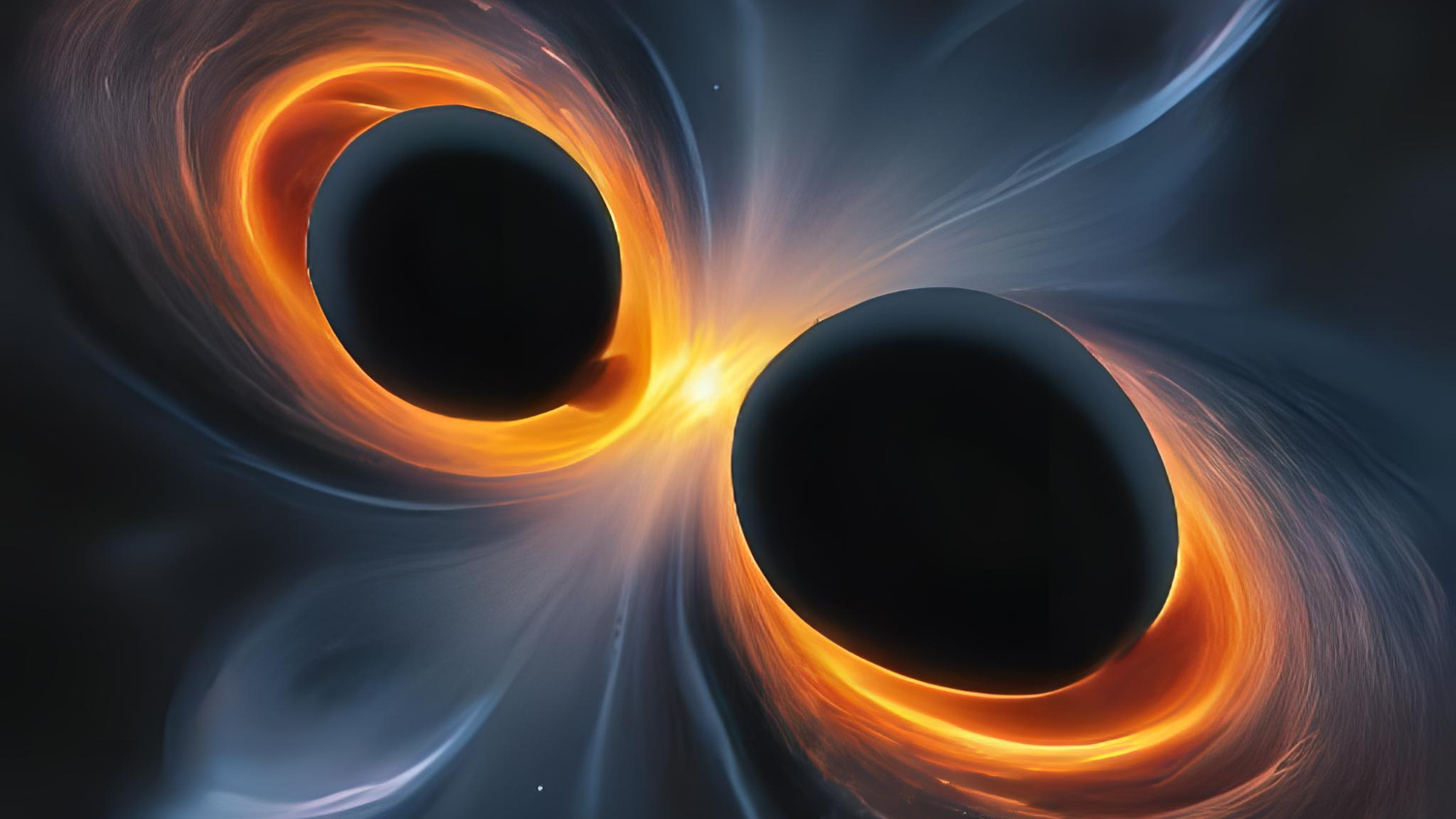
Yet, a specialized team of researchers led by scientists at the Albert Einstein Institute (AEI) in Germany proposed an alternative hypothesis that bypasses the need to rewrite stellar evolution models entirely. They suggest that the gravitational waves emitted by the merger were distorted during their long journey across the cosmos, magnifying their apparent size and creating the false impression of an impossible collision.
The Mechanism of Gravitational Lensing
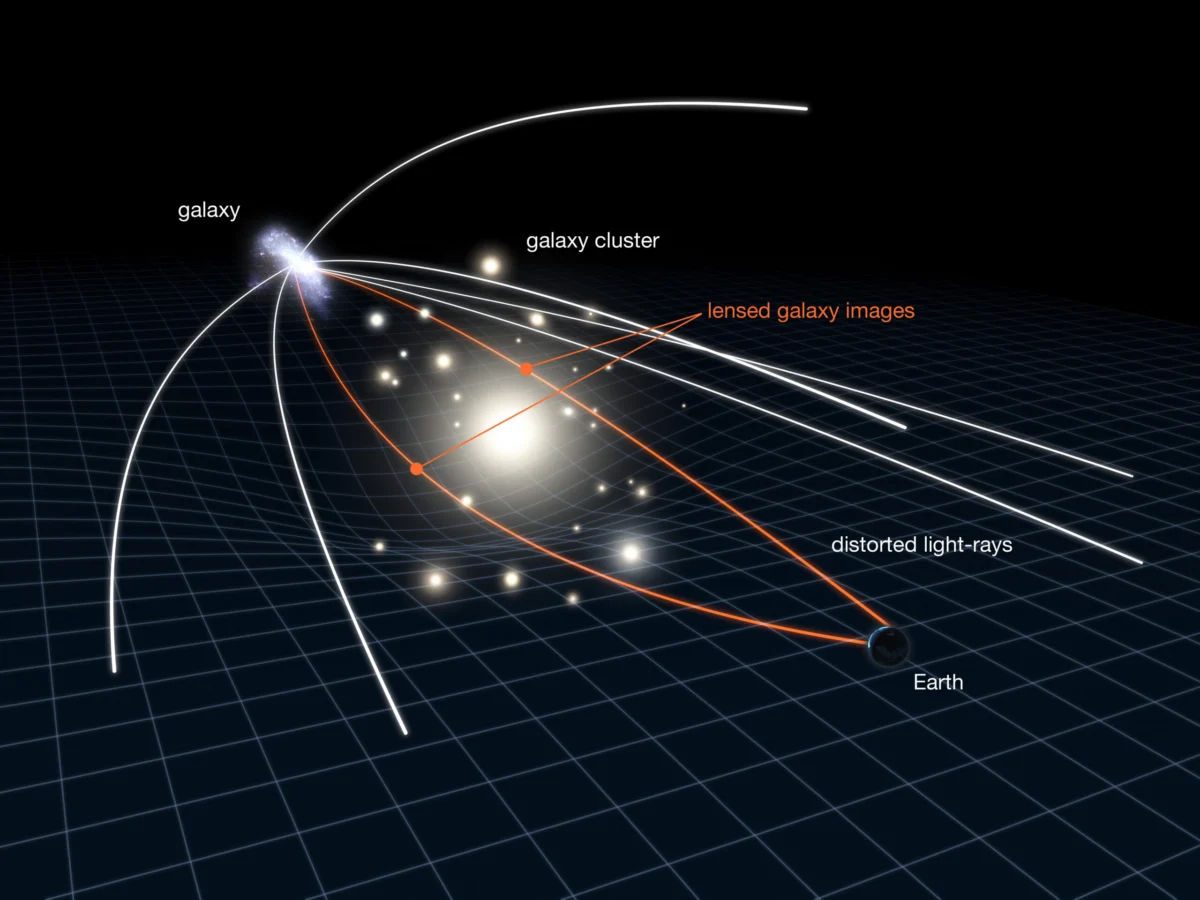
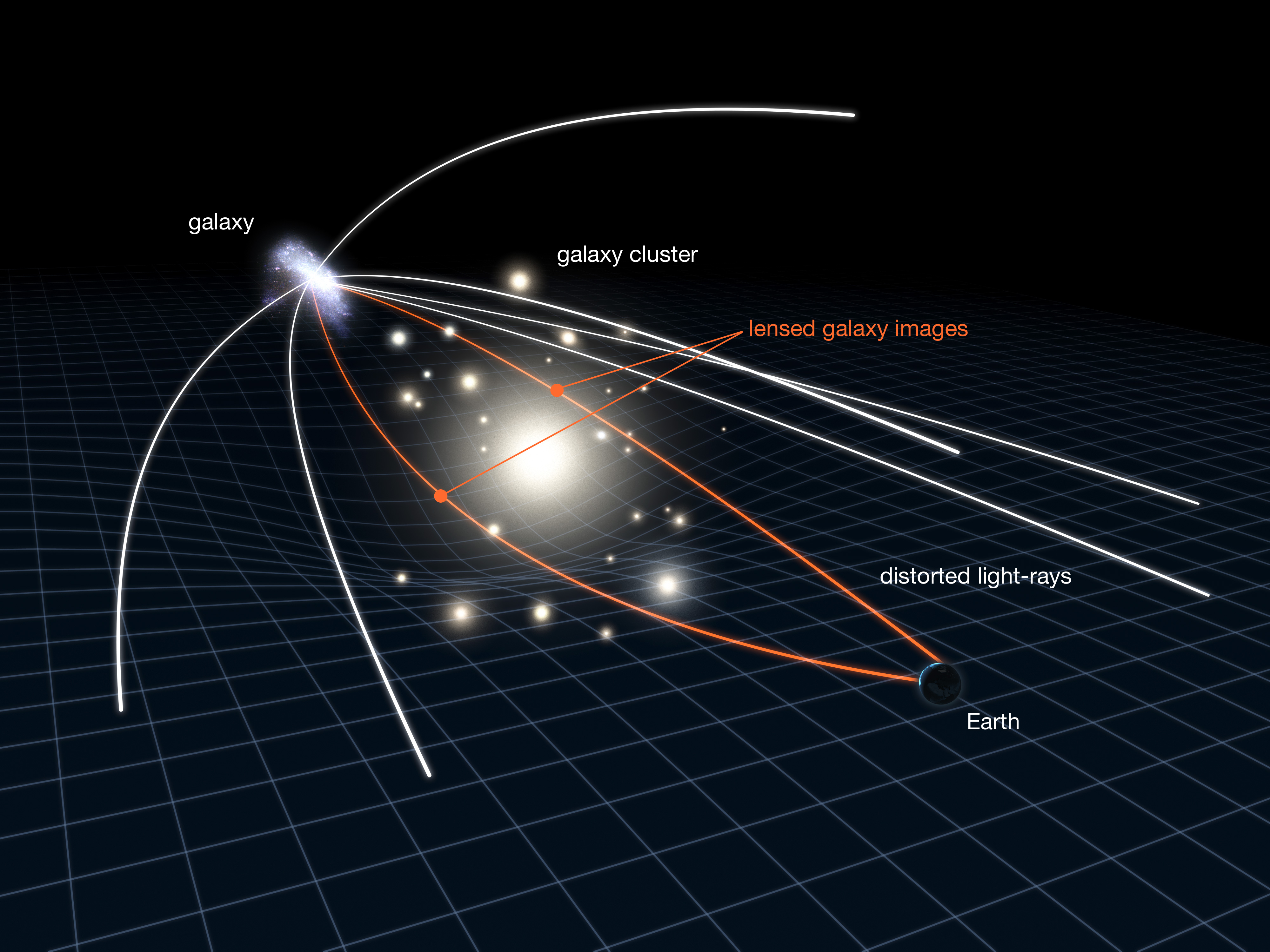
The foundation of this new hypothesis rests upon Albert Einstein’s 1915 theory of general relativity. Alongside predicting the existence of gravitational waves—ripples in the fabric of spacetime generated by cataclysmic cosmic events—general relativity also predicted gravitational lensing. This phenomenon occurs when a massive foreground object, such as a galaxy, a cluster of stars, or a compact invisible mass, warps spacetime through its immense gravitational field.
When light or gravitational waves pass close to this massive foreground object, their trajectory is bent, much like light passing through a curved glass lens. In astronomy, gravitational lensing has long been used to magnify distant, ancient galaxies that would otherwise remain invisible to humanity’s most powerful telescopes.
The AEI research team realized that this exact optical phenomenon applies equally to gravitational waves. As the ripples generated by GW231123 propagated across billions of light-years, they encountered a massive intervening structure that deflected, magnified, and interfered with the wavefronts. This natural amplification made the colliding black holes appear far larger and more energetic than they actually were in reality.
"Like light, gravitational waves can also be deflected, magnified and split into multiple signals by massive objects," explained Miguel Zumalacárregui, a group leader in the Astrophysical and Cosmological Relativity Department at the Albert Einstein Institute, in a public statement. "For gravitational waves, diffraction and interference effects give us an additional way to identify and study lensed signals."
Mathematical Modeling and Re-evaluating the Mass
To test their hypothesis, the research team developed a sophisticated mathematical framework and custom software capable of calculating the complex diffraction and interference patterns of lensed gravitational waves.
By factoring in the lensing effect, the researchers modeled a scenario where the original gravitational wave signal was deflected and distorted by a compact intermediate-mass object weighing between 190 and 850 solar masses, or alternatively, by a larger extended structure such as a globular cluster.
When the simulation was executed under these parameters, the true nature of the merger came into focus. The model revealed that the event likely involved a binary system with a combined mass of approximately 140 solar masses—a figure entirely consistent with standard astrophysical models—rather than the staggering 240-solar-mass behemoth initially calculated by raw data analysis. Additionally, this lensing interpretation naturally accommodated the observed spin rates without requiring exotic, highly improbable stellar conditions.
Despite solving the immediate puzzle of the forbidden masses, the new model introduces a secondary cosmic mystery: the nature of the lens itself. Individual compact lenses weighing between 100 and 1,000 solar masses are theoretically expected to be exceedingly rare in the universe.
"The nature of the lens remains a major mystery in our analysis," Zumalacárregui noted. "Future work will need to establish whether such lenses can form, or whether an ensemble of lighter objects, including stars, can explain this event."
Chronology of the Discovery
- November 23, 2023: LIGO gravitational wave detectors register signal GW231123, originating from a distant binary merger.
- Early 2024: Initial data analysis reveals anomalies, indicating component black hole masses of 140 and 100 solar masses, challenging established stellar evolution models.
- Mid-2024: Researchers at the Albert Einstein Institute begin developing specialized mathematical models to test whether gravitational lensing could account for the anomalous mass measurements.
- August 25, 2025: The research team publishes their findings in the Astrophysical Journal Letters, demonstrating that gravitational wave lensing can create an illusion of mass inflation and resolve the "forbidden" merger paradox.
Broader Implications for Gravitational Wave Astronomy
The study surrounding GW231123 marks a significant milestone in the young field of gravitational wave astronomy. Since LIGO and its international partners, Virgo and KAGRA, first detected gravitational waves in 2015, scientists have cataloged hundreds of black hole and neutron star mergers. However, identifying gravitationally lensed gravitational wave signals has remained an elusive goal.
If confirmed, lensed gravitational waves will provide astronomers with a revolutionary tool to probe the distribution of invisible matter across the universe, map the expansion rate of the cosmos with unprecedented precision, and test general relativity under extreme conditions.
At present, researchers cannot definitively prove whether GW231123 is the first confirmed case of a gravitationally lensed gravitational wave. Confirming similar events in the future will require ongoing technical upgrades to increase the sensitivity of global gravitational wave detectors, allowing scientists to discern subtle diffraction signatures embedded within spacetime ripples.
As gravitational wave detectors prepare for subsequent observation runs, discoveries like this highlight the rapidly evolving nature of modern astrophysics. What once appeared to be a violation of physical laws may ultimately serve as confirmation of Einstein’s enduring theories, demonstrating once again that in the vast expanse of the cosmos, things are not always as they appear from Earth.